Using Weight-Loss Clinics at Veterinary Hospitals: What to Expect
You’ll start with a veterinary assessment using a 9-point Body Condition Score (BCS); ideal is 4–5, with ribs palpable under slight fat. Your pet’s weight is measured on calibrated digital scales to ±0.1 kg. Blood tests rule out hypothyroidism. The plan includes calorie reduction of 20–30%, measured portions, and tailored exercise. Progress is tracked every two weeks-adjustments made if plateauing. A structured path guarantees measurable, sustainable results. What happens next depends on consistent follow-up and precise home management.
Notable Insights
- Veterinary weight-loss clinics perform a full physical exam, including accurate weight measurement and body condition scoring on a 9-point scale.
- Blood tests are conducted to rule out underlying conditions like hypothyroidism that may contribute to weight gain.
- A personalized plan is created with calorie reduction, prescription diets, precise portion control, and tailored exercise recommendations.
- Progress is monitored every two weeks using calibrated scales, BCS reassessment, and species-specific growth charts.
- The plan is adjusted if weight loss plateaus, with reduced calories, increased exercise, or updated bloodwork as needed.
Is Your Pet Overweight? Why a Vet-Led Program Helps
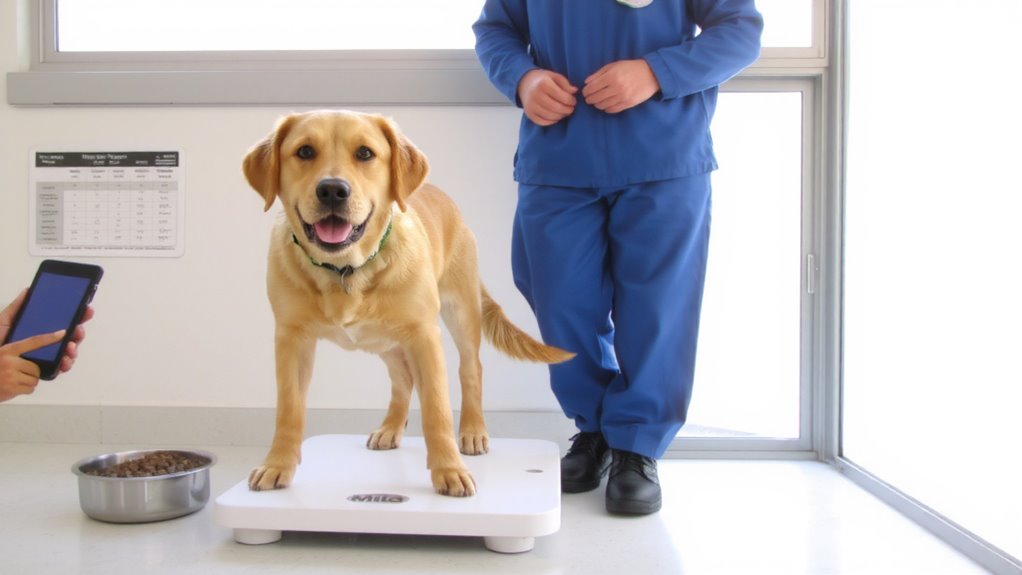
How do you know if your pet carries excess weight? You can assess body condition score (BCS) using a 9-point scale; ideal is 4–5. Ribs should be palpable under slight fat cover, with a visible waistline. Overweight pets score 6 or higher. Excess weight often stems from imbalanced pet nutrition-too many calories, insufficient fiber-or behavioral factors like reduced activity or begging. These factors contribute to obesity, increasing risks for diabetes, arthritis, and reduced lifespan. A vet-led program evaluates metabolic rate, identifies underlying conditions, and tailors caloric intake precisely. It integrates science-based pet nutrition plans with behavioral modification strategies. You receive measurable feeding guidelines, ideal body weight targets, and progress tracking. Unlike generic diets, veterinary programs account for species, breed, age, and comorbidities. They adjust protocols using clinical data-body weight, BCS, energy expenditure-ensuring safe, sustainable loss at 1–2% of body weight weekly. This structured approach improves long-term outcomes.
What Happens at a Pet Weight-Loss Clinic?
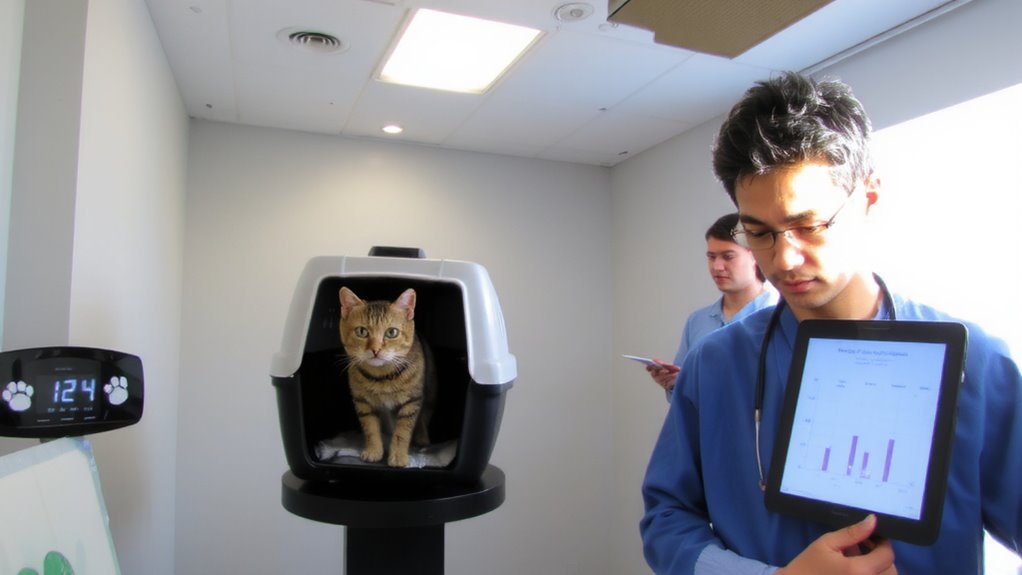
A visit to a pet weight-loss clinic starts with a thorough evaluation that builds on the initial BCS assessment you may have done at home. The veterinary team performs a complete physical exam, records your pet’s exact weight, and determines body condition score using a 9-point scale. They may run blood tests to rule out underlying conditions like hypothyroidism. Nutrition counseling follows, where a vet nutritionist designs a calorie-controlled diet tailored to your pet’s species, age, and metabolic needs. Portion sizes are calculated to the gram, based on resting energy requirements. Behavior modification strategies address overfeeding, begging, and lack of activity. You’ll receive a structured plan that includes meal timing, treat limits, and environmental enrichment. Monitoring tools like activity trackers or feeding logs may be recommended. Every intervention is rooted in evidence-based protocols to guarantee safe, sustainable weight loss.
Your Pet’s First Weight-Loss Checkup: What to Expect
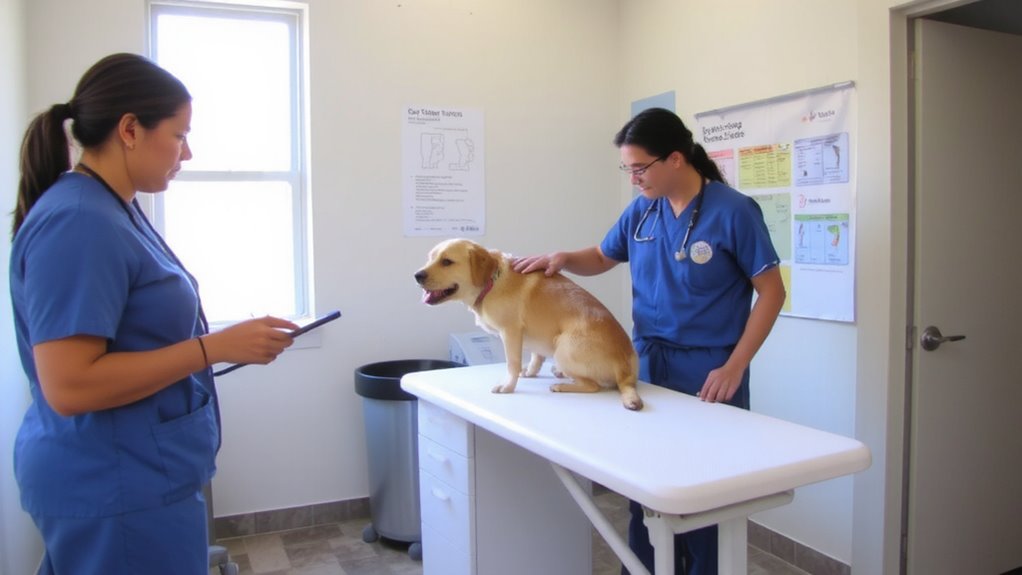
Why does the first weight-loss checkup matter? It establishes a baseline for your pet’s health and sets the stage for successful weight management. During the visit, the veterinary team evaluates your pet’s body condition score (BCS), a 9-point scale where 4–5 is ideal. A score above 6 indicates overweight, while 7–9 suggests obesity. They’ll assess fat coverage, waist visibility, and abdominal tuck. Accurate body weight, measured in pounds or kilograms, is recorded using calibrated scales. You’ll discuss current food portions, including type, amount, and feeding frequency. Portion sizes are often overestimated at home-measuring cups or digital scales provide precision. Treats and table scraps are reviewed. The team identifies medical issues affecting weight and confirms your pet is a candidate for a structured program. This visit guarantees data-driven decisions from the start.
Your Pet’s Personalized Weight-Loss Plan: Diet, Exercise & Goals
Your pet’s personalized weight-loss plan begins with a structured approach that combines precise nutritional control, measured physical activity, and time-specific targets. A veterinary nutritionist calculates your pet’s resting energy requirement (RER) and sets a calorie intake 20–30% below maintenance levels. Prescription weight-loss diets provide balanced nutrition with increased protein and fiber to promote satiety. Nutritional supplements like L-carnitine may be added to support fat metabolism. Daily food portions are measured to the gram using a digital scale. Exercise prescriptions include daily walking durations and intensity levels tailored to your pet’s fitness. Behavioral training addresses food-seeking habits and establishes new routines. Interactive toys and scheduled feeding times reduce anxiety. The plan includes bi-weekly weight checks and goal milestones, aiming for a safe weekly weight loss of 1–2% of body weight. Compliance is critical for success.
How the Clinic Tracks Progress Over Time
While consistent monitoring is essential for effective weight management, veterinary clinics use standardized protocols to guarantee accurate, objective tracking of your pet’s progress over time. Body condition scoring (BCS) is performed at every visit using a 9-point scale, where 4–5 is ideal. A veterinarian assesses fat coverage, waist visibility, and abdominal tuck to assign a score. Weight is recorded on calibrated digital scales with ±0.1 kg accuracy. Progress is plotted on growth charts tailored to species, breed, and age. You’ll receive updates showing percentage of weight lost relative to target. When your pet hits key milestones-like losing 10% of initial body weight-the clinic may recommend milestone celebrations, such as a photo update or non-food reward kit. These benchmarks reinforce motivation and adherence. Data from each session informs ongoing assessment without altering the current plan prematurely.
When (and Why) the Clinic Changes Your Pet’s Plan
How do you know when your pet’s weight-loss plan needs adjustment? The clinic evaluates progress biweekly using body condition scoring (BCS) and weekly weight logs. If weight loss stalls for two consecutive weeks, they initiate changes. Adjusting portions typically involves reducing daily caloric intake by 5–10% or switching to a lower-energy-density therapeutic diet (e.g., 250–300 kcal/100g). Modifying routines may include increasing aerobic activity duration from 15 to 30 minutes daily. Bloodwork is repeated monthly to rule out endocrine causes like hypothyroidism. The team uses objective metrics-not appearance-to guide decisions.
| Trigger | Clinic Response |
|---|---|
| Plateau >14 days | Adjusting portions, reassessing diet composition |
| Low activity adherence | Modifying routines, adding structured exercises |
Your Role: Maintaining Progress at Home
What keeps your pet’s weight-loss plan on track between clinic visits? You do. Consistent portion control is critical. Use a calibrated measuring cup to dispense food, following the exact amount prescribed by your veterinarian. Overfeeding by even 10% can stall progress. Adhere strictly to the recommended diet type and caloric density. Daily walks support caloric expenditure. Aim for at least 30 minutes of brisk walking, split into two 15-minute sessions if needed. Maintain consistent timing and route length to guarantee reliable energy burn. Monitor activity with a pet fitness tracker if available. Avoid treats outside the plan; if needed, use vet-approved, low-calorie options. Record food intake and walk duration weekly. Share logs with the clinic. Your disciplined follow-through directly determines success. Noncompliance risks metabolic slowdown and muscle loss.
On a final note
You commit to a proven process. Veterinary weight-loss clinics use structured protocols to address pet obesity systematically. Your pet’s plan includes precise calorie targets, measured in kilocalories per day, adjusted for ideal body weight and metabolic rate. Exercise prescriptions follow specific duration and frequency guidelines. Progress is quantified monthly via body condition scoring and weight differentials. Adjustments are data-driven, ensuring efficacy. You become an essential partner in a science-based, measurable intervention.