Changes in Vocalization Patterns as Early Markers of Pet Distress
Changes in your pet’s vocalizations often signal distress. A dog’s bark dropping from 450 Hz to 300 Hz may indicate pain. High-frequency meows lasting over 48 hours correlate with anxiety. Cats mid-call stopping or birds going silent show physiological strain. Acoustic monitoring detects deviations as small as 0.5 kHz. Persistent shifts in pitch, duration, or frequency demand evaluation. These vocal biomarkers offer objective health insights-understanding them improves early intervention accuracy.
Notable Insights
- Changes in vocal frequency, duration, or intensity can signal underlying pain, illness, or discomfort in pets.
- Excessive whining, barking, or silence beyond 48 hours may indicate distress or health issues.
- Increased purring in cats or high-pitched whinnies in horses can reflect stress or anxiety.
- Vocal shifts like abnormally low barks or mid-call termination suggest physiological strain or pain.
- Acoustic monitoring detects subtle deviations, aiding early diagnosis and treatment assessment.
What Your Pet’s Sounds Reveal About Health

What if your pet’s next whimper held a clue to an underlying illness? Changes in vocalization can signal pain, discomfort, or disease. Diet influences gut health and energy levels, which may alter vocal patterns. For example, pets on nutrient-deficient diets show reduced vocal frequency and intensity. Age variations also impact sound production; senior animals often vocalize less due to declining neurological or respiratory function. Puppies and kittens, by contrast, use higher-pitched calls linked to developmental vocal tract structure. Deviations from baseline-like increased whining or sudden silence-warrant clinical evaluation. Tools such as sound spectrographs can measure pitch, duration, and frequency shifts, detecting anomalies as small as 0.5 kHz. Monitoring vocal biomarkers over time provides objective health metrics. Early recognition of atypical patterns enables timely intervention, improving diagnostic accuracy and treatment outcomes. You should track vocal behavior systematically, accounting for diet influences and age variations.
Common Changes in Pet Vocalizations by Species
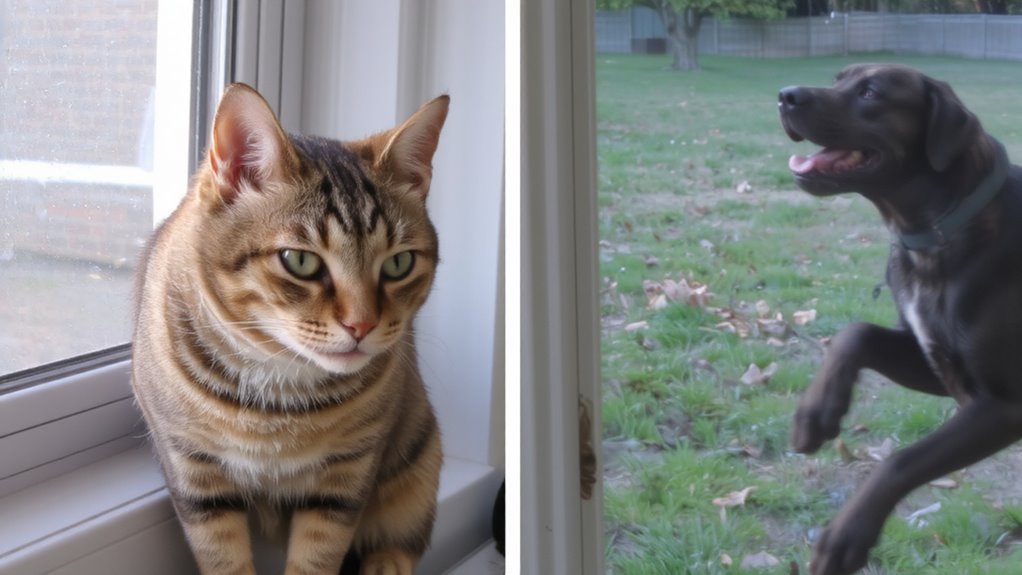
A noticeable shift in your pet’s vocal patterns often points to species-specific health or behavioral changes. Dogs may whine excessively or bark at unusual times, often correlating with disrupted sleep patterns or altered feeding habits. Nocturnal vocalization in senior dogs, for example, may signal cognitive decline affecting circadian rhythms. Cats frequently purr more when stressed, not just content-a key distinction. Increased meowing, especially at night, can coincide with reduced sleep duration and fragmented rest cycles. Birds may screech persistently or fall silent, both indicating potential environmental or physiological shifts. Changes in songbird vocalization duration or frequency often precede noticeable changes in feeding habits. Horses emit high-pitched whinnies when anxious, typically paired with restlessness and irregular sleep patterns. Rodents, like guinea pigs, produce teeth-chattering or squealing sounds linked to social stress or discomfort, often followed by appetite reduction. Monitoring vocal trends alongside feeding habits and sleep patterns improves early detection of distress across species.
When Vocal Changes Signal Pain or Illness

When your pet’s vocalizations shift abruptly in pitch, frequency, or context, it’s often a reliable indicator of underlying pain or illness. Frequency shifts-such as higher-pitched meows or abnormally low barks-can signal discomfort. These changes are measurable, often occurring outside species-typical ranges. For example, a dog’s usual 450 Hz bark dropping to 300 Hz may reflect laryngeal impairment or systemic distress. Vocal fatigue, marked by reduced vocal duration or weakened sound intensity, is another key sign. You might notice your cat starts to meow but stops mid-call, its vocal effort diminishing over time. That’s not laziness-it’s physiological strain. Laryngeal muscle weakness or respiratory compromise can degrade vocal performance. Unlike behavioral changes, these markers are quantifiable through acoustic analysis. Persistent shifts lasting over 48 hours warrant veterinary evaluation. Early detection improves outcomes. Document timing, duration, and context. Use recordings if possible. These objective data help clinicians assess pain severity and track treatment response effectively.
Is Your Pet Anxious? Listen for These Vocal Cues?
How often has your pet’s cry sounded different-not louder or softer, but somehow more urgent? Subtle shifts in vocalizations can reflect underlying anxiety. Changes often coincide with disruptions in play patterns or social interactions. A normally vocal pet may become silent, or a quiet one may whine persistively. These signals are measurable and repeatable indicators of emotional state.
| Vocal Cue | Behavioral Context |
|---|---|
| Repetitive barking | Reduced play patterns |
| Low-pitched whines | Withdrawal from social interactions |
| High-frequency meows | Increased startle response |
| Silence | Avoidance of familiar routines |
Monitor vocalization frequency, duration, and context using a daily log. Pair this data with observations of behavioral shifts. Altered vocal output, especially when linked to social or play disruption, strongly correlates with anxiety. These cues provide objective, early markers-essential for timely intervention. Trust the pattern, not the isolated event. Consistency in observation guarantees accuracy. Effective management may include vet-approved anxiety relief solutions tailored to your pet’s needs.
When to Call the Vet About Unusual Vocalizations
Could that persistent whining be more than just a phase? Unusual vocalizations in pets often signal underlying health issues. You should call the vet if you notice sudden behavioral shifts, such as agitation, withdrawal, or disorientation alongside vocal changes. Frequency spikes-more than double your pet’s normal vocalization rate over 24 hours-warrant evaluation. Document the timing, duration, and context of sounds using a audio log or app. Pair this data with observations of appetite, thirst, and mobility. Vocalizations accompanied by panting, tremors, or lethargy may indicate pain or neurological distress. Conditions like hyperthyroidism, cognitive dysfunction, or gastrointestinal obstruction commonly present this way. Don’t wait if symptoms persist beyond 48 hours. Early intervention improves outcomes. Your pet’s vocal patterns are measurable indicators-treat them like critical signs. Prompt veterinary assessment can distinguish behavioral causes from medical emergencies.
On a final note
You must monitor changes in your pet’s vocalizations closely. Subtle shifts in pitch, frequency, or duration can indicate underlying distress. A cat’s meow increasing from 500 Hz to over 1,200 Hz may signal pain. Dogs whining at 1.5-second intervals repeatedly often reflect anxiety. Birds emitting truncated calls less than half their normal length suggest illness. These vocal deviations serve as quantifiable, early-warning biomarkers. Persistent or sudden changes warrant immediate veterinary assessment.