How to Use Bone Broth as a Gut-Healing Tool for Dogs With Chronic Diarrhea
Use bone broth to repair leaky gut by preparing it from joint-rich bones like knuckles or feet, simmered 12–24 hours at a low temperature to extract collagen. The gelatin-rich broth supplies glutamine and glycine, reducing intestinal inflammation and strengthening tight junctions. Skim solidified fat after cooling to keep fat under 2g per cup. Start with 1–2 tablespoons daily, gradually increasing to 1 oz per 10 lbs of body weight twice daily. You’ll learn how to maximize healing when you explore ideal feeding strategies.
Notable Insights
- Use joint-rich bones like knuckles or feet to maximize gelatin content for gut healing.
- Simmer bones 12–24 hours at a low temperature to extract collagen without degrading nutrients.
- Skim solidified fat after cooling to reduce gastrointestinal stress and prevent pancreatitis risk.
- Introduce broth gradually: start with 1–2 tablespoons daily, monitoring for digestive tolerance.
- Administer 1 oz per 10 lbs body weight twice daily once tolerated to support mucosal repair.
Heal Leaky Gut With Bone Broth
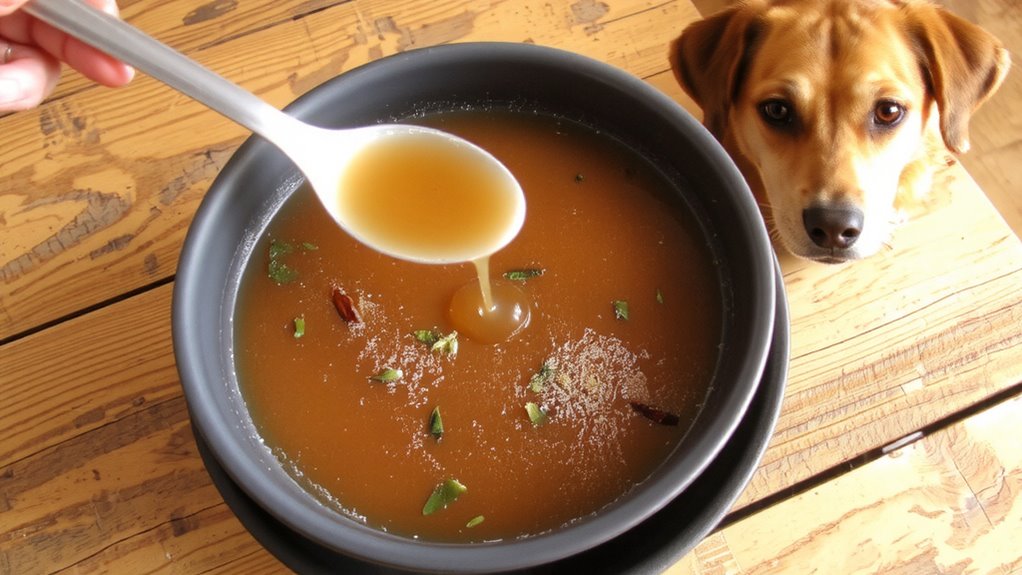
While your dog’s digestive system struggles with diarrhea, bone broth can play a critical role in repairing leaky gut, a condition where the intestinal lining becomes permeable. Leaky gut repair begins when compounds in bone broth, like glutamine and glycine, reduce intestinal inflammation. These amino acids support cellular regeneration in the gastrointestinal tract. Gut lining support is further enhanced by mucopolysaccharides, including hyaluronic acid and chondroitin, which reinforce epithelial integrity. Bone broth’s low molecular weight peptides are easily absorbed, accelerating mucosal healing. Studies show dogs receiving daily bone broth exhibit improved tight junction function within 7–10 days. You should administer 1 oz per 10 lbs of body weight, twice daily. Use only unsalted, additive-free broth to avoid gastrointestinal irritation. Consistent dosing provides measurable improvement in stool quality and nutrient absorption. Bone broth isn’t a cure-all, but it’s a clinically effective component of gut restoration protocols.
Use Joint-Rich Bones for More Gelatin
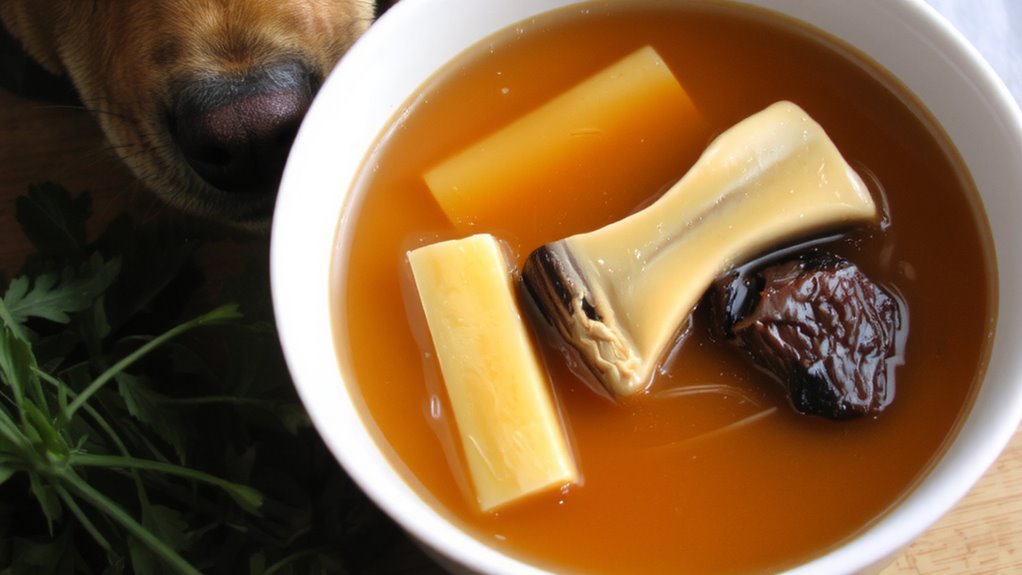
Gelatin is the key to effective bone broth for dogs with diarrhea, and you’ll get the most of it by using joint-rich bones. These bones-like knuckles, feet, and tails-are dense in collagen, which breaks down into gelatin during cooking. Unlike meat-heavy bones, joint-rich cuts provide up to three times more gelatin per pound. They also contain rich marrow, packed with nutrients that support gut integrity. The gelatin release depends on slow extraction: a long, gentle simmer converts collagen efficiently. Aim for bones with visible cartilage and connective tissue-these yield a broth that gels firmly when chilled. Knucklebones from beef or chicken feet are ideal, offering both structural collagen and nutrient density. Using joint-rich bones guarantees a potent, gut-soothing result. This targeted ingredient choice maximizes therapeutic benefits without additives. You’re not just making broth-you’re engineering a healing food.
Simmer 12–24 Hours to Extract Collagen
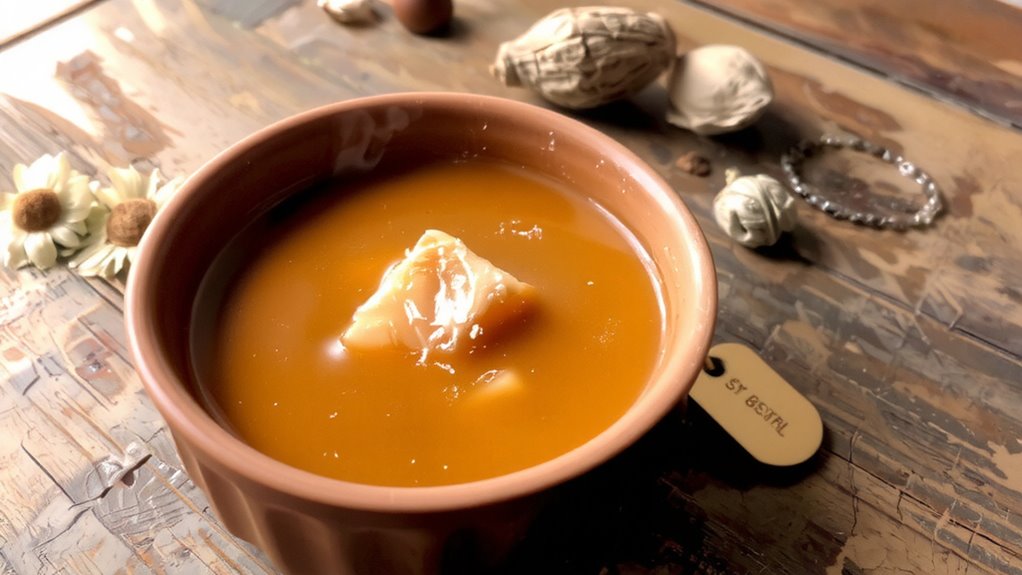
You’ve selected joint-rich bones like knuckles or feet for their high collagen content, and now it’s time to release that potential through proper extraction. Proper simmer duration is critical for effective collagen extraction. Heat breaks down connective tissues slowly, releasing gelatin into the broth. Too short a simmer means incomplete extraction; too long risks bitterness.
| Simmer Duration | Collagen Yield (approx.) |
|---|---|
| 6 hours | Low |
| 12 hours | Moderate |
| 18 hours | High |
| 24 hours | Maximum |
| 36+ hours | Diminishing returns |
Maintain a low, steady simmer-never a boil-to preserve structure. Use a lid to reduce evaporation. The broth should develop a rich, viscous texture. Collagen extraction peaks between 18–24 hours. At this stage, glycine and proline release fully, supporting gut lining repair. For dogs with chronic diarrhea, this gelatin-rich liquid aids digestion and reduces inflammation. Stick to tested timeframes for reliable results.
Skim Fat for a Safer Broth
After simmering, let the broth cool slightly before transferring it to a clean container for chilling. Once refrigerated, fat rises and solidifies on the surface, making it easy to remove. Skimming fat is essential because high fat content can worsen digestive irritation in dogs with sensitive guts. Excess fat may trigger pancreatitis, especially in small or predisposed breeds-a significant safety concern. Use a spoon to lift off the thickened layer until the broth appears clear and gelatinous underneath. This step guarantees a leaner, safer product. A properly skimmed broth contains less than 2 grams of fat per cup, minimizing gastrointestinal stress. You’re not just cleaning the broth-you’re optimizing its healing potential. Low fat content supports nutrient absorption without overloading the digestive system. Always skim before serving. Safety concerns related to fat are avoidable with this simple, effective step.
Introduce Bone Broth Gradually
Start with a small amount when offering bone broth to your dog for the first time, especially if they’re experiencing diarrhea. Introduce slowly to avoid worsening gastrointestinal upset. Begin with one to two tablespoons for small dogs or up to ¼ cup for larger breeds, once daily. This controlled approach allows the digestive system to adapt. Monitor response closely over 24 to 48 hours. Look for signs of improvement, such as reduced stool frequency or firmer feces, but also watch for bloating, gas, or increased diarrhea. If adverse symptoms occur, discontinue use immediately. Repeat dosing only if tolerance is confirmed. Bone broth contains collagen, glycine, and other compounds that support intestinal repair, but even beneficial substances can trigger sensitivity in compromised guts. Always prioritize gradual integration over rapid intervention. Consistency and observation are key to safe implementation.
Add Broth to Bland Meals for Recovery
While your dog is recovering from diarrhea, adding bone broth to bland meals can enhance hydration and support gut healing. This simple meal integration boosts nutrient absorption and improves palatability. Use low-sodium, additive-free broth to avoid irritating the digestive tract. The gelatin in bone broth aids intestinal lining repair, while amino acids like glycine modulate inflammation.
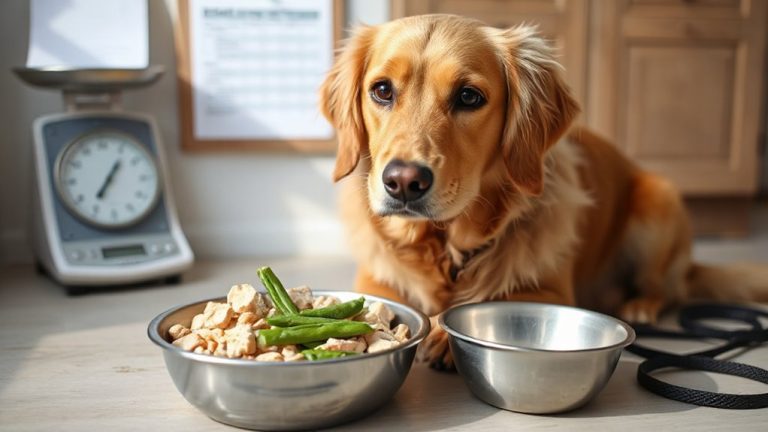
Flavor enhancement encourages appetite without compromising dietary simplicity. Mix 1/4 cup warm broth per cup of bland food (boiled chicken and rice) for ideal consistency.
| Meal Component | Ratio to Broth |
|---|---|
| Cooked Chicken | 2:1 (food to broth) |
| White Rice | 2:1 (food to broth) |
| Total Daily Volume | Adjust per 10 lbs body weight |
Serve at room temperature, up to three times daily. This approach guarantees effective meal integration while maintaining dietary control.
Watch for Signs of Gut Healing
You’re already supporting your dog’s digestive recovery by adding bone broth to bland meals, and now it’s time to monitor the results. Look for signs of gut healing, such as improved digestion and reduced bloating. Improved digestion appears as firmer stools, typically within 48 to 72 hours of consistent broth use. Your dog may also show increased stool consistency, shifting from loose or watery to well-formed. Reduced bloating is visible through a flatter abdomen and less abdominal discomfort during palpation. You may notice your dog resuming normal activity levels, indicating internal stability. These changes reflect mucosal repair in the gastrointestinal tract. For best results, continue administering 1 ounce of bone broth per 10 pounds of body weight, twice daily. Healing markers suggest the broth’s collagen and gelatin are supporting gut lining regeneration, much like mortar seals cracks in brickwork. Monitor closely for sustained progress.
On a final note
Bone broth supports gut healing in dogs with chronic diarrhea. Use joint-rich bones-like knuckles or feet-simmered 12–24 hours to extract 20–30g of collagen per quart. Gelatin from broken-down collagen helps repair intestinal lining, similar to resealing a leaky pipe. Skim excess fat to reduce digestive stress. Introduce slowly: start with 1 teaspoon per 10 lbs of body weight daily. Increase over days as tolerated. Combine with bland diets to aid recovery and monitor for improved stool consistency.