Understanding Pet Food Labels: Decoding Ingredients and Nutritional Adequacy Statements
You must check pet food labels for key legal details: product name, species, net quantity, and manufacturer info. Ingredients are listed by pre-processing weight, so water-heavy meats rank high but contribute less after cooking. Named meals like chicken meal offer 60–70% protein and better transparency than vague terms. By-products aren’t waste-they’re nutrient-rich organs. “Complete and balanced” means it meets AAFCO standards, either through formulation or feeding trials-know the difference to choose wisely.
Notable Insights
- Product names and ingredients are listed by weight before processing, so high-water ingredients like fresh meat may appear higher but contribute less after cooking.
- Guaranteed analysis provides minimum protein and fat, maximum fiber and moisture, but doesn’t reflect nutrient quality or digestibility.
- Named animal meals (e.g., chicken meal) are concentrated, high-protein ingredients more reliable than vague terms like “meat meal.”
- By-products refer to nutritious organs, not waste, and can be valuable protein sources when clearly labeled.
- “Complete and balanced” requires an AAFCO statement, with feeding trials offering stronger proof of nutritional adequacy than laboratory analysis.
What Legally Must Be on a Pet Food Label?
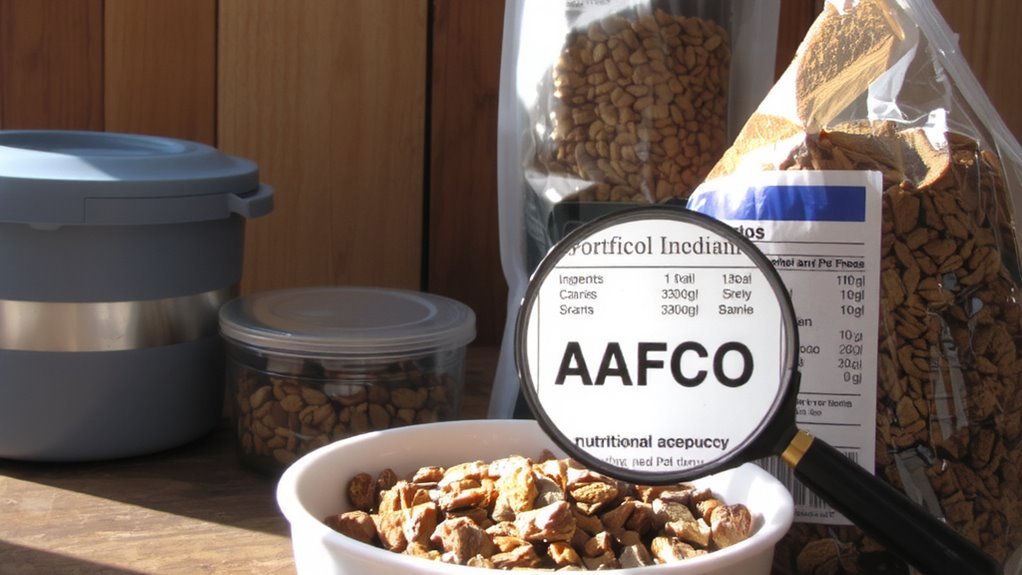
Every pet food label you see on store shelves must follow strict federal and state regulations to guarantee consistency and transparency. Legal requirements dictate specific information you must find on every package. Mandatory disclosures include the product name, species designation, net quantity, manufacturer’s name and address, and a guaranteed analysis. The guaranteed analysis lists minimum percentages of crude protein and fat, and maximum percentages of crude fiber and moisture. These values aren’t exact nutrient levels but legal minimums and maximums. You’ll also find a calorie statement, required by AAFCO since 2016, given in kilocalories per kilogram or can. Ingredient lists follow, but that’s covered next. All labels must meet these baseline standards-just like nutrition facts on human food-to assure you can compare products accurately and make informed feeding decisions.
How to Read Ingredient Lists: And Why Order Matters
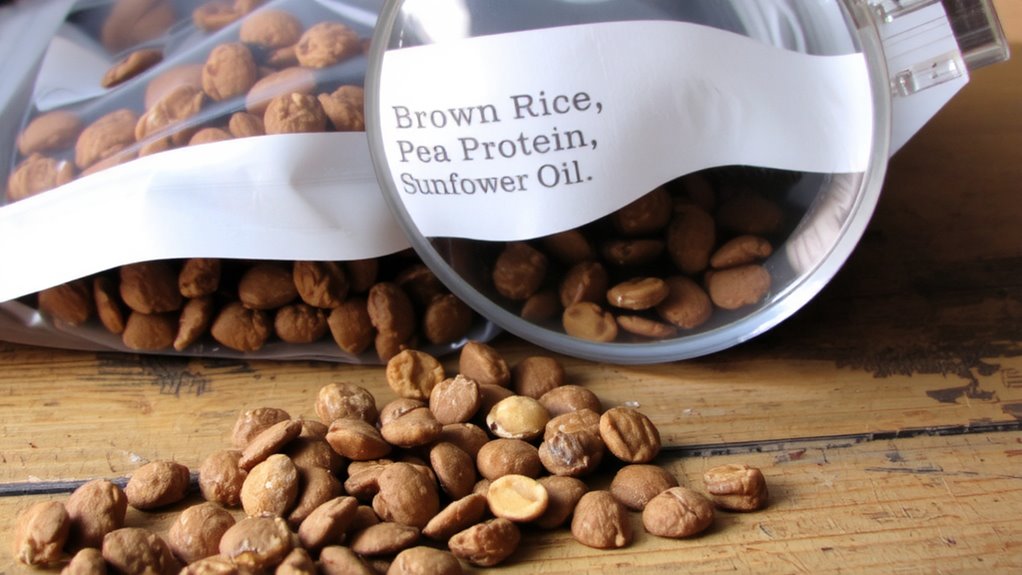
You’ve already seen what the law requires on every pet food label, from guaranteed analysis to calorie statements. Now, pay attention to ingredient lists-what comes first matters. Ingredients are listed by weight before processing, so heavier items like water-rich meats appear first, even if they contribute less protein after cooking. This affects nutritional density, as drier, concentrated ingredients like meat meals can offer more sustained amino acids. Order reflects volume, not quality, so don’t assume fresh meat at the top means superior nutrition. Consider ingredient sourcing: named animal meals (e.g., chicken meal) often provide more consistent protein than generic by-products. Plant fillers like corn or soy, if high on the list, may reduce overall nutrient availability. Always assess the ingredient sequence alongside guaranteed analysis. A food heavy in carbohydrates may dilute nutritional density, especially for carnivorous pets requiring high-protein diets. Read labels critically-weight order shapes nutrient profile accuracy.
By-Products and Meal: What Pet Food Labels Really Mean
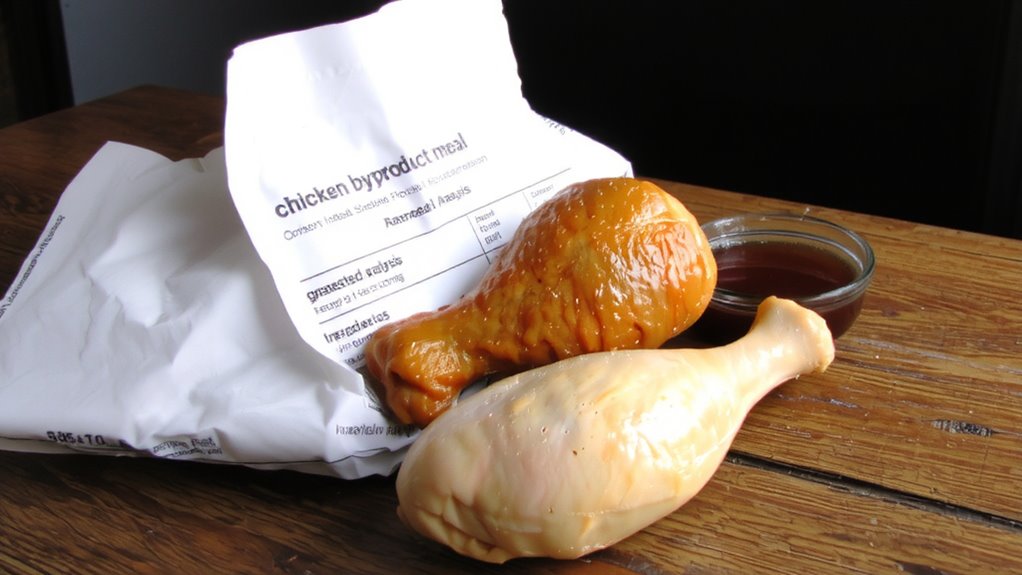
While the term “by-products” often raises concern, understanding its legal and nutritional definition reveals a more nuanced reality. By products defined by AAFCO include organs like liver, kidneys, and lungs-nutrient-dense parts not used in human food. These aren’t waste; they’re rich in protein, vitamins, and minerals essential for pets. Yet, meal quality varies. Named meals (e.g., chicken meal) are concentrated protein sources, typically 65–70% protein dry matter. Avoid anonymous meals like “meat meal,” which lack transparency.
| Ingredient Type | Protein Range | Transparency |
|---|---|---|
| Named meat meal | 60–70% | High |
| Animal by-products | 30–50% | Moderate |
| Unspecified meat meal | Varies | Low |
Always check if by products defined align with quality ingredients, and prioritize high meal quality for ideal nutrition.
Marketing Tricks on Pet Food Labels to Watch For
Pet food labels often use clever wording to create a perception of superior quality, even when the nutritional reality doesn’t match the marketing. Misleading claims like “grain-free” or “natural” sound healthy but lack strict definitions and don’t guarantee balanced nutrition. “Holistic” and “premium” are marketing terms with no regulatory meaning. These phrases influence perception without improving pet health. Hidden costs emerge when low-quality fillers replace named meats, increasing carbohydrate content beyond feline or canine needs. For example, diets high in corn or soy reduce protein density, requiring pets to consume more volume for needed nutrients. Ingredient splitting-listing multiple forms of corn or wheat separately-distorts the first ingredient illusion. Always check the guaranteed analysis: protein and fat levels should align with your pet’s life stage and activity. Real sourcing matters more than flashy labels.
What “Complete and Balanced” Means (and Who Decides)
What does “complete and balanced” really mean on a pet food label? It means the food meets established nutritional standards for your pet’s life stage. Regulatory oversight guarantees these claims aren’t just marketing-they’re backed by science. The Association of American Feed Control Officials (AAFCO) sets these standards, defining nutrient profiles or through feeding trials.
| Basis of Claim | Method Used |
|---|---|
| Nutrient Profile | Lab analysis meets AAFCO levels |
| Feeding Trial | Tested in live animals |
| Life Stage | Formulated for growth, adult, etc. |
You can trust “complete and balanced” only if the label specifies which method was used. Nutritional standards differ for dogs and cats, and even within life stages. Regulatory oversight by AAFCO and state agencies helps maintain label integrity. Without it, claims could be misleading. Always check the statement to know how the food was evaluated.
Why Guaranteed Analysis Is Limited
Why do you often see crude protein, fat, fiber, and moisture listed so prominently on pet food labels? Because the guaranteed analysis is legally required-but it has key limitations. It provides minimum or maximum percentages, not exact nutrient levels. The crude protein value tells you how much protein is present, but not the quality or digestibility of the protein source. A food might list high crude protein, but if it comes from low-quality byproducts, your pet may not absorb essential amino acids. Moisture content heavily influences these percentages; dry foods show higher protein concentration simply because they contain less water. Canned foods, with up to 78% moisture content, appear lower in protein even if the actual meat content is high. The guaranteed analysis doesn’t reflect bioavailability, ingredient origin, or nutrient stability-all critical for your pet’s health.
How to Compare Pet Food Labels Effectively
How can you make sense of the dozens of pet food options staring back at you from the shelf? Start by checking for an AAFCO nutritional adequacy statement. This confirms the food meets nutrient profiles for your pet’s life stage. Foods meeting these profiles are tested through formulation or feeding trials. Feeding trials involve real animals and provide stronger evidence of digestibility and palatability. Nutrient profiles set minimum and maximum levels for 40+ nutrients, ensuring completeness. Compare protein and fat percentages from the guaranteed analysis, but don’t ignore moisture content-wet and dry foods differ markedly. Prioritize products listing animal-based ingredients first. Avoid those with excessive fillers or vague terms like “meat by-products.” The label’s calorie content helps determine proper serving size. Always match the food to your pet’s age, weight, and health needs for ideal nutrition.
On a final note
You now understand how to interpret pet food labels accurately. Ingredient lists are ordered by weight pre-cooking, so additives appear higher even if present in small amounts. “By-products” include nutritious organs, not just waste. “Meals” are concentrated protein sources. AAFCO establishes nutrient profiles for “complete and balanced” claims. Guaranteed Analysis provides minimums and maximums for key nutrients but lacks bioavailability data. Use labels to compare protein, moisture, and fat content across similar products.