Understanding the Root Causes of Inappropriate Urination in Indoor Cats and How to Correct It
Your cat’s inappropriate urination may signal a life-threatening blockage, especially in males-urinary obstructions can cause kidney failure within 48 hours. Always rule out medical causes first: UTIs, diabetes, or chronic kidney disease alter urination patterns. Test with urinalysis, blood work (SDMA, creatinine), and ultrasound. If medical issues are cleared, examine litter box hygiene-use unscented clumping litter at 2–3 inches depth, one box per cat plus one extra, placed in quiet, accessible locations on every floor. Avoid high-traffic zones and food areas. Stress from new pets or changes triggers marking behavior-Feliway diffusers release 4.8 mg/day of synthetic pheromones, reducing anxiety by up to 70%. Behavioral causes require environmental enrichment and consistent routines. Understanding the root cause guarantees effective, lasting correction. You’ll discover targeted solutions that match your cat’s specific needs.
Notable Insights
- Urinary blockages, especially in males, are life-threatening and require immediate vet care to prevent kidney failure and death within 48 hours.
- Cats avoid dirty litter boxes due to sensitivity to ammonia and bacteria, so scooping daily and full changes every 1–2 weeks are essential.
- Litter boxes should be large, uncovered, filled with 2–3 inches of unscented clumping litter, and placed in quiet, accessible locations on every home level.
- Stress from environmental changes or multi-cat households can trigger inappropriate urination, which pheromone diffusers like Feliway can help reduce by 70%.
- Medical issues like UTIs, kidney disease, or diabetes cause litter box avoidance and require diagnosis through urinalysis, blood tests, or imaging.
Is Your Cat’s Peeing Problem Actually a Medical Emergency?
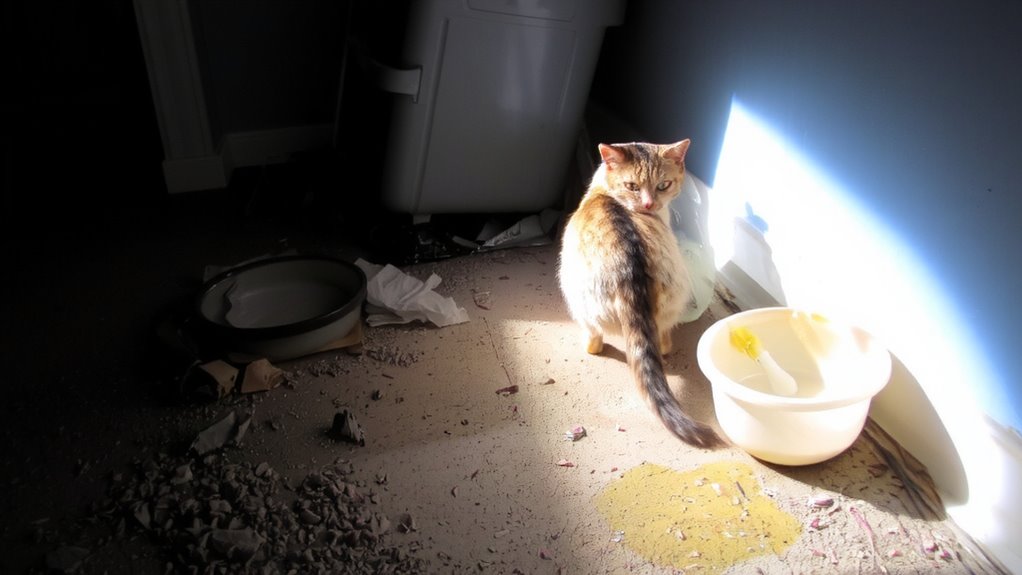
Could what seems like a behavioral issue actually be a life-threatening condition? Yes. Urinary blockage in cats is a medical emergency. It occurs when crystals, stones, or mucus obstruct the urethra, preventing urine from exiting the bladder. Male cats are at higher risk due to their narrower urethras. Without intervention, bladder pressure builds within hours, leading to kidney failure. Toxins like blood urea nitrogen (BUN) and creatinine accumulate, damaging organs. A blocked cat may strain in the litter box, produce little or no urine, vomit, or appear lethargic. Rectal temperature may drop below 99°F. Immediate veterinary care is critical. Treatment includes urethral catheterization, IV fluids, and monitoring electrolyte imbalances. Left untreated, death can occur within 48 hours. Recognize the signs early-your cat’s life depends on it.
Dirty or Poorly Placed Litter Boxes: Why Cats Avoid Them
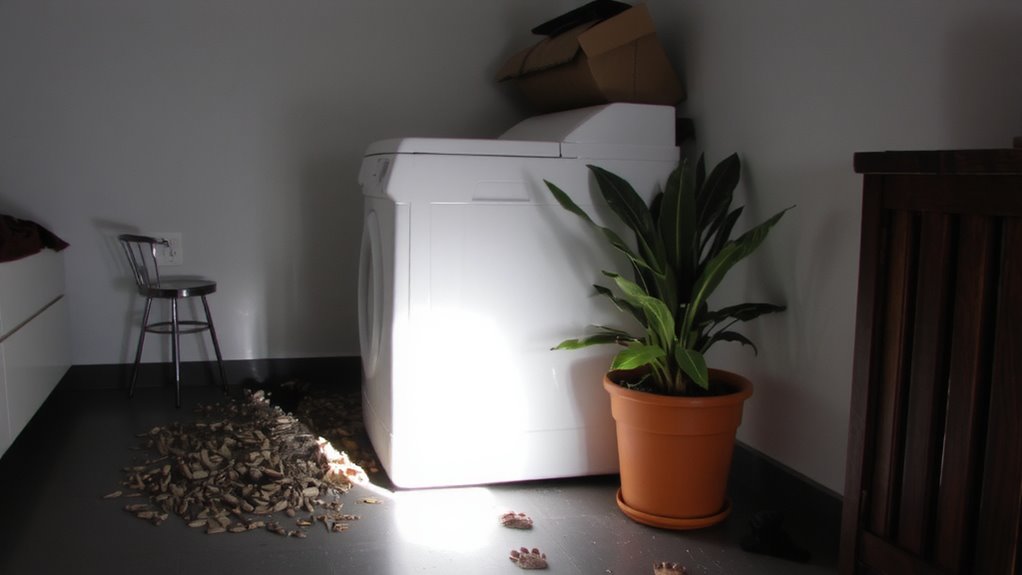
Why would a cat spurn its litter box even when it’s clean? Litter cleanliness isn’t just about visible waste; cats detect trace ammonia and bacteria your nose misses. Feces left more than 12 hours can alter pH, deterring fastidious users. Most cats prefer unscented, clumping clay or silica gel litter, 2–3 inches deep, to facilitate digging and odor control. Poor box placement amplifies avoidance. Box placement matters: avoid high-traffic zones, laundry rooms (noise, confinement), or near food bowls-cats naturally separate elimination from feeding areas. Place boxes in quiet, low-traffic, accessible locations on each home level. Use uncovered, large trays (at least 1.5 times your cat’s length) for ease of entry. Multiple cats require one box per cat, plus one extra. Poor litter cleanliness and incorrect box placement are leading environmental causes of inappropriate urination. Providing appropriate kitten teething toys can prevent destructive chewing that may lead to litter box disruption.
How Stress and Home Changes Trigger Inappropriate Urination
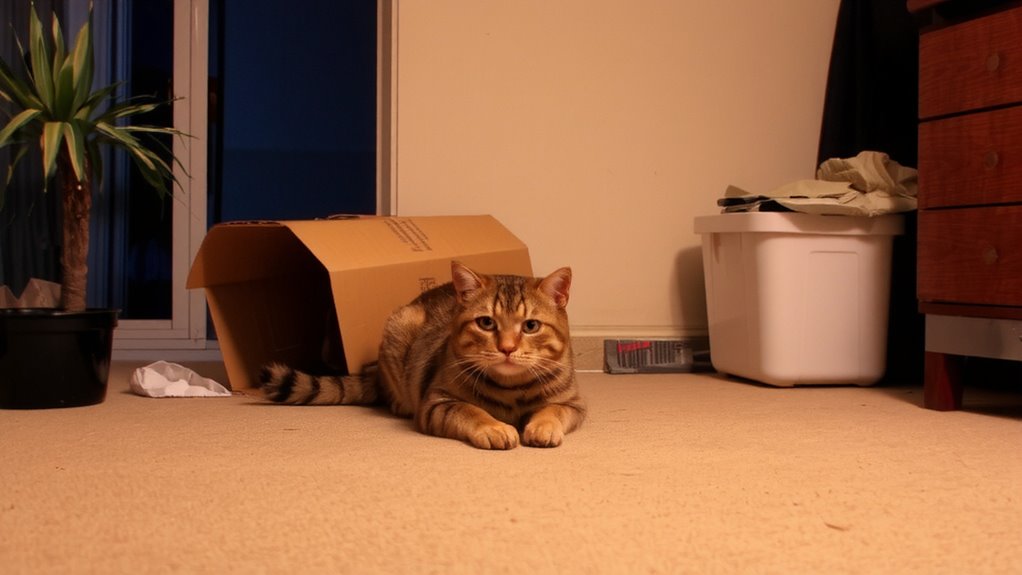
Where does your cat go when the environment feels unstable? Stress from home changes-like new pets, moving, or loud noises-can trigger inappropriate urination. Cats rely on routine, and disruptions may cause litter aversion, where they avoid the box even if clean. This isn’t defiance; it’s a behavioral response to anxiety. Stress also stimulates territorial marking-cats urinate on vertical surfaces to reassert control using scent glands in their urine. Unlike accidents, marking is usually small-volume and targets edges of rooms, doors, or fabrics. Household shifts alter scent landscapes, prompting marking as a recalibration tactic. To reduce incidents, identify stressors and maintain environmental predictability. Use pheromone diffusers (like Feliway), which release synthetic facial pheromones at 4.8 mg/day to reduce anxiety by 70% in clinical trials. Address changes gradually, preserving safe zones and minimizing olfactory disruption. Incorporating pet anxiety training tools can further support behavioral modification in stressed cats.
Health Issues That Cause Cats to Pee Outside the Litter Box
Medical conditions often underlie sudden changes in your cat’s urination behavior, even when environmental stressors seem to explain the issue. Urinary tract infections cause pain and urgency, leading your cat to avoid the litter box. Conditions like kidney disease reduce urine concentration, increasing volume and frequency. Diabetes and hyperthyroidism also alter urination patterns. Always seek veterinary diagnosis before assuming behavioral causes.
| Condition | Key Symptom | Diagnostic Method |
|---|---|---|
| Urinary tract infection | Straining to urinate, blood | Urinalysis, culture |
| Kidney disease | Increased thirst, weight loss | Blood tests (SDMA, creatinine) |
| Bladder stones | Frequent, small-volume urination | Ultrasound, radiographs |
Early detection improves outcomes. Chronic kidney disease has no cure but can be managed with diet and fluid therapy. Urinary tract blockages, especially in males, are emergencies. Persistent inappropriate urination warrants full diagnostics. Never dismiss it as behavioral without ruling out medical causes first.
How to Stop Inappropriate Urination for Good
While medical causes must be ruled out first, addressing inappropriate urination effectively means tackling both behavior and environment with precision. Territory marking often stems from stress, especially in multi-cat households. You can reduce it by using pheromone diffusers like Feliway, which mimic natural facial pheromones and decrease anxiety. Guarantee you have one litter box per cat, plus one extra, placed in low-traffic, quiet areas. Use unscented, clumping litter, filled to a depth of 1.5–2 inches, as most cats prefer it. Behavioral training involves immediate redirection to the box when you observe squatting. Never punish-use positive reinforcement. Clean accidents with enzymatic cleaners to eliminate odor cues. Environmental stability, consistent routines, and vertical spaces reduce stress. These steps, applied consistently, correct the behavior in up to 90% of cases within six weeks. For optimal results, consider using one of the top-rated pheromone diffusers for cats.
On a final note
You must rule out medical issues first-urinary tract infections, kidney disease, or diabetes can cause inappropriate urination. Test with a veterinary urinalysis and blood panel. Then, evaluate litter box hygiene: provide one box per cat plus one, clean daily. Make sure boxes are in quiet, accessible locations. Address stress with Feliway diffusers and routine consistency. Use enzymatic cleaners on accidents to eliminate odor cues. Consistent environmental and medical management resolves most cases.