Designing a High-Moisture, Low-Phosphorus Diet for Geriatric Cats
You should feed your senior cat a high-moisture, low-phosphorus diet to support declining kidney function. Aim for wet foods with less than 1.0% phosphorus on a dry matter basis and at least 75% moisture. Choose options like Hill’s k/d or Royal Canin Renal Support, which provide 140–160 mg phosphorus per 100 kcal. Prioritize high-quality proteins such as egg whites or lean poultry. Avoid ingredients like bone meal and dicalcium phosphate. A proper diet slows renal deterioration while improving hydration and urine dilution-key steps in managing long-term kidney health.
Notable Insights
- Limit dietary phosphorus to below 1.0% on a dry matter basis to slow kidney disease progression in older cats.
- Prioritize high-moisture wet foods with 70–80% water content to combat dehydration and support renal function.
- Select high-quality, highly digestible proteins like egg whites or lean poultry at 28–32% on a dry matter basis.
- Avoid hidden phosphorus sources such as bone meal, dicalcium phosphate, and animal by-products by carefully reviewing ingredient lists.
- Supplement homemade diets with safe additives like fish oil, vitamin E, and B-complex, ensuring no phosphate-containing ingredients are included.
Why Older Cats Need Low-Phosphorus, High-Moisture Food
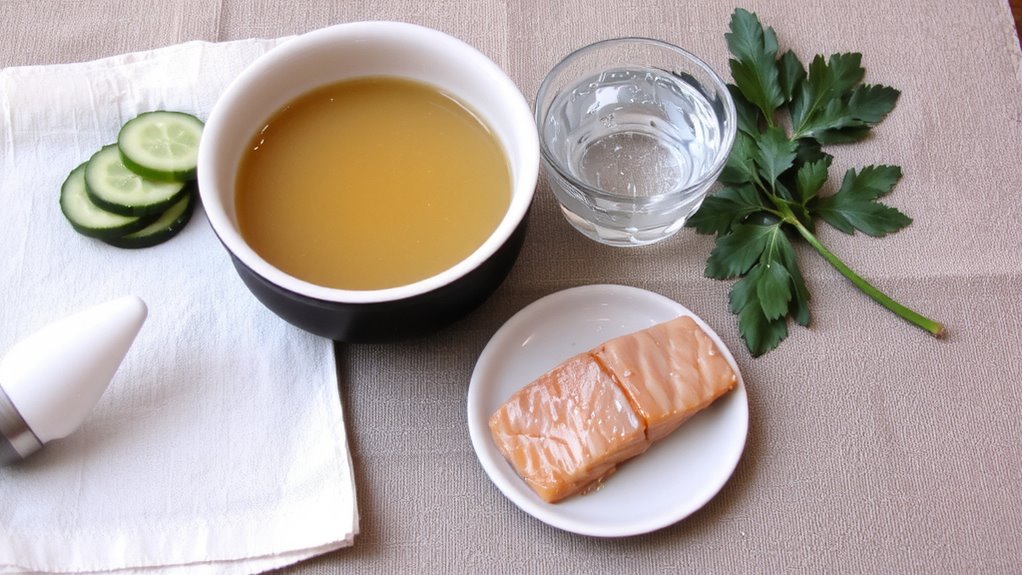
As your cat ages, its kidneys naturally lose some of their ability to filter waste efficiently, making dietary adjustments essential. Reducing dietary phosphorus helps limit further kidney damage. Excessive phosphate absorption increases blood phosphate levels, worsening renal stress. Low-phosphorus diets-containing less than 1.0% phosphorus on a dry matter basis-slow disease progression. High-moisture food supports vital hydration benefits. Older cats often have diminished thirst responses, making them prone to chronic dehydration. Wet food typically contains 70–80% moisture, compared to 10–12% in dry kibble. This moisture boost helps maintain urine dilution, reducing crystal formation and kidney workload. Hydration benefits also improve electrolyte balance and waste excretion. You should feed at least two 3-ounce cans of wet food daily to meet hydration targets. Combining low phosphorus with high moisture creates a synergistic effect, preserving renal function longer. Always verify nutrient levels on guaranteed analysis labels.
How Kidney Disease Changes What Cats Can Eat
Kidney disease alters your cat’s ability to process nutrients, requiring specific dietary adjustments to manage progression and support remaining organ function. Protein restriction reduces nitrogenous waste, decreasing the kidneys’ workload. While essential amino acids must still be supplied, high-quality, highly digestible proteins-like egg whites or lean poultry-are preferred over plant-based sources. Lower dietary protein (typically 28–32% on a dry matter basis) helps slow azotemia development. Maintaining acid balance is critical; metabolic acidosis accelerates muscle wasting and worsens renal damage. Diets should include alkalinizing agents, such as potassium citrate, to normalize urine pH between 6.2 and 6.6. Acid balance supports efficient enzyme activity and electrolyte regulation. Phosphorus restriction-though covered next-works synergistically with protein control. Together, they reduce tubular injury and glomerular pressure. Always introduce diets gradually to guarantee acceptance and digestive tolerance.
Best Low-Phosphorus Wet Foods for Senior Cats
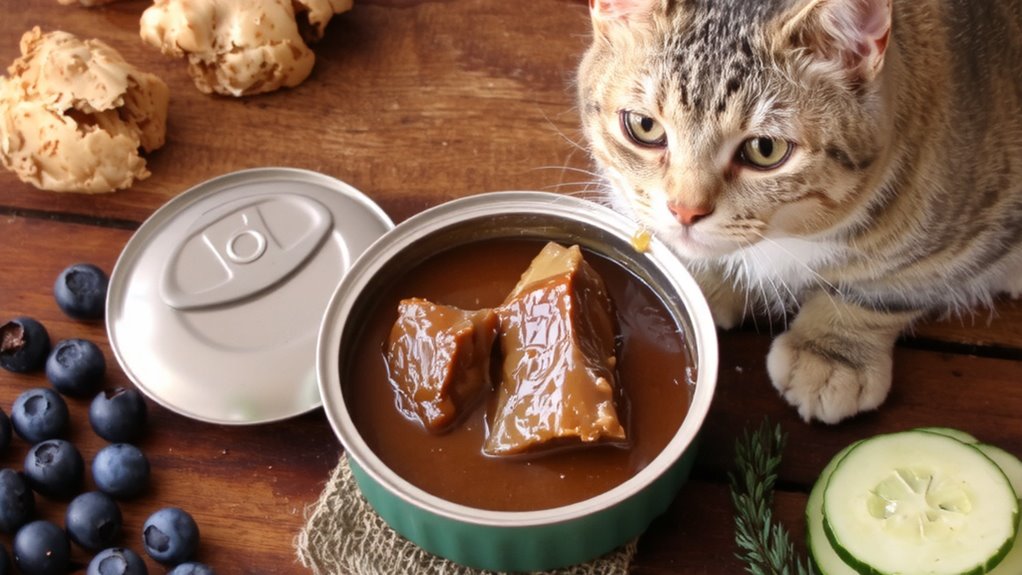
When your senior cat has kidney concerns, choosing a wet food low in phosphorus becomes essential for slowing disease progression and supporting renal function. You need options that balance nutrient restrictions with wet food texture and palatability concerns. These recipes use hydrolyzed proteins or select ingredients to reduce phosphorus while maintaining taste.
| Brand | Phosphorus (mg/100 kcal) | Texture |
|---|---|---|
| Hill’s Prescription Diet k/d | 140 | Smooth pâté |
| Royal Canin Renal Support A | 160 | Finely ground chunks in gravy |
| Purina Pro Plan NF Kidney Function | 155 | Soft chunks in sauce |
Each offers clinically tested formulas with moisture levels above 75%, aiding hydration. The pâté and gravy-based formats improve acceptance, addressing palatability concerns in older cats. These textures also ease chewing, important when dental issues coexist. You’re not just managing phosphorus-you’re ensuring your cat will eat it consistently, which is half the battle.
How to Spot Hidden Phosphorus on Cat Food Labels
Where do you start when trying to find the true phosphorus levels in your senior cat’s food? Begin with label decoding. Phosphorus isn’t always listed directly; you must identify phosphorus sources like bone meal, dicalcium phosphate, or animal by-products. These ingredients contribute to total phosphorus content even if not explicitly stated on the guaranteed analysis. Check the ingredient list: items higher on the list are present in larger amounts. Foods with whole meats as the first ingredient often have less added phosphorus than those with meat meals or by-products. Look for wet foods with less than 1.25 g of phosphorus per 1,000 kcal, a safe target for geriatric cats. Understanding phosphorus sources helps you assess actual dietary load, ensuring better long-term kidney support.
Simple Low-Phosphorus Recipes for Older Cats at Home
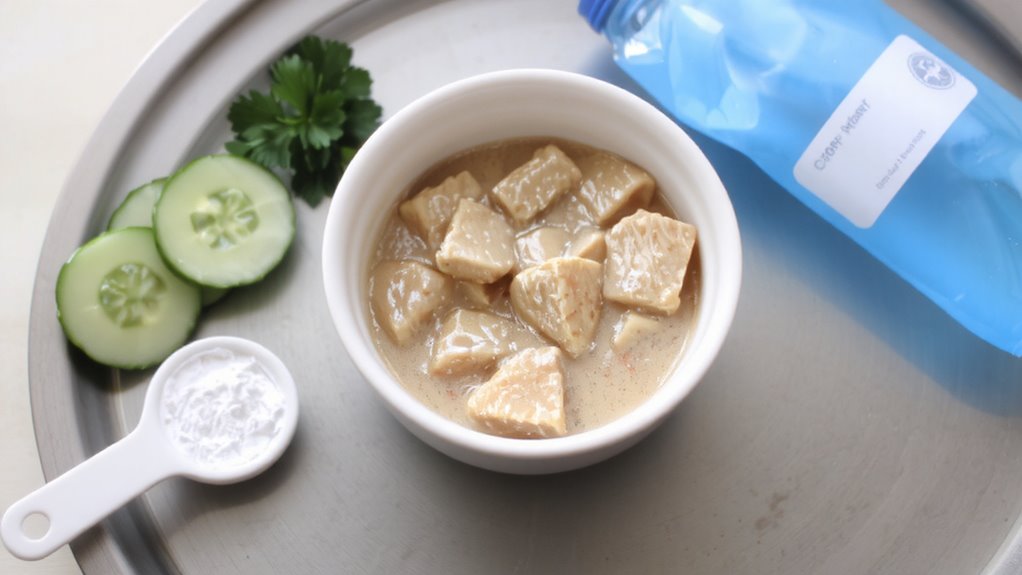
A balanced homemade diet can support your senior cat’s kidney health by minimizing phosphorus intake while maintaining essential nutrition. Use lean, skinless steamed chicken as a primary protein source; it contains approximately 120 mg phosphorus per 100 grams, making it ideal for low-phosphorus meal planning. Combine with a low-sodium homemade broth to increase moisture intake-critical for renal function. Prepare broth by simmering chicken meat and bones, then discard bones and skim fat to reduce phosphorus and fat content. Serve 85% steamed chicken mixed with 15% broth by volume. Guarantee meals are supplemented with balanced vitamins and minerals, excluding added phosphorus. Rotate ingredients weekly to prevent nutrient imbalances. Always consult a veterinary nutritionist to confirm dietary adequacy. This recipe supports hydration and minimizes phosphorus load, aligning with therapeutic renal diet guidelines for geriatric cats.
Kidney-Supportive Supplements That Won’t Raise Phosphorus
Why do some supplements help aging kidneys without worsening phosphorus levels? They provide targeted support using non-mineral-based compounds. Omega supplementation, particularly EPA and DHA, reduces renal inflammation without contributing to phosphorus load. Antioxidant support combats oxidative stress, a key factor in chronic kidney disease progression. These supplements operate independently of mineral metabolism, making them safe for long-term use.
| Supplement | Key Benefit |
|---|---|
| Fish oil (100–300 mg EPA/kg/day) | Omega supplementation lowers glomerular pressure |
| Vitamin E (10–30 IU/day) | Antioxidant support limits lipid peroxidation |
| B-complex vitamins | Replenish water-soluble vitamins lost through urine |
| Coenzyme Q10 (5–10 mg/cat/day) | Supports cellular energy in renal tissues |
Always verify labels: choose additives with no phosphate binders or bone meal. Use only pharmaceutical-grade products standardized for potency and purity.
How to Switch Your Senior Cat to a Kidney-Safe Diet
Introducing supplements is just one part of managing kidney health, but adjusting what your cat eats plays an even larger role. A gradual change over 7 to 10 days minimizes gastrointestinal upset and increases long-term acceptance. Start by replacing 25% of the current food with the kidney-safe formula, then increase by 25% every two to three days. These diets typically contain phosphorus levels below 0.5% on a dry matter basis and increased omega-3 fatty acids. Moisture content should exceed 75% in wet formulations to support hydration. For appetite stimulation, gently warm food to body temperature (about 100°F) or use veterinary-recommended palatants. Avoid free-choice feeding; instead, offer meals at consistent times to regulate intake. Monitor body weight weekly and adjust portions to prevent muscle wasting.
On a final note
You must prioritize hydration and phosphorus control in geriatric cats. High-moisture diets support renal function by increasing urine dilution, reducing crystal formation. Low-phosphorus foods slow chronic kidney disease progression-aim for less than 0.5% phosphorus on a dry matter basis. Wet foods offer 70–80% moisture, far exceeding kibble’s 10–12%. Always verify labels, avoiding bones, organ meats, and additives like phosphate salts. Shift gradually over 7–10 days to maintain digestive stability.