Senior Dog Nail Care: Managing Arthritis and Brittle Claws in Geriatric Labs
Your senior Lab’s nails need regular trims to prevent pain from overgrowth and joint stress caused by arthritis. Brittle, thickened claws are prone to splitting, so use sharp bypass clippers with soft-grip handles to reduce hand strain and guarantee clean cuts. Trim just below the quick’s base, avoiding the pinkish vascular core. A 45-degree angle cut helps prevent splitting. For safer shaping, a rotary grinder files tough nails gradually. You’ll find better results with high-carbon steel tools and non-slip grips-details that make all the difference in maintaining mobility and comfort.
Notable Insights
- Senior Labs often develop brittle, thickened nails due to reduced blood flow and keratin changes, increasing fracture risk.
- Arthritis and thinning paw pads heighten pain sensitivity, making nail trims uncomfortable without proper technique.
- Use ergonomic bypass clippers or grinders to minimize hand strain and reduce crushing of brittle, irregularly growing nails.
- Trim small amounts at a 45-degree angle or file with a grinder to avoid the receded quick and prevent bleeding.
- Seek veterinary care if nails show discoloration, infection signs, or if lameness persists beyond a few days.
Why Nail Trims Hurt Senior Labs (And What to Do)
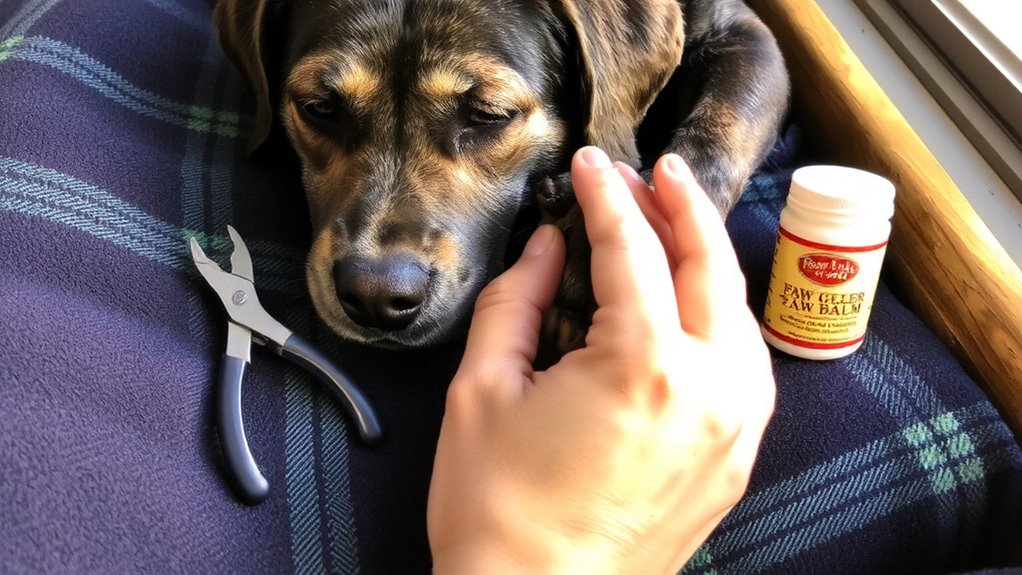
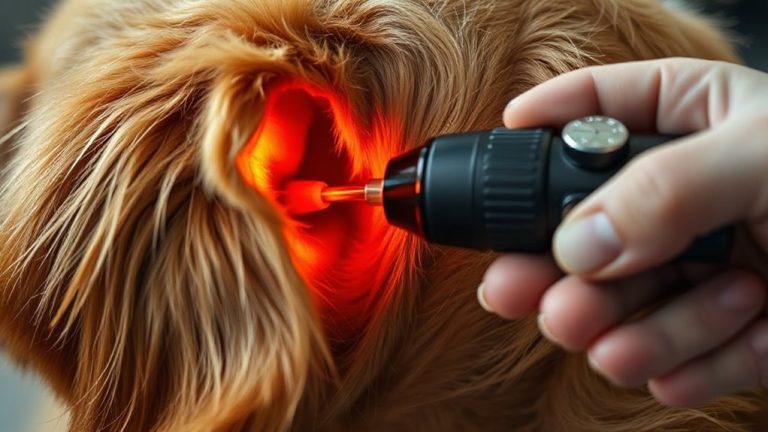
While aging affects every part of your Labrador, changes in their nail structure and paw sensitivity are often overlooked. Senior Labs develop thicker, more brittle nails that grow irregularly, increasing pressure on sensitive paw pads. Pain sensitivity rises due to thinning fat pads and reduced collagen, amplifying discomfort during handling. Nerve damage from chronic conditions like diabetes or degenerative myelopathy further heightens reactivity to touch. Even mild pressure on the quick can trigger withdrawal reflexes, misinterpreted as aggression. The phalanges and digital cushions lose elasticity, reducing shock absorption. This alters gait and increases strain on already arthritic joints. You must inspect paws weekly using a soft LED light to detect fissures or splits. Trim small fractions frequently with sharp, scissor-style clippers to avoid splintering. Address pain sensitivity proactively by desensitizing paws with short, positive sessions. Nerve damage demands caution-you should consult your vet before any procedure. For optimal results, choose clippers designed for thick, tough nails, such as the best pet nail clippers.
Best Nail Clippers for Older Dogs With Arthritis
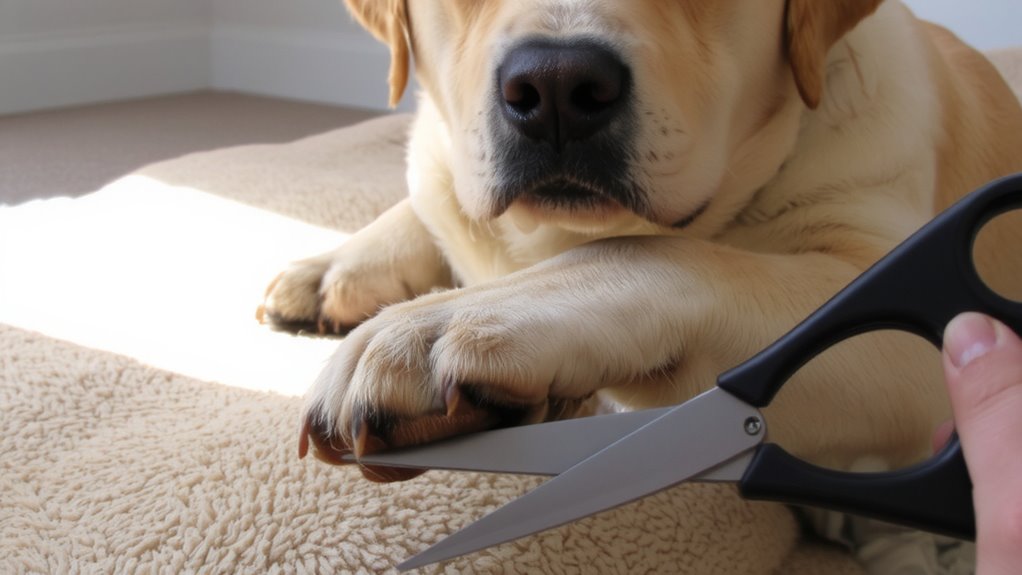
You’ll want a tool that compensates for reduced dexterity and joint pain when trimming your senior dog’s nails, and that’s where specialized clippers come in. Look for models with ergonomic grip design to reduce hand strain and improve control. Soft, non-slip handles enable a secure hold, even during brief movements. Blade types matter-guillotine blades suit small to medium nails, while rotary tools offer precision for thick, curved claws. Bypass clippers provide clean cuts with less crushing, ideal for brittle nails. High-carbon steel blades stay sharp longer and resist corrosion. Choose a model with a safety stop to prevent over-cutting. Lightweight construction, typically under 8 ounces, reduces fatigue. Some models include a built-in LED light to highlight the quick. Pair proper blade types with an optimized grip design for maximum efficiency and minimal effort. These features enhance accuracy despite arthritic stiffness. A top-rated option among pet owners is the best dog nail clippers, known for combining precision and ease of use.
How to Trim Your Senior Lab’s Nails Safely
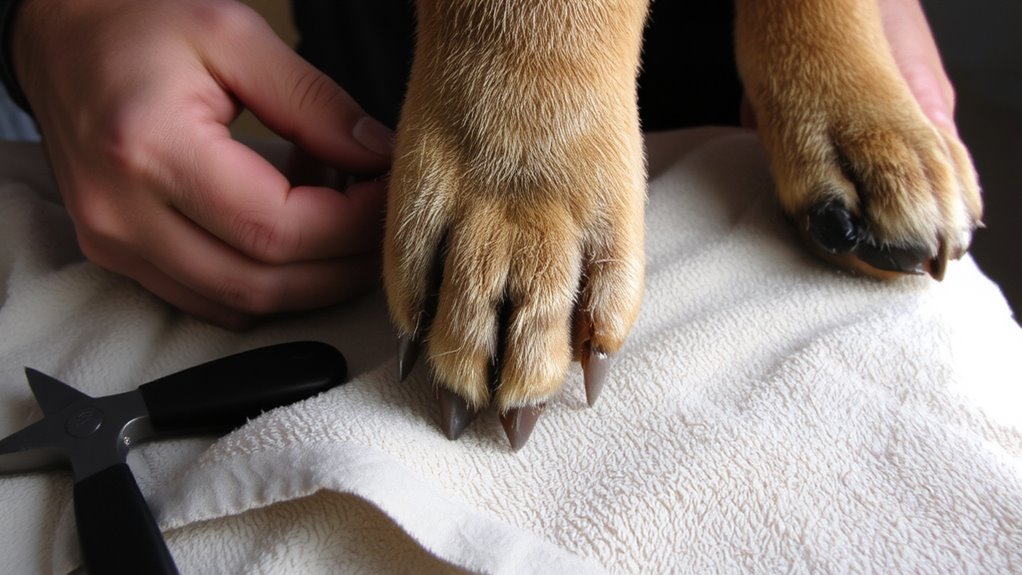
Since older Labrador Retrievers often develop thicker, more brittle nails and may have reduced mobility, trimming their nails requires a careful approach to avoid injury. Use sharp, scissor-style clippers with a safety stop to prevent overcutting. Position your dog in a calm environment to reduce anxiety and improve cooperation. Examine each paw closely-older nails often have less translucency, making the quick harder to see. Trim small amounts at a 45-degree angle, avoiding the pinkish center. If your Lab resists, stop and try again later. Always use positive reinforcement, offering small treats and praise immediately after each successful clip. This strengthens trust and reduces future stress. Restraining too firmly increases fear. Instead, gently support each paw with one hand while trimming with the other. Aim to trim every three to four weeks to maintain proper paw alignment and reduce joint strain. For dogs sensitive to clipping, a pet nail grinder can smoothly file thick nails with minimal risk of cutting the quick.
Common Nail Problems in Senior Labrador Retrievers
Your senior Lab’s nails face increased risks as they age, with common problems arising from reduced activity and slower nail wear. Brittle texture develops due to diminished blood flow and keratin deterioration, making nails prone to chipping or splitting. This fragility often results in painful breaks near the quick. Overgrown curvature occurs when nails aren’t worn down naturally, curling into a tight arc that can trap dirt and increase fracture risk. Unchecked, this curvature alters weight distribution, stressing joints already compromised by arthritis. Nail growth rate slows with age, averaging 2–3 mm per month, yet insufficient movement prevents natural abrasion. You’ll notice visible yellowing, ridges, or a chalky consistency indicating structural weakness. Trimming becomes riskier with a receded quick, limiting safe shortening. Regular inspection and maintenance are essential to prevent complications linked to these age-related changes.
When to Call the Vet for Nail Issues
A change in nail condition can signal underlying health issues that go beyond routine maintenance. If you notice persistent lameness concerns, it may indicate a cracked, overgrown, or ingrown nail causing structural stress. Lameness that doesn’t improve after a few days warrants professional evaluation. Infection signs-like redness, swelling, discharge, or foul odor around the nail bed-require prompt veterinary attention. Bacterial or fungal pathogens often need topical or systemic treatment. Uncontrolled bleeding lasting more than 10 minutes after clipping suggests clotting issues or damaged quicks. Discolored nails-darkening or yellowing-can reflect trauma or infection. Pain during normal activity, reluctance to walk, or visible nail misalignment demands diagnostic imaging. Annual senior bloodwork helps rule out systemic causes. Never delay care when structural paw integrity is compromised. Early intervention prevents chronic pain and secondary joint strain.
On a final note
You must prioritize comfort and safety when trimming your senior Lab’s nails. Use bypass-style clippers with hardened stainless steel blades and a 1.5-inch cutting surface for clean cuts. Avoid crushing instruments to prevent nail splintering. Trim every 3–4 weeks, removing only 1/16th inch at a time. Angled cuts at 45 degrees reduce splitting. Overgrown quicks require veterinary attention. Regular maintenance prevents gait distortion and joint stress.