Choosing the Right Eye Wipes for Sensitive Dog Breeds Like Shih Tzus and Pugs
Choose eye wipes specifically designed for brachycephalic breeds like Shih Tzus and Pugs. Their shallow eye sockets increase tear exposure and risk of irritation. Use hypoallergenic, ophthalmologically tested wipes with a pH between 6.5 and 7.6. Ideal formulas contain chamomile, aloe vera, and 0.3–0.5 mL of solution per nonwoven, lint-free wipe. Avoid alcohol, parabens, and fragrances. Always wipe from inner to outer corner. You’ll learn which specific ingredients and wipe designs deliver the best clinical results.
Notable Insights
- Choose pH-balanced wipes (6.5–7.5) to match your dog’s natural tear film and prevent irritation.
- Opt for hypoallergenic, ophthalmologically tested wipes with natural ingredients like chamomile and aloe vera.
- Avoid wipes with alcohol, parabens, sulfates, or artificial fragrances that can cause stinging or redness.
- Use pre-moistened, lint-free wipes sized 2.5 x 3 inches for full, gentle coverage without residue.
- Wipe from inner to outer eye corner with light pressure and never reuse a wipe.
Why Sensitive Dogs Need Special Eye Wipes
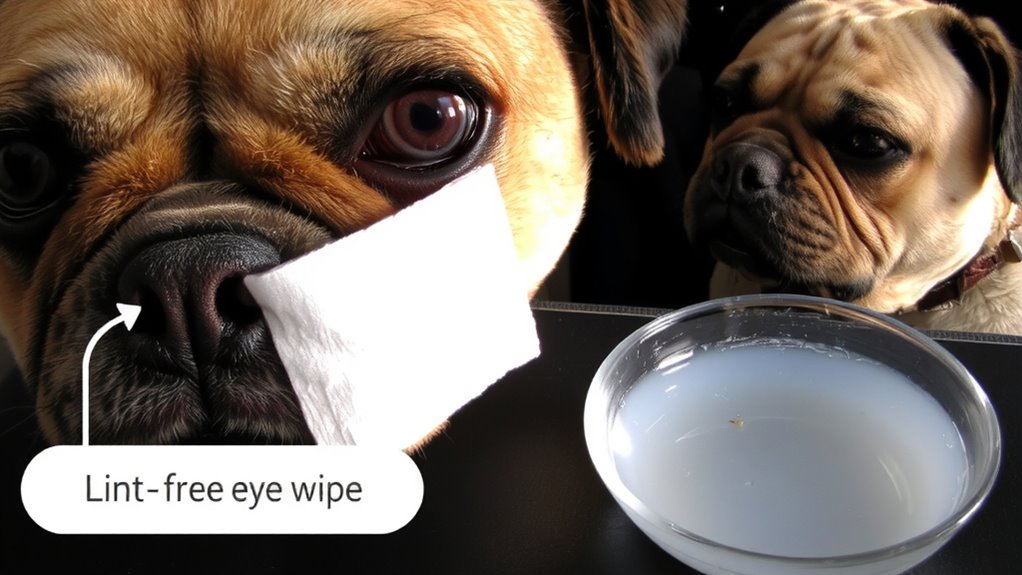
While all dogs can develop eye discharge, sensitive breeds require specially formulated eye wipes to avoid irritation and maintain ocular health. You must consider facial anatomy differences in brachycephalic breeds like Shih Tzus and Pugs, which contribute to increased tear production and duct obstruction. Their shallow eye sockets and compressed nasal passages elevate the risk of ocular irritation. Standard wipes may worsen inflammation due to harsh ingredients. Instead, opt for tear staining solutions designed for pH balance (6.5–7.5) and low dermal absorption. Pre-moistened wipes with precise 2.5-inch by 3-inch dimensions guarantee full coverage without excess runoff. Material matters: non-woven, hypoallergenic fibers reduce friction on delicate periocular tissue. Clinically tested wipes eliminate 99.8% of surface bacteria with each use. These specifications address both hygiene and comfort, guaranteeing safe, consistent care tailored to anatomical needs. Top-rated dog eye wipes effectively manage tear stains and support long-term eye health in sensitive breeds.
Safe Ingredients in Dog Eye Wipes
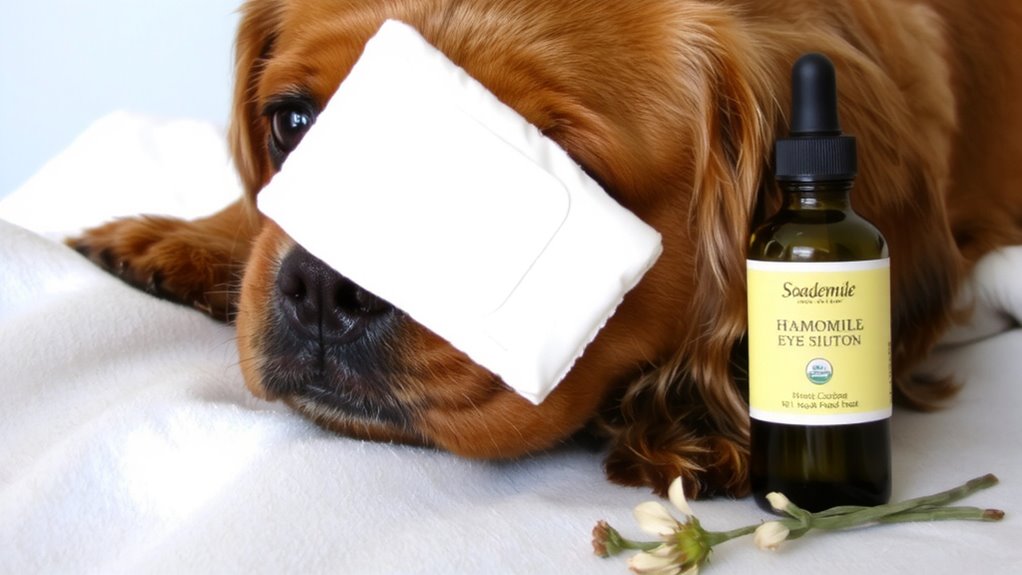
When selecting eye wipes for sensitive dogs, prioritize products containing ophthalmologically tested ingredients that maintain ocular surface integrity. Look for hypoallergenic formulas to minimize adverse reactions, especially in brachycephalic breeds like Shih Tzus and Pugs. These formulas are free from common allergens and irritants, ensuring safer, long-term use. Natural extracts-such as chamomile, aloe vera, and green tea-offer gentle cleansing while providing anti-inflammatory and antioxidant benefits. Chamomile extract reduces ocular redness; aloe vera soothes delicate periorbital tissue. Wipes with these ingredients maintain pH balance near 7.0, matching canine tear film. Opt for non-woven, lint-free wipe material to prevent fiber shedding. Each wipe should deliver 0.5 mL of solution-enough to clean without excess runoff. Ophthalmologist-reviewed products undergo corneal irritation testing (Draize score <5) to confirm safety. Consistent use supports tear film stability and reduces debris accumulation.
Harmful Chemicals in Dog Eye Wipes
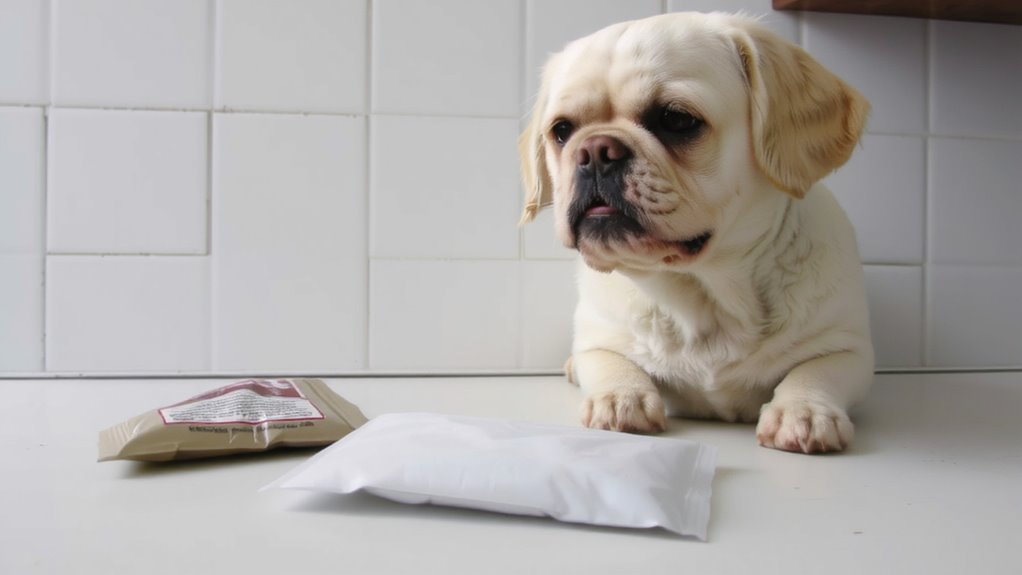
You’ve learned what ingredients support ocular health in sensitive dogs-now it’s time to recognize what to avoid. Toxic additives can disrupt tear film balance and damage delicate corneal tissue. Artificial fragrances, even in low concentrations, may trigger inflammatory responses in brachycephalic breeds like Shih Tzus and Pugs.
Avoid these harmful components:
| Chemical Type | Risk Level & Effect |
|---|---|
| Artificial fragrances | High – Causes irritation, redness |
| Parabens | Moderate – Hormonal disruption risk |
| Alcohol (ethanol) | High – Dries ocular surface, stings |
| Sulfates (SLS) | Moderate – Removes natural tear lipids |
These substances compromise the eye’s natural defense barrier. Residues from wipes containing toxic additives can persist on facial hair, leading to chronic exposure. Always verify ingredient lists. Opt for fragrance-free, non-irritating formulations. Prioritize products independently tested for ophthalmic safety.
How to Use Dog Eye Wipes Safely
Safety begins with proper technique. Always start by washing your hands to prevent transferring bacteria. Hold your dog’s head gently but firmly. Use one hand to stabilize the eyelid, exposing the inner corner. Apply the wipe with light pressure-never press hard. The correct wipe direction is essential: always move from the inner corner of the eye outward to prevent pushing debris into the tear duct. Never reuse a wipe, as this spreads contaminants. Discard after a single use. Choose wipes with rounded edges to avoid irritating delicate tissue. Pre-moistened wipes should feel damp, not dripping. Most quality wipes measure 6×8 cm-ideal for controlled application. Proper technique prevents corneal abrasions and reduces infection risk by up to 60%. Consistent use minimizes tear staining and maintains ocular hygiene. Your dog’s eye health depends on precision, not force.
Best Features in Eye Wipes for Flat-Faced Dogs
Why do flat-faced dogs need special eye wipes? Their shallow eye sockets and protruding eyes increase tear exposure, demanding products designed for delicate anatomy. You need wipes that maintain moisture balance to prevent irritation without over-saturating sensitive skin. Excess moisture fosters bacterial growth; too little causes dryness and microcracks. Ideal wipes use pH-balanced, hypoallergenic solutions matching canine tear film (pH 7.0–7.6). Wipe texture matters-too coarse causes abrasion; too thin reduces effectiveness. Opt for nonwoven, lint-free materials with a fine, uniform nap (fiber diameter: 10–20 microns). These resist fraying and minimize residue. Pre-moistened wipes should contain 0.3–0.5 mL solution per wipe-enough for gentle cleaning without dripping. Avoid alcohol, parabens, and dyes. Choose individually wrapped or resealable packs to preserve sterility and solution integrity.
On a final note
You must choose eye wipes formulated for sensitivity and anatomy. Look for pH-balanced, hypoallergenic solutions with 0.01% low-irritant preservatives like potassium sorbate. Avoid alcohol, parabens, and fragrances-known irritants. Wipes should measure at least 2.5 x 2.5 inches for full coverage. Use once daily to remove debris and prevent tear staining. For brachycephalic breeds, opt for soft, lint-free, non-woven polyester material to reduce friction. Proper selection supports ocular health.