How to Administer Emergency Oral Medications to Resistant Pets
Always check if the pill can be crushed-never crush extended-release (ER, XR), sustained-release (SR), or enteric-coated formulations, as this risks overdose or stomach irritation. For resistant pets, use a liquid suspension, transdermal gel, or pill pocket with a pH of 6.0–7.0. Administer using a pill gun to place the dose 1.5–2 cm deep in the cheek pouch. Tilt the head back slightly and stroke the throat to trigger swallowing. Confirm ingestion by watching for licking lips or swallowing motions-further guidance follows.
Notable Insights
- Confirm if the medication can be crushed by checking for ER, XR, SR, or CD labels to avoid overdose or irritation.
- For aggressive pets, use an oral syringe to administer liquid medication safely without direct pill handling.
- In high resistance cases, mix crushed safe pills into soft food ensuring complete ingestion without detection.
- Administer buccally by placing the pill in the cheek pouch 1.5–2 cm deep, avoiding the back of the throat.
- If vomiting occurs within 30 minutes, consult a vet before re-dosing due to overdose risk.
Check if the Pill Can Be Crushed and Whether It’s an Emergency
Before attempting to administer any medication, confirm whether the pill can be crushed-some formulations lose effectiveness or become toxic when altered. Pill safety depends on understanding medication forms. Extended-release, enteric-coated, or time-release pills must never be crushed; doing so causes rapid release of the drug, risking overdose or gastric irritation. Check the veterinary label or consult your vet. Non-crushable medications often have acronyms like ER, XR, SR, or CD stamped on them. These coatings control absorption and protect the stomach. If unclear, use alternatives like liquid suspensions or pill pockets. In emergencies, only modify medication if explicitly directed. Administering improper forms reduces treatment efficacy or causes harm. Always verify drug specifications before altering medication forms. When in doubt, preserve pill integrity and seek professional advice-your pet’s safety hinges on precision.
Pick the Best Method for Your Pet’s Resistance
You’ve confirmed the pill is safe to crush and determined the situation requires immediate action. Your pet’s resistance level dictates the best approach. Evaluate pet behavior: is your animal anxious, aggressive, or merely evasive? Match resistance type to effective medication forms.
| Resistance Level | Recommended Method |
|---|---|
| Mild | Pill pocket disguise |
| Moderate | Liquid suspension |
| High | Crushed in soft food |
| Aggressive | Oral syringe delivery |
| Extreme | Compounded transdermal |
Soft food mixtures must fully encapsulate taste. Liquid suspensions allow precise dosing via calibrated syringes. Transdermal gels require veterinary compounding but reduce oral struggle. Always verify medication forms with your vet-some drugs degrade when altered. Quick, calm action guarantees safety and efficacy. Selecting the right method minimizes stress and maximizes compliance.
Gather Supplies and Set Up a Stress-Free Area
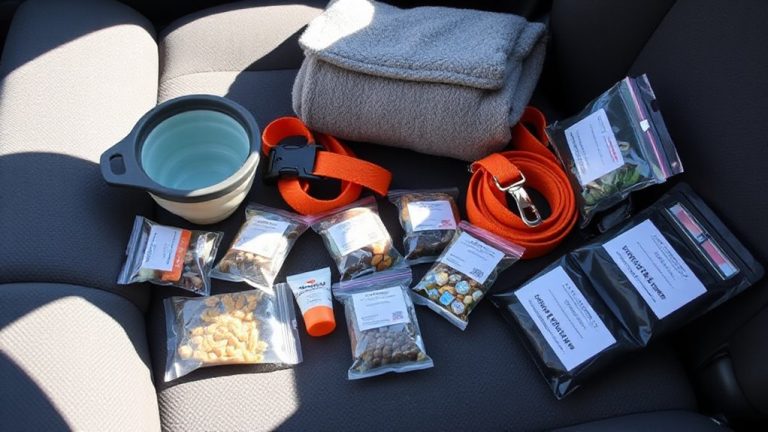
Preparing the right environment and tools in advance increases your chances of successful medication delivery while minimizing stress for both you and your pet. Choose a quiet, enclosed space with minimal distractions to enhance pet comfort. Use nonslip mats to prevent sliding, which supports safety measures during handling. Gather supplies: a properly dosed pill, pill gun with disposable sleeves, gloves, and a towel for gentle restraint. Guarantee lighting is adequate-minimum 300 lux-to improve visibility. Keep the medication at room temperature (20–25°C) to avoid taste aversion. Position a treat or bait food nearby, but not within reach, to maintain focus. Confirm all tools are clean and within arm’s reach to reduce movement. This controlled setup supports consistent technique execution. Reduce auditory stress by closing doors and turning off loud appliances. Proper preparation optimizes efficiency, compliance, and safety measures during emergency dosing.
Get the Pill In: Fast Techniques for Stubborn Pets
When your pet resists medication, speed and precision matter-use a targeted approach to minimize struggle and guarantee accurate dosing. For uncooperative pets, employ pill pocket tricks: conceal the medication in a soft, edible wrap no thicker than 3–5 mm to prevent detection. Guarantee the treat is molded tightly around the pill, leaving no exposed edges. If your pet detects medication, switch to a low-sodium meat-based pocket with a neutral pH (6.0–7.0) to mask odors. Alternatively, use cheek pouch placement: tilt your pet’s head back slightly, open the cheek, and insert the pill into the buccal pouch near the molar line. Deposit it deep enough-approximately 1.5 to 2 cm-to trigger natural swallowing reflexes. Keep the mouth closed and gently stroke the throat until swallowed. These techniques reduce evasion and guarantee reliable delivery during emergency dosing.
What If Your Pet Vomits or Spits It Out?
A successful pill delivery means nothing if the medication doesn’t stay down. If your pet vomits or spits out the dose within 30 minutes, gastric clearance may not have occurred, requiring prompt action. Pill coating can influence stability and absorption; enteric coatings resist stomach acid, delaying dissolution. If intact, a coated pill may be re-administered under veterinary guidance. Avoid forcing a second dose blindly-risk of overdose is real. Medication reformulation offers alternatives: compounding pharmacies can convert pills into transdermal gels or flavored liquids, improving compliance. These formulations maintain precise dosing while reducing physical resistance. Some tablets disintegrate in under five minutes, increasing absorption likelihood even if regurgitation occurs shortly after. Always document the incident time, pill form, and visible signs of breakdown. Consult your vet before re-dosing-accuracy prevents complications.
Stay Calm and Confirm the Dose Was Swallowed
Even if the pill appears to go smoothly, never assume it’s been swallowed-confirmation is critical. Monitor your pet’s behavior immediately after administration. Look for subtle signs like licking lips or gulping, which suggest successful ingestion. Avoid distractions to focus on dosage verification. A quick distraction with water or food can help, but only after confirming the medication is down.
| Observation | Meaning |
|---|---|
| Lip licking | Likely swallowed |
| Repeated swallowing | Positive sign |
| Coughing | Possible irritation |
| Drooling | May reject soon |
Check the mouth briefly if uncertain. Repeat dosing without confirmation risks overdose. Use a pill pocket or oral syringe for liquids to improve accuracy. Proper dosage verification guarantees treatment efficacy.
On a final note
You must confirm the pill was fully swallowed. Watch for lip-licking or swallowing motions. Use a syringe with 1–3 mL of water post-administration to guarantee delivery. Never re-dose blindly-underdosing risks treatment failure, while overdosing may cause toxicity. Record the time, dose, and behavior. If vomiting occurs within 15 minutes, contact your vet. Most oral meds have a narrow absorption window. Repeat dosing requires professional guidance.