Why Your Cat’s Hairballs Might Be a Sign of Underlying Digestive Dysfunction
Frequent hairballs often signal digestive dysfunction, not just grooming habits. If your cat produces more than one hairball monthly, slowed gut motility may be impairing hair clearance. Reduced dietary fiber-below 5–8% crude fiber-limits fecal bulk and transit efficiency. Stress can cut gastric emptying rates by up to 30%, compounding the issue. Inflamed guts and dysbiosis further disrupt mucus secretion and peristalsis. Proper hydration and lubricants help, but persistent cases point to deeper digestive inefficiencies worth addressing.
Notable Insights
- Frequent hairballs may signal slowed gut motility, impairing the natural passage of ingested fur.
- Poor diet consistency and low fiber reduce fecal bulk, hindering hair clearance through the GI tract.
- Chronic inflammation or food sensitivities can disrupt digestion and increase hairball formation.
- Stress and dysbiosis slow gastric emptying and weaken intestinal function, contributing to hair accumulation.
- Sporadic vomiting or constipation alongside hairballs may indicate broader digestive dysfunction.
Frequent Hairballs: A Sign of Digestive Problems?
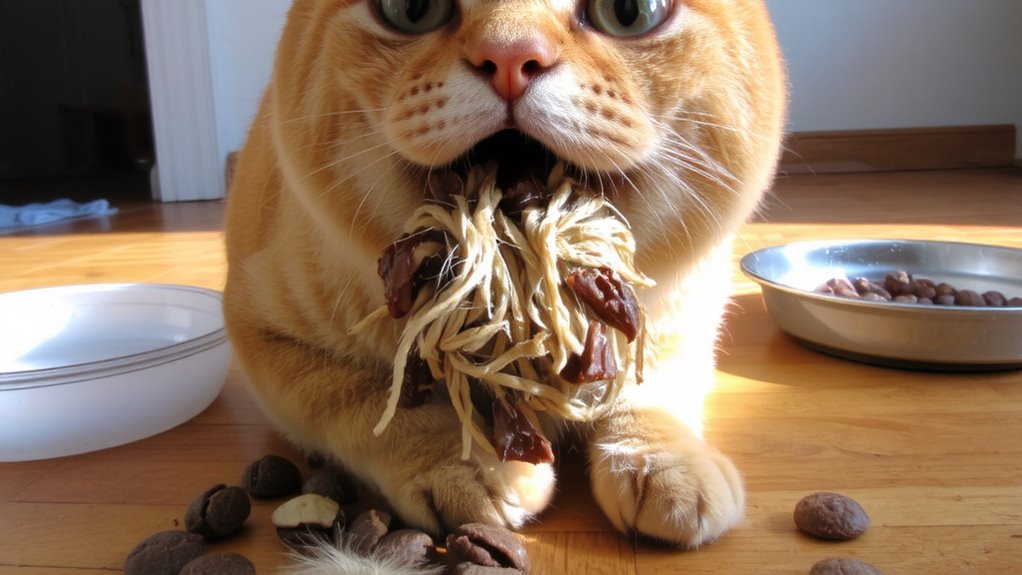
Could frequent hairballs actually signal an underlying digestive issue? Yes-when your cat produces more than one hairball monthly, it may indicate compromised gut motility. Normal digestion moves ingested fur efficiently through the gastrointestinal tract via peristalsis. When motility slows, trichobezoars accumulate. Reduced diet variety limits fiber diversity, impairing fecal bulk and transit time. Studies show cats on varied-protein diets with 5–8% crude fiber expel hair more effectively. Elevated stress levels also disrupt autonomic regulation of digestion, decreasing gastric emptying rates by up to 30%. Chronic stress elevates cortisol, which alters gut microbiota composition, further inhibiting fiber fermentation and short-chain fatty acid production essential for colon health. These physiological changes create an environment conducive to hair retention. Monitor frequency, texture, and associated symptoms. Persistent cases require veterinary diagnosis to assess motility disorders. Diet variety and stress levels are modifiable factors influencing digestive resilience. Address them systematically. Choosing a high-quality diet with optimal fiber content, such as those found in top dry cat food formulations, can support healthy digestion and reduce hairball formation. Top dry cat food picks offer balanced nutrition designed to promote gastrointestinal health.
Common Causes of Hairball-Related Digestive Issues
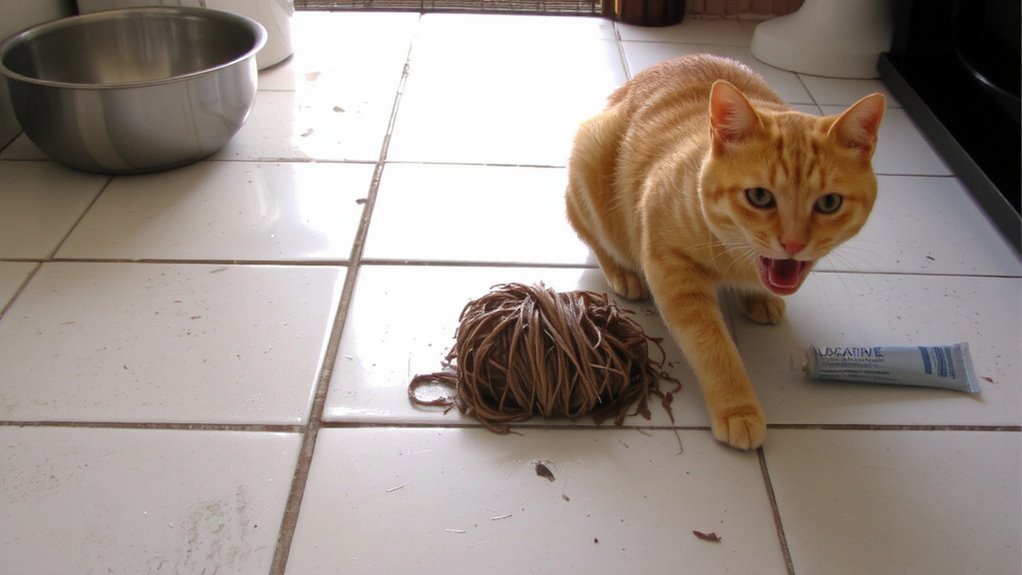
While your cat’s grooming habits are natural, excessive hair ingestion combined with compromised digestion can lead to problematic hair retention. High grooming frequency increases hair intake, overwhelming the digestive tract. Without adequate motility, hair accumulates, forming obstructions. Diet consistency directly impacts gastrointestinal efficiency-consistent nutrient profiles support stable enzyme secretion and peristalsis. Abrupt diet changes disrupt transit time, promoting hairball formation.
| Factor | Impact on Digestion | Recommended Practice |
|---|---|---|
| High grooming frequency | Increases hair load in stomach | Daily brushing to reduce shedding |
| Poor diet consistency | Slows gastric emptying | Feed uniform, high-fiber diets daily |
| Low intestinal motility | Reduces hair clearance | Guarantee hydration and fiber intake |
Monitor routines closely. Adjust feeding and grooming to maintain digestive flow. Consistent routines support natural hair passage, minimizing complications.
How Gut Inflammation and Food Sensitivities Affect Cats
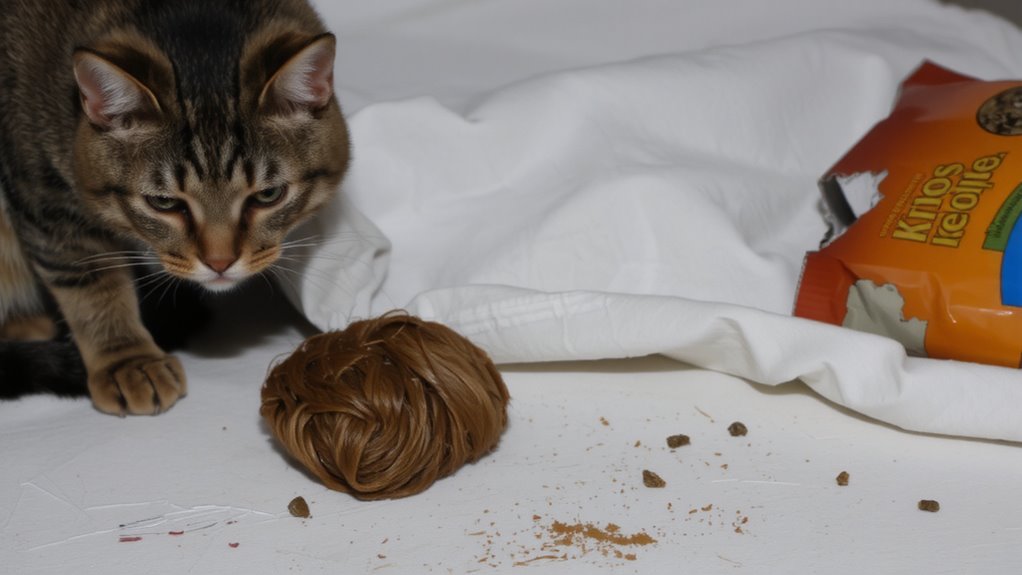
Gut inflammation and food sensitivities can substantially impair your cat’s ability to process and eliminate ingested hair, compounding the risks introduced by grooming habits and diet inconsistencies. Chronic inflammation damages the intestinal lining, increasing gut permeability-often called leaky gut-which allows undigested proteins and toxins to enter the bloodstream. This triggers immune responses that worsen digestive efficiency. Food sensitivities provoke inflammatory cascades, disrupting normal motility and mucus secretion. A compromised gut environment fosters microbial imbalance, where harmful bacteria outnumber beneficial species like *Lactobacillus* and *Bifidobacterium*. This dysbiosis reduces fermentation of fiber and short-chain fatty acid production, weakening colon function. Without adequate microbial support, hair isn’t efficiently propelled through the GI tract. Over time, accumulated hair combines with viscous, inflamed mucosa, raising hairball formation risk. Managing these underlying issues is essential. Supplementing with vet-approved digestive health supplements for cats can help restore microbial balance and support gut integrity.
Symptoms of Poor Digestion in Cats
Digestive distress in cats often announces itself through observable changes in behavior and bodily functions. You may notice sporadic vomiting unrelated to hairballs, which can signal impaired nutrient absorption. Chronic diarrhea or soft stools indicate incomplete digestion and possible malabsorption syndromes. Constipation issues are equally concerning; infrequent or hard stools suggest motility dysfunction or dehydration within the gastrointestinal tract. Weight loss despite normal appetite points to inefficient nutrient absorption at the intestinal level. Look for dull coat quality or lethargy-both reflect systemic deficiencies due to poor digestion. Changes in stool volume, color, or odor provide diagnostic clues: pale, greasy feces suggest fat malabsorption, while mucus or blood indicates mucosal damage. Monitoring litter box patterns helps detect early signs. Persistent symptoms require veterinary assessment to rule out structural, enzymatic, or inflammatory causes affecting digestive efficiency.
What to Do About Problematic Hairballs
Why do some cats struggle with hairballs more than others? Genetic predisposition, coat length, and grooming habits contribute, but underlying digestive inefficiency is often the primary cause. Frequent or large hairballs signal impaired motility or poor digestion. You should prioritize diet modification using high-fiber, easily digestible formulas containing 8–10% crude fiber to enhance gastrointestinal transit. Look for products with insoluble fibers like cellulose, which increase fecal bulk by 15–20%. Hydration support is equally critical-dehydration thickens intestinal contents, slowing hair movement. Offer water-rich diets; canned food contains 70–80% moisture versus 10–12% in dry kibble. Supplement with oral electrolyte solutions, providing 50–60 mL/kg/day as needed. Use hairball-specific lubricants with petrolatum or mineral oil, administered 2–3 times weekly, to ease passage. These targeted interventions reduce obstruction risks and restore digestive function.
On a final note
Your cat’s frequent hairballs aren’t normal-they signal digestive dysfunction. Healthy cats expel hair efficiently through feces, not vomiting. Chronic regurgitation suggests impaired motility or inflammation. Food sensitivities to common proteins like chicken or fillers such as corn can trigger gut irritation. Consider a hydrolyzed protein or novel-antigen diet. Pair with a veterinarian-recommended hairball formula containing fiber like cellulose (8–10% crude fiber) to aid transit. Always rule out underlying conditions like IBD or lymphoma via diagnostics.