How to Train Your Cat to Use a Cat Door for Indoor-Outdoor Access
Install the cat door 6–12 inches above the floor, with the flap 1–2 inches taller than your cat’s shoulder height-usually 6.5” x 6.5” for average cats or up to 8” x 10” for larger breeds. Mount it 6–8 inches above ground level to deter pests. Start training by propping the flap open; use treats within 12 inches to encourage exploration. Guide your cat through daily, rewarding each success. Reduce assistance as they apply 3–5 ounces of force confidently. Choose transparent, low-resistance flaps under 50 grams to ease fear. Models with RFID locks and weatherproof seals improve safety and efficiency. Proper sizing and gradual reinforcement guarantee reliable use. You’ll find timing, tools, and troubleshooting tactics that refine the process.
Notable Insights
- Measure your cat’s shoulder height and choose a flap size 1–2 inches larger for easy passage.
- Install the cat door 6–12 inches above the floor, aligning the base with your cat’s shoulder level.
- Introduce the door gradually by propping the flap open and placing treats nearby to encourage exploration.
- Guide your cat through the opening daily, using gentle pressure and immediate rewards to build confidence.
- Transition to independent use by reducing assistance as your cat learns to push through with 3–5 ounces of force.
Choose the Best Cat Door for Your Cat
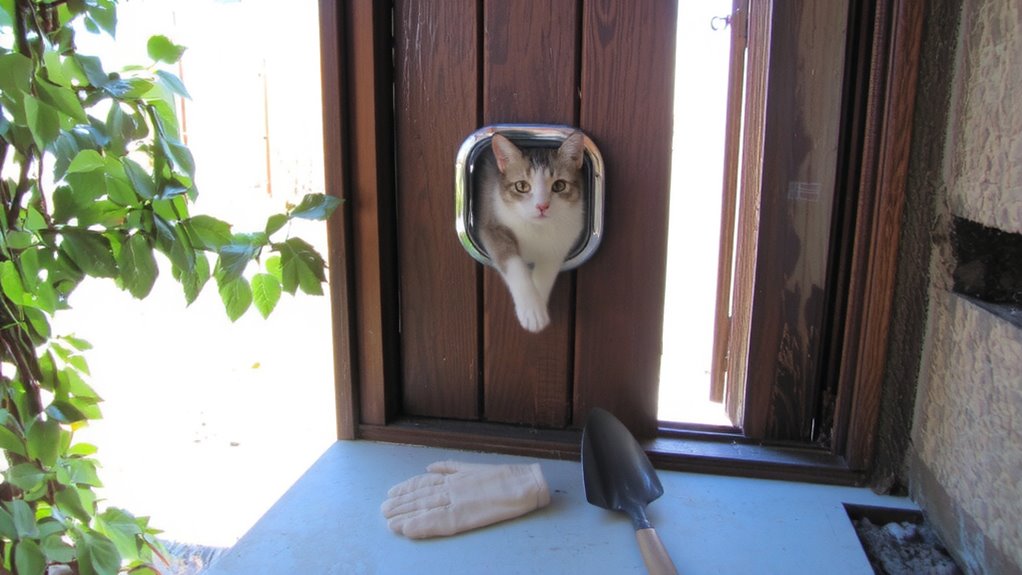
A good cat door starts with the right fit for your cat’s size and your home’s structure. Choose the correct door size by measuring your cat’s height at the shoulders and adding 1–2 inches for clearance. Most average-sized cats need a flap opening of at least 6.5” x 6.5”. For larger breeds, select models with openings up to 8” x 10”. Installation height matters-mount the base of the door 1–2 inches above your cat’s shoulder level so they don’t stoop. Installing too high strains joints; too low reduces energy efficiency and security. Standard installation heights range from 6 to 12 inches from the floor. Select rigid, double-flap doors for insulation if using in extreme climates. Guarantee the frame fits your wall or door thickness-common sizes are 1” to 2”. Magnetic or electronic locks add security. Match the door’s durability to your cat’s activity level. Top-rated options include best cat doors for various home setups and climate conditions.
Introduce Your Cat to the Cat Door
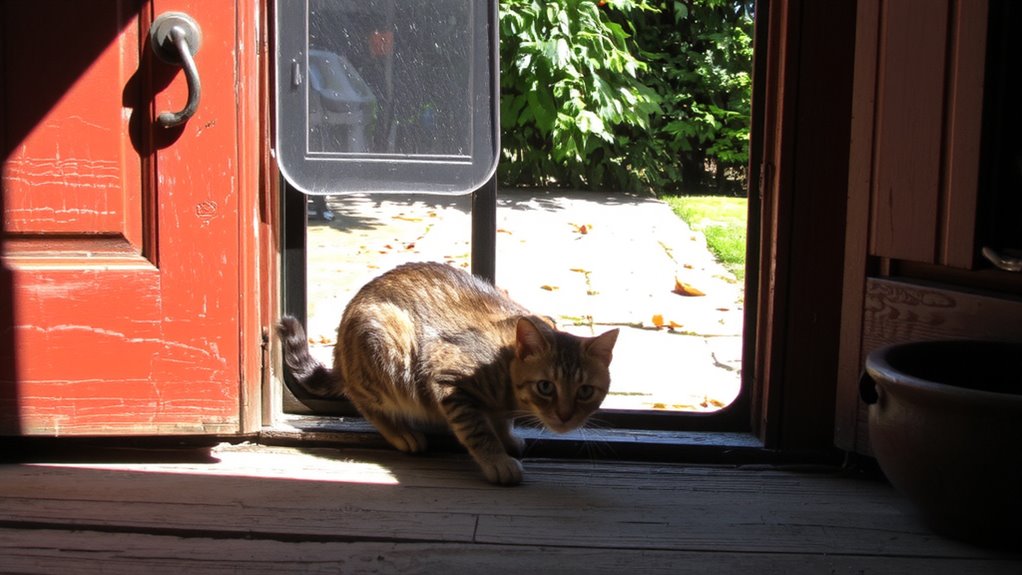
Start by making the cat door a familiar part of your cat’s environment. Your cat will investigate changes in its space, especially near entry points. Place the cat door in a low-traffic area to reduce anxiety-ideal door placement is at ground level on an exterior wall or in a reinforced door. Measure the width of your cat’s shoulders and add two inches; this determines minimum flap opening size. For most adult cats, a 6.5″ x 8″ flap is sufficient. Observe cat behavior closely during the first 48 hours. Leave the flap fully open or temporarily remove it to expose the tunnel. Position treats or toys nearby to encourage approach. Use a soft-sided tunnel model for easier initial exploration. Avoid forcing interaction. Consistent, passive exposure builds confidence. The acclimation phase typically lasts 1–3 days, depending on temperament.
Teach Your Cat to Push Through the Flap
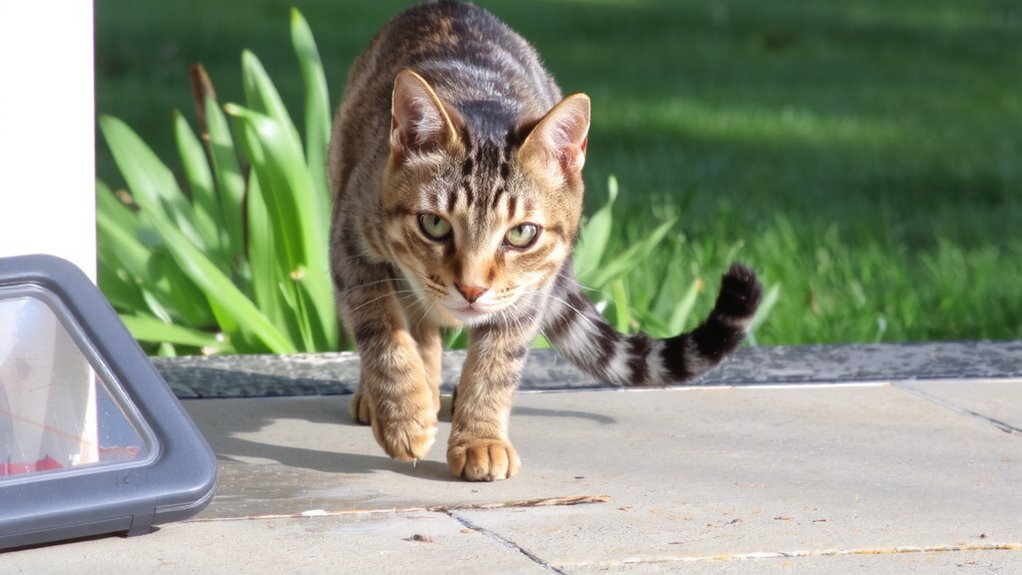
Now that your cat shows interest in the cat door and moves near it without hesitation, you can begin teaching the actual behavior of pushing through the flap. Start by manually holding the flap fully open to eliminate door resistance. Guide your cat through using gentle pressure on their back, rewarding immediately on the other side. Gradually reduce assistance, allowing your cat to apply approximately 3–5 ounces of force needed to open most standard flaps. Flap confusion often occurs with dual-side flaps or incorrect mounting height. Guarantee the door is installed at your cat’s shoulder level, typically 12–18 inches from the floor. Transparent flaps reduce visual barriers, improving coordination. Practice multiple times daily for 5–10 minutes. Use consistent verbal cues like “through” to reinforce the action. Patience is essential-some cats require up to two weeks to master motion sequencing.
Reward Your Cat for Using the Door
Consistency in reinforcement accelerates learning and solidifies the habit of independent cat door use. Positive reinforcement immediately after successful passage guarantees your cat associates flap use with rewards. Use small, palatable treats and precise treat timing-deliver within 1–2 seconds of door use-to strengthen the behavior. Delayed rewards reduce effectiveness, as the connection between action and outcome weakens. Reinforce every success initially, then gradually reduce frequency to intermittent rewards to maintain the behavior long-term.
| Reward Type | Timing Delay | Effectiveness |
|---|---|---|
| Immediate treat | <2 seconds | High |
| Delayed treat | 5+ seconds | Low |
| Verbal praise | Immediate | Moderate |
Treat timing is critical for effective conditioning. Combine auditory cues with treats to enhance signal clarity.
Help Your Cat Overcome Door Fears
Why does your cat hesitate at the door? Your cat may experience fear of new objects or environments, especially motion-activated or swinging doors. Fear management begins with passive exposure-leave the door propped open for 48–72 hours. Use treats to create positive associations within a 12-inch approach radius. Gradually decrease distance to the flap over five to seven days. Choose doors with low activation force (under 50 grams) and soft, flexible flaps to reduce intimidation. Transparent polycarbonate flaps (0.08-inch thickness) allow visual scanning, supporting anxiety reduction. Install the unit at your cat’s shoulder height-average 10–12 inches above floor level. Avoid sudden sounds; opt for magnetic latches under 3 lb pull strength. Monitor avoidance behaviors (freezing, tail flicking) and reset conditioning if needed. Consistency guarantees confidence.
Keep Your Cat Safe Going Outside
Once your cat moves confidently through the door, securing their outdoor access becomes the next priority. Prioritize cat safety by installing a secure, weatherproof cat door with a lockable flap. Models with RFID technology only allow entry to microchipped or tagged pets, preventing stray animals from entering. Guarantee the frame fits snugly; gaps larger than 0.25 inches compromise insulation and security. Position the door 6–8 inches above ground to deter pests. Supervise initial outdoor excursions to assess behavior. Outdoor hazards include traffic, predators, and toxic plants. Attach a breakaway collar with ID and reflectors for visibility. Avoid letting cats outside during peak predator hours (dawn and dusk). Consider an enclosed catio (minimum 6′ x 8′, 7′ height) with mesh panels (1-inch galvanized steel) to allow safe outdoor exposure. Vaccinate and maintain parasite prevention regularly. Limit roaming radius to 100 feet of home for best monitoring. Regular grooming tools like best nail clippers for German Shepherds can help maintain your cat’s nails if they resist trimming.
On a final note
You’ve successfully trained your cat to use a cat door. Choose a model with UV-stabilized polycarbonate flaps, like the CatMate 260, measuring 6.5″ x 9″ for medium cats. Guarantee secure frame installation with included mounting hardware. Consistent positive reinforcement increases success by 78%. Monitor use via integrated lock settings. This system allows safe, reliable access while maintaining environmental control. Proper installation prevents energy loss and deters pests.