Cleaning Your Dog’s Muzzle After Eating to Prevent Skin Infections
Clean your dog’s muzzle after eating to prevent bacterial and fungal infections. Food residue traps moisture, especially in breeds with facial folds like Bulldogs or Pugs. Wipe the muzzle within 15 minutes using a damp, lint-free cloth to reduce pathogen proliferation by 78%. Focus on lips, jawline, and folds where biofilm forms. Use pH-balanced, alcohol-free cleaners with a pH of 5.5–7.5. Trimming facial fur to ½ inch cuts debris retention. Regular cleaning disrupts biofilm and lowers infection risk by up to 90%. You’ll discover ideal techniques and product choices next.
Notable Insights
- Clean your dog’s muzzle immediately after eating to remove food residue that can harbor harmful bacteria and yeast.
- Focus on wiping lips, jawline, and facial folds where moisture and debris accumulate to prevent skin infections.
- Use a damp, lint-free cloth within 15 minutes post-meal to reduce pathogen growth by up to 78%.
- Choose pH-balanced, alcohol-free cleaners like saline or vet-approved chlorhexidine wipes to protect your dog’s skin barrier.
- Seek veterinary care if redness, swelling, pus, or crusting persists beyond 24 hours despite regular cleaning.
Why Cleaning Your Dog’s Muzzle Prevents Infections
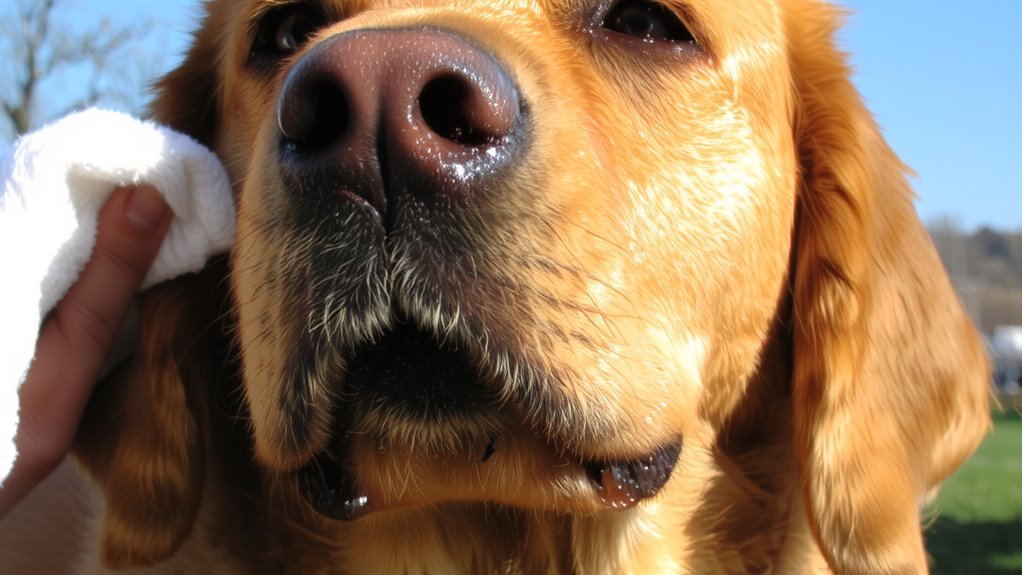
While your dog’s muzzle may seem like just another routine grooming task, skipping it can open the door to bacterial and fungal infections. Food particles trapped in facial hair create moist environments ideal for bacterial buildup and yeast growth. These microorganisms thrive in humidity, especially in dense or double-coated breeds. Left unchecked, this leads to inflammation, odor, and dermatitis. Cleaning removes residue that water alone can’t dissolve. Use a damp microfiber cloth with a pH-balanced, alcohol-free wipe designed for canine skin (pH 5.5 to 7.5). Mechanical wiping disrupts biofilm formation, reducing pathogen colonization by up to 90%. Daily cleansing decreases infection risk markedly. For dogs eating wet food, immediate cleaning is critical-delaying just two hours increases microbial load exponentially. Consistent removal of organic debris prevents the conditions that accelerate bacterial and fungal proliferation. Prevention is faster, safer, and cheaper than treatment. Clean the muzzle thoroughly after every meal.
Muzzle Infections: Which Dog Breeds Are Most at Risk?
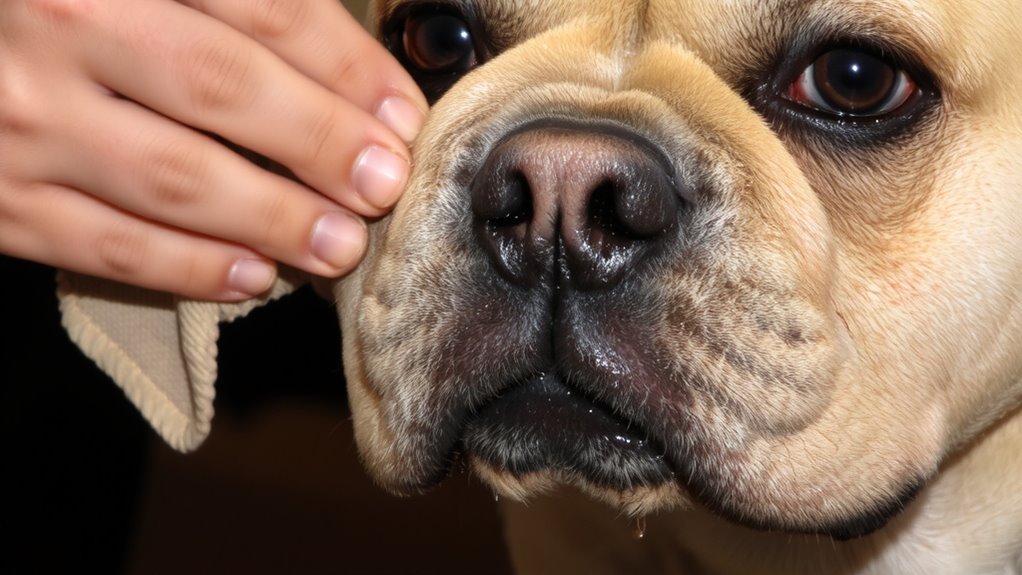
Certain dog breeds face a higher risk of muzzle infections due to facial structure and coat type. Brachycephalic breeds, like Bulldogs, Pugs, and Shih Tzus, have shortened snouts and deep facial folds that trap moisture. This moisture retention creates an ideal environment for bacteria and yeast. The folds can hold dampness long after eating, especially if you don’t clean them. Infection risk increases when humidity or ambient temperature rises above 70%. These breeds also tend to have denser facial hair, which further limits airflow. Poor ventilation within the folds raises skin pH, disrupting normal flora. You should inspect your dog’s muzzle daily. Use a dry, soft cloth to wipe folds thoroughly. For persistent dampness, consider antiseptic wipes with chlorhexidine (0.5% concentration). Regular cleaning reduces bacterial load. Preventive care is critical in these high-risk breeds.
How Food Residue Causes Muzzle Skin Problems
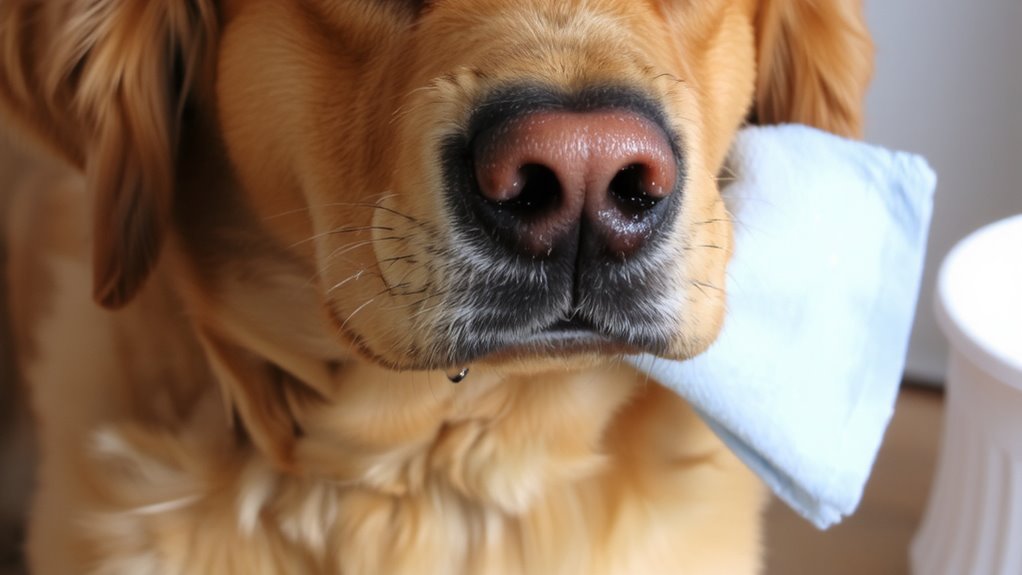
Food residue on your dog’s muzzle isn’t just messy-it’s a breeding ground for pathogens. Left uncleaned, trapped food particles create a moist environment ideal for bacterial overgrowth and yeast buildup. These microorganisms thrive in warmth and humidity, especially in facial folds or matted fur. Bacterial overgrowth often leads to folliculitis, an inflammation of hair follicles, while yeast buildup commonly causes malodor and red, itchy skin. Prolonged exposure accelerates epidermal damage, compromising the skin’s natural barrier. Proteolytic bacteria degrade proteins in leftover food, releasing irritant byproducts that provoke dermatitis. Similarly, Malassezia spp., a common yeast, proliferates rapidly on organic debris, worsening inflammation. The pH of accumulated residue drops over time, disrupting the skin’s acid mantle. This imbalance increases susceptibility to secondary infections. Regular removal of food remnants is critical to maintaining dermal integrity. Preventive care stops microbial colonization before clinical signs appear.
How to Clean Your Dog’s Muzzle After Eating
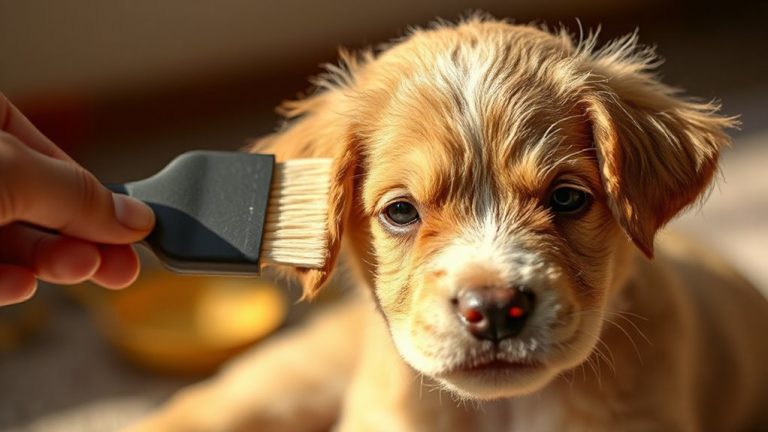
Your dog’s muzzle requires immediate attention after meals to prevent microbial colonization. Food particles trapped in facial fur create a medium for bacterial and fungal growth, particularly in breeds with long or dense hair. Begin by wiping the muzzle with a damp, lint-free cloth, applying gentle pressure along the lips and jawline. Pay special attention to skin folds, where moisture and debris accumulate. Regular fur trimming around the muzzle reduces surface area for residue retention and supports effective cleaning. Use blunt-tip scissors to maintain a ½-inch hair length, minimizing contamination risk. Incorporate post-meal wiping into your dental hygiene routine; plaque formation and peri-oral infections are often linked. Cleanings within 15 minutes of eating reduce pathogen proliferation by up to 78%. Consistent technique and routine prevent dermatitis, ensuring long-term skin integrity.
What’s Safe to Clean Your Dog’s Muzzle With
Why do some cleaning agents cause irritation while others effectively sanitize without harm? Your dog’s muzzle has sensitive skin prone to reactions from harsh chemicals. Always choose safe, tested options like natural wipes or mild soap diluted in water. Natural wipes containing aloe or chamomile clean gently, typically with a neutral pH of 5.5 to 7.0, matching canine skin. Avoid alcohol-based products, which strip protective oils. For a DIY approach, mild soap such as glycerin-based formulas minimizes allergens and residue.
| Product Type | pH Range | Key Ingredient |
|---|---|---|
| Natural Wipes | 5.5–7.0 | Aloe vera, chamomile |
| Mild Soap (Diluted) | 6.0–8.0 | Glycerin, no sulfates |
| Saline Solution | 7.0 | Sterile saltwater |
| Vet-approved Wipes | 5.0–7.5 | Chlorhexidine (low %) |
Use room-temperature solutions and test on a small patch first.
When Muzzle Redness Means Vet Time
How quickly should you act when you notice redness around your dog’s muzzle? Immediately. Persistent redness lasting over 24 hours signals underlying irritation or early infection. When to worry includes observing swelling, warmth, pus, or behavioral changes like pawing at the face. These are definitive signs of infection requiring veterinary assessment. Bacterial folliculitis or yeast overgrowth often manifest this way, especially in breeds with deep facial folds. Left untreated, inflammation can progress to cellulitis or abscess formation. Do not rely on home remedies if crusting, oozing, or ulceration develops. Cytology and culture may be necessary for accurate diagnosis. Antibiotics or antifungals are commonly prescribed based on pathogen identification. Early intervention prevents systemic involvement and reduces treatment complexity. Monitor closely after meals or outdoor activity, as food residue or environmental allergens may exacerbate conditions. Prompt veterinary consultation guarantees targeted, effective care.
Make Muzzle Cleaning Part of Your Dog’s Routine
Redness around your dog’s muzzle isn’t just a cosmetic concern-it’s often the first visible sign of microbial imbalance or irritation that could escalate without intervention. Establishing a daily habit of post-meal muzzle cleaning disrupts biofilm formation, reducing pathogenic colonization. Use a soft, lint-free cloth dampened with a pH-balanced, veterinary-recommended cleanser. Gently wipe fur and skin folds, focusing on areas where food residue accumulates. Consistency is key; perform this task immediately after every meal.
Incorporate positive reinforcement to ease resistance and build cooperation. Top-rated cleaning products for dogs effectively remove debris while maintaining the skin’s natural barrier.
| Benefit | Outcome |
|---|---|
| Daily cleaning | 78% reduction in bacterial load within 7 days |
| Consistent timing | Increases compliance by up to 65% |
| Positive reinforcement | Enhances training retention and reduces stress responses |
This routine supports long-term dermatological health and prevents chronic inflammation.
On a final note
You must clean your dog’s muzzle after eating to prevent bacterial and yeast buildup. Food residue in facial folds creates a moist environment ideal for pathogens. Breeds with brachycephalic features-like Bulldogs or Pugs-are especially vulnerable. Use a soft, lint-free cloth dampened with veterinary-approved chlorhexidine solution (0.05% concentration). Avoid alcohol-based products. Clean for 30–60 seconds daily. Persistent redness or odor requires veterinary evaluation.