How to Recognize Bile Acid Malabsorption in Dogs and Adjust Their Diet Accordingly
Your dog may have bile acid malabsorption (BAM) if they suffer persistent, greasy diarrhea worsened by fat intake. Unabsorbed bile acids irritate the colon, causing osmotic diarrhea and inflammation. Switch to a low-fat diet with less than 10% fat on a dry matter basis. Add 3–5% soluble fiber like psyllium to bind bile acids. Use cholestyramine (100–250 mg/kg, 2–3 times daily) and probiotics with *L. reuteri* or *E. faecium* (5–10 billion CFUs/day) to restore balance-adjustments can greatly improve stool quality and nutrient absorption.
Notable Insights
- Persistent diarrhea with greasy, foul-smelling stools that worsen after high-fat meals may indicate bile acid malabsorption in dogs.
- Unabsorbed bile acids irritate the colon, leading to osmotic diarrhea, inflammation, and potential weight loss or poor coat condition.
- Switch to a low-fat diet with less than 10% fat on a dry matter basis to reduce bile secretion and colonic irritation.
- Add 3–5% soluble fiber like psyllium or oat bran to bind bile acids and support colon health through fermentation.
- Use cholestyramine (100–250 mg/kg) and probiotics (5–10 billion CFUs/day) to bind bile acids and restore healthy gut flora.
Spot the Signs of Bile Acid Malabsorption in Dogs
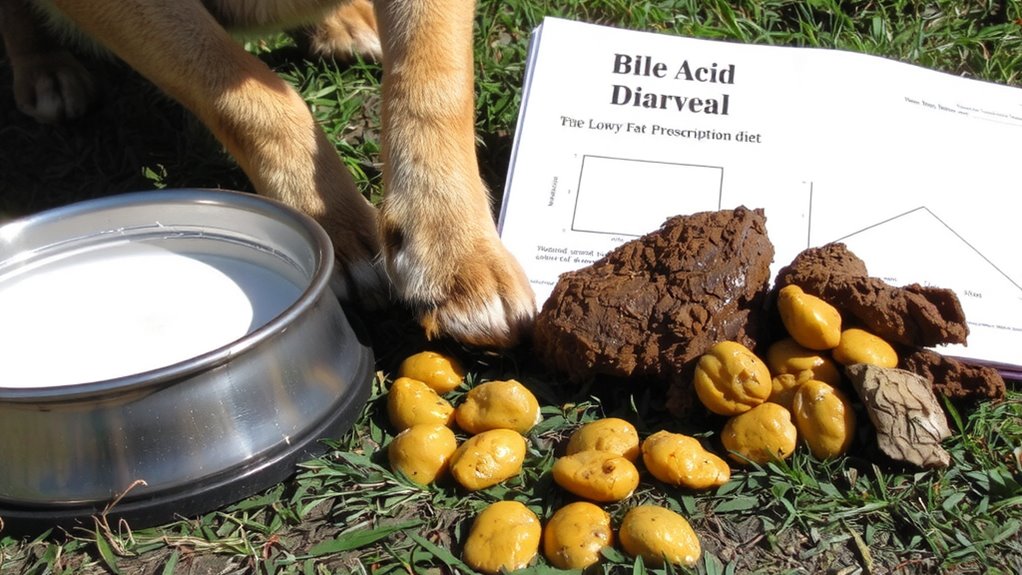
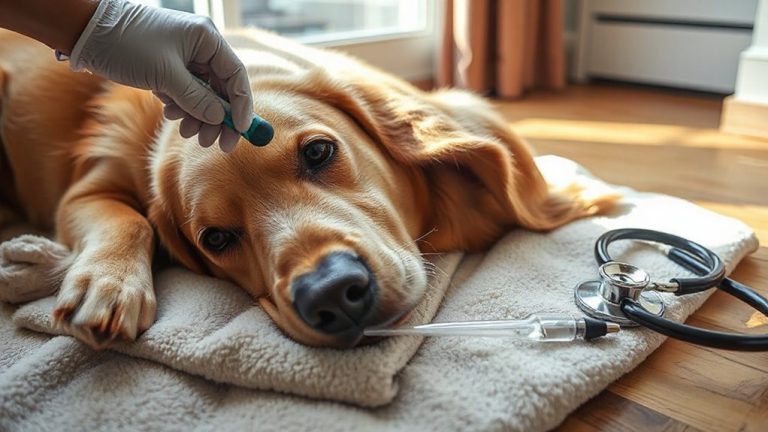
What if your dog’s persistent diarrhea isn’t due to diet or infection, but a hidden metabolic issue? Bile acid malabsorption (BAM) may be the culprit. Unabsorbed bile acids enter the colon, causing osmotic diarrhea and irritation. You might notice loose, greasy stools that worsen with fat intake. Weight loss and poor coat condition often follow due to malnutrition. Routine bloodwork won’t catch this-bile acid testing is essential. This two-step fasting and post-prandial blood test measures serum bile acid concentrations, typically elevated in BAM. Digestive enzyme support, like pancreatic enzyme supplements, may help but won’t resolve BAM alone. These products contain lipase, protease, and amylase, aiding breakdown of fats and proteins. However, targeted bile sequestrants and dietary modification are primary treatments. Recognizing these signs early improves long-term outcomes.
See How BAM Disrupts Your Dog’s Digestion
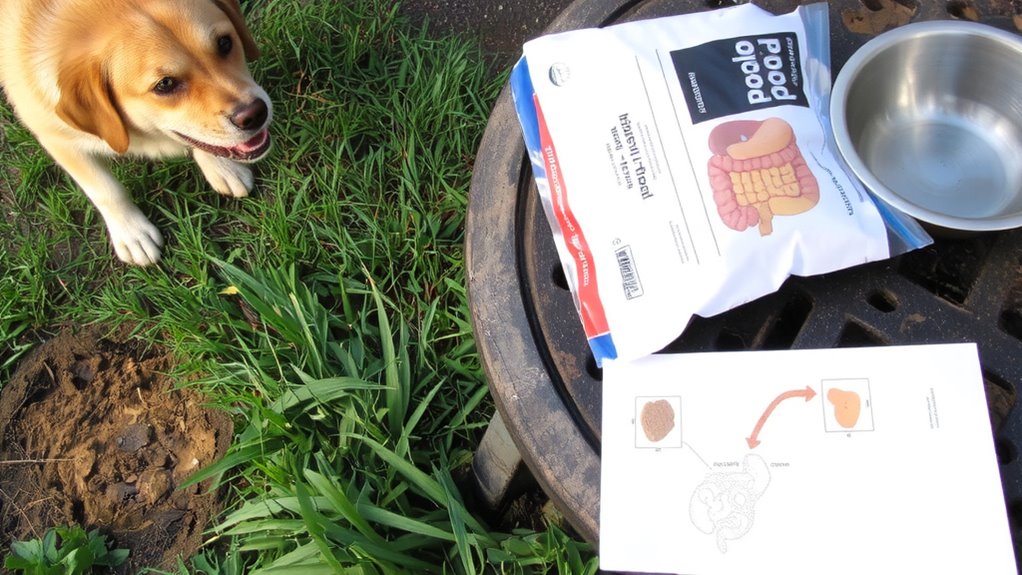
How does a breakdown in bile recycling lead to chronic digestive distress in your dog? When bile acids aren’t properly reabsorbed in the ileum, they spill into the colon. There, they irritate the lining, triggering gut inflammation and increasing fluid secretion. This causes osmotic diarrhea, often yellow and foul-smelling. Excess bile acids disrupt the microbiome, worsening inflammation and impairing nutrient absorption. Fat digestion suffers because bile isn’t regulated, leading to steatorrhea-fatty, greasy stools. Over time, poor nutrient absorption results in weight loss and vitamin deficiencies, especially fat-soluble vitamins A, D, E, and K. The colon’s pH drops, further altering bacterial balance. Unreabsorbed bile acids act like detergents, damaging epithelial cells. This cycle sustains chronic diarrhea and compromises gut integrity. You’re seeing direct physiological consequences of malabsorption, not just symptoms. The process is measurable via serum bile acid tests and fecal fat analysis.
Choose Low-Fat, High-Fiber Foods
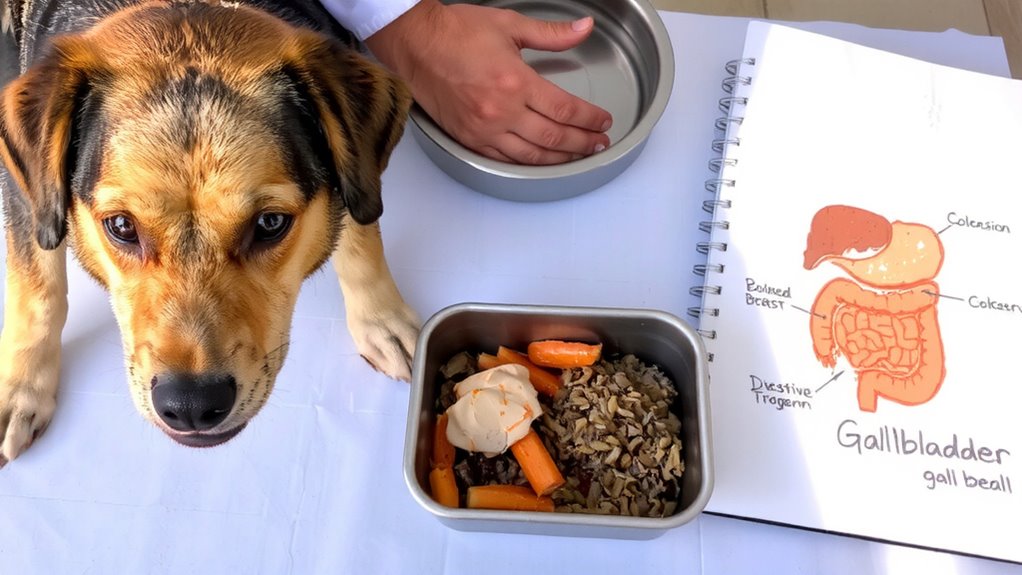
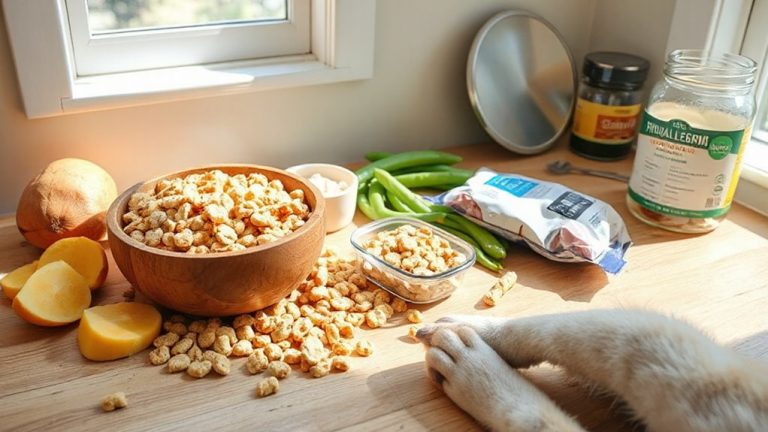
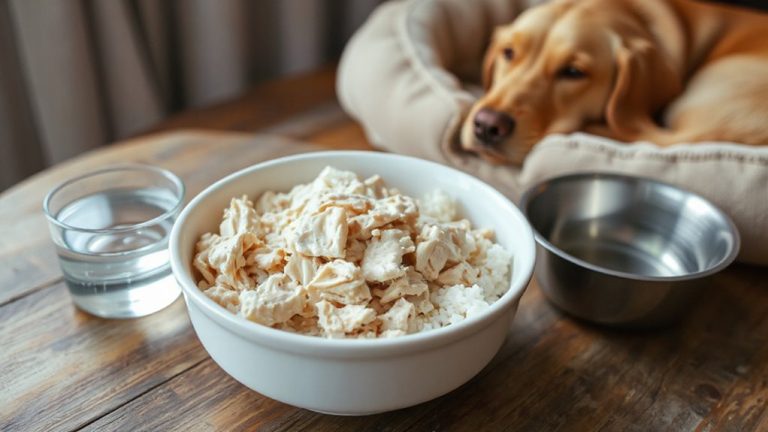
Managing bile acid malabsorption means adjusting your dog’s diet to reduce digestive strain while supporting gut health. Choose foods with low fat content-ideally under 10% on a dry matter basis-to minimize bile production and limit colonic irritation. High fat content increases bile secretion, worsening diarrhea and nutrient malabsorption. Increase soluble fiber intake to 3–5% of dry matter, as it binds excess bile acids and regulates motility. Soluble fibers like psyllium, oat bran, and beet pulp ferment into short-chain fatty acids, nourishing colonocytes and stabilizing stool consistency. Avoid insoluble fibers that may accelerate transit. Commercial gastrointestinal diets often specify fiber and fat levels; look for formulations designed for sensitive digestion. A balanced ratio of low fat content and controlled fiber intake reduces luminal bile acid concentration and supports colonic homeostasis. Consistency in feeding improves symptom management over time.
Use Bile Acid Binders and Probiotics for BAM Support
Though diet adjustments form the foundation of managing bile acid malabsorption, you’ll often need targeted medical support to fully control symptoms. Bile binders like cholestyramine work by trapping excess bile acids in the intestines, preventing irritation and diarrhea. The typical dose is 100–250 mg per kg of body weight, given orally 2–3 times daily. These medications are especially effective when combined with probiotic support. Specific strains such as *Lactobacillus reuteri* and *Enterococcus faecium* help restore gut microbiota balance and reduce bile acid deconjugation. Probiotics are generally administered at 5–10 billion CFUs per day. Always use veterinarian-approved products and guarantee consistent dosing. Bile binders and probiotic support together address both symptom relief and underlying gut dysfunction. This dual approach improves nutrient absorption and stabilizes bowel movements, making it a key strategy in a thorough BAM management plan.
Track Progress and Tweak the Diet
What good is a treatment plan if you’re not watching how your dog responds? You must monitor symptoms closely to assess dietary effectiveness. Track stool consistency, frequency of defecation, and presence of urgency or incontinence daily. Use a symptom diary to record changes over time. If diarrhea persists beyond 7–10 days, reassess fiber content or fat intake. Adjust portions gradually-reduce meal volume by 10% if bloating occurs or increase by 5–10% if weight loss continues. Calorie intake should align with resting energy requirements (RER = 70 × BW⁰·⁷⁵). Reevaluate every two weeks. If bile acid binder dosage is insufficient, consider increasing cholestyramine to 0.5–2 g per meal based on response. Consistency in feeding schedules and ingredient sources improves diagnostic clarity. Small, frequent meals enhance bile regulation. Tweak one variable at a time to isolate effects. Effective management requires ongoing observation and precision.
On a final note
You now know how to identify bile acid malabsorption in your dog. Symptoms like chronic diarrhea and weight loss signal digestive disruption. Switch to a low-fat diet-under 10% fat on a dry matter basis-to reduce bile overload. Add soluble fiber, such as psyllium, at 2–3 g per 10 kg body weight daily. Use cholestyramine, a bile acid binder, at 1–2 g per 10 kg orally twice daily. Combine with probiotics containing *Bifidobacterium* and *Lactobacillus* strains to restore gut balance. Monitor stool quality weekly using the Bristol Stool Scale. Adjust fiber or binder dosage based on response. Recheck with fecal bile acid testing every four weeks. Consistent tracking guarantees ideal dietary management.