Managing Puppy Energy: Exercise and Mental Stimulation Balance
You need both safe physical exercise and structured mental stimulation to balance your puppy’s energy. Puppies under 12 months should get just 5 minutes of exercise per month of age, twice daily, to protect developing growth plates. Swap long walks for puzzle feeders that slow eating by up to 70% and challenge cognition. Scent games using animal-safe oils provide mental load equivalent to 30 minutes of physical activity. Nutrient profiles with 22–25% protein and low-glycemic carbs support stable focus. Without this balance, dopamine fluctuations can mimic ADHD-like behavior. A consistent routine with chew rotations, quiet rest, and cognitive tasks regulates energy more effectively than exercise alone-details on optimizing each element follow.
Notable Insights
- Balance physical exercise with mental stimulation to effectively manage puppy energy and prevent behavioral issues.
- Limit physical activity to 5 minutes per month of age, twice daily, to protect developing joints and growth plates.
- Use puzzle feeders and scent games to provide mentally enriching activities that reduce hyperactivity and improve focus.
- Feed a balanced diet with 22–25% protein, 8–10% fat, and added DHA to support stable energy and cognitive function.
- Establish a consistent daily routine with scheduled exercise, training, naps, and downtime to regulate energy levels and sleep patterns.
Why Managing Puppy Energy Isn’t Just About Exercise
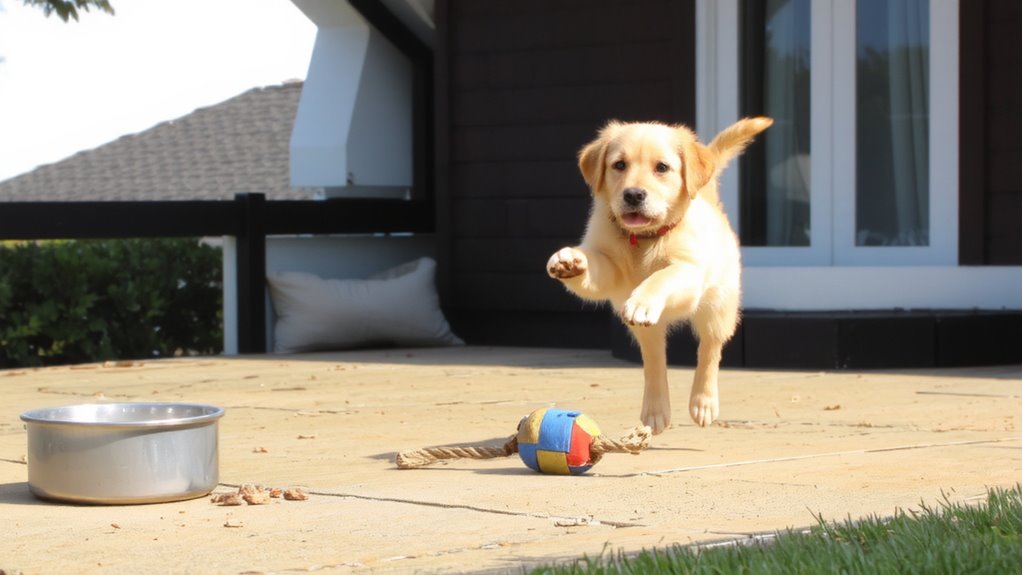
Why do so many exhausted owners still struggle with hyperactive puppies despite daily walks and playtime? Because physical exertion alone doesn’t address core behavioral drivers. Puppy nutrition directly influences energy levels and focus. Diets deficient in DHA, omega-3s, or balanced protein-to-fat ratios can exacerbate restlessness. High-glycemic ingredients cause blood sugar spikes, increasing erratic behavior. Proper nutrient profiles-such as 22–25% protein and 8–10% fat for small to medium breeds-support sustained mental clarity. Equally critical is emotional development during the primary socialization window (3–14 weeks). Puppies lacking structured exposure to stimuli develop heightened reactivity. Neural pathways form rapidly; without guided experiences, the limbic system over-responds to novelty. You’re not just raising a pet-you’re shaping neurobehavioral outcomes. Stimulate the mind with scent games, quiet training sessions, and controlled interactions. Balanced development requires nutritional precision and early cognitive conditioning, not just physical tiredness. That’s how you convert chaos into calm competence.
How Much Exercise Can Your Puppy Handle Safely?
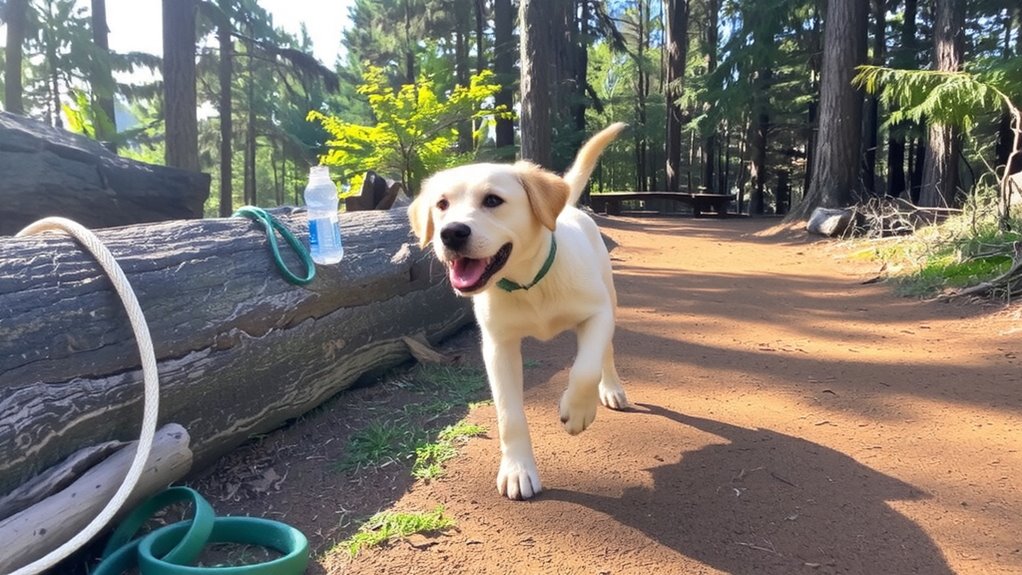
While it’s tempting to push your puppy to keep up with your fitness routine, their developing joints and bones can’t handle prolonged or high-impact activity. Exercise limits are determined by age, breed, and skeletal maturity. Puppies under 12 months have soft growth plates-areas of cartilage near the ends of long bones that haven’t fully hardened. Excessive strain can fracture or damage these zones, leading to permanent deformities. Large and giant breeds are especially vulnerable and remain susceptible up to 18–24 months. A safe rule: limit exercise to 5 minutes per month of age, twice daily. For example, a 4-month-old pup should exercise 20 minutes max, split into two sessions. Avoid jumping, rough play, or running on hard surfaces. Focus on structured leash walks and short play bursts. Monitoring your puppy’s fatigue cues guarantees you stay within safe exercise limits without compromising development.
Best Mental Games for Tiring Out a Hyper Puppy
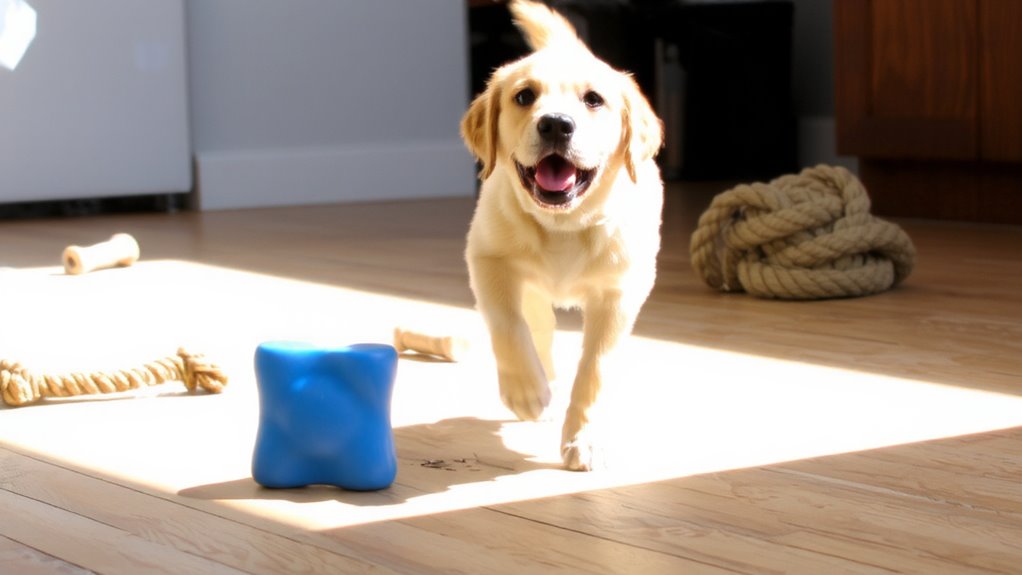
How do you keep a hyperactive puppy engaged without exhausting its developing joints? Mental stimulation is key. Puzzle feeding slows eating and enhances cognitive engagement. Use portion-controlled puzzle feeders with adjustable difficulty levels-start with simple sliders, then progress to multi-step challenges requiring paws and nose manipulation. These devices reduce food intake speed by up to 70%, increasing mental exertion. Introduce scent tracking using cotton swabs infused with animal-safe essential oils like lavender or anise. Hide the scent 5–10 feet away in grass or carpet, guiding your puppy with hand signals. Scent tracking activates the olfactory cortex, equivalent to 30 minutes of physical activity in mental load. Sessions should last 10–15 minutes, twice daily. Rotate tasks every three days to prevent habituation. Use consistent verbal cues. These techniques build focus and reduce unwanted behaviors. For durable and effective options, consider the best dog puzzle toys based on expert evaluations and user feedback.
Signs You’re Mismanaging Your Puppy’s Energy
Could your puppy’s unruly behavior signal an energy imbalance? Yes, and ignoring it increases overstimulation risks. You’ll notice constant pacing, excessive barking, or biting-clear signs of unmet physical and mental needs. Puppies require 5 minutes of exercise per month of age, twice daily; exceeding or under-delivering disrupts regulation. Behavioral breakdowns occur when stimulation lacks structure. A puppy nipping after a long walk may not need more activity, but better-balanced engagement. Overstimulation risks include heightened anxiety, sleep disruption, and reduced focus. These symptoms mimic ADHD in neurological response studies. Without routine, dopamine and cortisol levels fluctuate unpredictably. Your puppy’s inability to settle within 15 minutes post-activity indicates poor energy management. Monitor duration, intensity, and recovery. Correct balance prevents compulsive behaviors. Adjust activity type if hyperactivity persists despite adequate exercise.
Sample Daily Routine for Balanced Puppy Energy
When structured properly, a daily routine stabilizes your puppy’s energy and supports neurological development. Begin at 7 AM with 20 minutes of leash walking, followed by 15 minutes of interactive training using positive reinforcement. At 9 AM, initiate a puppy napping schedule: 90 minutes of rest in a crate or quiet zone, maintaining a consistent dark, cool environment to promote sleep hygiene. At 10:30 AM, introduce chew toy rotation-rotate three durable rubber toys every 24 hours to prevent habituation and support dental development. Afternoon activity includes off-leash play for 30 minutes, then 45 minutes of puzzle feeder use to stimulate cognitive processing. Resume napping from 2 PM to 3:30 PM. Evening walks occur at 5 PM with variable terrain for motor skill development. Enforce lights-out by 9 PM, aligning with circadian rhythms. This routine balances stimulation with rest. Feeding your puppy a high-quality diet formulated for active breeds can enhance their overall stamina and focus, making Best Dog Food for English Springer Spaniels a key consideration for optimal performance and health.
On a final note
You must balance physical and mental exertion to regulate puppy energy effectively. Over-exercising harms joint development; limit activity to five minutes per month of age, up to twice daily. Cognitive tasks like puzzle feeders or scent games reduce hyperactivity more efficiently than walks alone. Combine structured play with downtime. Monitor behavior: restlessness or destructiveness indicates imbalance. A consistent routine aligns neurological and physical development, ensuring ideal long-term behavioral outcomes.