Dental Development Stages in Rabbits, Guinea Pigs, and Other Pets
Your rabbit’s teeth start growing before birth, with incisors emerging prenatally and molars shortly after. Guinea pigs are born with fully erupted incisors that grow continuously at 1.5–3 mm per week. Both rely on constant wear from fibrous hay to prevent malocclusion. Misaligned teeth cause overgrowth and sharp spurs within days. Proper occlusion guarantees even wear. Vitamin C and limited pellets support structural health. Early detection of drooling or weight loss improves outcomes. You’ll find precise care steps next.
Notable Insights
- Rabbits have open-rooted teeth that grow continuously at 2–3 mm per week, with molars erupting shortly after birth.
- Guinea pigs are born with erupted incisors and develop molars by 3 weeks, achieving full dental occlusion early in life.
- Both rabbits and guinea pigs replace deciduous teeth with permanent ones by four to five months of age.
- Continuous tooth wear is essential; a diet high in fibrous hay prevents malocclusion and supports proper dental function.
- Early signs of dental disease include drooling, weight loss, and selective eating, requiring prompt veterinary assessment.
Rabbit Teeth: When They Grow and What’s Normal
While most mammals have a fixed set of teeth, you should know that rabbits have open-rooted dentition, meaning their teeth grow continuously throughout life. This constant growth, averaging 2–3 mm per week, demands regular wear to prevent overgrowth. Tooth eruption begins prenatally, with incisors emerging before birth and molars following shortly after. By three weeks, all deciduous teeth are typically in place, replaced by permanent teeth by four to five months. Proper molar alignment is essential-upper and lower molars must occlude precisely to enable effective grinding. Misalignment, even by 1 mm, can lead to sharp spurs and ulceration. You’ll need to monitor for signs of malocclusion early. Ideal dental health depends on high-fiber diets that promote natural tooth wear. Radiographic exams can assess root length and eruption patterns. Regular veterinary checks help maintain ideal molar alignment and detect issues before clinical symptoms arise.
Guinea Pig Teeth: What’s Normal by Age
How do guinea pig teeth develop as your pet ages? Guinea pigs are born with fully erupted incisors, which grow continuously at 1.5–2.5 mm per week. By 3 weeks, molars emerge, establishing full occlusion. Proper jaw alignment guarantees even wear; misalignment leads to uneven grinding and malocclusion. At 6 months, adult dentition stabilizes, with incisors typically measuring 3–5 mm visible length. Regular chewing on hay maintains ideal tooth length and alignment. Tooth discoloration may occur normally, with healthy orange-to-yellow staining due to pigmentation, not disease. Discoloration that’s dark or gray may indicate trauma or infection. By 3 years, wear patterns should remain consistent. Monitor for spurs, sharp edges, or overgrowth. Annual oral exams help track changes. Proper diet and genetics influence long-term dental health. Jaw alignment and tooth length remain key indicators of normal development throughout life.
Common Dental Problems and Early Warning Signs
Guinea pigs rely on precise tooth alignment and continuous wear to maintain oral health, but even with proper care, dental problems can arise. Dental malocclusion occurs when teeth don’t align correctly, preventing normal grinding. This misalignment leads to overgrowth of incisors or molars, often visible within days. You might notice drooling, difficulty eating, or weight loss. A common complication is sharp tooth spurs-abnormal enamel points that form on cheek teeth. These spurs can lacerate the tongue or inner cheeks, causing pain and infection. Molar spurs are typically 1–2 mm long and diagnosed via oral examination, sometimes requiring sedation. Left untreated, they impair chewing and promote further malocclusion. Early warning signs include reduced appetite, selective eating, or grinding teeth. Regular visual checks and veterinary exams every 6–8 weeks help detect issues before severe damage occurs. Prevention includes proper husbandry and routine monitoring.
How Diet Keeps Teeth Healthy
Because dental health in guinea pigs depends on continuous tooth wear, your pet’s diet plays a decisive role in preventing overgrowth and maintaining proper occlusion. Diet texture is essential-coarse, fibrous materials like timothy hay promote natural grinding. Hay should make up 80% of intake, providing the necessary abrasiveness to wear molars evenly. Short fibers in soft foods don’t offer enough resistance, leading to malocclusion. Nutrient balance supports enamel strength and gum integrity. Vitamin C, at 10–50 mg/kg body weight daily, prevents scurvy and connective tissue breakdown. Pellets should be fortified but not overfed-limit to 1/8 cup per pound of body weight. Fresh vegetables add moisture and chew resistance, enhancing mechanical cleaning. Avoid sugary treats; they encourage plaque and disrupt pH. A balanced, high-fiber diet mimics wild foraging, aligning dental wear with growth rates of 2–3 mm per week. Consistent texture and nutrition mean healthy teeth.
When to See a Vet: Red Flags to Watch For
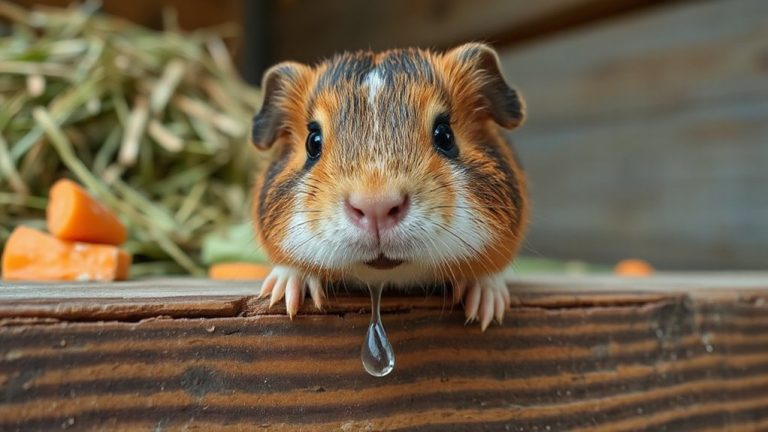
Signs of dental disease in guinea pigs often appear subtle at first but can escalate quickly without intervention. Excessive drooling is a key indicator, often caused by sharp enamel spurs or malocclusion irritating oral tissues. You might notice damp fur around the mouth or chin. Guinea pigs have open-rooted teeth that grow continuously-up to 2–3 mm per week-so misalignment disrupts normal wear, leading to overgrowth. Weight loss follows when pain makes chewing difficult. A healthy adult guinea pig should maintain a steady weight of 700–1,200 grams; a drop of 50+ grams over a week signals trouble. Decreased fecal output, reduced activity, or selective eating are secondary signs. Any change in tooth alignment, appetite, or grooming deserves prompt veterinary evaluation. Radiographs may be needed to assess root elongation. Early detection prevents life-threatening complications like abscesses or gastroenterostasis.
On a final note
Your pet’s dental health depends on consistent care and species-specific knowledge. Rabbits and guinea pigs have continuously growing incisors and cheek teeth, up to 2–3 mm per week. Misalignment or malocclusion disrupts normal wear, causing overgrowth. Provide high-fiber diets-timothy hay at 80% of intake-to promote proper grinding. Monitor weight, appetite, and droppings weekly. Any change signals potential dental disease. See your vet promptly for diagnosis and treatment.