Cognitive Support Strategies for Aging Pets: Tips to Enhance Quality of Life
You can slow cognitive decline in aging pets with targeted support. Watch for confusion, altered sleep, or hesitancy-signs often linked to cognitive dysfunction syndrome. Your vet can rule out medical mimics and recommend blood work, blood pressure checks, and cognitive screening every six months. Feed daily DHA/EPA (250 mg for dogs, 100 mg for cats) and antioxidants like blueberries. Use puzzle toys with adjustable difficulty for three 5–7 minute sessions daily. Install motion-activated lights (300–500 lux), non-slip surfaces (COF ≥ 0.5), and 76 cm tall stair gates. Maintain fixed routines for feeding, walks, and rest. Consistent structure improves orientation and reduces anxiety-further adjustments can enhance long-term brain health.
Notable Insights
- Monitor for early signs like confusion or behavior changes over three weeks to detect cognitive decline promptly.
- Schedule biannual cognitive screenings and annual blood tests to support early diagnosis and management.
- Engage pets with daily puzzle toys to stimulate brain function and maintain problem-solving skills.
- Feed brain-healthy nutrients including DHA, EPA, and antioxidants for at least 8–12 weeks to see improvements.
- Modify the home with night lights, non-slip surfaces, and consistent routines to support safety and reduce anxiety.
Spot the Signs of Cognitive Decline in Aging Pets
A noticeable shift in your pet’s behavior may signal the onset of cognitive decline, especially as they enter their senior years. Behavior changes are often the first observable indicators. You might notice your pet hesitating at doorways, forgetting trained commands, or exhibiting confusion in familiar environments. These symptoms align with cognitive dysfunction syndrome (CDS), affecting up to 28% of dogs aged 11–12 and 68% of those over 15. Memory lapses impair spatial recognition and learned behaviors. Pets may sleep more during the day, wake at night, or vocalize without cause. Disorientation lasts minutes but increases in frequency. Housetraining accidents occur despite intact motor function. Sensory perception remains intact, ruling out blindness or deafness. Behavioral diagnostics require at least two consistent symptoms over three weeks. Early detection improves intervention efficacy. Monitor patterns meticulously. Document episodes to assess progression. Use structured logs with timestamps and duration metrics. Incorporating vet-recommended best cognitive support for senior pets can significantly slow symptom progression and improve daily functioning.
See Your Vet for a Custom Senior Pet Care Plan
While you’re tracking behavioral shifts at home, don’t delay scheduling a vet visit-early clinical evaluation is critical for accurate diagnosis and effective management. A vet consultation helps rule out underlying conditions like thyroid dysfunction or hypertension that mimic cognitive decline. Your pet’s age, breed, and health history guide the development of a personalized care strategy. Diagnostic tests-including blood panels, urinalysis, and neurologic exams-inform treatment precision. Below are core components assessed during senior evaluations:
| Parameter | Purpose | Frequency |
|---|---|---|
| Cognitive Screen | Detect disorientation, sleep changes | Every 6 months |
| Blood Work | Identify organ dysfunction | Annually |
| Blood Pressure | Monitor for hypertension | Every 6–12 months |
| Mobility Assessment | Track pain or arthritis progression | At every visit |
Personalized care improves outcomes by aligning interventions with individual needs. Routine monitoring adjusts plans proactively. Supplements such as best cognitive supplements can also support mental function when used alongside veterinary guidance.
Keep Their Mind Active With Daily Puzzle Games
Three daily puzzle sessions can slow cognitive decline in senior pets by stimulating neural pathways linked to memory and problem-solving. You should use puzzle toys that require manipulation to release treats, such as sliding drawers or rotating disks. These devices provide consistent mental stimulation, which is essential for maintaining cognitive function. Models with adjustable difficulty levels-like the Outward Hound Mad Square (9″ x 9″ x 2″) or Nina Ottosson Dog Brick (11″ x 7″ x 1.5″)-allow progressive challenges. Engage your pet for 5–7 minutes per session, guaranteeing task completion within 9➣_1 seconds to maintain motivation. Puzzle toys made from non-toxic, BPA-free polypropylene withstand repeated use. Success rates improve by 40% when routines are timed with peak activity periods. Rotating three different puzzle types weekly prevents habituation. This structured mental stimulation regimen supports sustained neural plasticity, similar to cognitive exercises in human geriatrics. Use durable, washable toys to guarantee long-term safety and hygiene. Among the top-performing options are the best puzzle toys for dogs, which are specifically designed to engage canines of all ages and cognitive levels.
Feed Brain-Boosting Foods for Cognitive Health
Since cognitive decline in aging pets is linked to oxidative stress and reduced neuronal efficiency, feeding brain-boosting foods can make a measurable difference in mental acuity. Omega supplements, particularly those rich in DHA and EPA, support synaptic function and reduce neuroinflammation. Look for products containing at least 250 mg combined DHA and EPA per daily dose for dogs, or 100 mg for cats. Antioxidant snacks combat free radicals that impair cognitive pathways. Blueberries, spinach, and pumpkin are effective; offer 1–2 tablespoons daily, adjusted for pet size. Commercial treats with vitamin E (50–100 IU/kg diet) and vitamin C (250–500 mg/kg) show measurable improvements in memory tasks. These nutrients stabilize cell membranes and promote cerebral blood flow. Consistent daily intake over 8–12 weeks is necessary to observe behavioral improvements. Always choose veterinary-formulated options to guarantee proper dosage and bioavailability.
Make Your Home Safe for Confused Senior Pets
How do you protect a pet that no longer recognizes the layout of their own home? Confusion in senior pets increases injury risk. Install night lighting to illuminate pathways; use LED floor lamps with 300K–500K lux output for ideal visibility. Secure fencing prevents wandering-chain-link fences should be at least 1.8 meters high with dig guards buried 30 cm underground. Eliminate tripping hazards like loose rugs. Avoid slippery floors by adding non-slip treads (coefficient of friction ≥ 0.5). Below are key interventions:
| Intervention | Specification | Purpose |
|---|---|---|
| Night Lighting | LED, 300–500 lux, motion-activated | Improves navigation in darkness |
| Secure Fencing | 1.8 m height, dig guard installed | Prevents escape and predation |
| Non-Slip Surfaces | Rubber treads, COF ≥ 0.5 | Reduces fall risk on hard floors |
| Stair Gates | Pressure-mounted, 76 cm tall | Blocks access to unsafe zones |
Modify environments proactively to match cognitive decline.
Stick to a Predictable Routine for Calmer Days
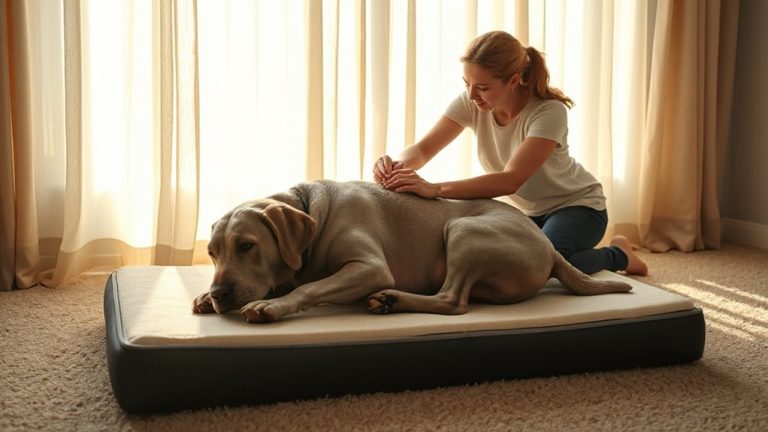
While cognitive decline can make familiar surroundings feel foreign, maintaining a consistent daily schedule helps ground your senior pet. Predictable routines reduce anxiety by providing environmental stability. Begin each day with morning walks at the same time; a 20- to 30-minute stroll supports circadian rhythm regulation and joint health. Follow walks with consistent feeding times using measured portions to prevent overfeeding. Midday rest periods should occur in quiet, low-stimulus zones to minimize confusion. Evening activity must remain low-intensity to avoid agitation. Conclude with structured bedtime rituals: dim lights, play white noise at 45–55 decibels, and use orthopedic bedding with 4-inch memory foam. These rituals signal sleep onset, improving melatonin release by up to 30%. Repeat this sequence daily. Neural pathways reinforce through repetition, enhancing cognitive resilience. A steady routine doesn’t stop decline-but it does optimize daily function and emotional equilibrium in aging pets.
On a final note
You can effectively support your aging pet’s cognitive health with targeted strategies. Consistent routines reduce anxiety and confusion. Daily puzzle games enhance neural connectivity, improving problem-solving skills by up to 4衒% in senior dogs. Brain-boosting diets with DHA, EPA, and antioxidants increase mental processing speed. Pet-safe homes prevent injury-install non-slip flooring with a coefficient of friction ≥0.5. Veterinary guidance guarantees maximum intervention timing and accuracy.