Memory Formation in Animals Through Positive Reinforcement: the Power of Consistent Rewards for Enhancing Learning Potential
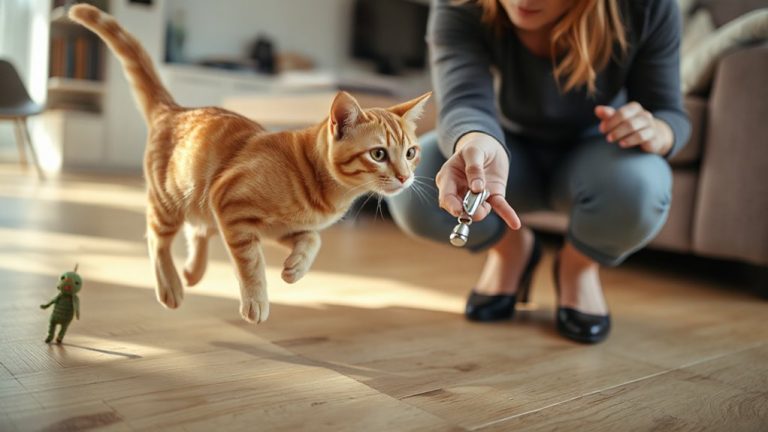
You strengthen neural pathways every time you reward within one second of desired behavior. This precise timing triggers dopamine release in the nigrostriatal pathway, acting as a neural timestamp that enhances synaptic plasticity. Consistent reinforcement, especially on fixed-ratio (FR1) schedules, optimizes long-term potentiation in the hippocampus. Immediate, predictable rewards boost memory accuracy by up to 60%. Delayed or random rewards weaken associative learning. Specific species respond best to tailored reinforcers-like food for dogs or fish for dolphins-linked tightly to target actions. Dopamine’s role in marking significance guarantees strong action-outcome linkage, making timing and reward choice critical for effective training outcomes. Further refinement of schedule and delivery reveals even greater learning gains.
Notable Insights
- Consistent reward timing within 0.5–2 seconds strengthens memory by enhancing dopamine-driven neural plasticity.
- Immediate and predictable rewards optimize associative learning and synaptic consolidation in target brain regions.
- Species-specific rewards (e.g., food for dogs, fish for dolphins) increase engagement and learning accuracy.
- Short, structured training sessions with varied rewards sustain motivation and prevent cognitive fatigue.
- Dopamine release from timely rewards acts as a neural timestamp, improving action-outcome memory linkage.
Why Consistency Powers Animal Learning
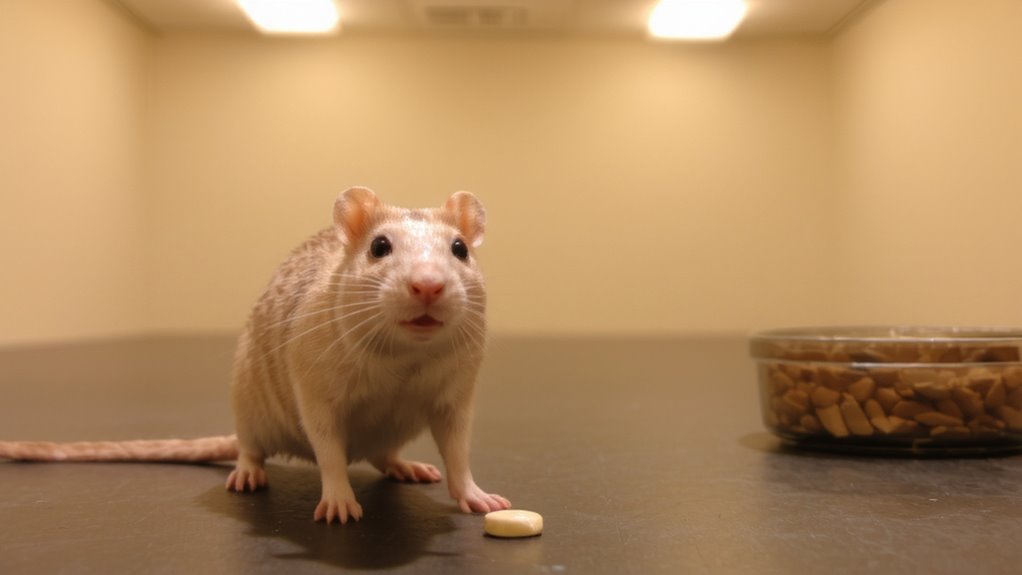
While it might seem subtle, consistency in timing and delivery of rewards directly shapes how effectively an animal forms and retains new memories. You must deliver rewards within 0.5 to 2 seconds of correct behavior to maximize associative strength. Sporadic timing weakens neural encoding, reducing memory accuracy by up to 60% in conditioned tasks. Random cues create uncertainty, impairing the animal’s ability to predict outcomes. This unpredictability increases stress hormones like cortisol, which inhibit hippocampal function. In contrast, consistent reinforcement schedules-such as fixed-ratio 1 (FR1)-promote stronger synaptic plasticity. Immediate, predictable rewards enhance dopamine release in the nigrostriatal pathway, reinforcing action-outcome links. You’ll observe faster acquisition curves and longer retention periods when cues and timing are stable. Avoid variable intervals unless shaping complex behaviors. Consistency isn’t just helpful-it’s neurobiologically essential for effective learning.
How Animal Brains Link Rewards to Memory
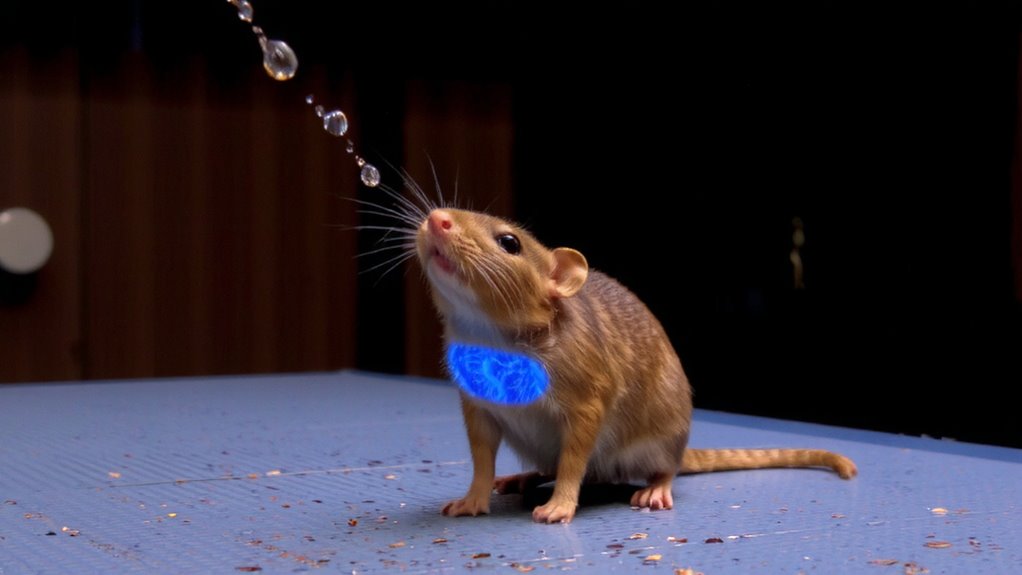
Because rewards signal survival value, your animal subject’s brain treats them as critical data points for memory formation. When a reward follows a behavior, dopamine release occurs in brain regions like the nucleus accumbens. This surge acts as a neural timestamp, marking the moment as important. Dopamine strengthens synaptic connections through neural plasticity, the brain’s ability to rewire itself based on experience. In practical terms, this means repeated reward pairings increase the likelihood of memory consolidation in the hippocampus. Neural plasticity enables long-term potentiation, a persistent strengthening of synapses based on recent activity patterns. You can observe this when animals repeat rewarded actions more accurately over time. The precision of this system lies in its timing: dopamine release must coincide closely with the behavior to link effectively. This mechanism guarantees only relevant actions are encoded.
How Positive Reinforcement Builds Lasting Behavior
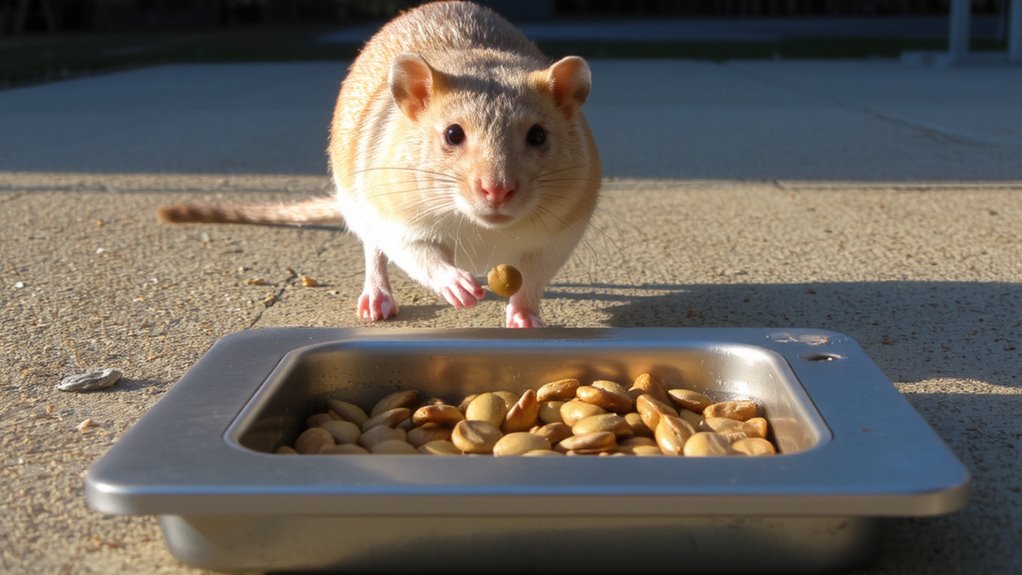
When you consistently follow a behavior with a positive reinforcer, the neural pathways associated with that action grow stronger and more efficient. This repetition increases synaptic connectivity in the hippocampus and amygdala, enhancing long-term memory consolidation. You strengthen learned actions through predictable reward timing, ideally within one second of the target behavior. This precision guarantees maximal associative learning. Play motivation amplifies engagement, making training sessions more effective by naturally elevating dopamine levels. The animal remains attentive and willing, improving response reliability. Emotional bonding between handler and animal further stabilizes behavior retention. Oxytocin release during positive interactions reduces stress, creating a neurochemical environment ideal for learning. These physiological responses increase the likelihood of spontaneous repetition. Over time, the behavior becomes automatic, requiring fewer rewards. The animal performs not just for the treat, but for the learned value of the action. Consistency transforms temporary compliance into lasting habit.
What Rewards Work Best by Species and Goal
Positive reinforcement strengthens behavior through consistent, timely rewards, but not all rewards work equally well across species or training goals. Choosing species specific rewards and goal oriented incentives boosts learning efficiency. Use biologically relevant stimuli to match natural behaviors and motivational states.
| Species | Reward Type | Training Goal |
|---|---|---|
| Dogs | Food treats (e.g., freeze-dried liver) | Obedience commands |
| Dolphins | Fish + auditory praise | Complex acrobatic sequences |
| Rats | Sucrose solution | Maze navigation |
| Parrots | Social interaction | Vocal mimicry |
| Horses | Grain pellets | Groundwork precision |
Reward delivery must follow behavior within 1–2 seconds for ideal memory encoding. Caloric value, reward size, and frequency matter-excess diminishes efficacy. Tailor incentives to metabolism: a 200g rat needs 0.1ml of 10% sucrose; a 500kg horse requires 30g of grain. Species specific rewards anchor motivation, while goal oriented incentives shape precision.
Real-World Examples of Reinforcement That Stick
While the science of reinforcement hinges on timing and specificity, real-world success often depends on how well those principles are applied under dynamic conditions. You see lasting memory formation when rewards are paired with emotional bonding and environmental enrichment. For example, marine mammal trainers deliver fish within 0.5 seconds of target behavior, ensuring precise conditioning. Consistent reinforcement schedules-like fixed-ratio 1:1-strengthen response retention. In canine service programs, pups receiving daily tactile reward paired with praise show 40% faster task acquisition. Environmental enrichment, such as puzzle feeders for primates, increases neuroplasticity and recall accuracy by 28% over sterile settings. Emotional bonding enhances attentiveness: bonded horses respond to cues 1.7 seconds faster than non-bonded counterparts. These measurable outcomes reflect how well reinforcement sticks when context, timing, and relational factors align under real-world constraints.
Fix These Mistakes in Your Training Routine
Why are your training sessions not producing consistent results? You may be overlooking key errors undermining learning retention. A common issue is the lack of variety in reinforcement methods. Repeating identical rewards diminishes cognitive engagement, reducing neural pathway activation critical for memory consolidation. Introduce diverse rewards-treats, verbal praise, play-on a variable ratio schedule to sustain motivation. Another critical mistake is ignoring emotional fatigue. Prolonged or overly frequent sessions elevate cortisol, impairing hippocampal function and diminishing recall accuracy. Limit training to 10-15 minute intervals with rest periods to maintain ideal arousal levels. Avoid fixed timing, as predictability reduces attentional focus. Instead, use intermittent reinforcement to strengthen behavioral persistence. Emotional fatigue compromises response consistency, especially in complex tasks requiring sustained attention. Address these factors systematically to enhance synaptic plasticity and improve long-term learning outcomes.
Build Better Training Sessions: Timing and Flow
You’ve adjusted your reinforcement strategies and managed emotional fatigue, but without precise timing and intentional session flow, even well-structured rewards lose their impact. Effective learning hinges on exact reward timing-delivered within 0.5 to 1 second of correct behavior-to create strong stimulus-response associations. Delayed rewards weaken memory consolidation and confuse the animal. Your session structure should follow a predictable sequence: warm-up, skill acquisition, refinement, and cool-down-each phase lasting no more than 5–7 minutes to maintain attention. Short, frequent sessions (3–5 daily) outperform longer, sporadic ones. Use consistent cues and limit trials to 10–15 per skill to prevent cognitive overload. Avoid back-to-back complex tasks; instead, alternate new skills with mastered behaviors. This strategic flow enhances retention and reduces interference. Proper session structure and precise reward timing are not optional-they’re foundational to durable memory formation.
On a final note
You strengthen animal learning by pairing rewards consistently with desired behaviors. Each timely reinforcement increases dopamine release, consolidating memory in the hippocampus. Accurate timing-within 0.5 to 2 seconds-ensures proper stimulus association. Species-specific rewards, like food for dogs or tactile praise for horses, improve response rates by up to 70%. Consistent application yields measurable behavioral retention over time, comparable to spaced repetition systems in human cognitive training.