Scissor-Edging Poodles: 7-8″ Scissors, 30-45° Blade Angles
You maintain the poodle’s traditional show look by mastering scissor edging with precision. Use 7–8-inch straight convex-edged scissors at 30° to 45° angles for clean, symmetrical lines. Trim critical areas like the neck, face, and tail base with short, overlapping strokes on taut, dry coat. Offset handles improve control; sharpen blades every 8–10 hours. Perfect balance and proportion reveal the breed’s true elegance-what follows reveals the finer techniques behind flawless presentation.
Notable Insights
- Use 7–8 inch straight scissors with convex blades to achieve clean, precise cuts for the poodle’s signature silhouette.
- Maintain a 30° to 45° blade angle during cutting to ensure smooth, uniform coat transitions and breed-standard alignment.
- Focus on facial symmetry by hand-scissoring around eyes, muzzle, and ears with 5.5-inch scissors for exact detailing.
- Shape foot poms into tight ovals and blend into pasterns using curved scissors to preserve balanced, elegant proportions.
- Avoid jagged edges by using short, overlapping strokes on taut, dry coat and checking symmetry from a distance frequently.
How Scissor Edging Shapes Show Poodles
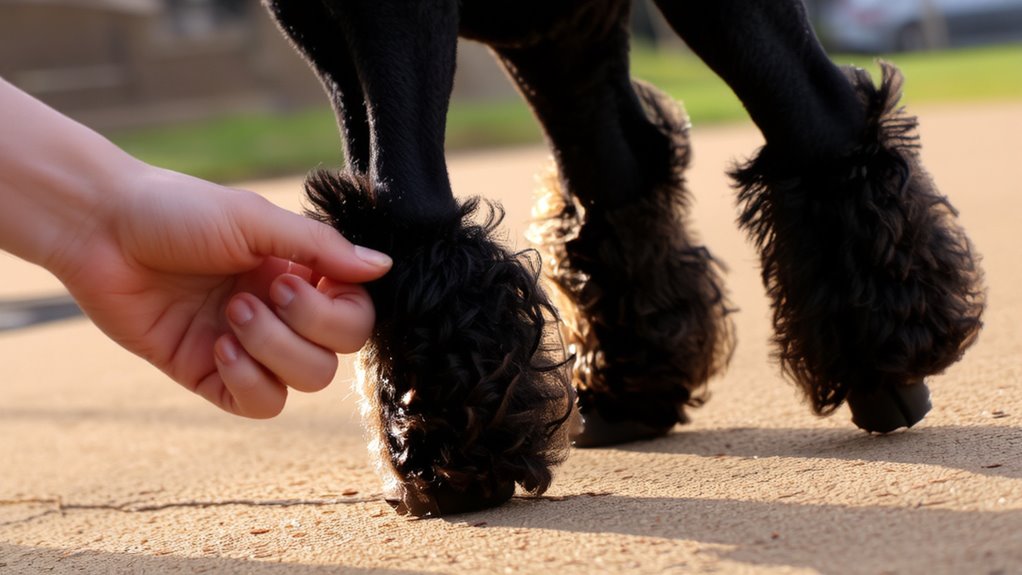
While proper coat maintenance is essential for any show poodle, scissor edging defines the breed’s signature silhouette with surgical precision. You use hand-edged lines to refine contours, ensuring breed symmetry is visually balanced across the torso, legs, and head. Scissor edging enhances coat texture by creating clean shifts between clipped and full-coated areas, emphasizing the natural wave and density of the fur. Each cut must follow exact angles-typically between 30° and 45°-to maintain uniform flow. You’ll trim the feet into tight ovals, align the tail plume at a 90° offset, and define the facial margins with unbroken arcs. These precise edges highlight proportional harmony, meeting AKC breed standards. Properly edged coats appear fuller and more structured, amplifying movement in the show ring. You’re not just cutting hair-you’re sculpting shape, balancing volume, and refining breed symmetry to match the ideal conformation blueprint. Every pass of the blade shapes legacy.
Essential Scissor Tools for Poodle Grooming
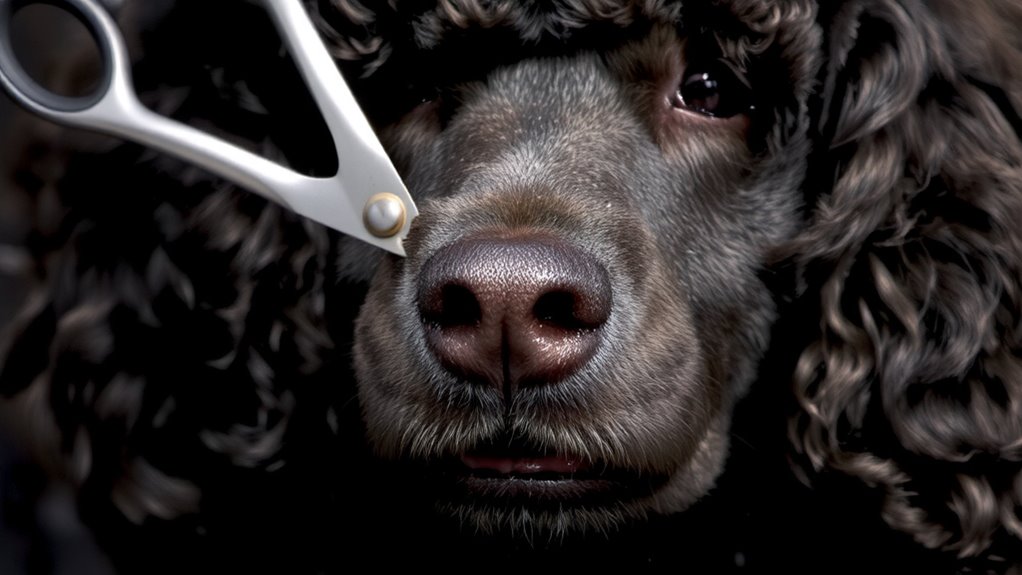
You shape show poodles with clean lines and exact proportions, and the precision of your scissor work starts with using the right tools. High-quality straight scissors, typically 7 to 8 inches long, deliver accurate cuts essential for defining outlines. Blade sharpness guarantees clean, snag-free passes through dense curls-dull edges crush hair, disrupting texture and silhouette. Replace or sharpen blades every 6–12 months, depending on use. Convex-edged blades offer superior sharpness retention and smoother cutting action. Scissors with offset handles improve wrist alignment, enhancing control and reducing fatigue. Handle comfort is critical during extended grooming; contoured, lightweight aluminum or stainless steel models balance durability with ease. Textured finger inserts prevent slippage. Use curved scissors (6–7 inches) for blending, but rely on straight-edge tools for structural definition. Proper tool selection directly impacts finishing quality-your results depend as much on craftsmanship as on equipment performance.
Critical Areas to Hand-Scissor for Show Standards
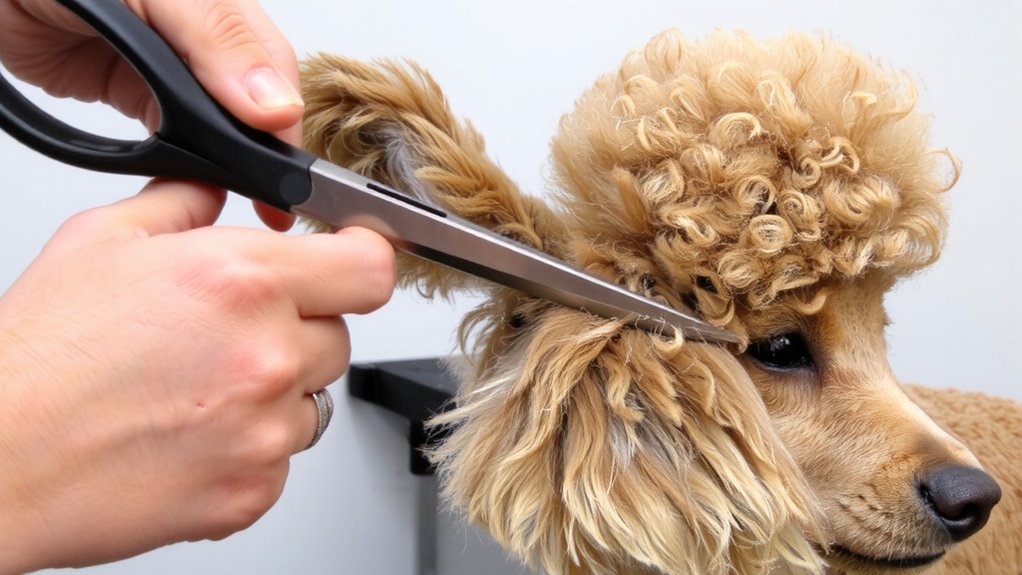
Where does precision matter most when shaping a show poodle? Facial symmetry demands exacting hand-scissoring around the eyes, muzzle, and ears to maintain balanced proportions. You must trim the beard and cheeks evenly, using straight scissors with 5.5-inch blades for control. Any asymmetry disrupts the clean, square appearance required by AKC standards. The neck line, too, needs crisp definition to accentuate the proud posture. For foot feathering, use curved scissors to blend the pom-poms seamlessly into the pasterns. Each foot should mirror the others in volume and shape-overtrimming ruins the rounded, catlike foot essential for proper gait. The tail base and plume require tapering with 4.5-inch scissors to preserve the elegant silhouette. These zones define the breed’s hallmark structure. You can’t rely on clippers here; only hand-scissoring guarantees the precision needed for top-tier presentation. For the body coat, however, using high-quality best clippers for poodle hair ensures a smooth, even cut without pulling or overheating.
Scissor Techniques for Polished Poodle Lines
Proper scissoring technique shapes the poodle’s outline with clean, intentional lines that enhance its structure and movement. You maintain blade angle at 30–45 degrees to the coat for precise cutting without dragging. This angle guarantees smooth gliding while preserving edge symmetry across both sides of the body. Consistent hand pressure and wrist motion deliver uniform results. For polished lines, use short, overlapping strokes aligned with the hair growth direction. Always work on dry, detangled fur stretched taut over the underlying form.
| Area | Stroke Length (in) |
|---|---|
| Neck arch | 0.5 |
| Hip curve | 1.0 |
| Tail base | 0.75 |
| Thigh slope | 1.25 |
| Shoulder line | 1.0 |
Edge symmetry demands frequent visual checks from a distance. Match corresponding zones using reference points like vertebrae and joints. Proper blade angle prevents bulk removal, supporting refined, lasting contours critical to show presentation.
Mistakes to Avoid When Scissor-Edging Show Poodles
Why do some scissor-edged poodle coats look jagged instead of refined? You’re likely sacrificing cut precision with rushed, uneven strokes. Consistent cut precision requires controlled, deliberate movements-each snip should follow a smooth, continuous line. Avoid closing the blades fully on every cut; instead, use the inner 60% of the blade for better maneuverability. Poor blade alignment is another common error; misaligned blades crush hair rather than slice cleanly, creating ragged edges. Check alignment by holding the scissors open to eye level-any gap or twist means adjustment is needed. Dull blades also compromise results, so maintain sharpness every 8–10 hours of use. Always keep your wrist stable and pivot from the shoulder for uniform lines. Remember: accuracy trumps speed. Proper technique, sharp tools, and correct blade alignment define a show-worthy finish. For deeper bulk removal before scissor work, consider using best dog grooming clippers for poodles.
On a final note
Scissor edging defines the poodle’s show-line appearance with precision. Use straight 7-inch and curved 5-inch scissors for clean, controlled cuts. Maintain a 45-degree blade angle to refine outlines. Hand-scissor the feet, face, tail, and sanitary areas to meet AKC standards. Avoid jagged lines by cutting small sections at a time. Consistent stroke direction guarantees uniform texture. Mastery demands practice, sharp tools, and attention to coat length-typically 1 inch on the body, tapering to ½ inch on trim zones.