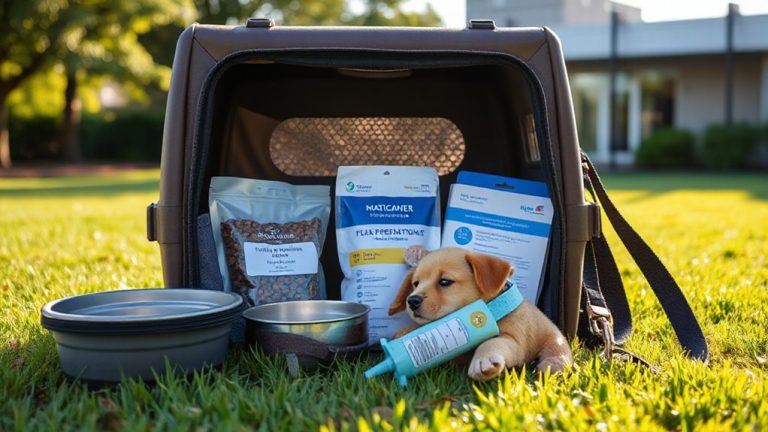
Creating a Pet Emergency Kit for Households With Snakes and Lizards
Keep your snakes and lizards safe with a dedicated emergency kit. Include 1–5 mL oral syringes and unflavored electrolyte powder mixed at 1 mL per 50 mL water for hydration. Pack a 24″ x 12″ breathable cloth wrap and a 6″ x 4″ x 4″ non-toxic PVC hide. Use a labeled, waterproof 10-quart container. Replace consumables every six months. You’ll also need solutions for heat, housing, and health monitoring when the unexpected happens.
Notable Insights
- Include oral syringes and unflavored electrolyte mix for safe, precise hydration of snakes and lizards during emergencies.
- Pack chemical heat packs, hot water bottles, and insulation materials to maintain safe temperatures during power outages.
- Use a ventilated plastic bin with secure lid and soft lining for safe, temporary housing of reptiles.
- Assemble a first aid kit with reptile-safe antiseptic, wound dressings, saline, and a blunt-tipped syringe for fluid delivery.
- Store updated veterinary records and conduct biannual evacuation drills to ensure a fast, organized emergency response.
Build Your Reptile Emergency Kit: What to Include
While every reptile owner hopes never to face a crisis, being prepared can make all the difference when emergencies strike. Your reptile emergency kit must include tools for hydration management and stress reduction. Pack oral syringes (1–5 mL) for precise water delivery. Include unflavored electrolyte powder, mixed at 1 mL per 50 mL of water, to maintain fluid balance. Use plastic drip bottles or small misters to encourage natural drinking behaviors. For stress reduction, add a breathable cloth wrap (24″ x 12″) for secure handling and a hide box (6″ x 4″ x 4″) made of non-toxic PVC. Include a digital thermometer (±0.5°F accuracy) and a hygrometer (±3% RH) to monitor conditions. Label all items clearly. Store everything in a waterproof, 10-quart container. Replace consumables every six months. Proper gear guarantees stability until normal routines resume.
Keep Reptiles Warm During Power Outages
If the power goes out, maintaining proper body temperature for your reptile becomes critical-since snakes and lizards are ectothermic, they rely entirely on external heat sources to regulate metabolism. Without heat sources, your pet can become hypothermic, halting digestion and weakening immunity. You must implement reliable insulation methods and backup heating immediately. Chemical heat packs, warm water bottles, and battery-powered heat mats serve as effective short-term solutions. Wrap these in towels to prevent direct contact and overheating. Place your enclosure in an interior room, and insulate it with blankets or foam boards to reduce heat loss.
| Heat Source | Duration (hrs) |
|---|---|
| Hand warmers | 8–12 |
| Hot water bottle | 3–5 |
| Battery heat pad | 6–10 |
| Body heat (safe hold) | 1–2 |
| Insulated enclosure | +2–4° retained |
Best Temporary Housing for Snakes and Lizards
A power outage demands immediate action to keep your reptile warm, but maintaining thermal stability means little without secure, functional housing to support those efforts. Use a rigid plastic storage bin with lid as temporary housing; it’s durable and easily modified. Drill small holes near the top for enclosure ventilation-¼-inch holes spaced 2 inches apart guarantee airflow while retaining heat and humidity. For escape prevention, secure the lid with tamper-proof clips or zip ties; snakes exploit gaps as small as ¼ inch. Line the bin with paper towels or reptile carpet to prevent abrasions. Choose bin dimensions that allow your reptile to stretch out fully but limit excess space, which hampers heat retention. A 10-gallon reptile thermal bag can be placed inside to maintain temperature. Always label the container with species name and handling warnings. This setup remains effective for up to 48 hours. For longer-term backup options, consider a portable reptile enclosure designed for ventilation and insulation.
What to Put in Your Reptile First Aid Kit
Your reptile first aid kit should contain essential medical supplies and tools tailored to the unique physiology of snakes and lizards. Include sterile gauze pads (2” x 2”), non-adherent wound care dressings, and reptile-safe antiseptic like chlorhexidine solution (0.05% concentration) for treating injuries. Add a digital thermometer accurate to ±0.1°C for monitoring body temperature. Carry saline solution for cleaning wounds and ocular irrigation. Include a small container of reptile hydration solution-mix 75% water, 20% pediatric electrolyte solution, and 5% dextrose-for emergency hydration tips. Use a 1ml syringe with blunt tip for safe fluid delivery. Add tweezers with fine tips and a magnifying lens for precise foreign body removal. Keep a notepad to log symptoms and treatments. All items fit in a waterproof, lightweight case. Replace expired contents every six months. This kit supports immediate response until veterinary care is available. For added preparedness, consider including a top-rated pet first aid kit that includes species-specific supplies and vet-approved tools.
Keep Vet Records Ready for Emergencies
Having immediate access to complete veterinary records can make a critical difference during a reptile emergency. You must keep your reptile’s medical history updated and organized. Unlike mammals, reptiles don’t require routine vaccination records, but documentation of received treatments, parasite screenings, and surgical procedures is essential. Store records digitally using encrypted cloud storage or a password-protected device, and include physical copies in your emergency kit. Each entry should list dates, diagnoses, medications administered, dosages, and veterinarian contact details. Proper recordkeeping enables fast, accurate treatment decisions. Include species-specific thermal and dietary requirements, as these inform clinical assessments. During transport to a clinic, provide first responders with immediate access to this data via a labeled USB drive or printed summary. Accurate documentation reduces misdiagnosis risk and supports continuity of care. Well-organized records are as crucial as any medical tool.
How to Monitor Your Reptile’s Health in a Crisis
When a health crisis strikes, knowing how to assess your reptile’s condition quickly and accurately can mean the difference between life and death. Check for lethargy, labored breathing, or abnormal posture-these are early red flags. Monitor hydration levels by gently pinching the skin; if it doesn’t snap back within two seconds, dehydration is likely. Sunken eyes and dry feces support this diagnosis. For accurate assessment, perform weekly weight tracking using a digital scale calibrated in grams. Sudden loss of more than 10% of body weight in one week indicates a serious problem. Use a consistent time of day for measurements to reduce variability. Record data in your emergency log to track trends. Accurate hydration and weight records provide critical insight during power outages, evacuations, or transport. These metrics help vets make faster, more precise decisions when every minute counts.
Run an Emergency Drill for Your Pet
Practicing emergency procedures ahead of time guarantees you can act quickly and correctly when every second matters. Rehearse evacuation procedures at least twice a year to guarantee efficiency during crises. Begin by simulating power outages or fire alerts to test response time. Use your labeled emergency kit, confirming all components-thermal bags, hydration syringes, microchip documents-are accessible within 30 seconds. Practice handling techniques with your snake or lizard to minimize stress and injury. Support the full body of larger reptiles; use clear acrylic tubes for secure, calm transport of snakes. For lizards, employ soft mesh carriers that allow ventilation and restrict movement. Conduct drills during varied conditions-night, cold, confined spaces-to build adaptability. Time each trial: a complete evacuation should take under five minutes. Record results to refine your process and improve outcomes.
On a final note
You’re prepared when disaster strikes. Your reptile emergency kit includes a thermal-insulated carrier, chemical heat pads rated for 72°F–85°F, and a battery-powered thermometer with ±0.5°F accuracy. A labeled first aid kit contains chlorhexidine, gauze, and saline solution. Digital vet records are stored on a waterproof USB drive. Regular drills guarantee timely, stress-minimized evacuations.