Substrate and Bedding Safety for Small Reptiles: Comprehensive Guide to Healthy Living
Your reptile’s health depends on choosing safe, species-appropriate substrate. Coconut fiber holds up to 70% moisture, maintaining 60–80% humidity for tropical species. Use 3–4 inches for burrowing, avoiding sand or gravel that causes impaction. Avoid aromatic woods and calcium sand-both are hazardous. A 1–2 inch drainage layer prevents waterlogging. Proper substrate supports hydration, shedding, and thermoregulation. The right setup mimics natural habitat conditions effectively. Next steps reveal how to match substrates to specific species’ needs.
Notable Insights
- Choose substrates like coconut fiber that retain moisture and maintain 60–80% humidity for tropical reptiles.
- Avoid sand and gravel to prevent impaction, especially in species prone to ingesting substrate during feeding.
- Provide 3–4 inches of burrowable, particle-sized (1–3 mm) substrate for natural digging and thermoregulation behaviors.
- Use hygrometers and thermal gradients to verify substrate supports proper humidity and temperature in the enclosure.
- Steer clear of aromatic woods like pine or cedar, which release toxic compounds harmful to reptile respiratory health.
Why Substrate Matters for Small Reptile Health
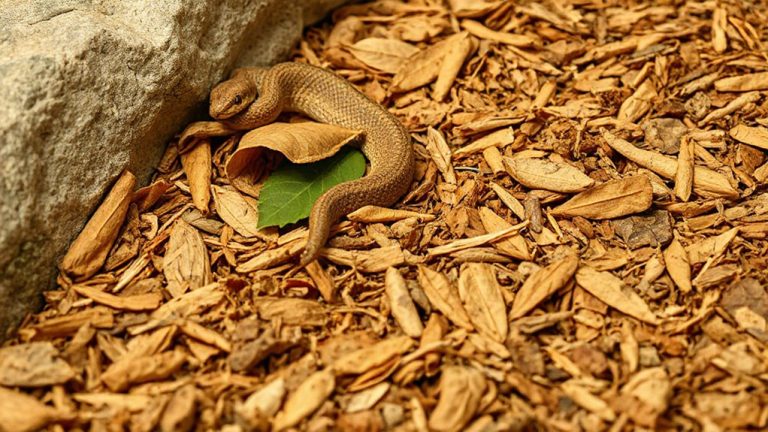
Every grain counts when it comes to your reptile’s well-being. The right substrate directly impacts health through proper hydration retention and support for natural burrowing behavior. Hydration retention refers to a material’s ability to hold moisture without fostering mold, essential for species requiring 60–80% humidity. Substrates like coconut fiber retain up to 70% of added water, maintaining stable microclimates. In contrast, sand holds less than 10%, increasing dehydration risk. Burrowing behavior is essential for thermoregulation and stress reduction. A suitable substrate must allow tunnel formation without collapse-ideal depth is 3–4 inches for small reptiles. Compaction resistance and particle cohesiveness determine structural integrity. Particles sized 1–3 mm support digging without impaction hazards. Improper materials restrict movement or cause intestinal blockages if ingested. You need substrates that balance moisture control, diggability, and safety. Your reptile’s physiological stability depends on these properties. Choose wisely.
Top Safe Substrates for Small Reptiles (And Why They Work)
Coconut fiber, also known as cocos husk, stands out as a top-tier substrate for small reptiles requiring moderate to high humidity. It retains up to 30% of its dry weight in moisture, supporting stable humidity levels between 60–80%. This consistency aids thermal regulation by minimizing air temperature fluctuations within the enclosure. The material is 100% organic, low-dust, and mold-resistant when properly maintained. Its soft, fibrous texture supports natural burrowing behavior, letting reptiles dig tunnels up to 3–4 inches deep without compaction. Depth should be at least 2–3 inches to allow full burrow expression. Calcium carbonate content buffers pH, reducing skin irritation risk. Avoid overly compacted layers; lightly compress only the base. It’s ideal for species like leopard geckos and crested geckos. Unlike sand or bark, it won’t cause impaction if ingested in small amounts.
Dangerous Substrates to Avoid for Reptile Safety
Gravel, sand, and other loose particulate substrates pose serious health risks to small reptiles and should be avoided in most captive environments. Ingestion of fine particles can lead to life-threatening impactions, especially in species prone to accidental consumption during feeding. These substrates also trap moisture, increasing parasite risks by supporting mite, mold, and bacterial growth. Avoid materials labeled as aromatic or containing pine or cedar-these release volatile compounds and are toxic materials that compromise respiratory health. Calcium sand, while marketed as digestible, still poses documented impaction hazards. Similarly, walnut shells and corncob bedding break down slowly, retain pathogens, and offer no sanitary benefit. Non-absorbent surfaces like polished stone or plastic mats are safer alternatives. Always prioritize substrates that resist microbial colonization and eliminate ingestion hazards. Your reptile’s long-term health hinges on minimizing exposure to physical and chemical hazards in its enclosure.
Match Substrate to Your Reptile’s Natural Habitat
While your reptile’s health depends heavily on proper enclosure design, selecting a substrate that mirrors its native environment is one of the most impactful choices you can make. You need a material that supports natural humidity retention specific to your species’ biome. For desert dwellers like leopard geckos, use coarse sand or soil blends that allow minimal moisture absorption-typically under 30% relative humidity. Tropical reptiles, such as crested geckos, require substrates like coconut fiber or sphagnum moss that sustain 60–80% humidity. If your reptile exhibits burrowing behavior, opt for substrates at least 2–3 inches deep with compaction resistance, such as excavator clay or organic topsoil. These materials support tunnel stability and prevent collapse. Matching substrate to habitat isn’t just aesthetic-it regulates physiological functions. Use thermal gradients and hygrometers to validate performance. You’ll minimize stress and enhance overall well-being.
Set Up a Healthy Substrate Layer in 5 Steps
A well-constructed substrate layer is essential for maintaining your reptile’s health and supporting natural behaviors. Start by selecting a safe, species-appropriate base material that mimics natural soil composition. Next, add drainage layers-like hydroton or coarse gravel-at the bottom to prevent waterlogging; aim for 1–2 inches to maintain moisture balance without saturation. Then, layer in a moisture-retentive material such as coconut coir or cypress mulch. Guarantee proper substrate thickness: 2–3 inches for burrowing species, up to 4 inches for deep diggers. This depth supports natural excavation instincts and aids thermoregulation. Always slope the substrate slightly toward the drainage zone for effective water flow. Finally, lightly mist the surface to activate moisture retention without oversaturating. This layered approach replicates natural habitat dynamics, promoting physical health and behavioral enrichment.
Maintain Substrate With Cleaning and Full Changes
You’ll need to clean the substrate routinely to prevent harmful bacterial buildup and maintain a healthy habitat. Spot cleaning should be performed daily by removing feces, uneaten food, and damp patches using tongs or a scooper. This reduces pathogen exposure and odor without disturbing the entire enclosure. For most substrates, replace soiled areas down to 1–2 inches deep. Deep cleaning is required monthly or bi-monthly, depending on reptile size and waste output. During deep cleaning, remove all substrate and disinfect the tank with a 1:30 bleach solution, rinsing thoroughly. Allow the enclosure to dry completely before adding fresh, species-appropriate substrate. For bioactive setups, replace 20–30% of the substrate every three months to sustain microbial balance. Proper maintenance extends substrate life, supports hygiene, and prevents respiratory or dermatological issues in small reptiles.
On a final note
Your reptile’s health depends on proper substrate choice. A safe, species-appropriate bedding prevents impaction and skin irritation. Use particle-free substrates like paper towels or reptile carpet for hatchlings. For desert species, silica-free play sand mixed with soil works at a 2:1 ratio. Maintain 1–2 inches of depth for burrowing. Replace soiled sections daily; do full changes monthly. Monitor humidity-keep between 30–60% for most species.