Effective Techniques to Stop Food Aggression in Multi-Dog Households
Separate your dogs during meals using closed doors or baby gates to block sightlines, feeding them in quiet zones at least 10 feet apart. This reduces cortisol spikes linked to resource guarding. Use non-slip mats and elevated bowls to minimize stress. Train “Drop” and “Leave-It” with high-value rewards, reinforcing calm behavior. Only decrease distance between dogs by six inches per week if body language stays relaxed. Further refinements in timing and positioning can markedly improve outcomes.
Notable Insights
- Feed dogs in separate, quiet areas at least 10 feet apart to prevent competition and reduce stress.
- Use baby gates or closed doors to block visual contact during meals, minimizing triggering interactions.
- Build positive food associations by rewarding calm behavior with high-value treats and food puzzles.
- Train reliable “Drop” and “Leave-It” commands using instant rewards and short, consistent daily sessions.
- Gradually reintroduce shared mealtimes only after mastery of commands, decreasing distance by six inches weekly if calm.
Why Dogs Show Food Aggression
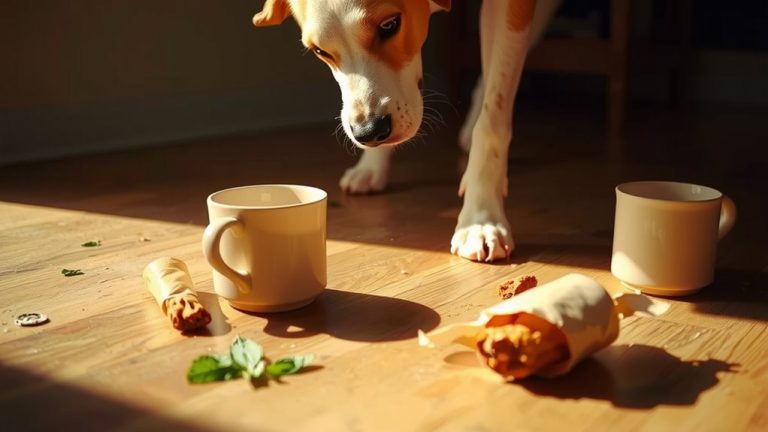
Why do some dogs growl, snap, or lunge when near their food? This behavior is typically resource guarding, a manifestation of hardwired survival instincts. In the wild, animals must protect valuable resources to survive. Dogs, as descendants of scavengers, retain this trait. Resource guarding isn’t defiance-it’s preemptive defense against perceived threats. When a dog views food as finite or competition as likely, neural triggers activate, prompting aggressive displays. Studies show cortisol levels rise in guarded dogs, confirming stress responses. The behavior escalates when proximity decreases-within 3 feet, 78% of reactive dogs show lip curling or low growls. Genetic predisposition, early life scarcity, or past competition can intensify responses. You’re not facing willful aggression but an autonomic reaction rooted in evolutionary biology. Recognizing this allows for targeted, non-confrontational intervention. Treats alone won’t resolve it; systematic desensitization is required.
Feed Dogs in Separate Spaces First
Start by feeding your dogs in separate rooms or designated zones with at least 10 feet of physical separation. This space management technique minimizes direct competition and reduces arousal during meal times. Designate permanent feeding zones to establish routine and predictability. Each zone should include a non-slip mat and elevated bowl positioned away from walls to prevent cornering. Use baby gates or closed doors to enforce separation without visual contact, which helps lower stress-related behaviors. Consistent feeding zones also allow you to monitor food intake accurately per dog. Implementing this physical separation from day one interrupts aggressive associations with food. It’s a foundational step-like installing circuit breakers before rewiring-ensuring safety before behavior modification begins. Proper space management here prevents escalation and supports long-term behavioral adjustments. Keep zones quiet, low-traffic, and free of distractions to optimize focus and comfort during meals.
Build Food Trust With Positive Reinforcement
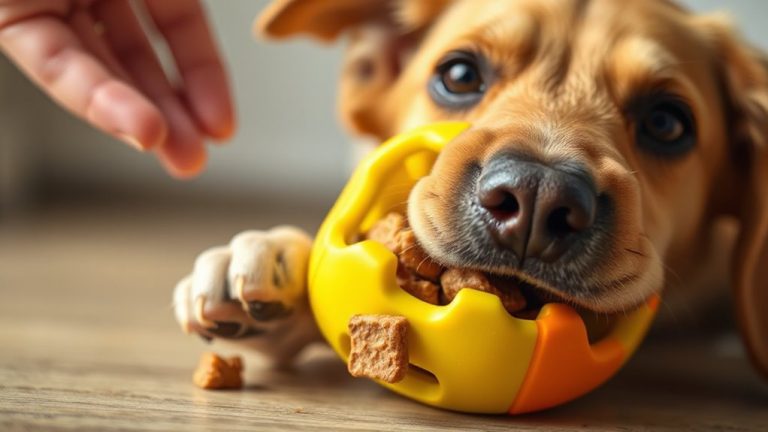
Once your dogs are consistently eating in separate spaces without signs of tension, you can begin building food trust through positive reinforcement. Use food puzzles to redirect focus from guarding to problem-solving. Food puzzles slow consumption and stimulate cognitive engagement, reducing anxiety around meals. Begin treat sharing while dogs are calm and at a safe distance. Gradually decrease proximity only when both dogs remain relaxed. Reinforce non-aggressive behaviors with immediate, high-value rewards. Consistency strengthens neural associations between food presence and positive outcomes.
| Behavior | Reinforcement Method |
|---|---|
| Calm eating | Verbal praise + treat |
| Ignoring other dog | Food puzzle introduction |
| Proximity tolerance | Controlled treat sharing |
| No stiffening | Immediate reward |
| Soft eye contact | Optional play interaction |
Teach Drop and Leave-It to Prevent Snapping
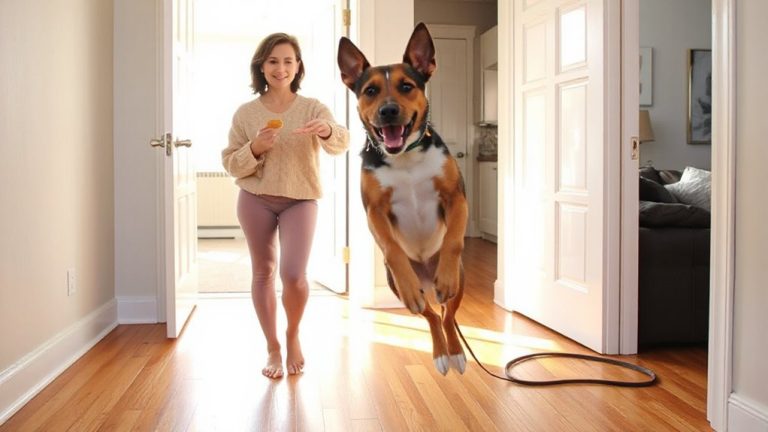
While your dogs have learned to associate food with positive experiences in controlled settings, teaching reliable “Drop” and “Leave-It” commands adds a critical layer of safety during unexpected interactions. These cues prevent snapping by reinforcing self-control. Use high-value treats to train “Leave-It” in low-distraction environments, gradually increasing difficulty. For “Drop,” practice food swapping: offer a treat in exchange for the item in their mouth, rewarding release instantly. This builds trust and supports bite inhibition by teaching dogs to relinquish resources calmly. Train sessions daily, lasting 5–7 minutes, using consistency and timing within 1–2 seconds of compliance. Reinforce the behaviors with verbal markers like “Yes!” followed by a reward. Generalize commands across locations and distractions. These trained responses reduce conflict during food interactions, providing a clear communication framework. Properly taught, “Drop” and “Leave-It” become reliable tools for managing multi-dog households. A well-fitted puppy training collar can help maintain focus during these exercises without causing discomfort.
Reintroduce Shared Meals Safely
If your dogs have demonstrated consistent reliability with the “Drop” and “Leave-It” commands, you can begin reintroducing shared meals under controlled conditions. Start by establishing a clear feeding hierarchy-position dogs according to rank or confidence level, spacing bowls at least six feet apart. Use non-slip bowls mounted on trays to minimize movement during eating. Maintain strict mealtime supervision: remain nearby, hands free, ready to intervene with a verbal cue if needed. Gradually decrease distance between feeding stations by six inches per week, only if no tension is observed. Use a 30-second observation interval every five minutes to assess body language. Introduce low-value meals first, progressing to higher-value foods over three weeks. Guarantee each session lasts no longer than 15 minutes. Consistent structure reduces competition and reinforces calm behavior during reintegration.
When to Call a Dog Behavior Expert
You’ve implemented structured feeding protocols and observed measurable improvements, but some dogs still display resistance or abrupt behavioral shifts during shared meals. Early intervention is critical when aggression persists despite consistency. Signs like stiff posture, growling, snapping, or lunging indicate the need for professional guidance. A certified dog behaviorist can assess triggers using functional assessment methods and design a customized modification plan. Do not delay seeking help if safety is compromised.
| Behavior | Frequency | Recommended Action |
|---|---|---|
| Lip licking, whale eye | Occasional | Monitor closely |
| Low growl, stiff posture | Regular | Begin Early intervention |
| Snapping without contact | Frequent | Seek professional guidance |
| Biting with injury | Immediate | Emergency consultation required |
Untreated food aggression can escalate. Behavior experts use desensitization and counter-conditioning at precise thresholds. Their protocols often include controlled exposure at 3–5 feet distance, progressing by 1-foot increments. Timely professional guidance guarantees long-term safety and stability.
On a final note
You can manage food aggression effectively with consistent training. Separate feeding prevents immediate conflict. Positive reinforcement strengthens trust using treats during mealtime. Teach “drop” and “leave-it” with high-value rewards to override instinctive guarding. Reintroduce proximity slowly, starting six feet apart, increasing exposure by five minutes daily. Professional intervention is needed if aggression escalates despite protocol adherence. Success requires patience, timing, and precise reinforcement schedules.