Ventilation and Air Quality Management for Indoor Exotic Animals
You need proper ventilation to prevent respiratory stress and toxic buildup in your exotic pet’s enclosure. Maintain 4–6 air changes per hour (ACH) for reptiles or 10–12 for birds using a balanced system with 50–200 CFM inline fans. Keep airflow below 2 m/s to avoid dehydration, using low-velocity directional vents at <0.5 m/s. Control ammonia with hydrated sodium bisulfate and eliminate mold using UVGI at 254 nm. Sustained air quality means pairing HEPA-carbon filters with corrosion-resistant ductwork and sensors that update every 10 seconds-there’s more to optimizing each component effectively.
Notable Insights
- Maintain 4–6 air changes per hour for reptiles and 10–12 for birds to ensure proper gas exchange and metabolic byproduct dispersion.
- Use balanced ventilation systems with variable-speed fans to achieve stable humidity, temperature, and air quality without energy waste.
- Install low-velocity directional vents (<0.5 m/s) to prevent drafts while ensuring even air distribution and thermal consistency.
- Combine HEPA and activated carbon filtration with UVGI or chlorine dioxide to remove particulates, ammonia, VOCs, and mold effectively.
- Clean filters monthly and monitor CO₂, humidity, and temperature every 10 seconds to maintain species-specific environmental health.
How Poor Ventilation Harms Exotic Pets
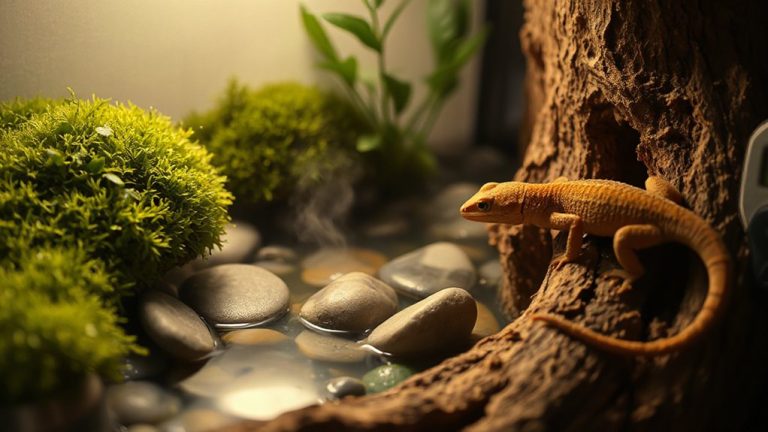
While fresh air might seem like a basic need, inadequate ventilation in exotic pet enclosures can lead to dangerous health issues over time. Poor airflow traps moisture and ammonia, increasing the risk of respiratory distress in species with sensitive pulmonary systems. Stagnant air elevates CO₂ levels above 1,500 ppm, impairing oxygen exchange in reptiles and small mammals. Without sufficient air exchange-recommended at 4–6 ACH (air changes per hour)-heat and humidity build up, causing thermal stress. Internal temperatures exceeding species-specific thresholds, such as 90°F for crested geckos, reduce metabolic efficiency. Mesh enclosures with at least 50% surface ventilation on top or sides enhance convection. Internal fans moving 10–20 CFM support evaporation and prevent microclimates. You must balance airflow with humidity retention, especially for tropical species. Direct drafts over 2 m/s can dehydrate skin and mucous membranes. Proper ventilation isn’t optional-it’s a mechanical necessity for physiological stability.
Why Air Quality Matters for Reptiles, Birds & Mammals
Since reptiles, birds, and exotic mammals can’t tell you when the air’s turning toxic, you’ve got to monitor it for them-because even slight deviations in air quality can trigger serious health problems. Poor air quality directly compromises respiratory health, leading to infections, reduced immunity, and shortened lifespans. Adequate airflow removes CO₂, ammonia, and moisture while supporting environmental enrichment through stable thermal and humidity gradients.
| Species Type | Ideal Humidity Range | Critical Pollutant Sensitivity |
|---|---|---|
| Reptiles | 30–70% (species-dependent) | High (ammonia, VOCs) |
| Birds | 40–60% | Extreme (aerosols, smoke) |
| Exotic Mammals | 45–55% | Moderate (dust, CO₂) |
Stagnant air promotes pathogen growth. Proper air exchange-0.5 to 2 complete changes per hour-ensures metabolic byproducts disperse before reaching harmful concentrations. You’re not just managing air-you’re sustaining physiological balance.
Pick the Right Ventilation System
You’ve got the basics of air quality down-now it’s time to control it with the right ventilation system. System selection depends on your animals’ needs and enclosure layout. Choose between exhaust, supply, or balanced systems based on airflow demands. For most exotic species, a balanced system offers ideal control. Equipment sizing is critical-undersized units cause poor air exchange; oversized ones waste energy and disrupt stability. Calculate cubic feet per minute (CFM) by multiplying room volume by air changes per hour (ACH). Reptile rooms need 4–6 ACH; avian areas may require 10–12. Use fans with variable speed controls for adaptability. Ductwork should minimize bends to maintain static pressure below 0.2 inches of water. Select corrosion-resistant materials like PVC or coated metal. Proper system selection and equipment sizing guarantee reliable, efficient performance.
Balance Airflow, Temp, and Humidity
How do you maintain stable conditions when airflow, temperature, and humidity interact so closely? You control airflow turbulence to prevent sudden drafts that disrupt microclimates. Strong air currents cool animals too quickly and alter humidity unevenly. Use low-velocity, directional vents-under 0.5 m/s-to minimize disturbance. Avoid placing inlets near heat sources or animal zones. Thermal stratification occurs when warm air rises and cold air sinks, creating vertical temperature layers up to 5°C different per meter. That’s dangerous for reptiles needing precise basking gradients. Combat this with vertical air mixing via ceiling fans or ducted returns at multiple heights. Maintain 68–78°F and 40–60% RH through coordinated HVAC cycles. Sensors should update every 10 seconds. Balance means matching airflow volume (measured in CFM) to heat output (watts) and moisture load (g/hr) for stable, species-specific conditions.
Remove Ammonia, Mold, and Odors Fast
Even trace amounts of ammonia can damage respiratory tissues in exotic animals, so rapid removal is critical. You must act quickly using effective air purification methods. HEPA filters capture mold spores down to 0.3 microns, while activated carbon filters adsorb gaseous pollutants. Air purification alone isn’t enough-combine it with chemical neutralization. Products containing hydrated sodium bisulfate neutralize ammonia on contact, reducing concentrations from harmful levels (above 20 ppm) to safe thresholds (under 5 ppm) within 30 minutes. For odors and mold, use chlorine dioxide generators at 0.03–0.05 ppm concentration-it’s potent but safe when dosed correctly. Ultraviolet germicidal irradiation (UVGI) at 254 nm wavelength destroys mold DNA, preventing spore replication. Run systems continuously during contamination events. Chemical neutralization breaks down contaminants at the molecular level, unlike masking agents. This dual strategy-air purification and chemical neutralization-ensures fast, complete air detoxification. Immediate response protects sensitive species.
Daily Air Quality Maintenance for Exotic Pets
Why do some enclosures maintain pristine air quality day after day? You achieve consistent results through daily use of high-efficiency air filtration and strategic noise reduction. Run a HEPA filter with a CADR rating of at least 150 to capture 99.97% of airborne particles down to 0.3 microns. Pair it with an activated carbon layer to neutralize volatile organic compounds. Operate the system 24/7 at low decibel settings-under 35 dBA-for effective noise reduction, minimizing stress in sensitive species. Clean filters every 30 days to maintain airflow efficiency. Monitor humidity between 40–60% using a digital hygrometer, as excess moisture degrades filtration performance. Use inline duct fans with variable speed control (50–200 CFM) to guarantee steady air exchange without drafts. Daily maintenance isn’t optional-it’s essential for preventing respiratory issues. Proper filtration and quiet operation keep your exotic pets healthy and your environment stable.
On a final note
You must maintain proper ventilation to protect your exotic pets’ health. Stagnant air raises ammonia and mold levels, harming respiratory systems. Use a variable-speed exhaust fan with at least 80 CFM for a 50 sq ft enclosure. Pair it with a passive intake vent to guarantee balanced airflow. Control humidity between 40–60% using a hygrometer. This prevents pathogen growth while sustaining ideal thermal gradients.