Understanding the Substrate and Bedding Safety Needs for Insect Pets: What You Need to Know Now
You need a safe, species-appropriate substrate to keep your insect healthy. Use neutral pH materials (6.5–7.5) like coconut coir or peat moss, free of pesticides and synthetic additives. Maintain 30–60% substrate moisture and 60–70% humidity, adjusting for your insect’s needs. Guarantee 2–4 inches of well-aerated, drain-friendly bedding to support burrowing and gas exchange. Sterilize organic substrates at 180°F for two hours or use pre-sterilized options to prevent mites and pathogens. Choosing the right bedding now sets the foundation for ideal habitat conditions you’ll want to get right.
Notable Insights
- Maintain a neutral pH between 6.5 and 7.5 to support healthy molting and exoskeleton development in insect pets.
- Use sterile, inert substrates like coconut coir or peat moss to prevent harmful microbial growth and parasite infestations.
- Avoid pesticides, fertilizers, and synthetic additives in bedding materials to eliminate risks of chemical toxicity.
- Ensure proper moisture retention and drainage to maintain 60–70% humidity without water pooling or bacterial growth.
- Match substrate depth and texture to species-specific needs, such as burrowing depth for tarantulas or dry sand for desert roaches.
What Makes a Substrate Safe for Pet Insects?
Why do some substrates support healthy insect colonies while others lead to mold, mites, or suffocation? The answer lies in their chemical composition and microbial presence. You need substrates with neutral pH levels (6.5–7.5) to avoid harming sensitive exoskeleton conflations or disrupting molting. Avoid materials treated with pesticides or artificial fertilizers-these chemicals are toxic even in trace amounts. Opt for natural, inert materials like coconut coir or peat moss, which have low nutrient content that limits harmful microbial growth. Beneficial microbes are okay; pathogenic ones aren’t. A sterile or pasteurized substrate reduces risks of fungal blooms and mite infestations. Guarantee proper particle size-too fine, and it compacts, reducing aeration; too coarse, and it doesn’t retain moisture. Good substrates balance moisture retention (30–60% humidity at substrate level) without becoming anaerobic.
Match Bedding to Your Insect’s Natural Habitat
When selecting bedding for your insect pets, starting with their natural environment gives you a clear advantage. You’ll replicate essential conditions they evolved to need. For forest-dwelling species like certain beetles, use moist coco fiber or leaf litter to support humidity and temperature regulation. Desert species, such as mealworms or certain roaches, thrive on dry sand or fine-grain substrates that minimize moisture retention. Match the bedding’s depth-typically 2 to 4 inches-to allow burrowing and thermal gradients. Guarantee proper ventilation needs are met: use mesh lids with substrates that won’t clog airflow. Avoid compaction, which impedes gas exchange and disrupts microclimates. You must maintain thermal stability; organic bedding like peat moss buffers temperature shifts better than inert materials. Always research your insect’s native habitat to determine correct substrate composition, moisture range, and structural complexity. This precision guarantees physiological health and natural behavior expression.
Avoid These Common Substrate Hazards
Many commercially available substrates contain materials that pose serious health risks to insect pets. Chemical toxicity is a leading concern-some products contain preservatives, dyes, or pesticides that can impair respiration or damage exoskeletons. Even low-level exposure over time may reduce lifespan or halt reproduction. You should always inspect ingredient labels and avoid substrates with synthetic additives. Coconut coir is generally safe if rinsed, but peat moss may contain traces of heavy metals. Parasite infestation is another risk, especially in untreated wood or soil-based substrates. Mites, nematodes, and fungal spores can hitchhike into your enclosure. To prevent this, sterilize all organic substrates at 180°F for two hours or purchase pre-sterilized options. Avoid garden soil or wild-collected materials-they’re common vectors. Choosing inert, clean, and verified substrates guarantees a biologically stable environment for your insect colony.
Keep Bedding Moist and Clean
Regularly maintaining proper moisture levels in your insect’s bedding is essential for supporting healthy molting and respiration. You must strike a balance-too much moisture invites mold, too little causes desiccation. Aim for 60–70% humidity, adjusting based on species-specific needs. Good bedding drainage prevents water accumulation, reducing bacterial growth and root rot in live setups. Use substrates with strong moisture retention, like coconut fiber or peat moss, which hold water evenly and release it slowly. Check bedding every 2–3 days; it should feel damp but not soggy. If water pools at the bottom, your drainage layer is inadequate-add coarse gravel or perlite beneath the substrate. Clean contaminated bedding immediately to prevent pathogen spread. Proper moisture retention guarantees stable humidity, critical for respiratory function in tracheal systems. Replace soiled spots daily and do full changes monthly. Consistent hygiene supports longevity and reduces stress.
Top Substrates by Insect Type
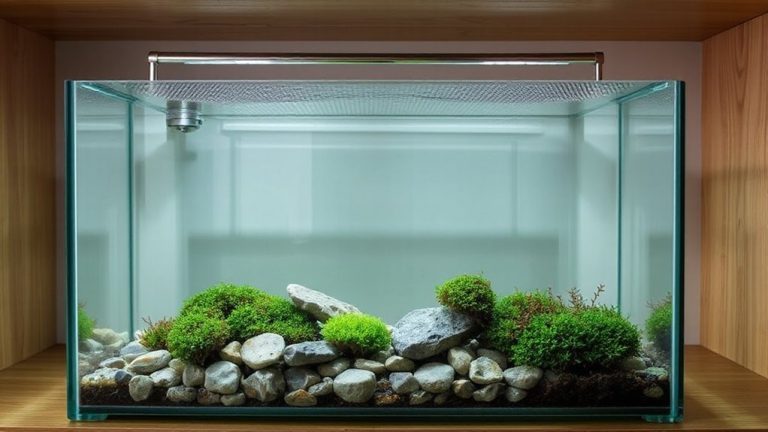
Your insect’s survival hinges on matching the substrate to its natural habitat and physiological needs. For leaf litter dwellers like stick insects, use a 2-inch substrate depth of coconut fiber mixed with sphagnum moss; this retains moisture while supporting microfauna. Ventilation needs are moderate-ensure enclosures have mesh tops to prevent mold. Burrowing species such as tarantulas require at least 4 inches of a soil and sand blend (70/30 ratio) to enable tunneling without collapse. Ventilation needs are low, but airflow must still prevent stagnant air. Springtails thrive in a 1-inch layer of activated charcoal and peat, with minimal ventilation needs due to high tolerance for humidity. Roaches need 3 inches of organic soil or vermiculite, with high ventilation needs to manage ammonia buildup. Always monitor substrate depth to prevent desiccation or drowning.
On a final note
Choose the right substrate to guarantee your insect’s health and longevity. Match bedding to species-specific humidity and burrowing needs. Avoid substrates with chemical additives or excessive dust. Maintain moisture levels between 60–80% for most tropical species. Use coconut fiber, peat moss, or vermiculite in layered setups for maximum aeration and drainage. Replace soiled bedding weekly to prevent mold and mite infestations. Proper substrate management supports natural behavior and reduces stress.