Why Some Dogs Gain Weight on “Weight Control” Diets—and How to Troubleshoot
Your dog may gain weight on “weight control” diets because many contain 300–350 kcal per cup-too high for inactive dogs needing only 200–250 kcal/cup. These foods often skimp on protein (below 25% dry matter), promoting muscle loss and slowing metabolism. Fillers like corn add calories without satiety. Hidden calories from treats and inaccurate cup measurements worsen imbalances. True progress requires precise portions, better food choices, and ruling out hypothyroidism or insulin resistance-key factors that adjusting your approach can uncover.
Notable Insights
- Weight control diets may still be too high in calories, exceeding the needs of inactive dogs despite lower fat claims.
- Hidden calories from treats, chews, and table scraps can significantly surpass daily energy requirements unnoticed.
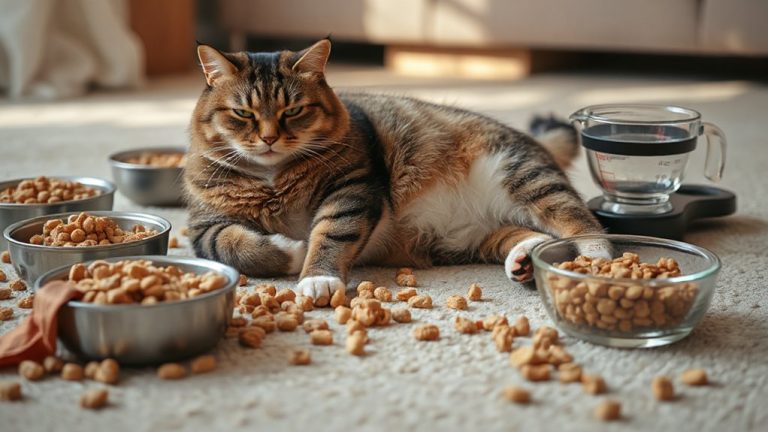
- Feeding by volume with cups leads to overfeeding; use a kitchen scale for accurate portion control.
- Inadequate protein in some light formulas causes muscle loss, lowering metabolism and hindering fat loss.
- Medical issues like hypothyroidism or insulin resistance can prevent weight loss even with diet changes.
Why Weight Control Dog Food Fails
While you may think switching to a weight control dog food guarantees results, many formulas fail to deliver meaningful weight loss due to misleading nutrient profiles. Nutrient density is often too high, packing excess calories into small volumes. These diets may reduce fat but compensate with fillers like corn or soy, which lack satiety value. Your dog’s metabolism adjusts through metabolic adaptation, slowing energy expenditure when calorie intake drops without sufficient protein. This undermines weight loss. Many “light” foods contain 300–350 kcal/cup-still excessive for inactive dogs needing only 200–250 kcal/cup. Protein levels below 25% on a dry matter basis worsen muscle loss. Without preserving lean mass, basal metabolic rate declines further. Check guaranteed analysis: look for 20–25% protein, under 12% fat, and at least 3% fiber. Realistic results require food formulated for sustained energy balance, not just reduced calories. High-quality Best Pitbull Dog Food Picks can offer balanced nutrition that supports weight management without sacrificing essential nutrients.
How Hidden Calories Make Dogs Gain Weight
How many calories are your dog really consuming each day? Hidden calories from treats, table scraps, and even chews can sabotage weight loss, even on a “weight control” diet. These extras often carry high caloric density, packing more energy per gram than main meals. Portion distortion worsens the issue-what seems like a small treat may equal a full meal calorie-wise.
| Item | Calories |
|---|---|
| Dental chew (1) | 120 kcal |
| Cheese cube (1 oz) | 90 kcal |
| Cooked chicken (1 tbsp) | 30 kcal |
| Commercial treat (1) | 45 kcal |
You might not count these, but your dog’s body does. Overestimating acceptable extras leads to unintended surplus. Caloric density varies widely among treats, so always check labels. Portion distortion occurs when estimated servings exceed recommended amounts. Accurately measure all food and treats daily. Even healthy options contribute to total intake.
Why Feeding Charts Lie (And What to Do Instead)
Why do so many dogs still gain weight even when you follow the feeding chart to the letter? Feeding charts are generalized tools based on averages, not individual needs. They propagate feeding myths by assuming all dogs of a breed or weight have identical metabolisms. In reality, metabolic rates vary up to 30% between individuals. Portion errors compound the problem-measuring food by volume with household cups can deviate by as much as 25% from labeled amounts. A 10-pound dog needing 280 kcal/day might consume 350 kcal due to imprecise scooping. Use an 8-ounce kitchen scale for dry food to guarantee accuracy within 5 grams. Adjust intake based on body condition score and monthly weight trends, not just age or breed guidelines. Monitor with bi-weekly weigh-ins using a digital pet scale accurate to 0.1 pound. Relying solely on feeding charts undermines precision; replace estimates with measured, individualized plans for real results.
Snack Creep: Why Treats Ruin Weight Control
Even when you meticulously measure main meals, hidden calories from treats can undermine your dog’s weight loss. Treat frequency often goes untracked, turning rewards into excess energy. A single high-calorie treat given multiple times daily adds hundreds of empty calories. Portion distortion worsens this-many owners use oversized or calorie-dense treats without adjusting the main diet. For example, a 10 kg dog on a 400 kcal/day plan can exceed limits with just three tablespoons of peanut butter (288 kcal). Low-calorie training treats average 3–5 kcal each; using more than 10 per day requires recalculating total intake. Always account for treats as part of the daily calorie budget. Replace high-calorie options with diced vegetables (e.g., carrots at 25 kcal per 1/2 cup) or portion-controlled commercial light treats. Track every treat to maintain energy balance. Shih Tzus, in particular, benefit from low-calorie training treats due to their predisposition to weight gain and sensitive digestion.
Medical Reasons Your Dog Can’t Lose Weight
While diet and exercise are foundational to weight management, underlying medical conditions can block progress despite your best efforts. Hypothyroidism is a common culprit; your dog’s thyroid gland produces insufficient thyroxine (T4), slowing metabolism. A hypothyroidism diagnosis typically requires blood tests showing low total T4 and elevated TSH levels. Without treatment, weight gain persists even on calorie-restricted diets. Insulin resistance is another factor-cells fail to respond to insulin, impairing glucose uptake and promoting fat storage. It’s commonly seen in older, obese dogs or those with Cushing’s disease. Chronic insulin resistance elevates circulating insulin, driving appetite and fat accumulation. These conditions mimic diet failure but require medical intervention. Blood panels and endocrine function tests are essential for accurate detection. Treating the root cause-levothyroxine for hypothyroidism or dietary adjustments plus possible medication for insulin resistance-restores metabolic balance. Always consult your vet if weight loss stalls despite rigorous diet control.
How to Pick the Right Weight Control Dog Food
Choosing the right weight control dog food becomes critical after ruling out medical causes like hypothyroidism or insulin resistance. You need a formula with high ingredient quality to guarantee nutritional adequacy despite reduced calories. Look for named protein sources-like chicken or fish meal-listed as the first ingredients; avoid by-products or generic grains. These provide consistent amino acid profiles essential for lean muscle maintenance. Fiber balance is equally important. Aim for 5–10% crude fiber on a dry matter basis. Soluble fibers like beet pulp or psyllium regulate digestion and enhance satiety, reducing begging. Too little fiber leads to hunger; too much impairs nutrient absorption. Calorie density should be under 3,000 kcal/kg, with fat content between 8–12%. Always verify guaranteed analysis and compare dry matter basis values across brands. This precision guarantees you’re not overfeeding unintentionally.
5 Science-Backed Tweaks to Restart Weight Loss
Why is your dog not losing weight despite being on a controlled diet? Metabolic adaptation may have slowed their calorie burn. Your dog’s body could be conserving energy, making continued weight loss difficult. You might also face an exercise imbalance-too little activity to offset intake. Restart progress with science-backed adjustments.
| Tweak | Action | Effect |
|---|---|---|
| Increase protein intake | Feed 30% more high-quality protein | Preserves lean mass, boosts metabolism |
| Adjust feeding frequency | Split meals into 3 daily portions | Stabilizes insulin, reduces hunger |
| Boost activity level | Add 15 min of brisk walking daily | Corrects exercise imbalance, burns extra 20–40 kcal |
| Cycle calorie intake | Alternate 10% higher/lower calories weekly | Counters metabolic adaptation |
Modify diet structure and physical demand systematically. These evidence-based strategies reset energy balance.
On a final note
You must adjust your dog’s feeding plan based on body condition, not just labels. Weight control diets often fail due to excessive carbohydrate content-some exceed 45% of metabolizable energy. Monitor calorie intake strictly; even 10 extra treats daily can add 150 kcal. Use a gram-scale to measure food. If no 1% weekly weight loss occurs, reassess calorie intake, rule out hypothyroidism, and consult your vet.