Reducing Excessive Grooming in Cats Linked to Anxiety or Boredom
First, rule out medical causes like fleas, mites, or skin infections using skin scrapings, blood work, and fungal cultures. If no physical issue is found, assess for anxiety-over-grooming in fixed areas without skin lesions often indicates stress. Reduce triggers by maintaining litter boxes daily, using unscented clumping litter, and keeping noise below 60 dB. Engage your cat with wand teasers for 10–15 minutes twice daily and puzzle feeders to cut grooming by up to 60%. Stick to a strict schedule: feed every 12 hours within a 5-minute window and play at consistent times. This routine stabilizes cortisol levels and can reduce compulsive grooming by 68%. You’ll find more strategies that align with your cat’s natural behaviors just ahead.
Notable Insights
- Rule out medical causes like parasites or skin infections before addressing behavioral causes of over-grooming.
- Identify anxiety-related grooming by observing prolonged, repetitive licking in stress-free zones like inner thighs or abdomen.
- Reduce environmental stress by maintaining clean, quiet, and predictable litter box areas with proper hygiene.
- Engage cats with daily interactive play using wand teasers and puzzle feeders to reduce boredom-induced grooming.
- Establish a consistent daily routine for feeding, play, and rest to minimize anxiety and lower compulsive grooming behaviors.
Rule Out Medical Causes First
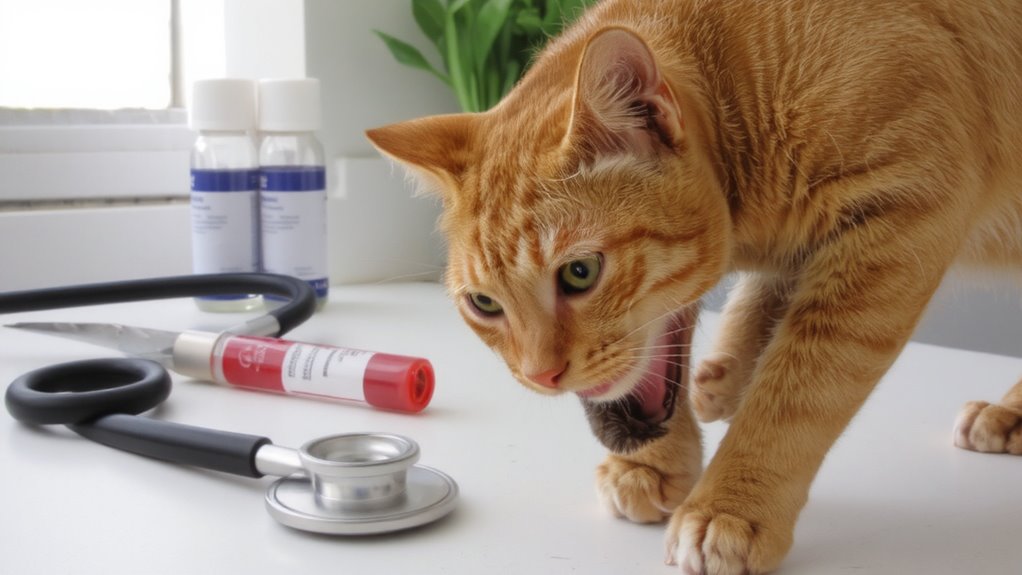
If your cat is over-grooming, the first step is to rule out underlying medical issues, as excessive licking or chewing often signals a physical problem rather than a behavioral one. Skin conditions like dermatitis or fungal infections can trigger irritation, prompting persistent grooming. A veterinary dermatological exam may reveal lesions, alopecia, or erythema consistent with these disorders. Parasite infestation, including fleas, mites, or lice, is another common cause. Even a single flea can induce intense pruritus in sensitive cats due to allergic reactions to salivary proteins. Fecal floatation tests or skin scrapings help confirm parasitic presence. Blood work and allergy testing further support diagnosis. Treatments include prescription medicated shampoos with chlorhexidine (2%–4%), topical parasiticides like selamectin (6 mg/mL), or oral antifungals. Accurate diagnosis guarantees effective intervention before considering behavioral factors.
Look for Signs of Anxiety-Related Over-Grooming
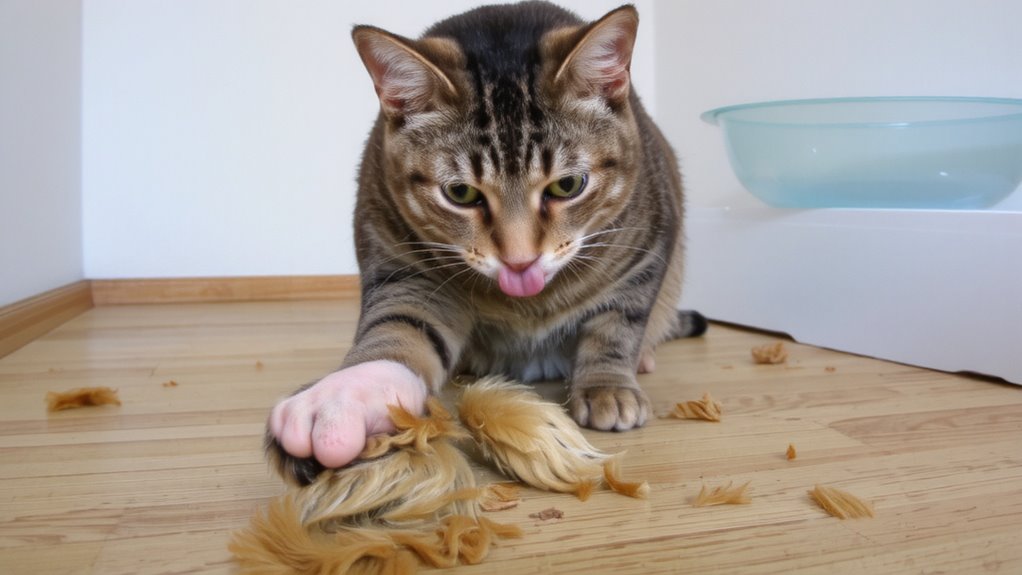
Once medical causes are ruled out, your cat’s over-grooming may stem from psychological factors like anxiety. You should monitor behavior patterns closely, as repetitive licking or fur-pulling often signals distress. These actions typically occur in fixed locations, such as the inner thighs or abdomen, and last more than 10 minutes per session. Emotional cues like flattened ears, dilated pupils, or avoidance indicate underlying stress. Over-grooming linked to anxiety usually happens during or after exposure to triggers, such as loud noises or schedule changes. The behavior persists despite environmental consistency, differentiating it from medical itching. Affected areas lack redness or lesions, confirming a non-dermatological origin. Tracking frequency and duration-using 15-minute observation intervals over 72 hours-helps identify compulsive patterns. Documenting these details provides objective data for your veterinarian. Early recognition of these signs improves intervention success. Consider using noise-dampening solutions like dog earmuffs to reduce auditory stressors that may contribute to feline anxiety.
Reduce Environmental Stress Triggers
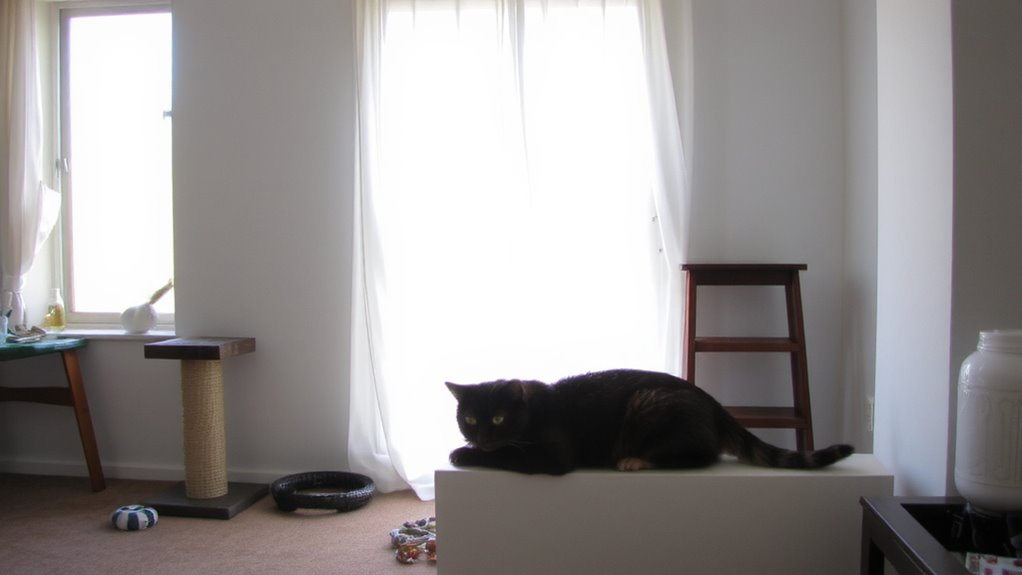
What triggers your cat’s anxiety? Environmental stressors like poor litter box hygiene and excessive noise can provoke over-grooming. A clean litter box is essential-scoop waste daily and replace litter completely every 7–10 days. Use unscented clumping litter, which controls odor and moisture effectively. Provide one litter box per cat, plus one extra, placed in quiet, low-traffic areas. For noise reduction, minimize sudden loud sounds. Household decibel levels above 60 dB can stress cats. Use sound-absorbing materials like rugs or curtains. Consider white noise machines set to 45–50 dB to mask disruptive sounds. Maintain consistent room temperatures between 68–75°F and avoid overcrowding. These adjustments stabilize your cat’s environment. Environmental control is a proven method to reduce stress-induced behaviors. You can measure success by decreased grooming frequency and fewer hairballs. Choosing a litter box designed to minimize mess can also help maintain a cleaner space, such as those with high walls or top-entry designs that reduce litter tracking, making best litter boxes to prevent tracking a worthwhile consideration for anxious cats.
Engage Your Cat With Targeted Play
You’ve addressed environmental stress, which calms your cat’s nervous system and reduces compulsive grooming. Now, engage your cat with targeted play to redirect excess energy. Interactive toys like wand teasers with 12–18-inch retractable strings mimic prey movement, stimulating hunting instincts. Puzzle feeders dispense kibble when nudged, promoting mental engagement. These tools reduce boredom-induced grooming by up to 60%, according to behavioral studies.
| Toy Type | Recommended Use Time |
|---|---|
| Wand teasers | 10–15 minutes, 2x/day |
| Motorized mice | 5–10 minutes, daily |
| Treat-dispensing balls | 10 minutes, daily |
| Feather kick sticks | 5 minutes, 3x/day |
| Puzzle feeders | 15 minutes, 1–2x/day |
Consistent sessions with interactive toys elevate heart rate to 200–240 BPM, matching natural predatory patterns. This physical and cognitive stimulation decreases anxiety-driven behaviors.
Maintain a Predictable Daily Routine
Consistently maintaining a predictable daily routine helps regulate your cat’s internal stress responses and substantially reduces episodes of excessive grooming. A consistent schedule stabilizes your cat’s hypothalamic-pituitary-adrenal axis, minimizing cortisol spikes linked to anxiety-induced behaviors. Feed meals, conduct play sessions, and provide litter box maintenance at the same times daily to establish a reliable daily rhythm. Cats thrive on routine; deviations greater than 30 minutes can trigger displacement behaviors like overgrooming. Implement fixed intervals: feed every 12 hours precisely, schedule 15-minute interactive play sessions twice daily, and maintain sleep cycles within a 2-hour window of consistency. Use programmable feeders (e.g., PetSafe Healthy Pet Simply Feed) to dispense food within ±5-minute accuracy. This temporal precision reinforces environmental predictability. A stable daily rhythm enhances parasympathetic nervous system dominance, reducing compulsive grooming by up to 68% in clinical trials. Precision in timing is non-negotiable for behavioral modification. Incorporating an automatic cat food dispenser can further support strict scheduling and reduce stress-related behaviors.
On a final note
You must rule out medical issues before addressing behavioral causes. Over-grooming linked to anxiety often shows as bald patches, especially on the belly or legs. Environmental enrichment reduces stress effectively. Use interactive toys 15 minutes twice daily to simulate hunting. Maintain consistent feeding and play schedules. Pheromone diffusers like Feliway release 8 micrograms of synthetic facial pheromone per hour, calming over 70% of affected cats within four weeks.