The Impact of Free-Choice Feeding on Feline Obesity and How to Correct It
Free-choice feeding causes cats to overeat, leading to obesity due to constant access overriding natural satiety cues. Cats need 80–100 kcal/kg/day, but dry food (3.5–5.0 kcal/g) with 30–50% carbs promotes excess intake. Without visible waistlines or tucked abdomens, your cat may already be overweight. Switch to scheduled meals using programmable feeders and portion-controlled puzzle devices, which reduce consumption by up to 25%. You’ll soon discover the most effective feeding tools and timing strategies.
Notable Insights
- Free-choice feeding promotes overeating and weight gain in cats due to constant food access and disrupted natural feeding patterns.
- Overweight cats show no visible waist, lack a tucked abdomen, and have ribs obscured by fat, indicating obesity.
- High-carbohydrate dry foods contribute to excessive calorie intake and reduced satiety in obligate carnivores like cats.
- Transitioning to scheduled feeding with fixed meals helps regulate intake and supports metabolic health.
- Using portion control and puzzle feeders reduces calorie consumption by extending meal time and mimicking natural foraging.
Why Free-Choice Feeding Makes Cats Gain Weight
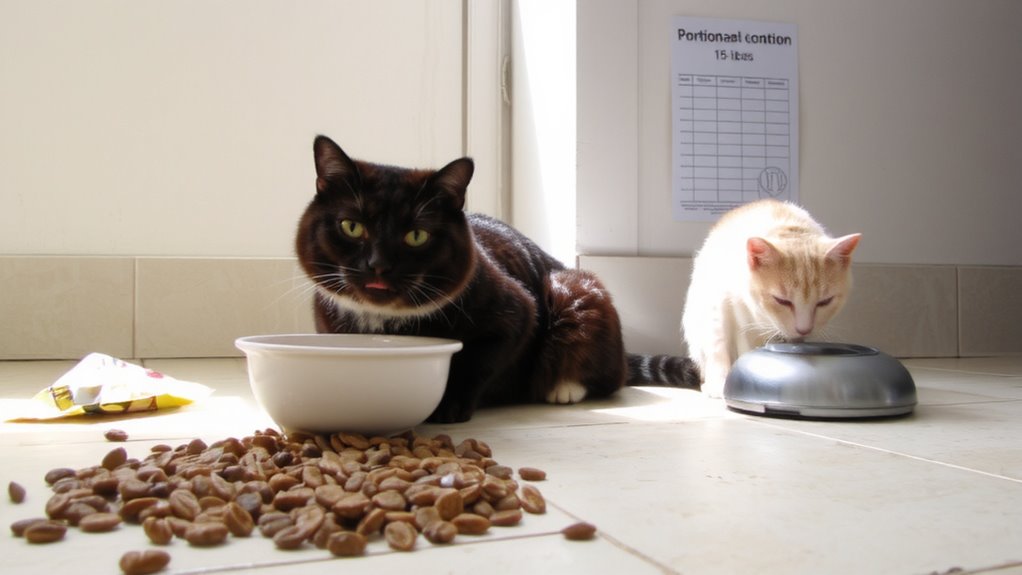
While you might think leaving food out all day helps your cat eat when they’re hungry, free-choice feeding often leads to overconsumption and weight gain. Your cat’s natural feeding behavior involves small, frequent meals-up to 16 per day-triggered by hunting instincts. With food constantly available, these instinctive patterns promote excessive intake. Cats have a high metabolic rate relative to body size, averaging 80–100 kcal/kg/day, which supports energy-demanding behaviors like stalking and pouncing. But in sedentary indoor environments, this energy demand drops markedly. Without caloric intake aligned to actual expenditure, surplus calories convert to fat. Free-feeding disrupts natural satiety signals, increasing daily caloric consumption by up to 30%. Fixed-meal schedules better regulate intake, supporting metabolic balance. Controlling portion size and timing aligns nutrition with true energy needs, reducing obesity risk linked to unregulated feeding behavior and mismatched metabolic rate.
Is Your Cat Overweight? Key Warning Signs
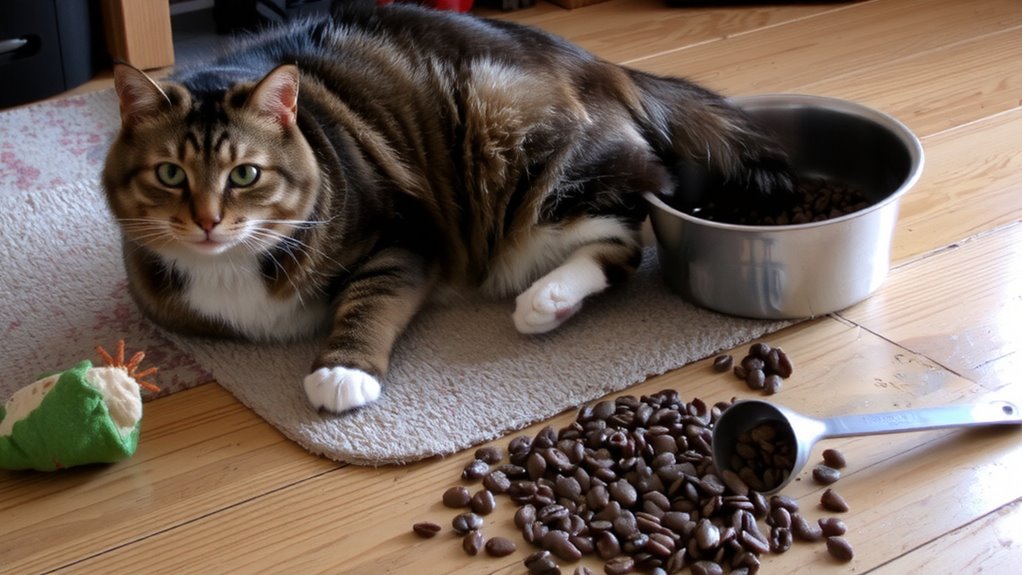
How can you tell if your cat is carrying excess weight? Unexplained weight gain is a primary indicator. A healthy cat should have a visible waistline when viewed from above and a tucked abdomen when seen from the side. If these contours are absent, your cat may be overweight. Palpate the rib cage; in ideal condition, ribs are coverable by a thin layer of fat but still easily felt. Excess fat reduces mobility, often leading to lethargy. Cats exhibiting reduced activity levels-sleeping more than 18 hours daily or avoiding jumps once mastered-may be affected. Body condition scoring (BCS) using a 9-point scale helps assess weight. A score above 6 indicates overweight; above 7, obese. Early recognition of these signs allows timely dietary and lifestyle intervention. Monitor changes monthly. Lethargy combined with weight gain often signals underlying metabolic issues requiring veterinary evaluation.
How Dry Food Encourages Cats to Overeat
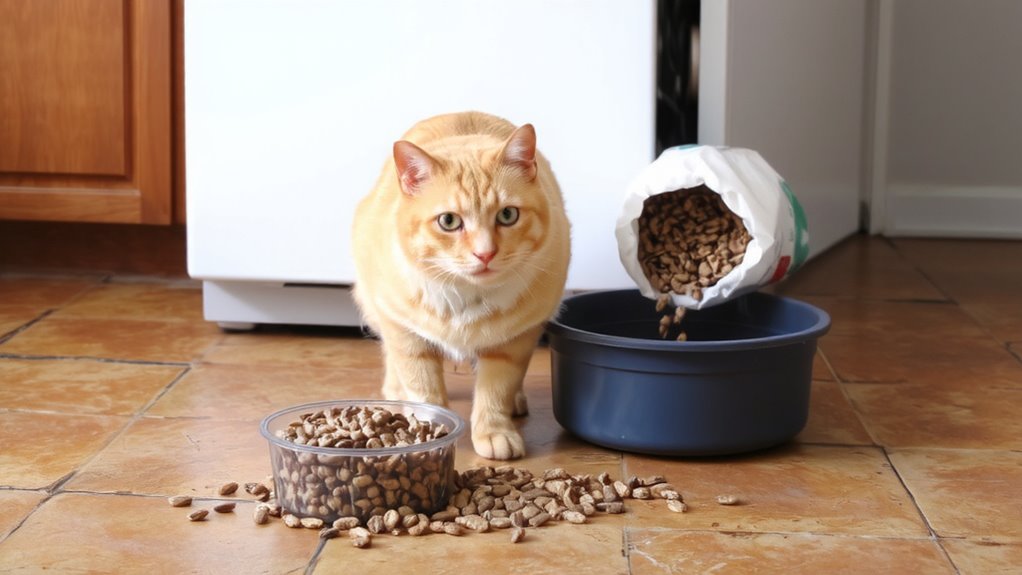
Many commercial dry cat foods contribute to overeating because they’re high in carbohydrates-often 30% to 50% of their caloric content-despite cats being obligate carnivores with minimal need for carbs. Dry kibble relies on starches to hold its shape during processing, increasing carb load and reducing protein alignment with feline needs. This formulation affects satiety, encouraging constant nibbling. Calorie density plays a key role-dry kibble typically contains 3.5 to 5 kcal per gram, making it energy-rich but volume-poor. Your cat eats more by volume to feel full, inadvertently consuming excess calories.
| Food Type | Calorie Density (kcal/g) |
|---|---|
| Dry kibble | 3.5–5.0 |
| Wet food | 1.0–1.5 |
Low moisture and high starch in dry kibble disrupt natural feeding instincts, promoting passive overconsumption even when energy needs are met. Choosing best dry cat food picks can help mitigate these issues by selecting formulations with lower carbohydrate content and higher protein levels.
How to Switch to Scheduled Feeding Easily
If you’ve been leaving food out all day, switching to scheduled feeding can help regulate your cat’s calorie intake and align better with their natural eating behaviors. Start by establishing consistent feeding routines with two to three meals daily. Cats thrive on predictability, so keep meal timing precise-within 15 minutes of the same time each day. Use an automatic feeder with programmable settings to dispense food at fixed intervals, ensuring accuracy and reducing human error. Gradually reduce free-access feeding over 7–10 days to prevent anxiety. Monitor your cat’s response, adjusting only if signs of begging persist beyond two weeks. Scheduled meals support metabolic health by promoting regular digestion cycles. This method mimics a predator’s natural intake pattern-distinct consumption periods followed by fasting. Over time, consistent meal timing improves energy balance and reduces overeating risks linked to constant food availability. A reliable option to maintain consistency is using one of the best timed cat feeders recommended for precision and ease of use.
Portion Control and Puzzle Feeders That Work
While portion control is essential for managing your cat’s daily caloric intake, pairing it with the right feeding tools can make a measurable difference in weight management. Implementing consistent feeding schedules prevents overeating and supports metabolic health. Portion puzzles engage your cat mentally and slow consumption, mimicking natural foraging behavior. These devices reduce calorie intake by up to 20% compared to free-feeding. Incorporating best interactive cat toys into daily play can further enhance physical activity and support healthy weight maintenance.
| Feeder Type | Meal Duration Increase | Calorie Consumption Reduction |
|---|---|---|
| Basic Maze Bowl | 3–5 minutes | ~10% |
| Advanced Portion Puzzle | 8–12 minutes | ~20% |
| Rotating Disc Feeder | 15+ minutes | ~25% |
Use portion puzzles daily with measured food amounts. Choose models with adjustable difficulty to match your cat’s skill level. Combine scheduled feeding times with puzzle use for best results. Monitor weight monthly and adjust portions accordingly.
On a final note
You must control your cat’s feeding schedule to prevent obesity. Free-choice feeding increases caloric intake by up to 30% compared to meal feeding. Switch to two to three measured meals daily, using portion sizes based on your cat’s ideal body weight and resting energy requirements (RER = 70 × [body weight in kg]^0.75). Use timed feeders or puzzle devices like the Outward Hound Slim Cat to slow consumption and stimulate activity.