Resting Heart Rate in Dogs & Cats: Normal vs. Too High
An elevated heart rate in a resting pet can be normal after play or stress, but sustained rates above 160 bpm in dogs or 180 in cats signal concern. Normal resting rates vary: dogs 60–140 bpm, cats 140–220 bpm. Check the pulse behind the left front leg for 15 seconds, then multiply by four. Persistent tachycardia may indicate arrhythmias, heart disease, or toxicity. Watch for lethargy, labored breathing, or pale gums. You’ll learn which home checks help detect hidden problems early.
Notable Insights
- Resting heart rates above 160 bpm in dogs or 180 bpm in cats warrant veterinary evaluation, even if the pet seems normal.
- Breed, age, and size influence normal heart rates-puppies and small dogs naturally have faster resting heartbeats than large dogs.
- Temporary increases due to excitement or stress are common, but persistent tachycardia at rest may signal underlying health issues.
- Non-cardiac factors like anxiety, stimulants, or electrolyte imbalances can elevate heart rate without heart disease.
- Red flags such as labored breathing, pale gums, or lethargy with high heart rate require immediate veterinary attention.
When to Worry About Your Pet’s Heart Rate?
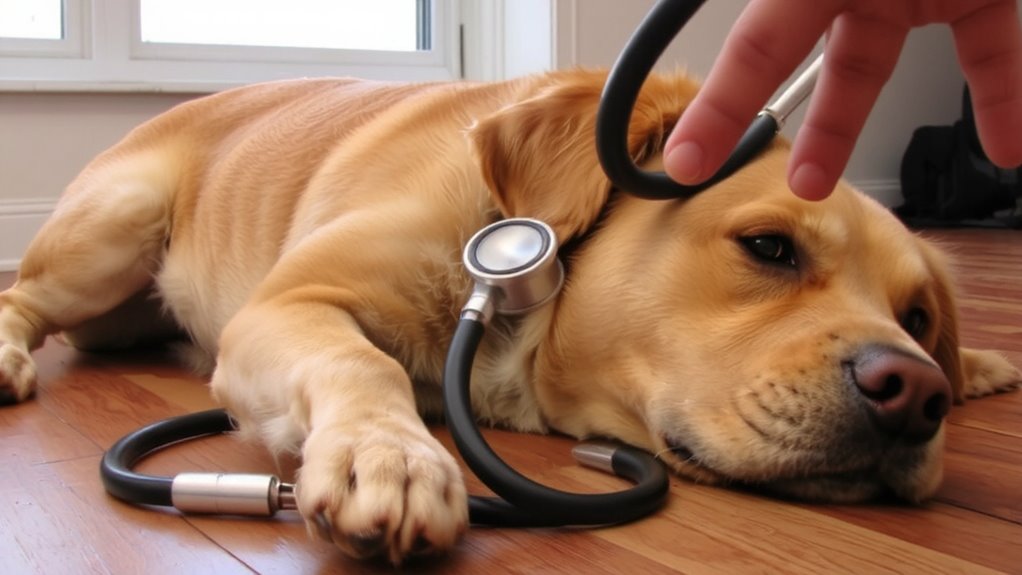
Why does your pet’s heart seem to race even when they’re asleep? A persistently elevated heart rate during rest may signal underlying conditions. Normal resting heart rates vary: dogs average 60–140 bpm, cats 140–220 bpm. If your pet exceeds these ranges consistently, consider clinical evaluation. Anxiety disorders can trigger sustained tachycardia, especially in noise-sensitive or separation-distressed animals. These conditions activate the sympathetic nervous system, increasing adrenaline and cardiac output. Medication sideeffects, such as those from corticosteroids or bronchodilators, may also elevate heart rate. Monitor for additional signs: panting, pacing, or trembling. Use a stethoscope to confirm rhythm and rate over 15 seconds, then multiply by four. Persistent elevation warrants veterinary assessment. Diagnostic tools like ECG or Holter monitoring can differentiate benign causes from pathology. Early detection improves outcomes.
What Causes a Fast Heart Rate in Resting Pets?
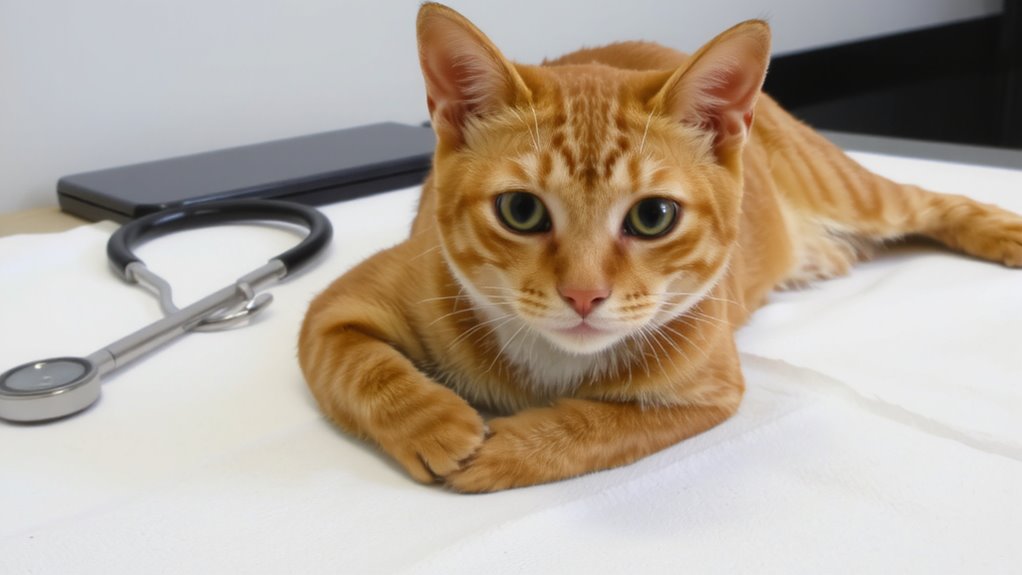
What could be driving your pet’s heart to race while they’re simply lying still? Anxiety disorders are a common culprit. These conditions trigger the sympathetic nervous system, increasing heart rate via excess epinephrine. Pets with chronic anxiety may show resting tachycardia, where heart rates exceed species-specific norms without exertion. Environmental stressors or separation distress can worsen symptoms. Dietary imbalances also contribute. Excess sodium or deficiencies in potassium and magnesium disrupt electrolyte homeostasis, impairing cardiac conduction. High-protein or stimulant-laced treats, especially those containing caffeine or theobromine, can provoke arrhythmias. Underlying metabolic diseases, like hyperthyroidism in cats, amplify cardiac output. Inflammatory conditions and pain increase circulating catecholamines, further elevating rates. You should consider these internal and external triggers when observing an elevated resting heart rate. Evaluation by a veterinarian can pinpoint causality through blood panels, ECGs, and behavioral assessments. Using an anxiety vest for dogs may help reduce stress-related tachycardia in pets prone to anxiety.
Normal Heart Rates for Dogs, Cats, and Small Pets
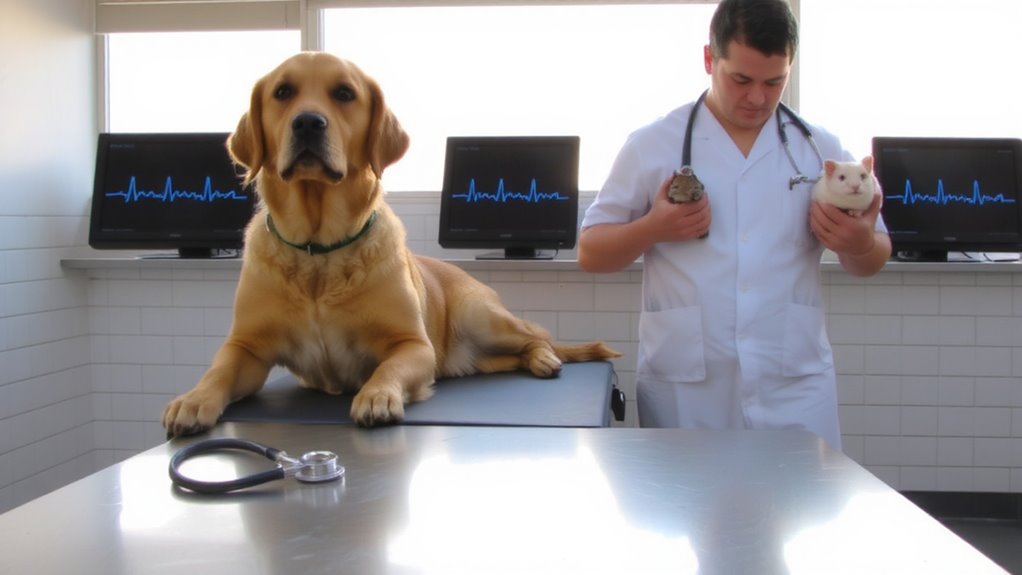
A pet’s resting heart rate serves as a vital sign of cardiovascular health. For dogs, normal resting heart rates range from 60 to 140 beats per minute (bpm), depending on breed variations and age differences. Small breeds typically have higher rates-100 to 140 bpm-while large breeds average 60 to 100 bpm. Puppies often exceed 140 bpm. Cats average 140 to 220 bpm at rest, with younger cats at the upper end. Age differences influence feline heart rates, as senior cats may show slightly lower baselines. Small pets like rabbits rest at 180 to 250 bpm; guinea pigs, 200 to 300 bpm. These ranges reflect metabolic rates and physiological demands. Breed variations in brachycephalic dogs-like Bulldogs-may elevate baseline rates due to reduced airway efficiency. Accurate assessment requires consistent resting conditions. Monitoring these benchmarks helps detect deviations early, supporting timely veterinary evaluation.
How to Check Your Pet’s Heart Rate at Home
How do you know if your pet’s heart rate falls within a healthy range? Home monitoring allows you to track essential signs comfortably and accurately. Place your hand over your pet’s left side, just behind the front leg, to feel the heartbeat. Count the number of beats in 15 seconds, then multiply by four to get beats per minute (BPM). For dogs, normal resting heart rates range from 60–140 BPM, depending on size. Cats typically rest at 140–220 BPM. Small pets like rabbits may have rates of 180–250 BPM. Use a stopwatch or smartphone timer for precision. Perform checks when your pet is calm or sleeping. Regular monitoring supports long-term pet wellness. Consistent data helps detect subtle changes early. Establish a weekly routine. Record results in a log. Early detection through home monitoring improves outcomes.
Medical Causes of Elevated Pet Heart Rate
You’ve now learned how to measure your pet’s resting heart rate accurately at home, giving you a baseline for their cardiovascular health. An elevated resting heart rate can signal underlying medical issues. Cardiac arrhythmias disrupt normal electrical impulses, causing irregular beats. These may include tachycardias, where the heart exceeds species-specific norms-over 160 bpm in dogs or 200 in cats. Such irregularities reduce cardiac efficiency and impair circulation. Congestive heart failure is another critical cause; the heart can’t pump effectively, leading to fluid buildup and compensatory tachycardia. This condition often stems from valvular disease or cardiomyopathy. Elevated heart rate in this setting is a hemodynamic response to maintain output. Structural heart disease, electrolyte imbalances, or systemic illness can also contribute. These conditions require diagnostic tools like echocardiograms or ECGs for confirmation. Monitoring trends helps detect progression early.
When to See the Vet: Red Flags Beyond Heart Rate
What good is a fast heart rate if your pet seems otherwise fine-until they aren’t? Sudden lethargy, labored breathing, or pale gums signal deeper issues. A resting heart rate above 160 bpm in dogs or 180 bpm in cats warrants evaluation. Consider anxiety disorders, which can elevate baseline physiology without obvious triggers. Chronic stress may mimic cardiac disease. Look for pacing, panting, or trembling-behavioral markers that accompany physiological distress. Toxic exposure is another critical factor. Substances like chocolate, xylitol, or rodenticides induce tachycardia alongside vomiting or seizures. Onset can be rapid, within 30 to 90 minutes post-ingestion. Neurological deficits or disorientation demand immediate care. Persistent panting in cats, even at rest, isn’t normal. Gastrointestinal signs paired with tachycardia suggest systemic involvement. These red flags exceed isolated heart rate concerns. You need diagnostics-blood work, ECGs, toxicology screens. Don’t wait. Early intervention improves outcomes.
How to Keep Your Pet’s Heart Healthy
A steady heartbeat starts with consistent care long before warning signs appear. Diet management is critical-feed your pet a balanced, species-appropriate diet low in sodium and rich in taurine, especially for cats. Obesity increases cardiac workload; monitor portion sizes using a calibrated measuring cup. Exercise routines should include at least 20–30 minutes of moderate activity daily, such as brisk walking or interactive play. This maintains cardiovascular endurance and helps regulate resting heart rate. Avoid overexertion in brachycephalic or senior pets. Routine veterinary screenings, including auscultation and, when indicated, echocardiograms, detect early structural changes. Guarantee hydration with fresh water available at all times-dehydration elevates heart rate. Rotate toys and adjust activity intensity based on age and breed. Preventative care, structured nutrition, and consistent physical activity form the core of long-term heart health. These steps reduce strain and support efficient myocardial function.
On a final note
You should monitor your pet’s resting heart rate regularly. A consistently elevated rate may signal underlying issues. Normal values range from 60–140 bpm in dogs, 120–220 bpm in cats, and 180–350 bpm in small mammals. Increases without exertion or stress warrant veterinary evaluation. Diagnostic tools like ECGs or blood tests may identify causes like arrhythmias, anemia, or hyperthyroidism. Early detection improves outcomes markedly.