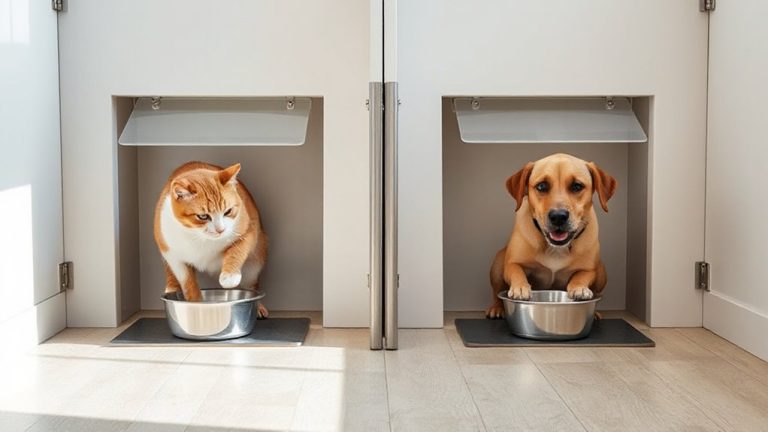
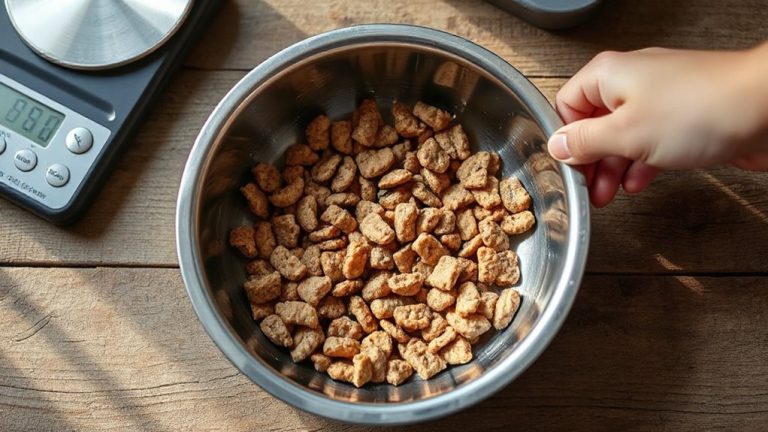
Why Neutered Cats Gain Weight and How to Adjust Their Diet Accordingly
Neutering causes your cat’s metabolism to slow by 20–30% due to reduced testosterone and thyroid activity, lowering daily energy needs. At the same time, ghrelin increases, boosting appetite by up to 27%. This mismatch promotes fat storage if calorie intake isn’t adjusted. Feed high-protein, low-carb wet food with 70–80% moisture, portioned to 20–30 kcal per pound daily. Use scheduled meals instead of free-feeding. You’ll see how targeted nutrition and activity shape long-term metabolic health.
Notable Insights
- Neutering reduces testosterone, lowering muscle mass and slowing metabolism by 20–30%, decreasing calorie needs.
- Neutered cats eat up to 27% more due to increased ghrelin and disrupted satiety signals.
- Weight gain results from higher calorie intake combined with lower energy expenditure post-neutering.
- Feed high-protein, low-carbohydrate wet food to maintain lean mass and promote satiety with fewer calories.
- Portion meals to meet 20–30 kcal per pound daily and schedule play sessions to match natural activity patterns.
Why Neutering Makes Cats Gain Weight
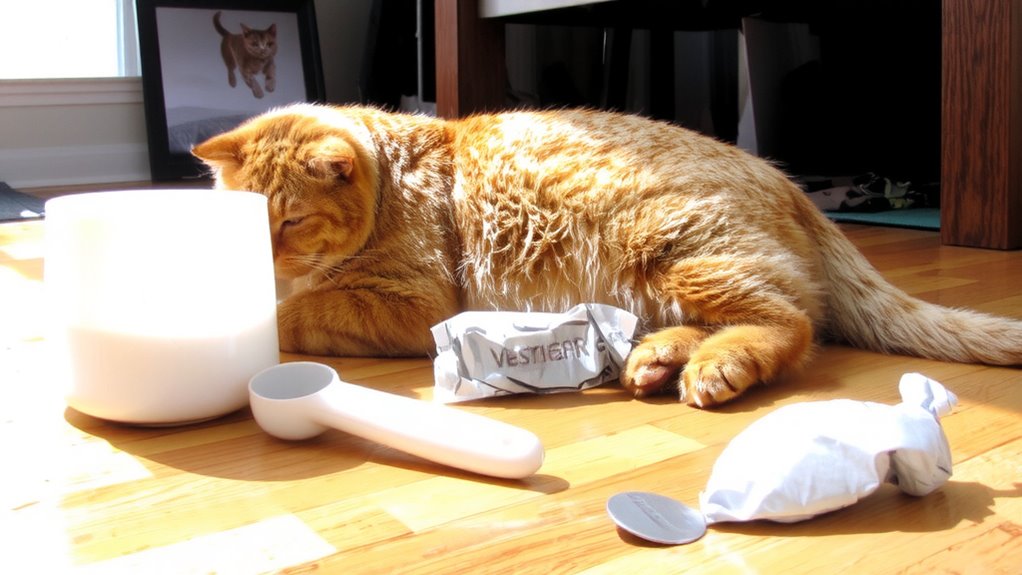
While neutering your cat offers clear health benefits, it also triggers metabolic changes that can lead to weight gain if not properly managed. The procedure causes hormonal changes that alter energy regulation. Testosterone levels drop sharply post-surgery, reducing lean muscle mass by up to 10% within months. This loss lowers resting energy expenditure. Simultaneously, an appetite increase occurs-neutered cats consume up to 27% more calories daily than intact ones. Ghrelin, the hunger hormone, rises, driving persistent food-seeking behavior. Without dietary adjustment, excess intake combines with reduced energy needs, creating a positive energy balance. Fat accumulation follows, often at a rate of 0.5–1.0 kg per year. These physiological shifts begin within weeks post-operation. Monitoring food portions and switching to calorie-controlled, high-protein diets immediately after neutering helps offset these effects. Weight gain isn’t inevitable-it’s manageable with targeted nutritional intervention.
How a Neutered Cat’s Metabolism Slows Down
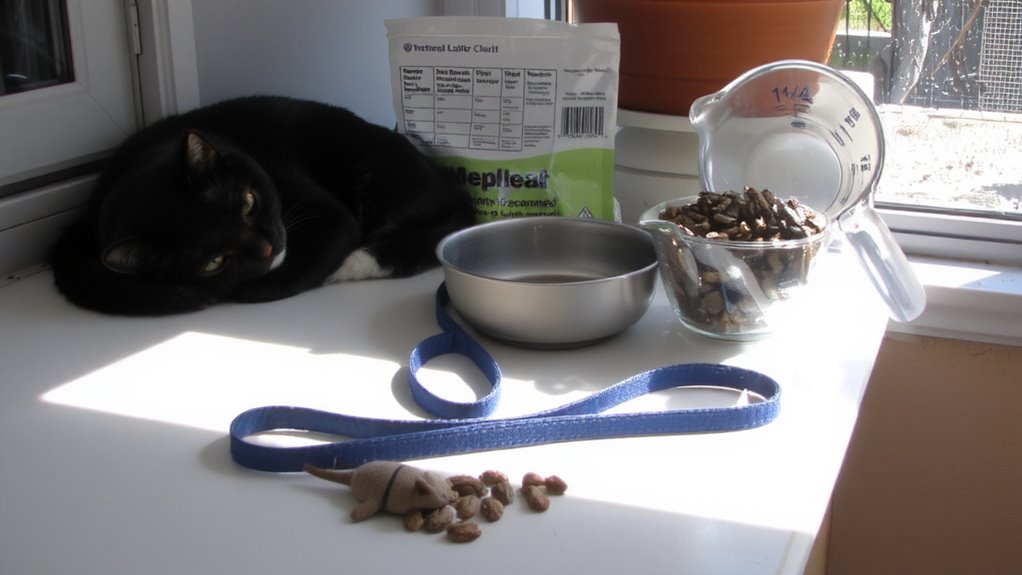
Because neutering alters your cat’s hormone profile, their metabolism slows significantly, reducing the number of calories they burn at rest. This metabolic shift stems from hormonal changes that decrease thyroid activity and basal metabolic rate. After neutering, your cat’s energy expenditure drops by up to 20–30%, meaning they require fewer daily calories. For example, an average 4 kg adult cat may only need 180–200 kcal per day post-neutering, compared to 250–270 kcal before. The reduction in sex hormones directly affects appetite regulation and fat storage mechanisms. Without dietary adjustments, excess intake quickly leads to energy imbalance. These physiological responses are predictable and consistent across most neutered cats. You must account for this lowered energy expenditure when planning meals. Ignoring it increases weight gain risk. The effect isn’t immediate but develops within weeks, requiring proactive nutritional management.
Is Your Neutered Cat Overweight? Key Signs
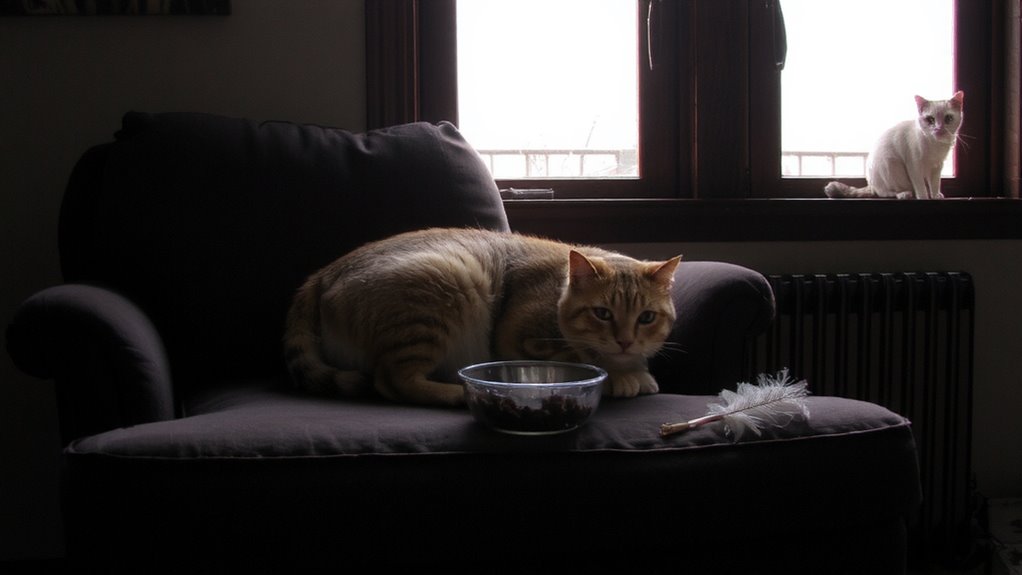
Your neutered cat’s slowed metabolism directly influences body composition, making weight gain more likely if intake isn’t adjusted. Excess weight manifests through visible fat deposits, especially along the abdomen and base of the tail. You’ll notice reduced agility-hesitation to jump or climb-due to added joint stress. Palpate the ribs; if you can’t feel them easily under a thin layer of fat, your cat is likely overweight. Behavior changes often accompany weight gain. Increased lethargy replaces typical grooming or play. Appetite spikes may occur post-neutering, driven by hormonal shifts that disrupt satiety signals. These spikes don’t reflect nutritional needs but rather altered metabolic regulation. Monitor meal frequency and portion size closely. Overconsumption, even of high-quality food, leads to caloric surplus. Use a digital scale monthly to track weight trends-consistent gains above 10% of ideal body weight indicate clinical overweight. Early detection improves long-term outcomes.
Best Cat Foods After Neutering to Avoid Weight Gain
Metabolism after neutering shifts in ways that demand precise nutritional management. You need to choose cat foods that align with reduced energy requirements. High-protein, low-carbohydrate formulas support lean body mass. Wet food is advantageous-it typically contains 70–80% moisture, promoting satiety with fewer calories. Look for options with animal-based proteins listed as the first ingredient, like chicken or turkey. Dry kibble often has higher carbohydrate levels, increasing energy density. That’s where portion control becomes critical. Even healthy foods contribute to weight gain if overfed. Use a calibrated measuring cup or digital scale to maintain consistency. Canned food allows more accurate portioning than free-fed dry. Select recipes labeled “for weight management” with 250–300 kcal per 5.5-ounce can. These strategies, combined, help maintain metabolic balance.
How Much to Feed a Neutered Cat (And When)
How much should you really be feeding your neutered cat? Adult neutered cats typically need 20–30 kcal per pound of body weight daily. For a 10-pound cat, that’s 200–300 kcal spread across the day. Portion control is critical-measure food precisely using a kitchen scale or measuring cup. Overfeeding by even 50 kcal daily can lead to a one-pound weight gain per month. Use feeding frequency to regulate intake: divide the daily amount into two to four meals. Consistent timing stabilizes metabolism. Free-feeding increases calorie consumption by up to 30% compared to scheduled meals. Follow your vet’s calorie recommendations and adjust based on body condition scoring. Monitor weight monthly. High-moisture diets can enhance satiety within calorie limits. Proper portion control and structured feeding frequency prevent post-neutering weight gain effectively.
Play and Exercise Tips for Neutered Cats
Staying active after neutering isn’t just helpful-it’s essential for maintaining a healthy weight. Neutered cats experience reduced metabolic rates, decreasing caloric needs by 20–30%. Daily physical activity compensates for this drop. Engage your cat with interactive toys that simulate prey movement. Wand toys with feathers or motorized mice moving at 1.5–2 feet per second trigger hunting instincts. Rotate toys weekly to prevent habituation. Aim for two 10–15 minute play sessions daily, aligning with cats’ natural crepuscular activity peaks. Consider leash training to expand exercise opportunities safely. Use a harness with a secure Y-neck design and a 4–6 foot lightweight leash. Start indoors for 5–7 days to acclimate your cat, then progress to controlled outdoor environments. Leash walking burns 2–3 times more calories than indoor play alone. Consistency in using interactive toys and leash training helps regulate energy balance, supporting long-term weight management. For optimal engagement, choose best wand toys for cats that mimic realistic prey motions and vary in texture and sound.
On a final note
You must adjust your neutered cat’s diet and activity to match its reduced metabolic rate. After neutering, energy needs drop by 20–30%, increasing obesity risk. Feed a measured amount of high-protein, low-carbohydrate food formulated for neutered cats, typically 60–80 kcal per kg body weight daily. Divide meals into two portions. Support this with 15 minutes of daily interactive play to maintain muscle mass and metabolic health.