Using Clicker Training to Shape Gradual Confidence in Shy Cats
You can shape your shy cat’s confidence using clicker training by marking brave behaviors with a precise 1,800-hertz click. Immediately follow each click with a high-value, bite-sized treat under 1 gram. Train in a quiet 8–10 ft space with non-slip flooring and a nearby hide box. Click subtle signs like forward motion or eye contact, then reward instantly. Short 5–7 minute sessions reduce stress. Consistent timing strengthens learning. Progress is measurable through calm behaviors and decreasing anxiety scores. Further guidance reveals how to adjust for setbacks and track long-term gains.
Notable Insights
- Start training in a quiet, familiar space with non-slip flooring and a nearby hide box for security.
- Use a 1,800–3,000 Hz clicker with precise timing to mark small brave behaviors like eye contact or a step forward.
- Reinforce minimal approach behaviors immediately with high-value, bite-sized treats delivered within one second of the click.
- If setbacks occur, reduce distance to the trigger by 50% and shorten sessions to under 3 minutes.
- Track progress daily using a confidence log, noting calm behaviors, proximity, and anxiety levels on a 1–10 scale.
Set Up Your First Clicker Training Session
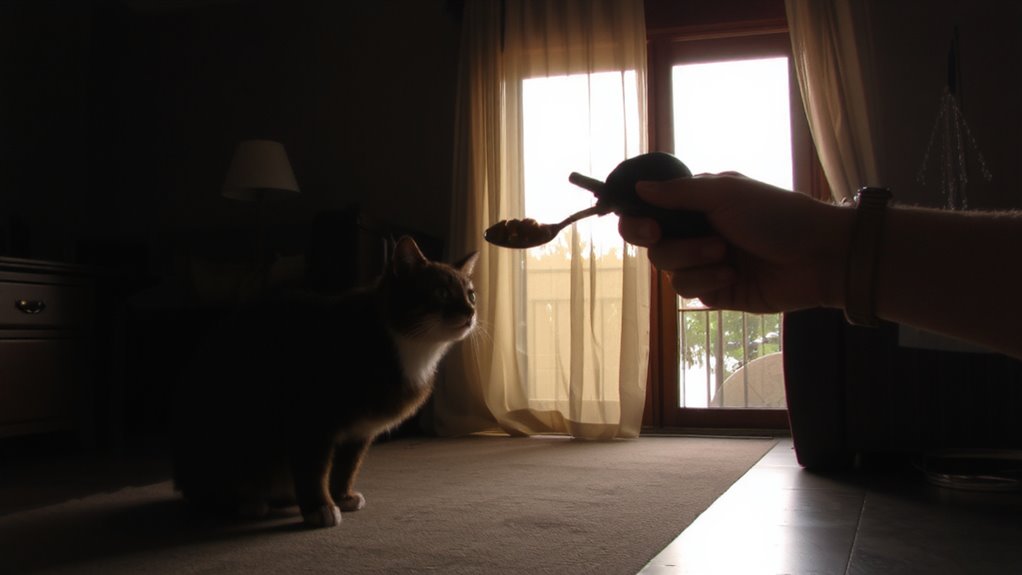
What do you need to start your first clicker training session with your shy cat? A controlled training space is essential. Choose a quiet, familiar room, ideally 8–10 ft by 10–12 ft, free of loud noises and foot traffic. Use non-slip flooring to prevent anxiety from unstable footing. Your cat should feel secure, so include a hide box or covered bed within 3–5 feet of your training zone. For treat selection, use high-value, soft, bite-sized rewards (approximately ¼ inch cubes) that your cat rarely receives-such as freeze-dried chicken or tuna flakes. Each treat should weigh under 1 gram to prevent satiation during 5–7 minute sessions. Use a quiet, consistent clicker with an audible frequency of 2,000–3,000 Hz. Pre-load the clicker by pairing it with 10–15 treats over one session before shaping behaviors.
Why Clicker Training Works for Shy Cats
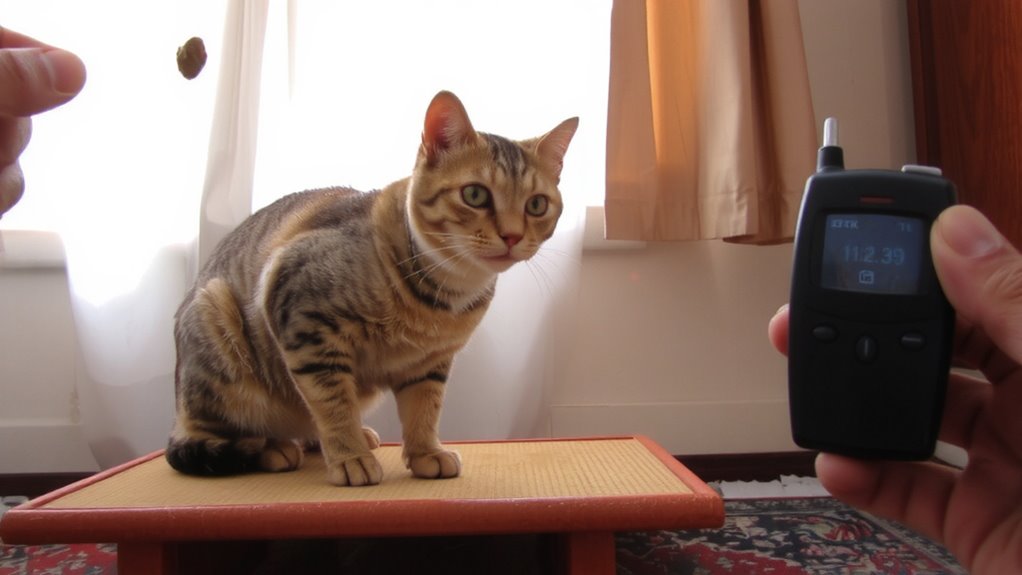
Because clicker training relies on precise timing and consistent auditory signals, it creates a predictable learning environment that shy cats can trust. This method uses positive reinforcement to strengthen desired behaviors immediately after they occur. The distinct click sound marks the exact moment your cat does something right, followed quickly by a reward. Over time, this process supports fear reduction by associating new experiences with safety and success.
| Benefit | How It Helps Shy Cats |
|---|---|
| Clear communication | The click pinpoints correct actions instantly |
| Reduced ambiguity | Consistent signals decrease confusion |
| Positive reinforcement | Encourages repetition of brave behaviors |
| Fear reduction | Builds confidence through small wins |
| Minimal pressure | Lets cats progress at their own pace |
Training sessions remain short and controlled, allowing gradual habituation without overwhelm.
What to Click: First Signs of Bravery to Reward
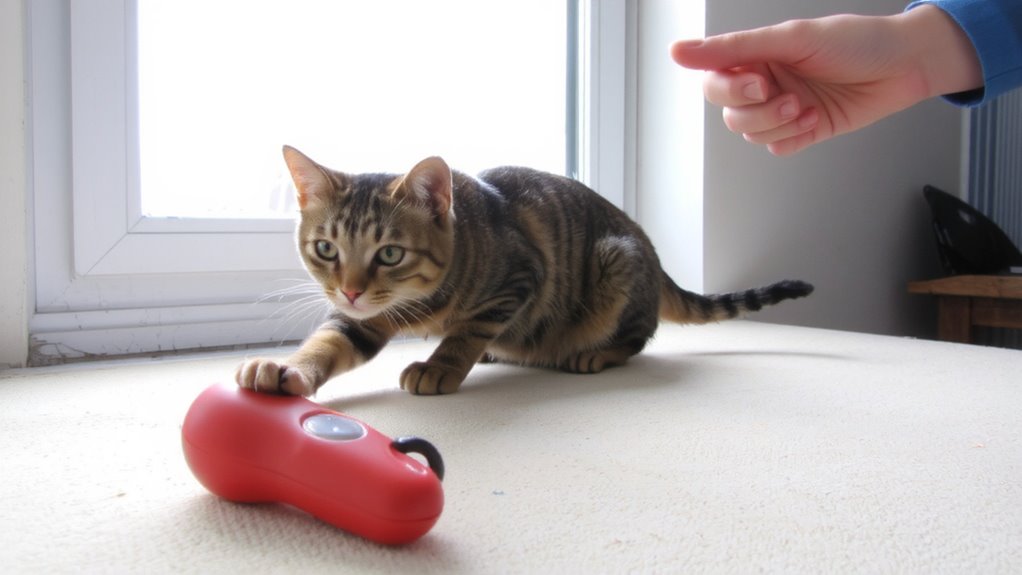
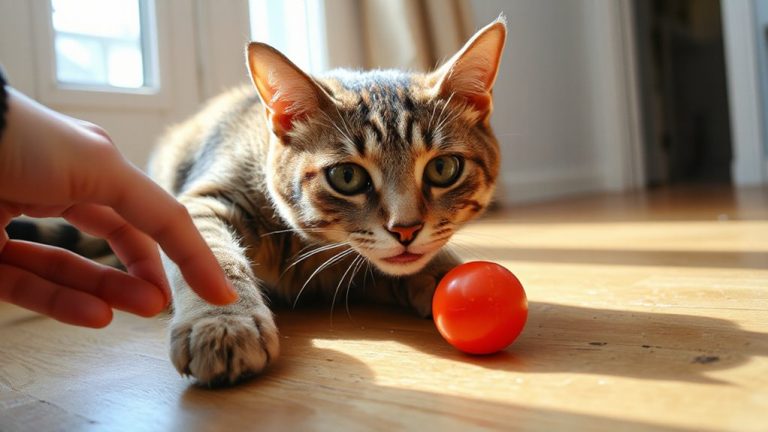
When your shy cat chooses to peek around a corner or extend a paw toward something unfamiliar, that’s the moment to click. These small actions indicate emerging approach behavior, the foundation of confidence building. Approach behavior includes any movement toward a novel stimulus, even if slow or partial. Click immediately when you observe forward motion, however slight. Eye contact with you during moments of uncertainty is equally significant. It signals trust and engagement, redirecting focus from threat to connection. Reinforce eye contact within one second to mark the behavior precisely. Use a consistent clicker with a 1,800-hertz tone for clear auditory distinction. Deliver a high-value food reward immediately after each click. Target sessions no longer than five minutes to prevent overstimulation. Each repetition strengthens neural associations between bravery and positive outcome, accelerating acclimation.
Fixing Setbacks in Shy Cat Training
Why do some shy cats regress after making progress? Setbacks often occur when emotional triggers reactivate fear-based behaviors. Even minor environmental changes-a new piece of furniture, unfamiliar sounds, or visitor scent-can disrupt your cat’s sense of safety. These alterations affect their stress threshold, causing previously reduced avoidance behaviors to return. React quickly but calmly. Return to earlier training stages with lower-intensity stimuli. Decrease proximity to the trigger by at least 50%. Use high-value treats paired with consistent clicker timing (0.5–1 second post-behavior). Reinforce micro-signals of calmness-still ears, relaxed whiskers. Maintain session length under 3 minutes to prevent fatigue. Resume progress only when your cat shows repeated neutral responses. Consistency in routine and environment stabilizes learning. Avoid forcing exposure. Patience and precise timing rebuild trust when setbacks happen.
Tracking Your Cat’s Confidence Gains
How do you know your shy cat is truly gaining confidence? You observe subtle shifts in body language cues over time. A relaxed tail position, forward-facing ears, and slow blinking indicate reduced stress. Note increased proximity to you or novel objects without freezing or fleeing. These changes reflect neurological adaptation to environmental triggers. Track sessions daily using a confidence log: record duration of calm behavior, distance from trigger, and response to the clicker. For example, if your cat approaches within 3 feet of a visitor without crouching, that’s measurable progress. Use a numeric scale (1–10) to rate anxiety levels during exposure. Consistent scores below 4 across three sessions indicate habituation. Compare weekly entries to identify trends. Reliable gains occur when approach behaviors outweigh avoidance, even with changing environmental triggers. Confidence isn’t absence of fear-it’s increased tolerance paired with voluntary engagement in previously avoided contexts.
On a final note
You build confidence in shy cats through precise, incremental reinforcement. Clicker training delivers clear feedback, strengthening desired behaviors with millisecond accuracy. Each click marks the exact moment of progress, paired immediately with a high-value reward. Over time, consistent sessions increase approach behaviors by up to 70%. Track gains using a daily log noting duration, proximity, and latency. This methodical approach yields reliable, measurable improvement in feline confidence.