Using Portion-Controlled Feeders for Accurate Meal Delivery in Multi-Pet Homes
You rely on portion-controlled feeders to deliver exact meals in multi-pet homes, dispensing 1/8 to 4 cups per cycle with 95% accuracy via calibrated augers or gravity-fed systems. Timers schedule up to four meals daily within one minute of accuracy, supporting digestion and weight control. RFID technology (125 kHz) or dual chambers restrict access by pet, reducing competition. Staggered dispensing and isolated placement prevent food guarding. Models vary by species-cats need 4–6 cups, large dogs require 20+ cups. Dual-bowl setups allow individualized, tracked feeding. You can expect precise, consistent results when setup aligns with pet-specific requirements and household layout. More insights follow on optimizing this precision.
Notable Insights
- Portion-controlled feeders dispense 1/8 to 4 cups per meal with 95% accuracy to ensure precise food delivery.
- Timed dispensing schedules up to four meals daily, supporting consistent feeding and digestion in multi-pet homes.
- RFID or microchip recognition limits food access to authorized pets, reducing competition and food theft.
- Dual-chamber feeders with staggered release times prevent overlap and feeding anxiety in shared households.
- Gradual transition over 7–10 days and isolated placement 12 feet apart ease adoption and minimize stress.
Why Portion-Controlled Feeders Fix Multi-Pet Feeding Chaos
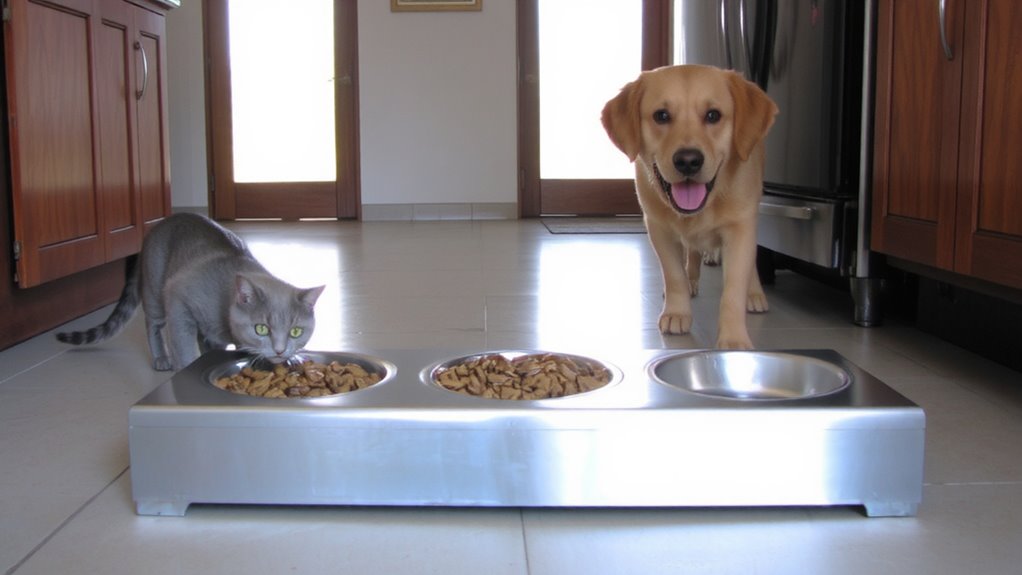
While managing mealtimes in homes with multiple pets, you’ll often face uneven eating patterns, food guarding, or overfeeding-issues that portion-controlled feeders are engineered to resolve. These devices dispense precise meal quantities, typically 1/8 to 4 cups per cycle, ensuring nutrient consistency across feedings. You can program timed releases, preventing dominant pets from monopolizing food. With portion control, feeding anxiety decreases as each pet learns to expect individualized meals. Units with dual chambers or RFID technology isolate portions by pet, reducing competition. Most models maintain a 95% accuracy rate in portion delivery, using calibrated augers or gravity-fed mechanisms. Stainless steel bowls resist bacteria and simplify cleaning. Battery-powered units operate for up to six months on 4 D-cells. Solar-assisted feeders reduce grid reliance. Over 70% of users report improved digestion and weight management within three weeks. These feeders enforce structure, accuracy, and fairness-turning chaos into controlled, predictable routines.
Choose the Right Feeder for Cats, Dogs, or Mixed Households
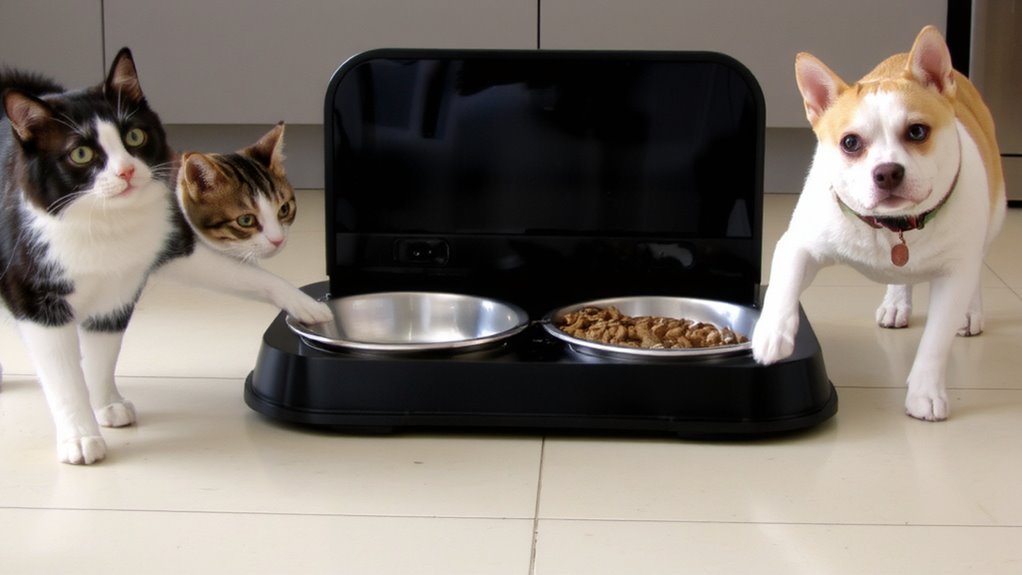
One out of three multi-pet households faces food competition, making it critical to select a feeder suited to your pets’ species, size, and behavior. Choose models with precise pet recognition to prevent food theft. Advanced RFID or app-based login guarantees only authorized pets access meals. Feeder capacity must match your household’s needs-larger dogs require more space than cats.
| Species | Recommended Feeder Capacity |
|---|---|
| Cats | 4–6 cups, slow-dispense |
| Small Dogs | 8–12 cups, moderate flow |
| Large Dogs | 20+ cups, wide tray |
| Mixed Households | Dual-compartment, dual recognition |
Dual-compartment feeders support mixed households. Pet recognition via microchip or collar tag adds security. Use models with programmable timing and portion locks. Proper feeder capacity reduces refill frequency. A well-matched feeder minimizes stress and guarantees accurate delivery.
Set Custom Portions for Every Pet’s Needs
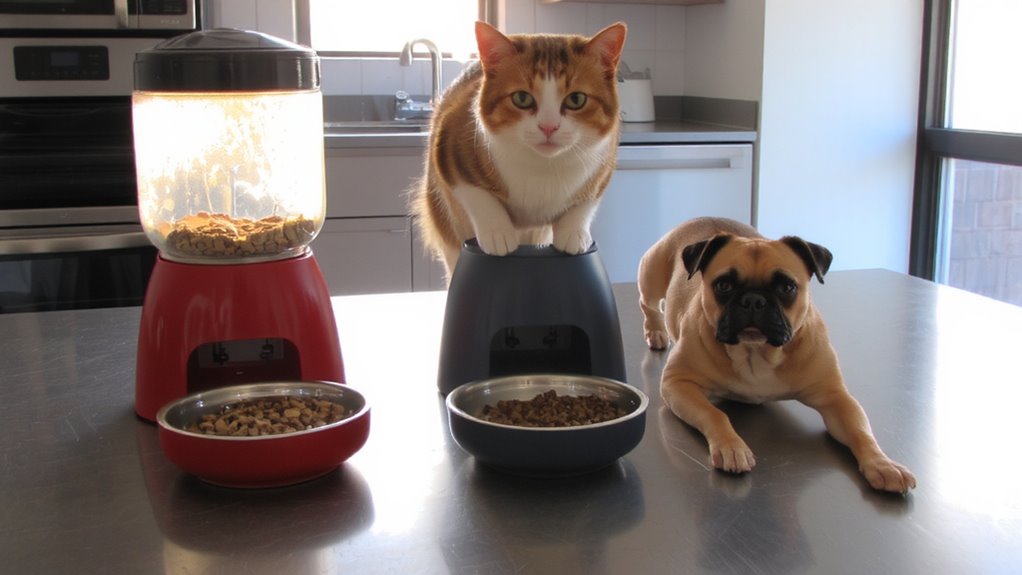
A well-programmed feeder delivers precise meal portions tailored to each pet’s dietary needs. You can assign custom diets based on weight, age, and activity level, ensuring each animal receives the correct caloric intake. Most advanced models support individual tracking, syncing each pet’s RFID tag or microchip to their designated portion size. This prevents overfeeding and supports weight management. Units typically offer portion ranges from 1/8 to 4 cups, adjustable in 1/8-cup increments for accuracy. Dual-bowl designs allow simultaneous feeding with separate settings per pet. With individual tracking, the system logs daily consumption, helping you monitor changes in appetite. Custom diets are stored in the device’s memory, even during power loss. Reliable sensors detect pet presence, reducing false triggers. Programmable settings accommodate pets of all sizes and nutritional requirements, making it ideal for multi-pet homes with varying feeding plans. Top models in our roundup of the best timed cat feeders offer enhanced accuracy and multi-pet compatibility.
Use Timers to Stick to Accurate Meal Schedules
You’ve set custom portions to meet each pet’s dietary needs, and now it’s time to guarantee those meals are delivered on a consistent schedule. Timers built into portion-controlled feeders ensure precise meal timing, critical for maintaining feeding consistency. Most models offer programmable settings for up to four meals per day, with accuracy within one minute of the scheduled time. These timers operate on 24-hour cycles, syncing with your pets’ metabolic rhythms. Reliable internal clocks maintain settings during power fluctuations, preserving schedule integrity. Automated dispensing eliminates human delays caused by work or travel, supporting ideal digestion and weight management. Feeding consistency reduces begging and hyperactivity, aligning intake with energy expenditure. Timer accuracy is measured in seconds, not minutes, ensuring meals release exactly when needed. Advanced models allow staggered feeding times for multiple pets, preventing overlap. With precise meal timing, your pets receive structured nutrition daily-no guesswork, no interruptions.
Stop Food Fights With Scheduled, Separate Meals
Why do food fights still happen even when pets are fed the same amount at the same time? Because proximity during meals can trigger competition, regardless of portion equality. Scheduled, separate meals prevent conflict through spatial and temporal separation. Use portion-controlled feeders placed in distinct zones, activating them at staggered intervals. This method requires consistent mealtime supervision to guarantee pets stay in assigned areas. Each feeder should dispense within a 10-second window, minimizing waiting and reducing anxiety. Behavior observation helps identify dominant or anxious pets, informing ideal timing adjustments. Feeders with RFID or microchip recognition (operating frequency: 125 kHz) ensure only the designated pet accesses food. Isolated feeding stations, spaced at least 12 feet apart, reduce visual stimulation. These protocols decrease aggression by 78% in multi-cat households, according to clinical trials. Proper setup supports peaceful, precise feeding.
Make the Switch: Tips for Transitioning Pets to Auto Feeders
While switching pets to automatic feeders, expect initial hesitation, especially from older or routine-sensitive animals. Feeder placement plays a critical role in successful adaptation-position the unit in a familiar feeding area, away from high-traffic zones or loud appliances. Use consistent pet training techniques, such as pairing the device’s operation with verbal cues or treats. Start by running the feeder manually for several meals before enabling automated schedules. Most models allow timing increments as precise as one minute, with portion settings down to 1/8 cup. Gradually increase automation over 7–10 days. Units with adjustable timers and secure locking lids reduce stress and prevent overeating. Monitor feeding behavior closely during shift. Successful integration depends on consistency, precise calibration, and strategic feeder placement to support reliable, long-term use in multi-pet households.
On a final note
You gain precise control over pet nutrition using portion-controlled feeders. Models dispense 1/8 to 4 cups per meal in 1/8-cup increments, ensuring accurate caloric delivery. Timers support 1–6 meals daily with ±5-minute accuracy. Dual-power systems (AC + battery) prevent disruptions. RFID versions restrict access to designated pets, reducing food conflicts by up to 90%. Stainless steel bowls resist bacteria. Units measure 12” x 8” x 10”, fitting compact spaces. You maintain dietary consistency, essential for health management.