How to Tackle a Large Mat on a Dog’s Back Without Causing Pain
Check the mat’s size and tightness-anything over 2 inches or pressed tightly to the skin risks pain and needs professional care. Use pet clippers with a #10 blade (2 mm guard) to carefully trim around the mat if needed. Gently separate layers with your fingers, avoiding pulling. Spray a pH-balanced detangler (6.5–7.5) into the core, wait 30–60 seconds, then work it loose. Use a slicker brush with fine, 1–2 mm spaced wires in short strokes at a 45-degree angle. Stop if your dog flinches or the skin puckers. Further steps depend on coat type and mat depth.
Notable Insights
- Assess mat size and severity; mats over 2 inches or tight against skin require professional help to avoid pain.
- Use pet clippers with a #10 blade to safely cut large mats, leaving 2 mm of fur to protect the skin.
- Begin detangling at the edges with fingers, applying gentle outward pressure to minimize skin trauma.
- Spray detangler directly into the mat’s core and wait 30–60 seconds to soften knots before careful separation.
- Monitor for signs of pain like whimpering or flinching, and stop immediately if distress or skin redness occurs.
Start by Checking the Mat’s Severity
If you’re not sure how serious the mat is, start by evaluating its size, depth, and proximity to the skin. Mats larger than 2 inches in diameter or pressed tightly against the skin often require professional attention. Check the mat texture: if it’s hard and compact, it’s likely embedded and painful to remove. A soft, looser texture may allow safe at-home treatment. Observe your dog behavior closely-whimpering, flinching, or pulling away signals pain and severity. Avoid pressing down, as this risks bruising sensitive skin. Use your fingers to gently separate the mat’s edges from the coat, testing mobility. Deep mats near joints or the spine limit movement and increase discomfort. Early detection minimizes risk. Evaluating these factors accurately determines whether intervention is safe or if a vet should handle it. Using the right dog mat remover can significantly reduce discomfort during at-home detangling.
Get the Right Tools Before You Begin
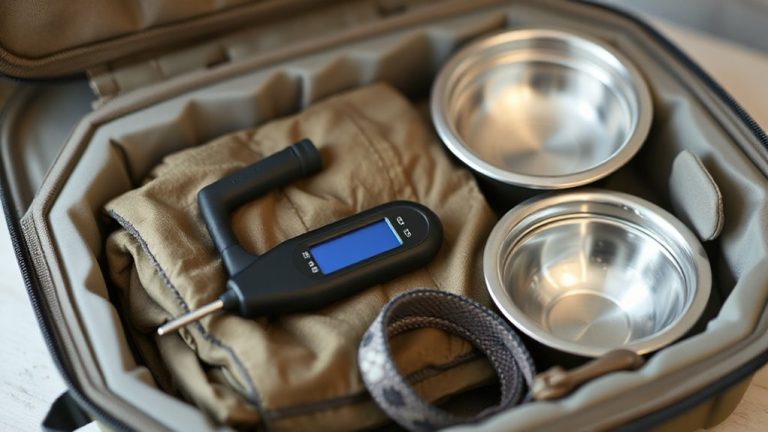
A well-equipped toolkit makes all the difference when dealing with canine coat mats. Proper tools guarantee effective detangling while supporting safe handling. Always begin with the correct equipment to prevent injury and reduce stress for both you and the dog.
| Tool | Purpose |
|---|---|
| Proper clippers with #10 or #7 blade | Precisely cut through thick mats without pulling hair |
| Slicker brush with fine wire pins | Removes loose undercoat and prevents future tangles |
| Dematting comb with dual blades | Separates small mats close to the skin safely |
| Non-slip grooming table | Guarantees stability and safe handling during the process |
Use clippers designed for pets, not human hair tools. The #10 blade leaves about 2 mm of fur, minimizing skin contact. Secure your dog comfortably to limit movement. Proper clippers reduce friction and heat buildup, preventing skin irritation. Safe handling includes firm but calm restraint to maintain control without causing fear. A polished look starts with using high-quality grooming tools that are built for durability and performance.
Loosen the Mat With Your Fingers First
Though starting with your fingers may seem too simple, it’s a critical step in reducing trauma to your dog’s skin and coat. Begin with finger separation to assess the mat’s density and proximity to the skin. Gently work your fingers around the mat’s edges, using light outward pressure to avoid pulling roots. This initial, gentle loosening minimizes discomfort and prepares the coat for further treatment. Use your index finger and thumb to grasp small sections, gradually teasing apart tangled fibers layer by layer. Keep movements slow and deliberate-rushing increases the risk of skin pinching. Mats form in layered networks; breaking them down incrementally reduces force required later. This method also reveals underlying skin irritation or wounds hidden beneath the tangle. Finger separation provides tactile feedback, allowing real-time adjustments in pressure. Think of it like untangling a snarled headset cord-patience prevents breakage. Proper technique now reduces reliance on tools that could cause harm. Using the right dog grooming combs can further aid in maintaining a healthy, mat-free coat between grooming sessions.
Apply Detangler to Stubborn Knots
When finger separation alone isn’t enough, applying a detangler becomes essential to safely break down stubborn knots without tugging at sensitive skin. A high-quality detangler spray contains emollients and slip agents that reduce friction between hair strands. Spray it directly onto the knot’s core, not just the surface. Allow 30–60 seconds for knot softening-this dwell time is critical for breaking down compacted oil and debris. Most effective detanglers use pH-balanced formulas (around 6.5–7.5) to match canine skin and prevent irritation. Avoid alcohol-heavy products; they dry the coat and increase breakage. Reapply as needed, focusing only on matted areas to prevent greasiness. The detangler’s lubricating action enables gradual separation with minimal force. Proper knot softening reduces the risk of cutting the skin with tools later. Always brush from the edge inward after treatment. Detangler spray isn’t a substitute for clipping severe mats but makes safe, non-invasive removal possible in manageable cases.
Use a Slicker Brush Gently on Loosened Areas
Now that the detangler has softened the knot structure and reduced inter-filament resistance, you’re ready to work on loosened areas with a slicker brush. Use a brush with fine, angled wires spaced 1–2 mm apart for precision. Apply gentle strokes, starting at the mat’s edge, to lift surface tangles without dragging. Maintain a 45-degree angle between the brush and skin to minimize friction. Your brush technique should employ short, overlapping motions, focusing only on fibers the detangler has relaxed. Avoid pressing deeply-only the top layer requires attention. This method safely separates fibers without stressing the follicle. Continue using light pressure until loose hair releases. Proper technique preserves coat integrity and avoids micro-trauma. Work systematically across the loosened zone, repeating strokes as needed. Gentle strokes paired with correct tool alignment promote effective de-matting while protecting sensitive skin.
Stop If Your Dog Shows Pain or Skin Shows
If your dog flinches, whimpers, or tenses during brushing, stop immediately-pain is a clear signal something’s wrong. Skin exposure beneath a mat requires immediate cessation of brushing. Handle carefully; even mild pressure on exposed skin can cause irritation or injury. Mats often pull tightly against the dermis, especially along the spine or hip bones, where skin is thinner. Avoid tugging at all costs-this can tear fragile tissue or worsen inflammation. Use one hand to stabilize the base of the mat while gently lifting the ends with a fine-tooth comb. If the skin puckers or appears red, discontinue. A 0.5 mm gap between mat and skin indicates safe intervention; less than that risks abrasion. Mats flush against the body compromise hygiene and circulation. Your goal is safe removal, not speed. Prioritize your dog’s physical integrity over cosmetic grooming.
Call a Pro for Tight or Skin-Tight Mats
Though some mats can be managed at home, you should call a professional groomer when dealing with tight or skin-tight mats that lie flush against your dog’s body. These mats pull on the skin and can cause pain or injury if handled improperly. A professional assessment is essential to avoid cutting the skin or worsening the condition. Emergency grooming may be required when blood flow is restricted or skin infections develop. Below is a comparison of mat types and risk levels:
| Mat Type | Risk Level |
|---|---|
| Loose surface mat | Low |
| Deep tangle | Moderate |
| Tight mat | High |
| Skin-tight mat | Critical |
| Infected mat | Emergency |
Delaying professional care can lead to serious complications. Groomers use specialized tools and techniques to safely remove severe mats. Immediate intervention guarantees your dog’s comfort and health.
On a final note
You’ve handled the mat safely and effectively. Always assess mat density first-compact tangles near skin require professional tools. Use a detangling spray with glycerin and panthenol for slip and coat protection. Apply with a fine mist, waiting 30 seconds before working. A stainless-steel slicker brush with 0.4mm bent wire pins reduces drag. Never exceed 2 inches from the skin. Stop at signs of redness. Severe cases need clipping with a #10 guard blade.