DIY Saline Solution for Cleaning Your Pet’s Eyes at Home
You can make a safe saline solution for your pet’s eyes using ¼ teaspoon of non-iodized salt and 1 cup of boiled, cooled distilled water. This creates an isotonic, pH-balanced rinse matching natural tears (pH ~7.4, ~300 mOsm/L). Always use sterilized containers and discard after 24 hours, or 48 if refrigerated. Wipe gently from the inner to outer eye corner using a fresh cotton pad each time. Never use tap water-it carries harmful microbes and minerals. Proper technique helps you spot early signs of irritation. There’s more to get right for consistent safety and effectiveness.
Notable Insights
- Use non-iodized salt and distilled water to create a safe, isotonic saline solution for your pet’s eyes.
- Mix ¼ teaspoon of non-iodized salt into 1 cup of boiled, cooled distilled water for proper concentration.
- Always cool the solution to room temperature and store it in a sterilized, labeled container.
- Wipe your pet’s eye from the inner to outer corner using a fresh cotton ball for each swipe.
- Discard homemade saline after 24 hours, or within 48 hours if refrigerated, to prevent contamination.
Why Clean Your Pet’s Eyes at Home?
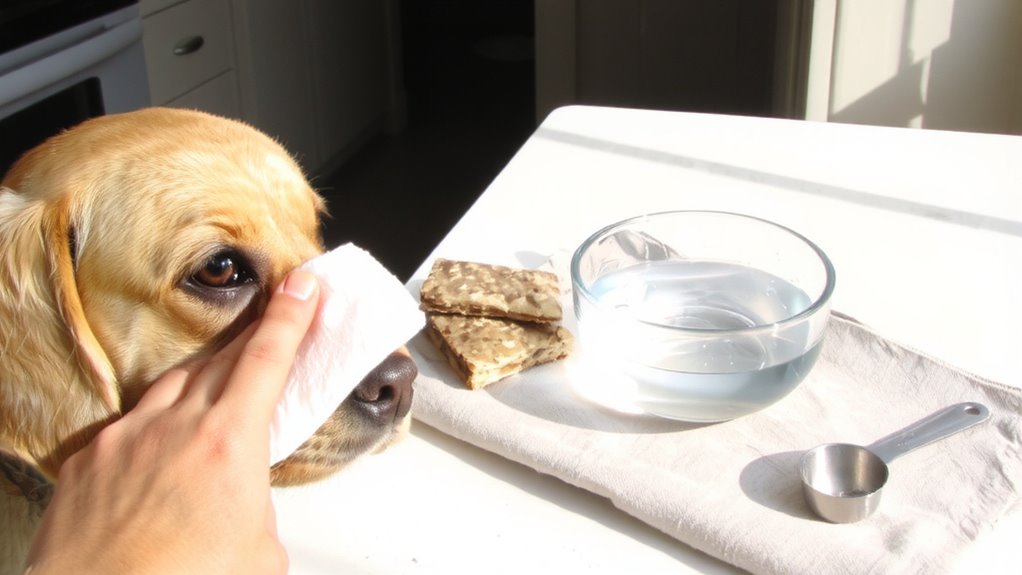
Why wait until your pet shows signs of eye trouble before taking action? Regular at-home eye care prevents complications from eye discharge and tear staining. These symptoms often indicate trapped debris, bacterial buildup, or irritation. Left untreated, they can progress to infections or corneal damage. Cleaning your pet’s eyes daily removes allergens and lubricates ocular surfaces. Use a sterile saline solution with 0.9% sodium chloride-mimicking natural tear composition-to avoid irritation. Apply with a lint-free cloth or sterile gauze, wiping from the inner to outer eye margin. This technique reduces the risk of introducing pathogens. Consistent care minimizes porphyrin deposits that cause reddish tear stains, especially in breeds prone to excessive tearing. Monitoring during cleaning also allows early detection of redness, swelling, or abnormal discharge. Simple, routine maintenance supports long-term ocular health and prevents avoidable veterinary costs. Prevention is always more effective than treatment.
What Ingredients Make Safe DIY Saline for Pets?
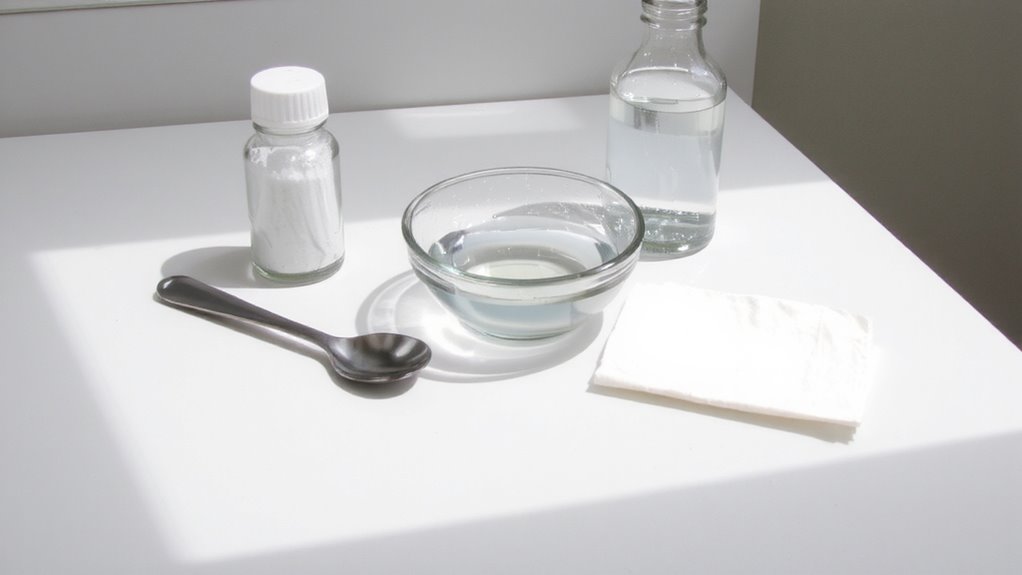
A properly formulated saline solution keeps your pet’s eyes safe and irritation-free. Use only non-iodized salt to prevent tissue damage. The correct ratio is 1 teaspoon of salt per 1 cup of distilled water. This creates an isotonic solution, matching your pet’s natural tear concentration. Maintain proper pH balance-between 6.5 and 7.5-to avoid stinging or corneal irritation. Tap water can disrupt pH and contains impurities; always use distilled. Sterile equipment is essential. Boil all tools and containers for at least 5 minutes before use. Even minor contamination can lead to infection, especially in sensitive ocular tissues. Store the solution in a sterilized, airtight container. Label it with the preparation date. Discard after 24 hours unless refrigerated, then use within 48 hours. Proper formulation and sterile equipment guarantee safety and effectiveness.
Make Your Own Saline Solution in 3 Steps
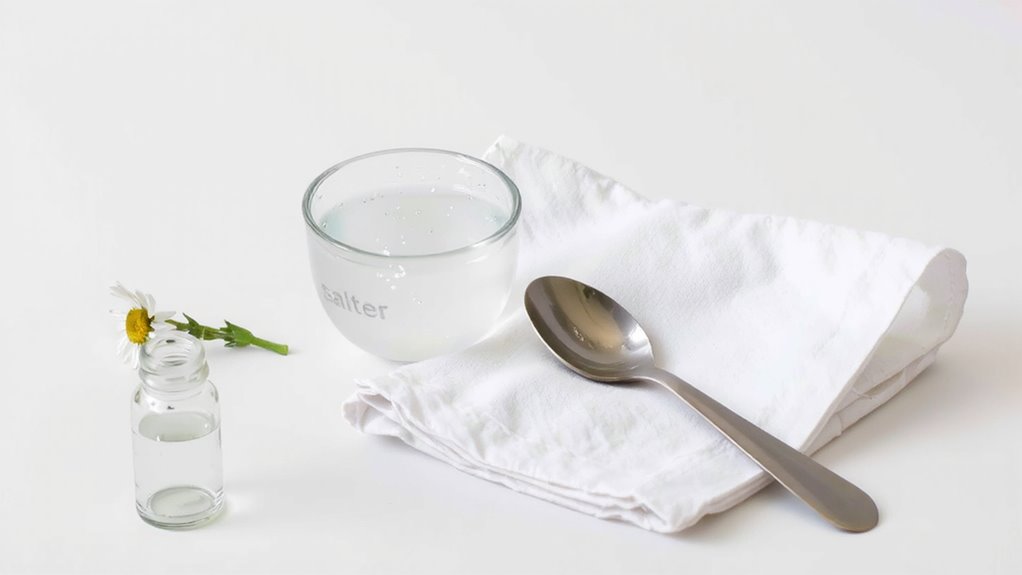
You’ve got the right ingredients and safety guidelines-now it’s time to put them to work.
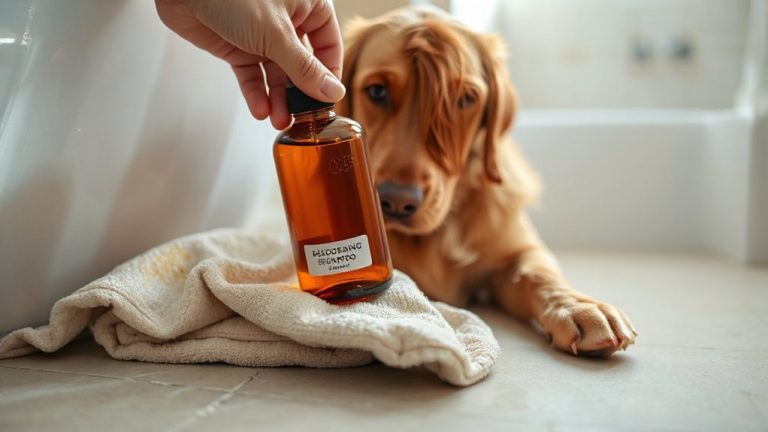
Start by boiling 1 cup (8 oz) of distilled or previously boiled water for 5 minutes to guarantee sterility. This step kills contaminants that could harm your pet’s eyes.
Next, add exactly ¼ teaspoon (1.25 g) of non-iodized salt. Use precise measurements-too much salt can irritate, too little won’t clean effectively. The correct ratio creates an isotonic solution, matching your pet’s natural tear osmolarity.
Stir until fully dissolved. Let the solution cool to room temperature-warm it slightly if needed, but never apply hot liquid near the eye.
Finally, transfer the saline to clean, labeled sterile containers. These prevent bacterial growth and cross-contamination. Use a sealed container with a tight lid.
Discard unused solution after 24 hours unless refrigerated. Refrigerated saline lasts up to 48 hours. Always inspect for cloudiness before use.
How to Clean Your Pet’s Eyes Safely With Saline
How do you guarantee your pet’s eyes stay clean without causing irritation? Use sterile saline solution to gently remove eye discharge and prevent tear staining. Soak a clean cotton ball or pad with saline-never use alcohol or soaps. Wipe from the inner corner of the eye outward, following the eye’s natural contour. One swipe per pass guarantees you don’t spread debris. Repeat with a fresh pad if needed. Saline mimics natural tears, maintaining pH around 7.4 and osmolarity near 300 mOsm/L, making it biocompatible. This minimizes discomfort while dissolving crusts and flushing allergens. For pets prone to tear staining, daily cleaning reduces bacterial growth that exacerbates discoloration. Use once or twice daily, or as advised by your vet. Always inspect the eye for redness, swelling, or excessive discharge. Do not reuse cotton materials. Proper technique prevents micro-abrasions. Safety and consistency protect ocular health.
5 Mistakes to Avoid When Cleaning Pet Eyes
Skipping proper technique risks harming delicate ocular tissues. Using tap water is never safe-it contains chlorine, minerals, and microorganisms that irritate sensitive eye surfaces. Always use sterile distilled or reverse osmosis water when preparing DIY saline: mix exactly ¼ teaspoon of non-iodized salt per 8 ounces of water, matching the eye’s natural tonicity of 0.9% NaCl. Even minor concentration errors cause discomfort or corneal damage. Ignoring expiration dates compromises sterility; homemade saline lasts only 24 hours when refrigerated. Store it in an airtight, sterilized container-preferably glass or medical-grade plastic. Avoid touching the dropper tip to any surface to prevent contamination. Apply no more than 2–3 drops per eye at a time with a clean applicator. Excessive force or pressure risks disrupting the tear film or injuring the conjunctiva. You must prioritize precision, cleanliness, and adherence to formulation standards.
When to Stop DIY and Call the Vet
Why risk worsening an eye condition when simple home care clearly isn’t enough? Persistent eye discharge, redness, swelling, squinting, or cloudiness mean it’s time to call the vet. DIY saline can soothe mild irritation but won’t treat infection or injury.
| Symptom | Duration | Action |
|---|---|---|
| Mild eye discharge | <24 hours | Monitor, clean gently |
| Persistent redness | >24 hours | Call vet |
| Thick discharge | Any | Seek care |
| Swelling or cloudiness | Immediate | Urgent vet visit |
| Squinting or rubbing | Ongoing | Stop DIY, call vet |
Your pet’s eyes are delicate. If symptoms persist beyond a day or worsen despite cleaning, professional diagnosis is essential. Some conditions, like corneal ulcers or glaucoma, require prescription medication. Using saline alone in these cases delays treatment and risks permanent damage. Recognize the limits of home care-your vigilance protects their vision.
How Long Can You Store Homemade Saline?
A single batch of homemade saline solution typically remains safe and effective for up to 24 hours when stored properly. This short shelf life minimizes contamination risk, which increases rapidly in non-sterile environments. Use only distilled or previously boiled water cooled to room temperature, combined with 0.9% sodium chloride-this isotonic concentration matches natural tear composition. Store the solution in a sterilized, airtight container, preferably refrigerated, to slow bacterial growth. However, refrigeration doesn’t extend the safe shelf life beyond one day. After 24 hours, discard any unused solution, as invisible microbial proliferation may occur even without visible cloudiness or odor. Repeated use of expired saline can introduce pathogens to sensitive ocular tissues. Always prepare a fresh batch for each use to guarantee purity and efficacy. Homemade saline lacks preservatives, making strict adherence to timing essential.
On a final note
You now have a sterile, isotonic saline solution at 0.9% sodium chloride concentration-safe for ocular use. Always prepare it with distilled water and non-iodized salt to prevent irritation. Store in a sealed, sterilized container for up to 24 hours at room temperature. Discard if cloudiness or contamination occurs. This solution mimics natural tears, maintaining pH and osmolarity similar to your pet’s eye fluids. Use only as directed. When in doubt, consult your veterinarian.