The Role of Protein in Preserving Lean Muscle During Canine Weight Loss
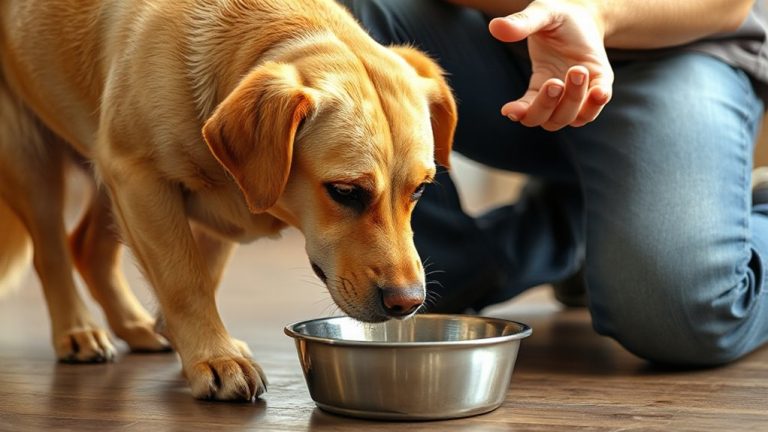
You need high-quality protein to preserve lean muscle when your dog loses weight. Muscle burns 6–8 calories per pound daily, helping sustain metabolism. High-protein diets (3.5–5 g/kg body weight) supply essential amino acids like leucine, which trigger muscle synthesis. Animal-based proteins-eggs, lean meats, whey-are over 85% digestible and support nitrogen balance. Spread protein across 3–4 meals daily to limit muscle breakdown. Pairing protein with exercise boosts retention. Without enough high-quality protein, your dog risks losing strength and metabolic efficiency-key details follow.
Notable Insights
- High-protein diets preserve lean muscle by supplying essential amino acids during calorie restriction.
- Protein intake of 3.5–5 g/kg/day supports muscle retention and boosts fat loss in weight-loss dogs.
- High-quality animal-based proteins offer superior digestibility and complete amino acid profiles for muscle maintenance.
- Frequent meals with balanced protein distribution enhance muscle protein synthesis and reduce breakdown.
- Post-exercise protein intake, especially from leucine-rich sources, optimizes muscle recovery and lean mass preservation.
Why Lean Muscle Matters When Dogs Lose Weight
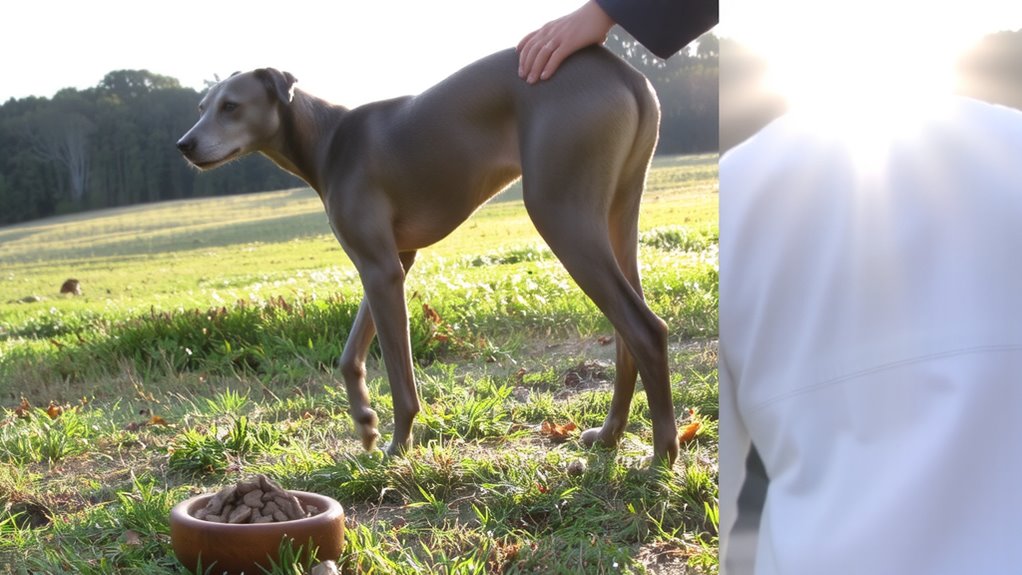
Muscle isn’t just for athletes-it’s a metabolic powerhouse in your dog’s body. It directly influences metabolic rate, burning more calories at rest than fat tissue. For every pound of muscle, your dog burns approximately 6–8 calories daily, compared to 2–3 from fat. Maintaining lean mass during weight loss keeps energy expenditure elevated, preventing plateaus. Muscle also provides essential joint support, reducing stress on ligaments and cartilage. Strong musculature improves stride efficiency and stability, lowering injury risk by up to 30% in overweight dogs. As fat diminishes, muscle preserves structural integrity, ensuring mobility isn’t compromised. Degeneration risks rise when muscle loss outpaces fat reduction. You need to prioritize lean tissue retention through adequate protein intake. This isn’t cosmetic-preserving muscle sustains function. Proper muscle mass supports posture, balance, and long-term joint health during weight management.
How Protein Prevents Muscle Loss in Overweight Dogs

A well-formulated high-protein diet is essential for preserving lean muscle mass during canine weight loss. You help maintain muscle by supplying abundant amino acids, the building blocks needed for muscle protein synthesis. Overweight dogs in a calorie deficit rely on dietary protein to prevent catabolism of muscle tissue. High-quality protein increases satiety and supports a higher metabolic rate, aiding fat loss while sparing muscle. Each meal should contain at least 2.8–3.2 grams of protein per kilogram of body weight daily. This intake guarantees a positive nitrogen balance, indicating adequate amino acid availability. Studies show dogs fed high-protein diets lose more fat mass and retain up to 90% of lean muscle compared to lower-protein counterparts. Protein also elevates diet-induced thermogenesis, slightly boosting metabolic rate. You’re not just reducing calories-you’re optimizing body composition through precise nutritional support.
Good vs. Poor Protein for Weight-Loss Dogs
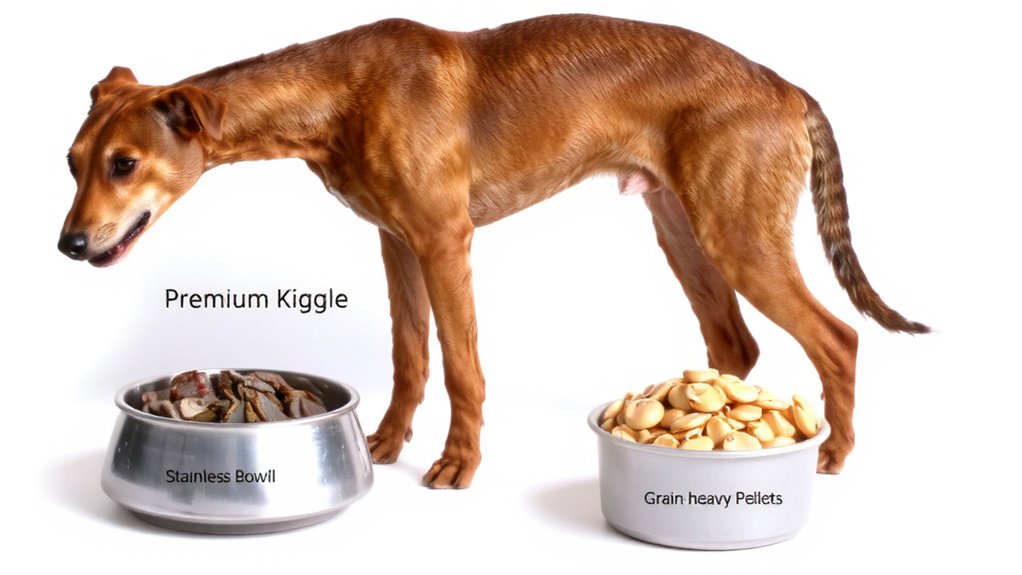
Why do some proteins support fat loss while others hinder it? The answer lies in digestibility differences and amino acid profiles. High-quality proteins, like those from eggs, lean meats, and dairy, have digestibility rates above 85%, ensuring your dog absorbs more usable nutrients per gram. Poor proteins-often plant-based or by-product meals-can fall below 70% digestibility, wasting calories and reducing muscle support. Best amino acid profiles, especially rich in leucine and lysine, directly fuel muscle maintenance during calorie restriction. Animal-sourced proteins typically provide complete, balanced amino acids; plant sources often lack taurine, methionine, or arginine. Choosing highly digestible, amino acid-dense proteins maximizes satiety, preserves lean mass, and accelerates fat loss. You’re not just cutting calories-you’re fueling biology. Each gram counts. Make it work.
How Much Protein Does a Dog Need to Lose Weight?
How much protein does your dog actually need to lose weight effectively? For peak lean muscle preservation, aim for 3.5 to 5 grams of high-quality protein per kilogram of body weight daily. This range supports metabolic demands without overloading renal function. The quality of protein sources matters-choose those with complete amino acid balance, like egg, whey, or lean meats, to guarantee essential amino acids like leucine are present for muscle synthesis. Inadequate amino acid balance leads to muscle catabolism, even with sufficient protein volume. Highly digestible sources improve nitrogen retention, enhancing muscle maintenance during caloric restriction. Research shows dogs on higher-protein weight-loss diets retain up to 90% more muscle mass than those on moderate-protein plans. Always verify protein content on a dry matter basis when comparing commercial foods. Balanced, species-appropriate protein intake isn’t just supportive-it’s essential.
How Meal Timing Supports Muscle During Weight Loss
When you space your dog’s meals strategically throughout the day, you’re not just managing hunger-you’re optimizing muscle preservation during weight loss. Feeding frequency plays a critical role in maintaining amino acid availability. Dividing daily intake into three to four meals sustains protein synthesis and reduces muscle breakdown. Nutrient spacing guarantees steady plasma amino acid levels, supporting an anabolic environment. Without it, long fasting windows trigger catabolism. Studies show dogs fed more frequently lose markedly more fat than muscle versus those fed once daily. Each meal should contain at least 25% of total daily protein to maximize absorption. This approach works especially well with high-quality, digestible protein sources. You don’t need supplements if nutrient spacing and feeding frequency are properly timed. Consistency enhances metabolic efficiency. Proper scheduling aligns with circadian nutrient utilization patterns, further protecting lean mass.
Pair Protein With Activity to Maintain Muscle
Isn’t it true that your dog’s post-exercise nutrition determines whether muscle is built or broken down? After activity, protein intake supports muscle recovery by supplying essential amino acids. The exercise intensity your dog experiences directly affects muscle protein breakdown. High-intensity sessions increase demand for post-workout nutrition. Within 30 to 60 minutes post-exercise, feed 1.4–2.0 grams of protein per kilogram of body weight per day, timed to optimize synthesis. Pairing dietary protein with physical activity stimulates muscle protein accretion. This synergy helps maintain lean mass during weight loss. Leucine-rich proteins-like egg or whey-trigger signaling pathways that initiate repair. Without this pairing, even adequate daily protein may fail to preserve muscle. Think of protein and activity as co-factors: one primes the muscle, the other drives adaptation. Consistent pairing guarantees metabolic efficiency and structural integrity. You’re not just managing weight-you’re sustaining function.
Signs Your Dog Isn’t Getting Enough Protein
You might notice your dog losing muscle mass despite regular exercise, and that’s a red flag. This could indicate protein deficiency, which impairs muscle repair and growth. Muscle weakness often follows, reducing your dog’s stamina and coordination. A lack of dietary protein limits amino acid availability, especially leucine, which regulates muscle protein synthesis. Without sufficient intake-typically below 4.5 grams per 100 kcal for active dogs-lean tissue degrades. You may also see a dull coat, slow wound healing, or increased fatigue after mild activity. These are clinical markers of inadequate protein. Blood tests might reveal low albumin, confirming deficiency. Dogs in weight loss programs need higher protein-up to 35% of metabolizable energy-to preserve muscle. Monitor body condition score and muscle condition score monthly. Adjust diet to provide at least 2.5–3.5 g of protein per kg of ideal body weight daily to prevent decline.
On a final note
You must prioritize protein to preserve lean muscle during canine weight loss. High-quality protein sources-like eggs, chicken, and fish-deliver essential amino acids, particularly leucine, which stimulates muscle protein synthesis. Dogs require 3.5–5.5 g of protein per kg of body weight daily during calorie restriction. Feed protein evenly across meals to maximize uptake. Pairing protein intake with daily resistance-style activity maintains muscle mass.