Removing Dog Splinters: Tweezers, Magnifier & Vet Signs
Use fine-tipped stainless steel tweezers to remove visible, superficial splinters from your dog’s paw or mouth. Restrain your dog safely and clean the area with saline. For paw splinters, pull straight out; for oral splinters, use a flashlight and grasp carefully. Avoid forcing or digging. If the splinter is deep, not fully visible, or signs of infection appear, professional care is essential. Further details on safe extraction and infection prevention follow.
Notable Insights
- Use fine-tipped tweezers to grasp and remove partially exposed splinters straight out without squeezing the skin.
- Sterilize tools with alcohol and use a digital magnifier to safely locate and extract splinters in fur or gum tissue.
- For deeper paw splinters, carefully lift the entry point with a sterilized needle at a 30-degree angle.
- In the mouth, inspect with a flashlight and remove visible splinters gently, avoiding force or digging.
- Apply chlorhexidine antiseptic after removal and seek veterinary care if swelling, pus, or eating refusal occurs.
How to Spot a Splinter in Your Dog’s Paw or Mouth
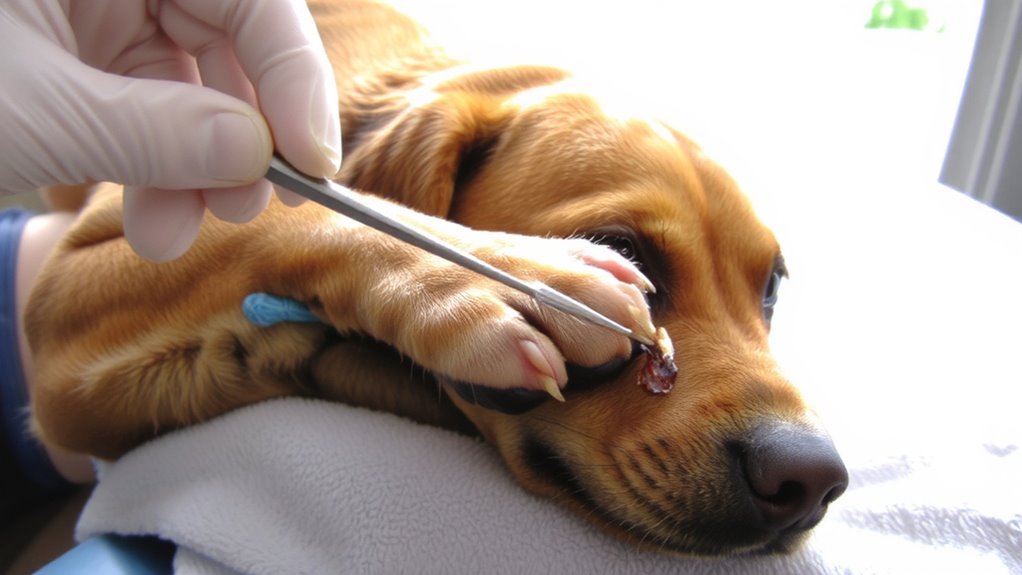
Signs your dog may have a splinter include persistent licking, limping, or visible discomfort when walking or eating. Pain behavior often manifests as pawing at the mouth or foot, vocalizing softly, or refusing to bear weight. These actions signal irritation or injury. Limping observation is critical-note whether the limp worsens on hard surfaces, which increases pressure on embedded foreign objects. Acute lameness in one limb suggests a paw splinter; oral splinters may cause excessive drooling or tilted chewing. Inspect between toes, under pads, and along the gum line with a bright LED flashlight (minimum 200 lumens). Splinters in fur-covered areas are harder to detect. Look for redness, localized swelling, or a small puncture. Early detection prevents infection. Document changes hourly. Persistent symptoms require veterinary evaluation. You’re observing for physical evidence and behavioral cues-both are diagnostically significant.
What Supplies You Need to Remove a Dog Splinter
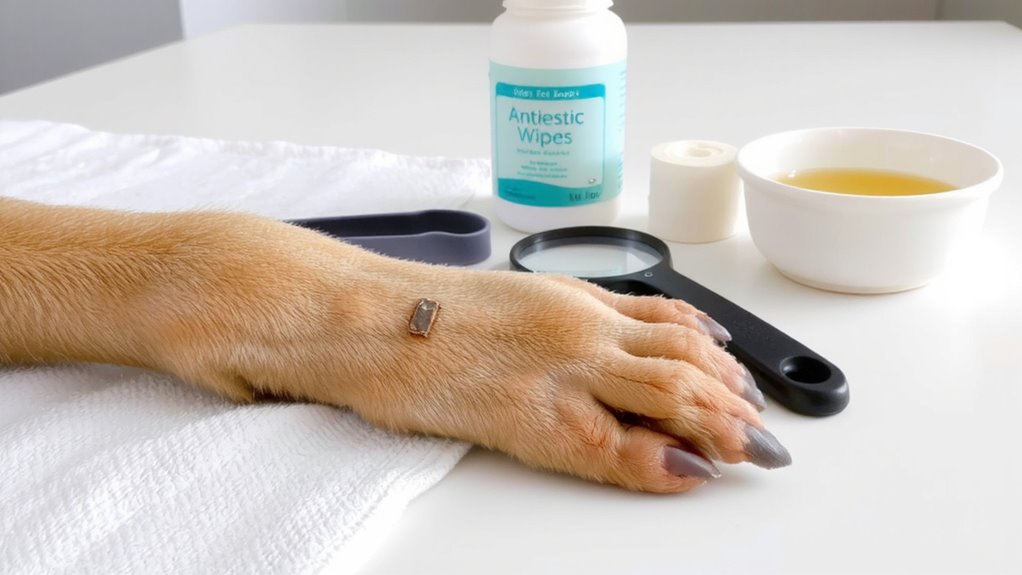
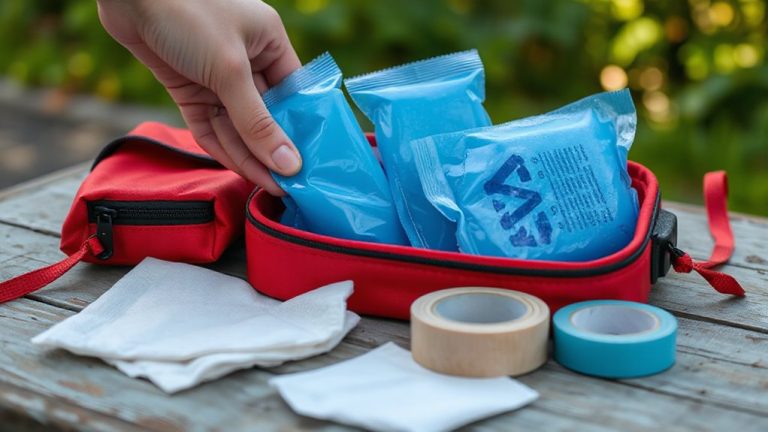
You’ll need a few essential tools to safely remove a splinter from your dog’s foot or mouth. Use fine-tipped stainless steel tweezers for precise grip and clean extraction. Sterile 2-inch gauze pads control bleeding and aid in wound cleaning. A digital magnifier with 5x to 10x zoom helps locate embedded splinters in fur or gum tissue. Medical-grade saline solution irrigates the site, reducing contamination risk. Antiseptic wipes containing 2% chlorhexidine prevent infection. Have a styptic pencil on hand to stop minor bleeding. For splinter prevention, inspect your dog’s environment daily and avoid wooded or thorny areas. Trim paw hair to reduce debris trapping. All tools must be disinfected with 70% isopropyl alcohol before use. Proper equipment guarantees effective removal and supports immediate post-extraction care, minimizing complications and promoting faster healing.
How to Remove a Splinter From Your Dog’s Paw
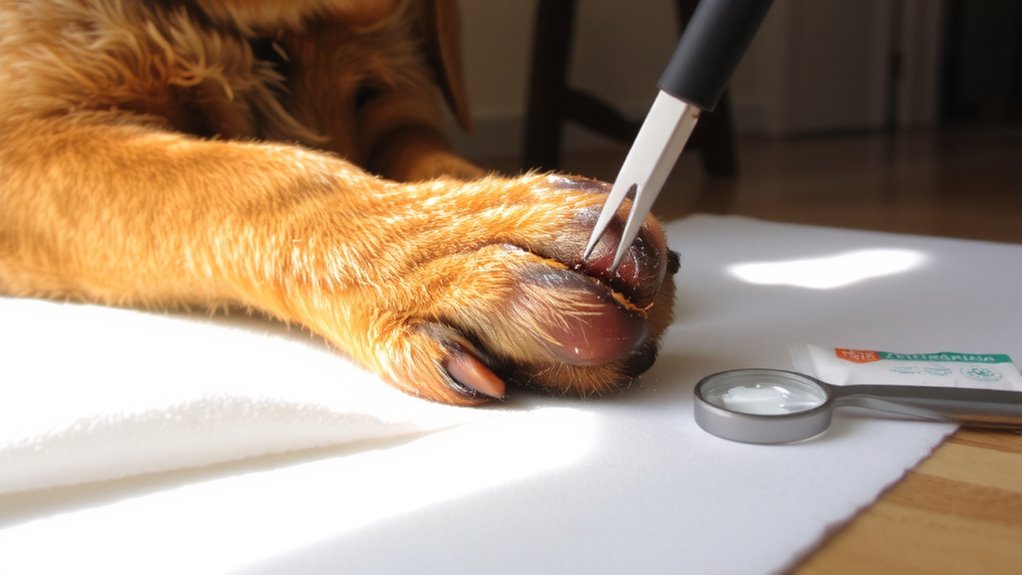
Begin by securing your dog in a calm, well-lit area to guarantee safety and precision during splinter removal. Assess the splinter depth visually-if partially exposed, sterilize tweezers with rubbing alcohol and use a firm grip to pull it straight out. Avoid squeezing the skin, which can push deeper fragments further in. For deeper splinters near or beneath the paw pad surface, employ an extraction technique using a sterilized needle to gently lift the entry point. Work at a 30-degree angle to minimize tissue damage. Apply antiseptic afterward to prevent infection. If the splinter depth exceeds 2 mm or isn’t fully visible, do not attempt full removal at home. Monitor for swelling, limping, or persistent licking. Professional veterinary tools, like magnifying loupes and sterile probes, may be required. Always prioritize minimal invasiveness and wound integrity.
How to Remove a Splinter From Your Dog’s Mouth
Where could a splinter hide if your dog suddenly refuses to eat or paws at its mouth? Check along the gums, under the tongue, or embedded in the inner cheek-common spots where splinters pierce delicate mucus membranes. Use a flashlight and gently open your dog’s mouth. Look for visible slivers, often lodged near folds or creases. If seen, sterilize tweezers with rubbing alcohol. Restrain your dog safely, ideally with a second person helping. Grasp the splinter firmly and pull straight out, avoiding breakage. Do not dig or force it. After removal, rinse the area with saline to support oral hygiene and reduce irritation. Avoid hydrogen peroxide-it damages tissue. Monitor for swelling or drooling, but skip antibiotics unless advised. Regular inspection and clean drinking water help maintain healthy mucus membranes and prevent complications during recovery.
When to See the Vet for a Dog Splinter (Infection Signs)
A splinter in your dog’s mouth may seem minor, but complications can escalate quickly if signs of infection appear. Swelling, redness, and pus are key indicators of infection. Swelling discharge suggests active microbial invasion. Redness around the site indicates inflammation. Pus, a thick yellow or green exudate, signals bacterial presence. If your dog shows increased drooling, refusal to eat, or persistent pawing at the mouth, seek veterinary care. Left untreated, localized infections can spread systemically. Abscess formation may require incision, drainage, and antibiotics. Your vet may prescribe broad-spectrum antimicrobials like amoxicillin-clavulanate, dosed at 12.5–25 mg/kg every 12 hours. Radiographs or ultrasound can rule out deep penetration. Delay increases risk of cellulitis or sepsis. Early intervention prevents progression. Monitor hourly. Seek professional help immediately when infection signs manifest. Timely treatment guarantees resolution.
On a final note
You should act quickly but carefully when removing splinters from your dog. Visible splinters near the skin surface can often be extracted with sterilized tweezers at a 90-degree angle. For deeply embedded or oral splinters, veterinary intervention is necessary. Monitor for redness, swelling, or discharge-signs of infection. Always clean the area with saline or mild antiseptic afterward. Prevention includes paw inspections after outdoor activity.