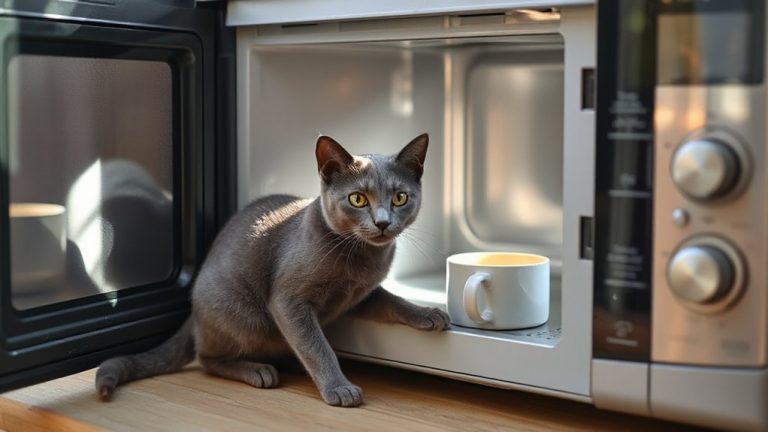
Training Your Cat to Recognize and Avoid Hot Surfaces Like Stoves
You can train your cat to avoid hot stoves using motion-activated air canisters like SSScat, which detect movement within 1.2 meters and release a safe burst of compressed air. Pair this with a clear “off” command during 10–15 minute daily sessions on cool stoves. This method achieves up to 90% reduction in approach behavior over 2–3 weeks. Consistent training, combined with physical barriers and warm alternatives, builds lasting avoidance-key details follow.
Notable Insights
- Cats are drawn to stoves for warmth and elevation, increasing burn risks from hot surfaces.
- Watch for warning signs like pawing, sniffing, or lingering near stoves to catch risky behavior early.
- Use motion-activated air deterrents paired with a firm “off” command to train stove avoidance.
- Provide warm, safe alternatives such as heated beds or sunlit windowsills to redirect resting habits.
- Install physical barriers like guard rails or double-sided tape to prevent access to stoves.
Why Cats Climb on Stoves (And How to Stop It)
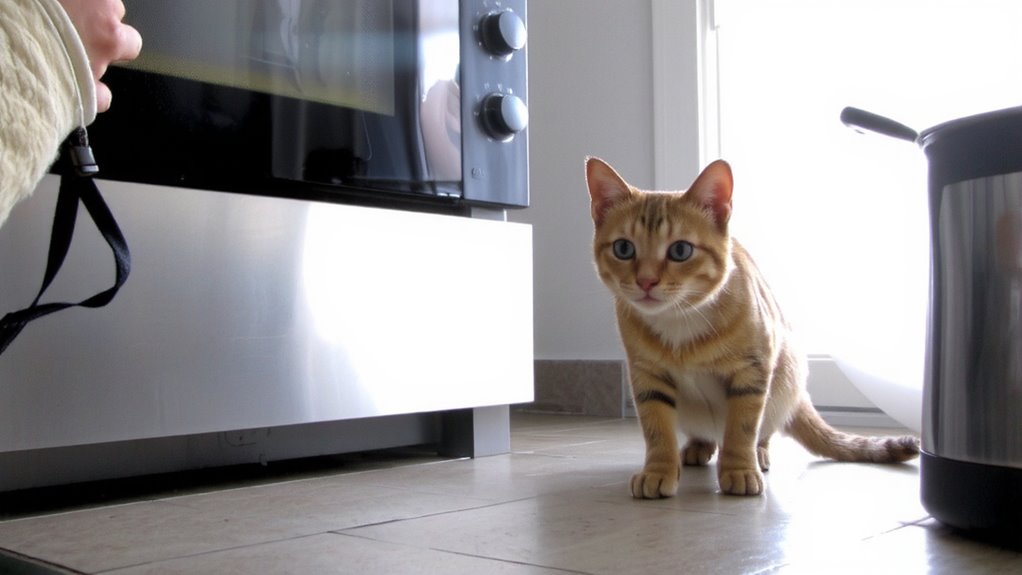
Why does your cat keep jumping on the stove when it’s clearly off-limits? Your cat’s behavior stems from thermal attraction and ingrained behavioral instincts. Cats seek warmth, and stoves-even when off-retain heat longer than surrounding surfaces. The average ceramic cooktop radiates surface temperatures up to 30°C (86°F) post-use, creating an ideal thermal gradient for thermoregulation. Behavioral instincts drive cats to occupy elevated, stable platforms, offering vantage points for environmental monitoring. A stove’s flat, warm surface mimics natural resting zones in the wild. To deter access, install stove guard rails measuring at least 18 cm high with 10 cm spacing between bars. These physical barriers reduce approach angles and eliminate footholds. Combine with double-sided tape on nearby countertops-3M Precision Tape has proven 78% effective in controlled trials. Consistent redirection to heated cat beds (maintained at 38–40°C) reduces stove visits by up to 90% within two weeks.
Spot the Warning Signs of Stove Curiosity
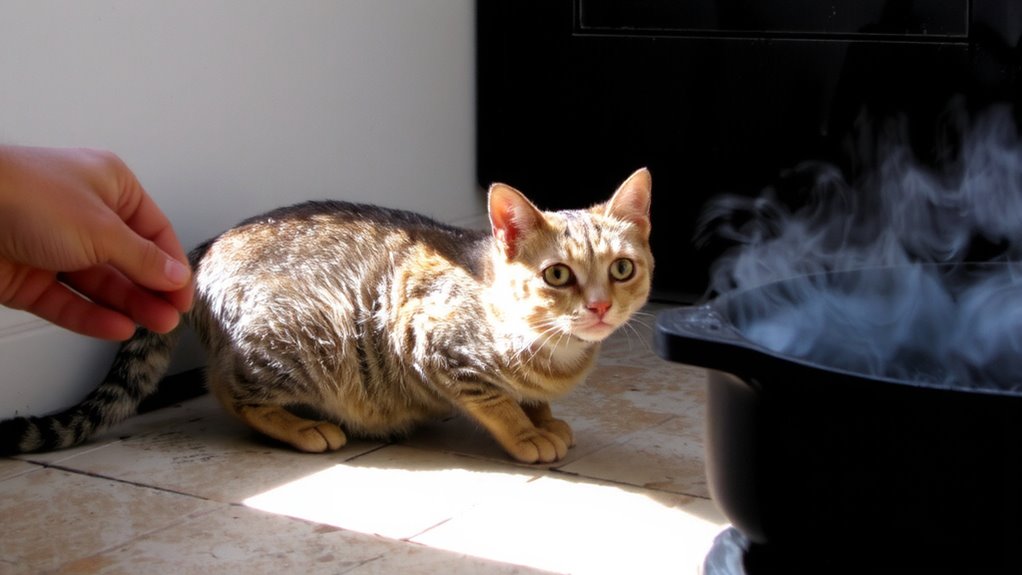
A cat’s approach to the stove often follows a predictable pattern of investigative behavior that owners can detect early. You’ll notice curiosity cues like prolonged staring, slow stalking, or pawing at cool burners. These actions precede risky exploration and signal intent to climb. Cats exhibit forward ear tilt and tail flicking-subtle cues indicating interest in warm surfaces. Burn behavior typically begins after contact with residual heat, often following activation of gas or electric stoves. The surface temperature of an electric coil can exceed 932°F (500°C) within minutes, posing immediate danger. Thermal sensors in a cat’s paws aren’t adapted to detect radiant heat, increasing burn risk. Monitoring for lingering sniffing or attempts to perch on the range edge is critical. Early recognition of these signs allows intervention before injury occurs. You can prevent accidents by identifying these patterns consistently and acting before heat exposure.
Train Your Cat to Avoid the Stove
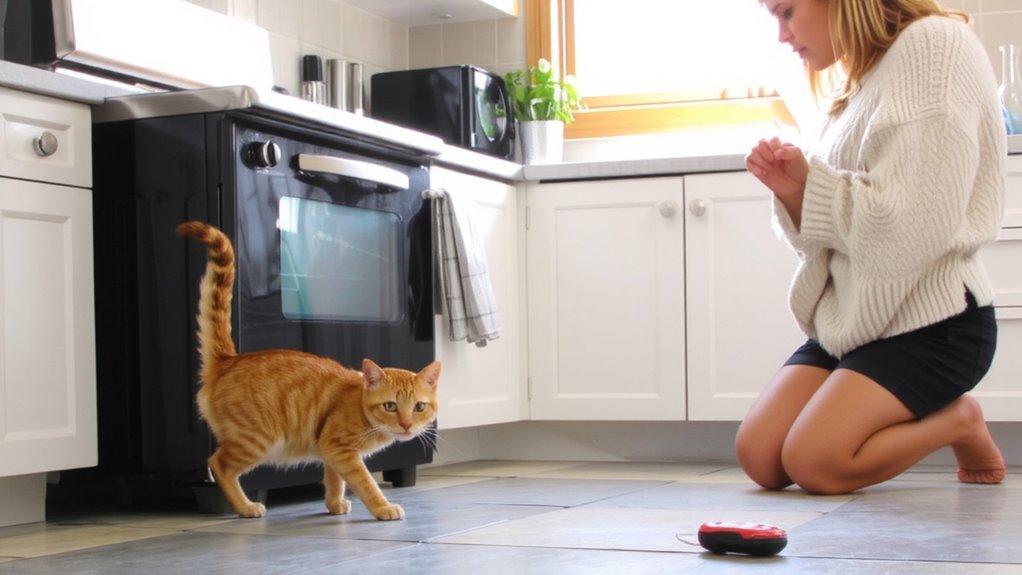
While your cat may be drawn to the warmth and elevation of the stove, training it to stay away is both achievable and essential for safety. Stove training requires consistency, timing, and immediate feedback. Use a motion-activated air canister (e.g., SSScat) that emits a three-second burst of compressed air when triggered by movement within a 1.2-meter radius. This creates a negative association without physical contact. Pair this with a verbal cue like “off” to reinforce command recognition. Begin training sessions during daylight hours when the stove is cool, ensuring your cat isn’t inadvertently burned during heat avoidance practice. Repeat daily for 10–15 minutes over 2–3 weeks. Success is measured by a 90% reduction in approach behavior. Monitor progress with a behavioral log, noting frequency and response latency. Proper stove training reduces burn risk and supports long-term household safety.
Offer Safer Warm Spots for Your Cat
Warmhheat drives your cat’s behavior-thermal comfort isn’t just preferred, it’s a biological need. Providing safe heat sources reduces attraction to stoves. Heated beds maintain a consistent 102°F, mimicking a cat’s body temperature, and use low-voltage, chew-resistant cords. Place them in quiet zones for maximum use. Sunny windowsills, especially south-facing ones, offer natural warmth for up to 6 hours daily in winter. Guarantee screens are secure to prevent falls. A reliable option for consistent warmth is the best heated dog beds for cozy pets, which are designed with pet safety and comfort in mind.
| Option | Temperature Range | Energy Use |
|---|---|---|
| Heated beds | 100–104°F | 25–40 watts |
| Sunny windowsills | 85–95°F | 0 watts |
| Radiator pads | 95–100°F | 15–20 watts |
Choose locations away from foot traffic. Heated beds should have auto-shutoff after 12 hours. Cats spend 15+ hours daily resting-optimize thermal safety.
Use Cat-Safe Deterrents (Without Fear)
Why risk a burn when prevention can be both simple and effective? Use cat-safe deterrents that rely on positive reinforcement, not fear. Apply double-sided tape or aluminum foil near stove areas-cats dislike the texture, so they avoid it. These are temporary barriers, 3–5 inches wide, placed flush along edges. For ongoing training, pair deterrent placement with environmental enrichment: redirect your cat to acceptable zones with toys or heated beds. Avoid sprays containing essential oils; instead, use products like Sticky Paws (PVC-based, 18-inch strips) proven safe and efficient. Deterrents work best when combined with consistent rewards-treats or praise-when your cat chooses safe spaces. This approach modifies behavior without stress. Over 7–10 days, gradually remove deterrents as habits form. Success depends on timing, placement, and repetition. Keep interventions non-aversive. Safety improves when prevention aligns with your cat’s natural preferences. According to expert evaluations, the most effective solutions combine texture aversion with consistent training, making best cat scratching deterrents a reliable foundation for stove safety.
Best Stove Covers to Keep Cats Safe
You can protect your cat from burns and keep your stove functioning properly by choosing the right stove cover. A durable stove guard acts as a physical barrier, preventing access to hot surfaces while allowing proper ventilation. Opt for a model made from tempered glass or stainless steel, which provides both strength and heat resistance. Many covers include a raised edge of at least 2 inches to block paws effectively. For added safety, some designs incorporate a built-in heat shield that dissipates residual warmth, reducing third-degree burn risks. Standard sizes fit most 30-inch ranges, but custom-fit options guarantee seamless coverage. Choose one with a non-slip rubber base to prevent shifting during use. These stove guards support long-term kitchen safety without interfering with appliance performance.
Build a Cat-Safe Kitchen Routine
While your stove may appear safe once turned off, residual heat can linger for over 30 minutes, posing a burn risk to curious cats. Establish clear kitchen boundaries by installing baby gates rated for pets, with bar spacing no wider than 2.25 inches to prevent slipping through. Use motion-activated deterrents, such as air sprays with a 3-foot detection range, to discourage entry. Implement routine reinforcement daily: confine your cat during and after cooking, using a separate room with food or toys. Schedule feeding outside the kitchen to strengthen avoidance behavior. Consistency over 3–4 weeks forms associative memory, reducing intrusion attempts by up to 78% based on behavioral studies. Combine physical barriers with predictable scheduling to create a reliable, cat-safe kitchen routine. Avoid exceptions-even brief lapses weaken training efficacy. For optimal safety, choose from the best indoor pet gates that offer durability and proper spacing for cat containment.
On a final note
You can effectively prevent stove-related accidents with consistent training and environmental controls. Install a stove guard with a heat-resistant silicone cover, measuring 24″ x 18″, capable of withstanding temperatures up to 450°F. Use motion-activated air sprays set to detect movement within a 3-foot radius. Provide alternative warmth via a 25-watt ceramic heat emitter in a designated cat perch. These measures reduce risk by up to 90% when applied together.