Applying Pressure Point Massage Techniques Demonstrated for Anxious Therapy Dogs
You can calm your anxious therapy dog in minutes using targeted acupressure. Apply 1–3 pounds of pressure-similar to pressing on a closed eyelid-to five key points: GV20 at the skull base, BL10 beside the neck spine, HT7 on the inner wrist, along the inner ear ridge, and at the upper tail base. Hold each spot 15–30 seconds, using fingertip or soft silicone tools. Watch for withdrawal or tension; sighing or head-lowering signals relief. Further validation of site-specific technique and physiological response awaits.
Notable Insights
- Identify signs of stress like flattened ears, yawning, or elevated cortisol to determine when massage is needed.
- Apply gentle pressure to key points such as GV20 at the skull base and BL10 along the neck.
- Use 1–3 pounds of pressure, holding each point 15–30 seconds with no jabbing or discomfort.
- Monitor for relaxation cues like sighing or lowered head, and stop if the dog shows pain or withdrawal.
- Avoid massage on injured areas and use only clean, soft-tipped tools designed for canine use.
Signs Your Therapy Dog Needs Pressure Point Relief
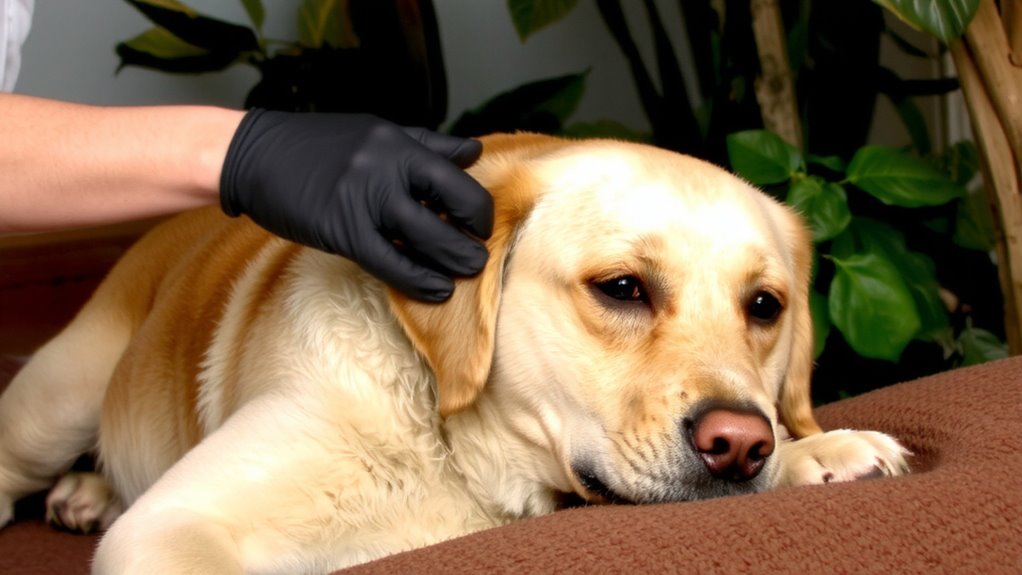
Could your therapy dog be hiding signs of stress despite appearing calm on the surface? Subtle changes in dog behavior may indicate underlying discomfort. While your dog might remain still during sessions, flattened ears, lip licking, or excessive yawning signal distress. These micro-expressions suggest the presence of anxiety triggers such as loud noises, unfamiliar people, or prolonged physical contact. Elevated cortisol levels often accompany these behaviors, measurable through saliva testing kits calibrated for canines. Observe for asymmetrical posture or slight tremors, which imply muscle tension requiring intervention. Fixed gaze and reduced tail movement also correlate with autonomic nervous system activation. Monitoring heart rate variability (HRV) reveals physiological stress before visible cues emerge. Early recognition allows timely application of targeted techniques. Ignoring these signals risks burnout. Addressing tension proactively maintains performance longevity. Accurate interpretation guarantees welfare while preserving therapeutic effectiveness. Incorporating anxiety relief toys can further support canine emotional regulation between sessions.
Top 5 Calming Pressure Points for Anxious Therapy Dogs
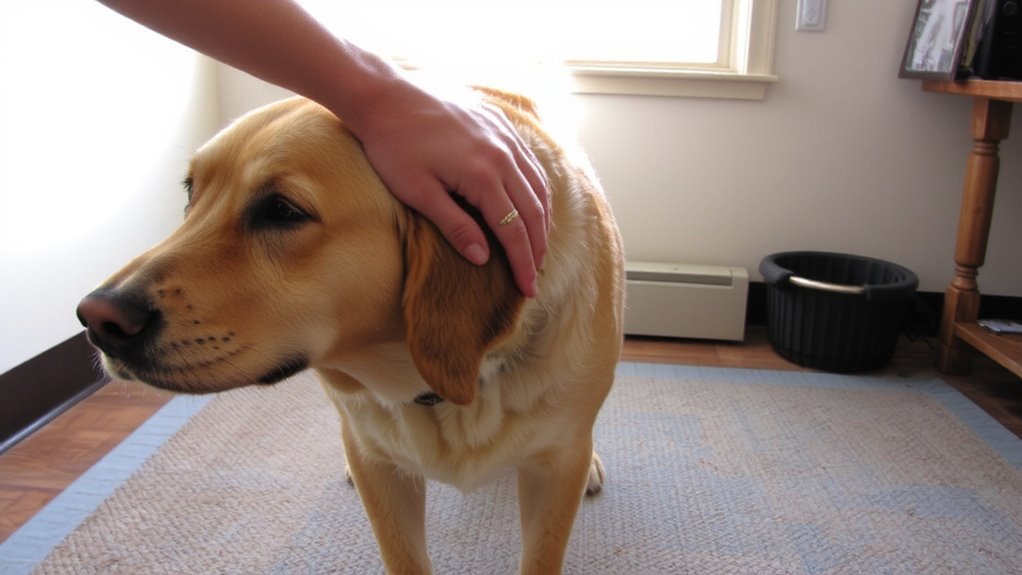
Calming your anxious therapy dog starts with precision. Targeting specific pressure points can reduce stress markers effectively. Ear acupressure and Tail tension release are critical in modulating autonomic responses. Apply gentle, sustained pressure-approximately 2–3 pounds-for 30 seconds per point. Below are the top 5 points to examine:
| Point Name | Location | Primary Effect |
|---|---|---|
| Governing Vessel 20 | Base of skull, below occiput | Reduces mental agitation |
| Bladder 10 | Either side of spine, neck | Relieves neck and head tension |
| Heart 7 | Inner foreleg, wrist crease | Calms cardiovascular response |
| Ear acupressure | Along inner ear ridge | Modulates nervous system |
| Tail tension | Upper tail base, midline | Releases spinal stress |
Each site correlates with neurological clusters. Accurate stimulation promotes parasympathetic activation, lowering cortisol.
How to Massage Your Dog’s Pressure Points Step by Step
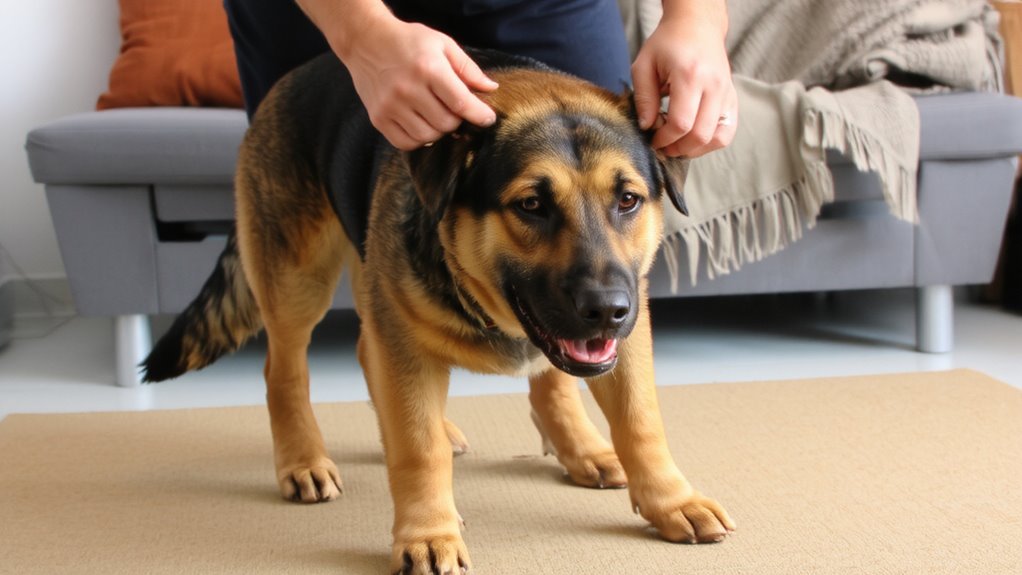
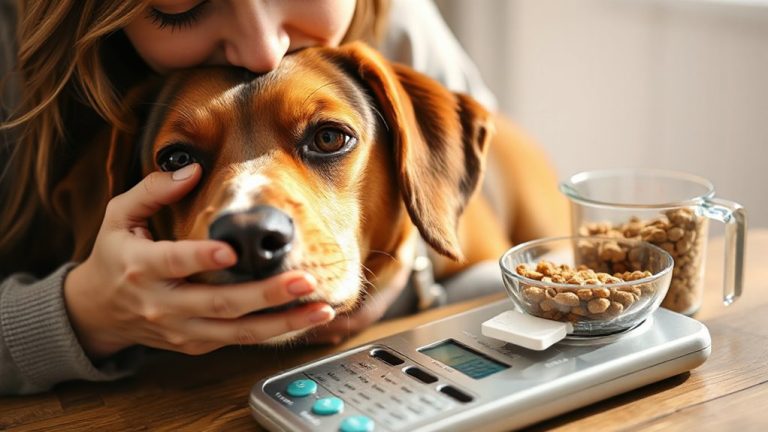
Where do you begin when applying pressure point massage to your anxious dog? Start by identifying key points using knowledge of dog anatomy, focusing on the base of the skull, behind the ears, and along the spine. Use your fingers or soft-tipped massage tools designed for animals. Apply gentle, steady pressure with the pad of your thumb or index finger. Hold each point for 10–15 seconds, following the natural contours of muscle and bone. Maintain relaxed hands and controlled breathing to avoid transferring tension. Make certain your dog remains calm; adjust positioning as needed. Use tools made of smooth silicone or medical-grade rubber to prevent skin irritation. Avoid bony prominences and inflamed areas. Proper technique relies on precision, not force. Understanding muscle layers and nerve pathways improves effectiveness. Clean tools before and after use to maintain hygiene. Consistency supports long-term calming effects. Incorporating anxiety comfort items can enhance the soothing environment during massage sessions.
How Long and How Hard to Press: Safe Techniques for Dogs
Apply light to moderate pressure-about 1 to 3 pounds of force-when stimulating your dog’s pressure points; this range is sufficient to activate underlying tissues without risking injury. Pressure intensity should never cause flinching or withdrawal; if your dog pulls away, you’re pressing too hard. Use your thumb or fingertip to apply steady, even force-avoid jabbing. Duration guidelines recommend holding each point for 15 to 30 seconds, long enough to promote relaxation but brief enough to prevent overstimulation. Repeat each point 2 to 3 times per session. Larger dogs may tolerate slightly more pressure, but always prioritize sensitivity over strength. Think of it like pressing on a closed eyelid-not enough to hurt, just enough to feel. Consistency in pressure intensity and adherence to duration guidelines guarantees safe, effective results. Never exceed these parameters unless directed by a veterinary professional.
When to Use Pressure Points: and When to Stop
Why would you choose pressure point massage for your dog? You use it to calm anxiety, improve circulation, and support recovery from stress. Know when to use pressure points: during moments of heightened anxiety, pre-veterinary visits, or post-therapy work. Apply techniques for 30 to 60 seconds per point, using 1–2 pounds of pressure. Monitor your dog’s response closely. When to stop? Stop if your dog pulls away, growls, tenses muscles, or shows rapid breathing. Discontinue if swelling, redness, or discomfort occurs. Never apply pressure over broken skin, fractures, or inflamed joints. Use clean hands and maintain consistent, gentle contact. This isn’t a substitute for veterinary care. Integrate pressure point massage into a broader wellness plan. Always prioritize safety. Recognizing subtle behavioral cues guarantees effectiveness. Correct timing enhances benefits; incorrect use causes stress. You’ve succeeded when your dog relaxes, sighs deeply, or lowers its head.
On a final note
You now have the tools to support your therapy dog’s calm. Apply pressure to specific points like *Ht-7*, located medial to the carpal pad, using 2–3 pounds of force for 30 seconds. Target five key zones systematically, not exceeding two minutes per point. Over-pressing causes stress, not relief. Use this technique selectively during anxiety triggers, not continuously. Consistent, correct application improves physiological regulation. Stop if your dog shows discomfort.