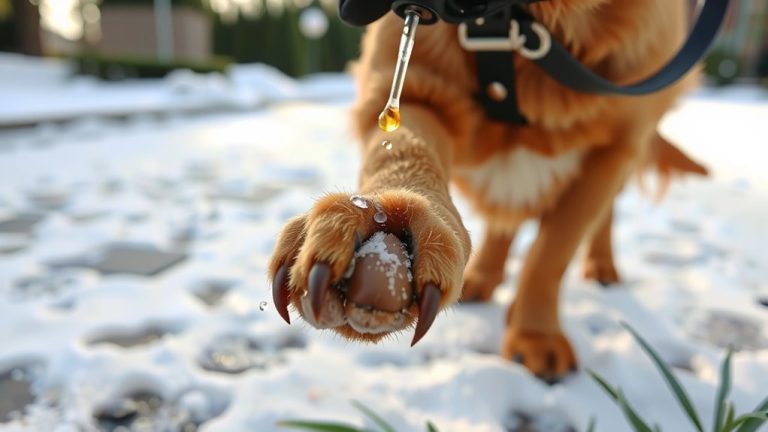
Using Fish Oil to Support Joint Health During Weight Loss in Large Dogs
You can use fish oil to support joint health in large dogs during weight loss by delivering EPA and DHA, which reduce IL-6 and TNF-α inflammation. A dose of 50 mg/kg EPA daily improved lameness by 40% in eight weeks. Triglyceride-form fish oil offers up to 71% better absorption. Pair it with gradual weight loss and low-impact exercise to protect cartilage. Choose high-EPA, third-party-tested oils to guarantee purity and potency-your next steps reveal even more precise ways to optimize results.
Notable Insights
- Fish oil reduces joint inflammation in large dogs by lowering pro-inflammatory cytokines like IL-6 and TNF-α during weight loss.
- EPA and DHA in fish oil inhibit COX-2 enzymes, providing anti-inflammatory benefits similar to NSAIDs but without gastrointestinal risks.
- Triglyceride-form fish oil offers up to 71% better omega-3 absorption, enhancing joint support during calorie-restricted weight loss.
- A daily dose of 20–55 mg EPA/DHA per pound helps protect joints; start low and adjust based on veterinary guidance.
- Combine high-EPA fish oil with controlled weight loss, low-impact exercise, and third-party tested supplements for optimal joint health.
How Fish Oil for Large Dogs Eases Joint Pain
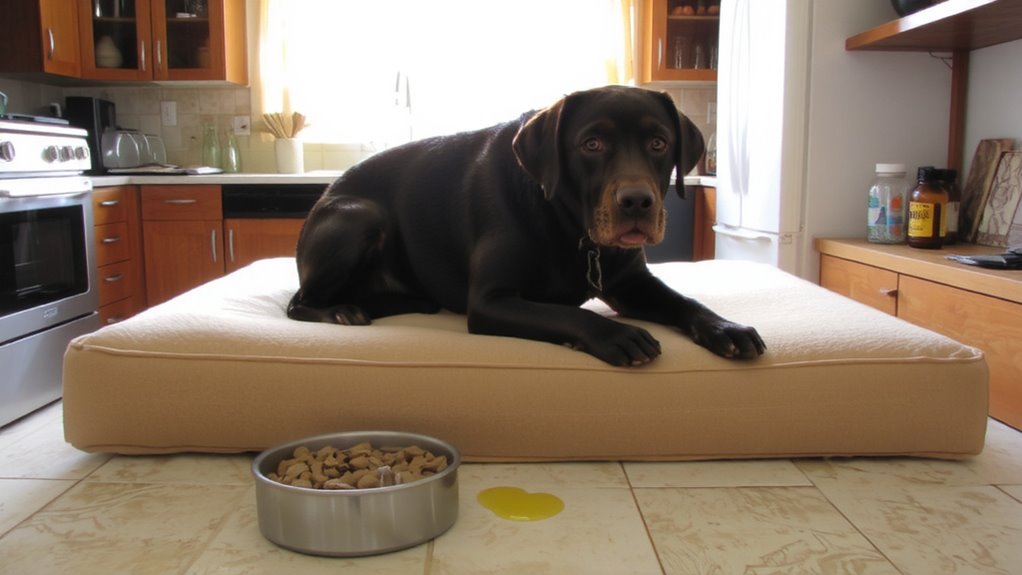
Joint pain in large dogs often stems from chronic inflammation, and fish oil tackles this at the source. Its anti inflammatory benefits reduce pro-inflammatory cytokines like IL-6 and TNF-α. These compounds drive cartilage degradation and joint swelling. High-quality fish oil delivers EPA and DHA, omega-3 fatty acids proven to inhibit COX-2 enzymes. This action mirrors NSAIDs but without adverse side effects. Omega 3 absorption peaks when triglyceride-form oils are used-up to 71% more bioavailable than ethyl ester forms. A 2021 study showed dogs receiving 50 mg/kg EPA daily had 40% improvement in lameness over eight weeks. You’ll see reduced stiffness and better mobility. Consistent dosing matters-choose a product with verified concentration. Cold-pressed, nitrogen-flushed packaging preserves potency. You’re not just masking pain; you’re modifying the inflammatory cascade. Proper omega 3 absorption guarantees sustained joint support, making fish oil a cornerstone in managing large dog osteoarthritis.
How Weight Loss Stresses Your Big Dog’s Joints
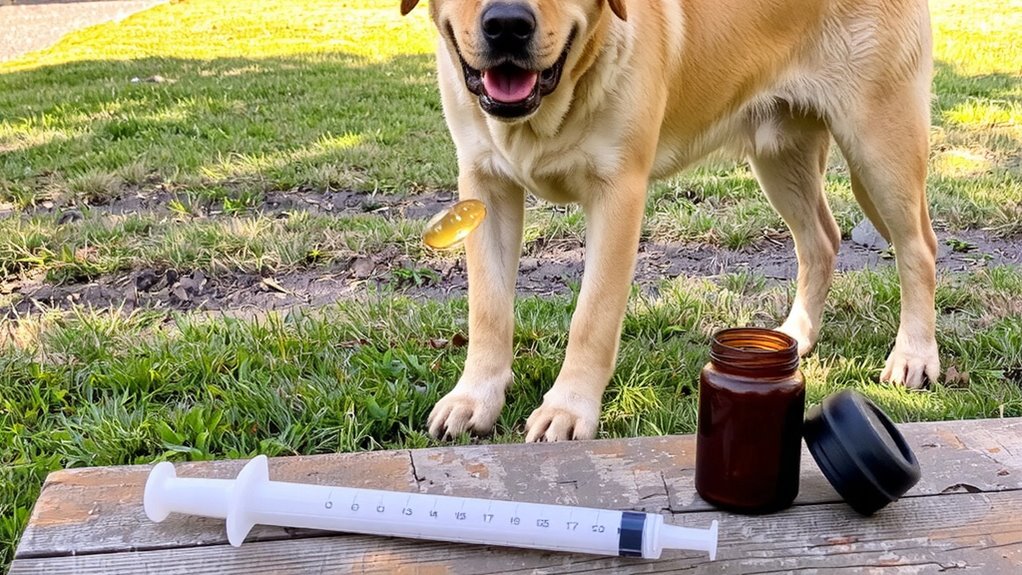
Why does shedding pounds sometimes make your big dog limp more? Rapid weight loss increases mechanical stress on joints already compromised by joint inflammation and cartilage degradation. As fat stores diminish, supportive cushioning around joints decreases, amplifying impact forces during movement. Large dogs, especially breeds like Labradors or German Shepherds, are predisposed to osteoarthritis. When excess weight is lost too quickly, subchondral bone experiences higher peak loads. This accelerates cartilage degradation due to reduced proteoglycan synthesis and increased matrix metalloproteinase activity. Joint inflammation intensifies as synovial fluid becomes more catabolic. The result? Painful mobility and reduced joint function despite lower body weight. Controlled, gradual weight reduction is essential. Maintaining joint integrity during this phase requires nutritional support targeting inflammation and structural repair-without it, weight loss can worsen existing joint pathology, undermining long-term mobility and joint health stability. Supplementing with omega-3 fatty acids from fish oil can help reduce joint inflammation and support cartilage health during weight loss.
How Much Fish Oil for a Large Dog?
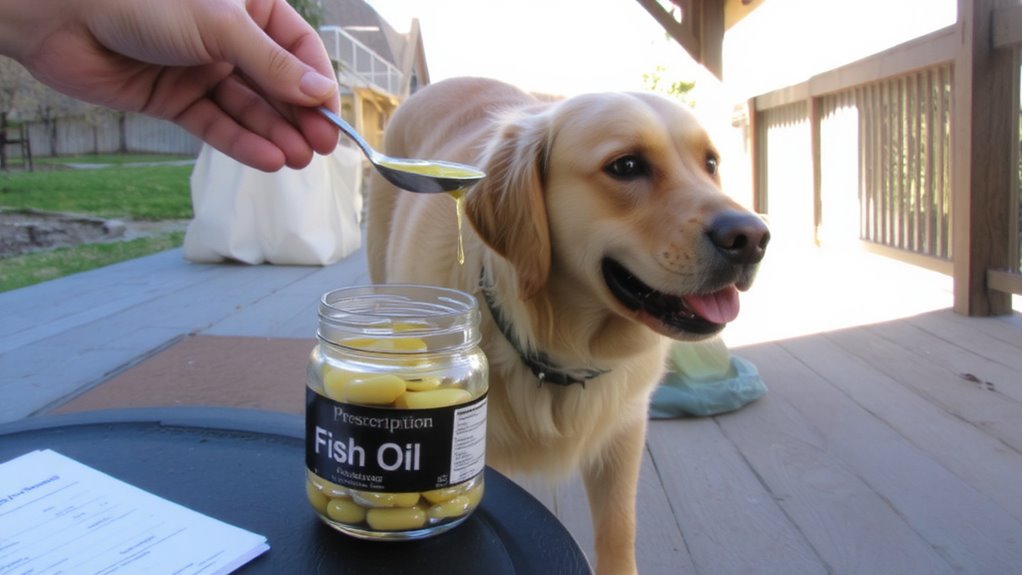
You’ve adjusted your large dog’s weight with a controlled plan, but now inflammation and joint support need equal attention. Fish oil helps, but dosage matters. General dosage guidelines recommend 20–55 mg of combined EPA and DHA per pound of body weight daily. For a 100-pound dog, that’s 2,000–5,500 mg total. Start low, then adjust based on response and veterinary feedback. High doses may cause gastrointestinal upset or blood thinning, so safety concerns exist. Never exceed 3,000 mg EPA/DHA per 100 pounds without vet approval. Omega-3s accumulate over time; effects may take 6–8 weeks. Monitor for loose stools or bleeding, especially if your dog takes other medications. Consistency and correct dosing guarantee joint benefits without risk. Always consult your vet before starting supplements. Choosing a high-quality supplement ensures optimal purity and potency, so look for third-party tested products from the top fish oil brands.
Choose a High-Epa Fish Oil With Third-Party Testing
A high-quality fish oil for large dogs starts with selecting a product rich in EPA, the omega-3 fatty acid most responsible for reducing inflammation. You’ll want at least 300 mg of EPA per gram of oil to see high EPA benefits. This concentration targets joint discomfort and supports mobility, especially during weight loss. Not all supplements deliver what they promise. That’s why third party certification matters. Look for brands tested by groups like IFOS or NASC. These labs verify purity, potency, and absence of heavy metals or PCBs. A certified product guarantees you’re giving a safe, effective dose. Without certification, you risk contamination or under-dosing. Consistent EPA levels mean reliable results. Always check the label for exact EPA content and certification seals. It’s not just about fish oil-it’s about proven, measurable quality that protects your dog’s joint health long term.
Pair Fish Oil for Large Dogs With Diet & Exercise
While fish oil delivers potent anti-inflammatory benefits, its full potential for joint health in large dogs emerges only when combined with proper diet and exercise. Fish oil benefits include reduced joint inflammation and improved mobility, but they’re maximized alongside balanced nutrition and physical activity. Feed your dog a high-protein, moderate-fiber diet with controlled calories-typically 20–30% less than maintenance intake for weight loss. Exercise should include 30–45 minutes daily of low-impact activities like walking or swimming to preserve muscle and reduce joint stress. This creates a joint support synergy: omega-3s from fish oil dampen inflammatory cytokines like IL-6 and TNF-alpha, while exercise stimulates synovial fluid production and cartilage resilience. Always dose fish oil at 20–55 mg combined EPA/DHA per pound of body weight daily. Consistency across all three elements yields measurable improvements in lameness scores within 8–12 weeks.
On a final note
Fish oil helps large dogs maintain joint function during weight loss. A high-EPA formula (at least 1,000 mg EPA per 10 lbs daily) reduces inflammation. Third-party tested fish oils guarantee purity and accurate dosing. Combined with a controlled diet and moderate exercise, fish oil supports cartilage integrity. It’s not a substitute for veterinary care but a science-backed supplement. Always consult your vet before starting a new regimen. Use liquid or softgel forms for consistent dosing.