What to Expect During Your Dog’s Annual Wellness Exam at the Vet
Your dog’s annual wellness exam starts with essential checks: temperature (100.5–102.5°F), heart rate (60–140 bpm, depending on size), and respiration (15–30 breaths per minute). The vet assesses joint mobility, especially in large breeds prone to dysplasia, and inspects eyes, ears, and teeth for early disease signs. Skin, coat, and parasite presence are evaluated. Core vaccines like DHPP and yearly heartworm testing are administered as needed. You’ll receive tailored recommendations for supplements or treatments. More details on preventive care follow.
Notable Insights
- The vet evaluates joint health, checking for stiffness, swelling, or early signs of arthritis, especially in larger breeds prone to dysplasia.
- Vital signs including temperature, heart rate, and respiratory rate are measured to detect any abnormalities indicating illness or stress.
- Eyes and ears are examined for discharge, cloudiness, odor, or infection, which could signal conditions like conjunctivitis or otitis externa.
- A dental check assesses tartar buildup and gum health, with recommendations for cleaning or treatment if periodontal disease is suspected.
- Vaccination status is reviewed, and core vaccines like DHPP or non-core ones like leptospirosis are updated based on lifestyle and risk.
What to Expect at Your Dog’s Wellness Exam
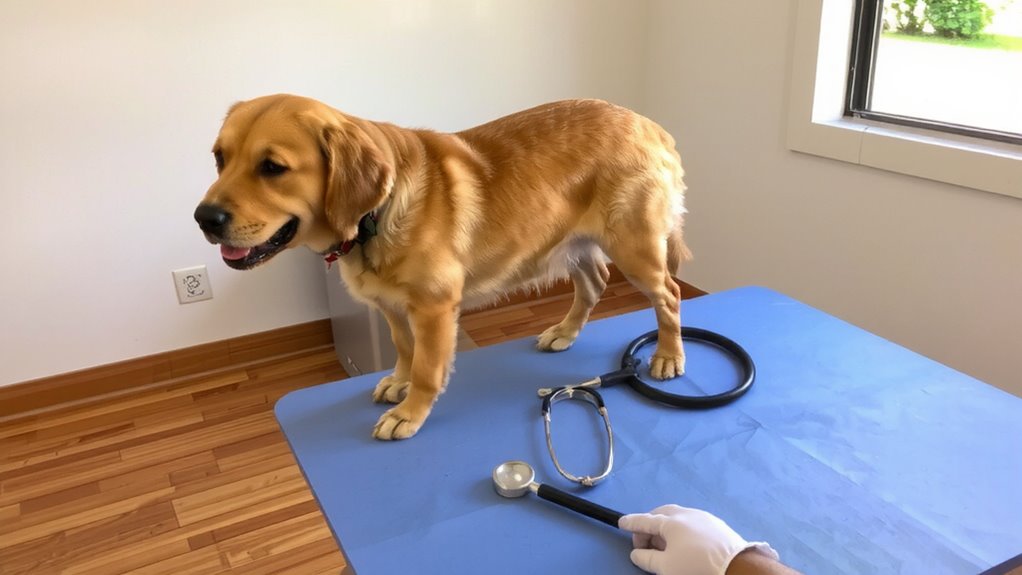
What happens during your dog’s annual wellness exam? The vet evaluates joint health by reviewing range of motion, detecting swelling, and identifying early signs of arthritis, especially in larger breeds prone to dysplasia. They may recommend glucosamine supplements or prescribe NSAIDs like carprofen at 4.4 mg/kg once daily if degeneration is present. Parasite prevention is thoroughly reviewed. You’ll receive a schedule for monthly oral or topical treatments effective against heartworm, fleas, and ticks. Products like ivermectin (6–12 mcg/kg) or afoxolaner (2.5 mg/kg) provide over 90% efficacy when administered correctly. Fecal exams detect intestinal parasites, requiring treatments such as fenbendazole at 50 mg/kg for five days. Vaccinations, diet, and dental health are discussed, but essential signs come later. This exam guarantees long-term wellness through early intervention and scientifically backed prevention protocols tailored to your dog’s breed, age, and lifestyle.
Vital Signs: What the Vet Checks First
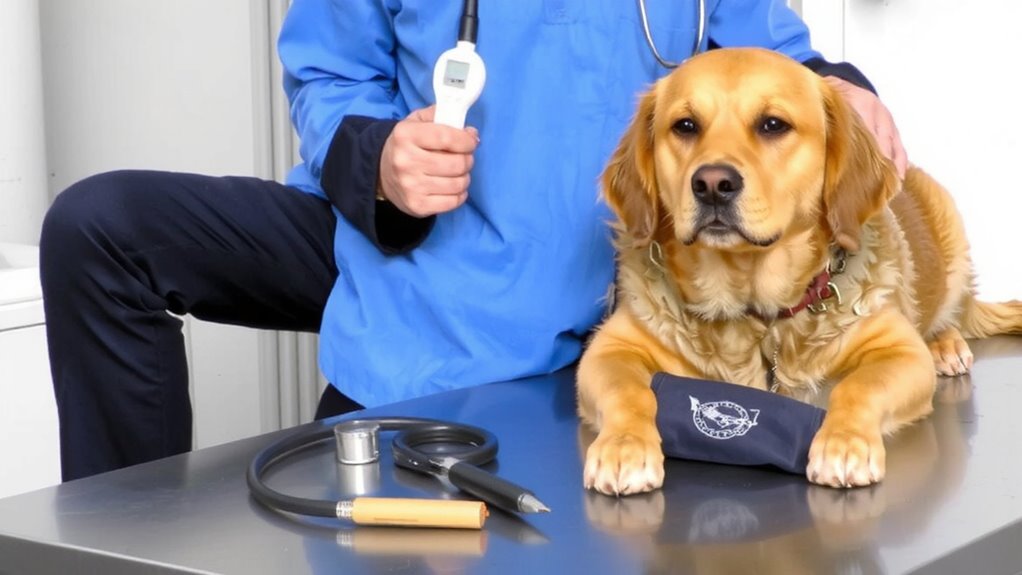
Temperature, heart rate, and respiration form the foundation of your dog’s essential signs, giving the vet an immediate snapshot of overall health. A normal canine temperature ranges from 100.5°F to 102.5°F. Anything outside this range may indicate infection or other illness. Your dog’s heart rate varies by size: small dogs average 100–140 beats per minute, while larger breeds typically have a resting heart rate of 60–100. The vet uses a stethoscope to assess rhythm and detect murmurs. Respiratory rate is measured at rest; healthy dogs take 15–30 breaths per minute. Rapid or labored breathing may point to pain, anxiety, or disease. These metrics are checked in a quiet setting to reduce stress-induced spikes. Together, heart rate, respiratory rate, and temperature provide objective data central to evaluating your dog’s physiological state. Accurate measurements guarantee early detection of underlying conditions.
Eyes, Ears, and Teeth: Critical Health Clues
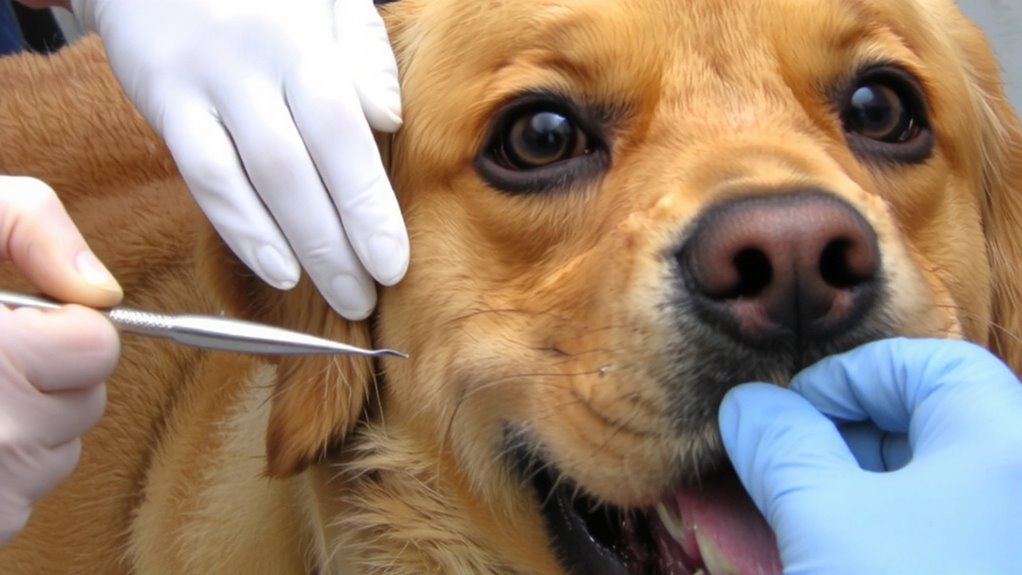
A dog’s eyes, ears, and teeth offer a window into its overall health, revealing subtle signs of disease before more serious symptoms appear. During the exam, your vet checks for eye discharge, cloudiness, or retinal abnormalities that may signal infection or systemic illness. Healthy ears should be clean and odor-free; ear odor often indicates bacterial or yeast overgrowth. Dental inspection includes tartar buildup, gingivitis, and tooth resorption-common in dogs over three years old.
| Condition | Clinical Significance |
|---|---|
| Eye discharge | Possible conjunctivitis or glaucoma |
| Ear odor | Likely otitis externa |
| Tartar accumulation | Risk for periodontal disease |
Early detection allows timely treatment, preventing progression to chronic conditions. Regular screening guarantees long-term wellness, minimizing complications.
Skin and Coat: Signs of Wellness or Trouble
The condition of your dog’s skin and coat serves as a reliable indicator of overall health, reflecting everything from nutritional status to hormonal balance. A healthy coat is glossy, thick, and lies flat, while dry, brittle, or thinning fur may signal underlying issues. You should monitor shedding patterns; seasonal shedding is normal, but excessive or year-round hair loss could indicate hormonal imbalances or poor diet. Skin allergies often manifest as redness, scaling, or intense scratching, commonly caused by environmental allergens or food sensitivities. The vet will check for parasites, bacterial infections, or fungal conditions like ringworm. Dullness, greasiness, or rashes suggest sebaceous gland dysfunction or allergy responses. Early detection of abnormalities allows timely intervention, preventing secondary infections. Palpation and visual inspection help differentiate between irritation and systemic disease. Consistent grooming aids in early problem recognition.
Vaccines and Tests: What’s Needed Annually?
While your dog may seem perfectly healthy, annual vaccines and diagnostic tests are essential to prevent diseases and catch hidden health issues early. Core vaccines, including those for parvovirus, are administered yearly to guarantee effective Parvo prevention; immunity wanes over time, making boosters critical. The DHPP vaccine, protecting against distemper, hepatitis, parainfluenza, and parvovirus, is typically given annually or every three years based on risk assessment. A yearly heartworm screening is non-negotiable-even dogs on preventive medication can test positive due to inconsistent dosing or resistance. The screening involves a simple blood test detecting heartworm antigens, with results available in minutes. False negatives are rare when tests are performed correctly. Additional non-core vaccines, like leptospirosis or bordetella, may be recommended based on your dog’s lifestyle and exposure risk. Your vet will tailor the plan accordingly.
Diet and Behavior: What to Tell Your Vet
You rely on vaccines and tests to guard against unseen threats, but what your dog eats and how they act day to day gives your vet deeper insight into overall health. Share your dog’s feeding habits, including meal frequency, portion sizes, and food type-kibble, raw, or canned. Sudden changes in appetite may signal metabolic or gastrointestinal issues. Monitor water intake; increases may indicate kidney disease or diabetes. Discuss activity levels honestly. A decline in exercise tolerance can reflect cardiac, respiratory, or musculoskeletal problems. Note any lethargy, restlessness, or altered sleep patterns. Behavioral shifts-aggression, anxiety, house soiling-can stem from pain or cognitive dysfunction. Track these changes over weeks, not days, for accurate assessment. Your observations, combined with clinical data, help form a diagnostic baseline. Accurate reporting guarantees timely interventions.
On a final note
You leave the exam with a clearer picture of your dog’s health. The vet reviews all findings, from heart rate to coat condition. Vaccinations are updated per AAHA guidelines. Parasite prevention is tailored to lifestyle and region. Blood work screens for hidden diseases like diabetes or kidney dysfunction. Annual exams catch issues early. Early detection improves treatment outcomes. Preventive care saves costs and extends quality life. You receive a personalized health plan.