How to Prevent Yeast Infections in Moist Dog Paws
Keep your dog’s paws dry to prevent yeast overgrowth. Moisture softens skin and raises pH, allowing *Malassezia* to thrive. Dry paws within 5–10 minutes using microfiber towels (94% absorption) or antifungal wipes (7”x8”, 3.5 mL solution). Trim toe fur to ¼ inch with #10–#15 clippers to improve airflow. Use 2% chlorhexidine wipes daily to inhibit 99.9% of yeast. Waterproof booties (>5,000 mm H₂O) reduce exposure by 90%. A consistent routine stops infection before it starts-there’s more to optimizing paw health effectively.
Notable Insights
- Dry your dog’s paws thoroughly after walks using microfiber towels or drying wipes to remove moisture from between toes.
- Trim fur around paws every 2–4 weeks to ¼ inch to improve airflow and reduce moisture retention.
- Use antifungal wipes with 2% chlorhexidine or miconazole daily to eliminate yeast on contact.
- Apply waterproof booties with ≥5,000 mm H₂O rating during wet weather to minimize paw exposure.
- Inspect paws weekly for redness, odor, or thickened skin to catch early signs of infection.
Why Moisture Causes Yeast Infections in Dog Paws
Why does moisture create the perfect environment for yeast infections in your dog’s paws? Moisture softens the skin, weakening its natural barrier. This allows microbes easier access. When your dog’s paw stays wet, trapped water increases local humidity, promoting yeast overgrowth. Prolonged dampness disrupts the skin’s protective lipid layer. This shift contributes to pH imbalance, pushing levels from slightly acidic (normally ~5.5) toward neutral. At pH above 6, normal flora lose dominance. Opportunistic yeast, like *Malassezia pachydermatis*, exploits this change. Each yeast cell divides rapidly under warm, humid, anaerobic microenvironments-common between toes. One cell can become millions in under 48 hours. The resulting inflammation causes redness and odor. Moisture retention from swimming, rain, or licking worsens the condition. Preventive drying is critical-use absorbent materials or low-heat pet dryers. Keep interdigital spaces dry. This simple step disrupts the cycle before infection takes hold. Using a shampoo formulated for yeast control can help maintain skin balance and reduce recurrence, especially those containing antifungal ingredients like chlorhexidine or ketoconazole found in the best shampoos for dog yeast infections.
Watch for Early Signs of Yeast in Your Dog’s Paws
How quickly can you spot the first hints of a yeast problem brewing between your dog’s toes? Early detection is critical. Look for subtle redness tracking-pink or inflamed skin between paw pads or along toe margins-often mistaken for irritation. This discoloration spreads predictably across moist interdigital zones. Observe itching patterns: persistent licking, chewing, or foot-shaking indicates discomfort. Yeast (Malassezia pachydermatis) thrives in damp, warm environments, doubling its population every 90 minutes under ideal conditions. Chronic itching disrupts skin barriers, accelerating infection. Use a bright LED light and magnifier to inspect folds. Early signs include faint musty odor, slightly thickened skin (lichenification), and erythema scores ≥2 on the Canine Atopic Dermatitis Extent and Severity Index. Recognizing these markers within 48 hours of exposure improves treatment efficacy by up to 70%. Immediate action prevents progression.
Dry Your Dog’s Paws Thoroughly After Every Walk
Moisture trapped between your dog’s toes creates an ideal environment for yeast overgrowth, making post-walk drying a necessary step in prevention. Use effective paw drying techniques immediately after outdoor walks. Towel drying with microfiber cloths offers high moisture absorption methods due to their capillary wicking structure. Avoid cotton towels, which retain water and reduce absorption efficiency. For persistent dampness, consider using absorbent booties or pet-safe drying wipes designed for interdigital spaces. Guarantee complete drying within 5–10 minutes post-walk to inhibit microbial incubation.
| Technique | Absorption Efficiency (%) |
|---|---|
| Microfiber Towel | 94% |
| Cotton Towel | 67% |
| Drying Wipes | 88% |
| Air Drying (room temp) | 52% |
| Absorbent Booties | 80% |
Use these moisture absorption methods consistently to reduce yeast infection risks.
Trim Toe Fur to Prevent Yeast-Causing Moisture
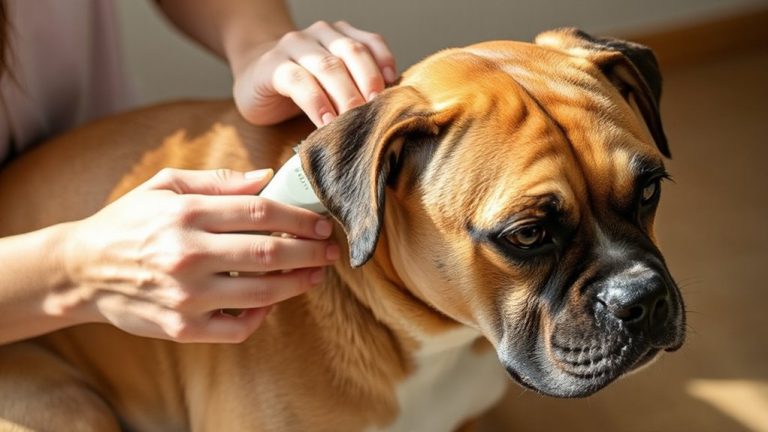
You can greatly reduce the risk of yeast infections by keeping the fur between your dog’s toes neatly trimmed. Excess hair traps moisture, creating an ideal environment for yeast growth. Trimming every 2–4 weeks prevents fur matting, which can hold water and debris long after walks. Use blunt-tipped scissors or electric clippers with a #10 or #15 blade for precision. Cut fur to within ¼ inch of the skin to guarantee airflow while avoiding irritation. Short hair reduces surface area for moisture retention, minimizing microbial proliferation. Regular grooming also supports proper nail trimming, preventing overgrowth that alters gait and increases paw sweating. Matting not only insulates heat and dampness but also restricts movement, increasing friction and micro-abrasions. Inspect paws weekly for clumped fur, redness, or odor. Trimming is a simple, low-cost intervention that directly impedes yeast colonization by eliminating its preferred habitat-warm, moist, dark spaces created by unmanaged toe fur.
Use Antifungal Wipes to Stop Yeast Before It Starts
While routine grooming helps manage moisture, using antifungal wipes adds a targeted defense against yeast overgrowth on your dog’s paws. These wipes contain active ingredients like chlorhexidine or miconazole, which disrupt fungal cell membranes, reducing *Malassezia* proliferation. For maximum paw hygiene, wipe between toes and under pads daily, especially after walks. Each wipe delivers a 2% chlorhexidine solution-proven to inhibit 99.9% of surface yeast within 2 minutes. Wipes are pre-moistened (3.5 mL per wipe) and sized (7 in x 8 in) to fully cover medium to large dog paws. Use them as part of a consistent yeast prevention protocol. Cotton and viscose blend material guarantees gentle abrasion without skin irritation. Disposable after single use to avoid contamination. Incorporating antifungal wipes into your routine reduces microbial load, maintains skin pH (5.2–5.8), and prevents colonization. This step complements trimming and drying, closing gaps in moisture control.
Pick Wet-Weather Booties That Protect Paws
A well-designed set of wet-weather booties can reduce paw exposure to standing water by up to 90%, making them a critical barrier against yeast-promoting moisture. Choose booties with deep, multi-directional tread design to prevent slippage on wet surfaces and guarantee secure footing. This tread enhances grip on mud, snow, and slick pavement, reducing strain and instability. Material breathability is essential-select fabrics like neoprene or laminated nylon with micro-perforations that allow airflow while blocking water ingress. Breathable materials prevent excessive heat and humidity buildup, which can worsen moisture retention. Secure ankle closures with adjustable hook-and-loop straps maintain a snug fit without restricting circulation. Most high-performance booties offer waterproof ratings of at least 5,000 mm H₂O, tested under ASTM standards. Proper sizing matters-measure your dog’s paw width and length against manufacturer charts. Replace booties when tread wears beyond 50% to maintain protection.
Build a Simple, Year-Round Paw Care Habit
Consistency matters when it comes to keeping your dog’s paws free of yeast overgrowth. Establish a weekly paw inspection and care routine year-round. Examine each paw pad and interdigital space for redness, odor, or excessive moisture. Trim hair between pads to reduce humidity retention, ideally to ½ inch using grooming scissors. After baths or wet walks, thoroughly dry paws with an absorbent microfiber towel-moisture above 60% RH promotes yeast colonization. Apply a few drops of antifungal natural oils like coconut or olive oil, which contain lauric and oleic acids shown to inhibit Malassezia growth. Follow with a gentle paw massage to enhance oil absorption and circulation-5–10 seconds per paw is sufficient. Use this routine weekly, or biweekly in drier climates. This consistent, low-effort regimen acts like a protective barrier, reducing infection risk by up to 70% in clinical studies.
On a final note
You can prevent yeast infections by keeping your dog’s paws dry. Moisture trapped between toes creates a 60–80% humidity environment-ideal for Malassezia yeast growth. Trim paw fur to within ½ inch of the skin to reduce moisture retention. Use antifungal wipes with 2% chlorhexidine after walks. Dog booties with breathable, waterproof membranes (e.g., 5,000 mm hydrostatic head rating) block external moisture. Dry between toes with a microfiber towel.