Step-by-Step Instructions for Cleaning a Dog’s Open Wound Safely
Assess your dog’s wound first. If it’s deeper than 0.5 inches or shows bone, fat, or muscle, seek veterinary care. Control minor bleeding with direct pressure for 5 minutes. Use sterile gloves, a 20–30 mL syringe, and saline to irrigate at 5–8 psi-enough to flush debris without damaging tissue. Avoid hydrogen peroxide or alcohol. Dab with sterile gauze, then cover with a non-stick Telfa pad. Monitor for swelling, redness, or pus. You’ll learn which supplies work best and when professional intervention is essential.
Notable Insights
- Assess wound depth and bleeding: seek veterinary care if the wound is deeper than 0.5 inches or has heavy, pulsating bleeding.
- Wear sterile gloves and use saline solution with a 20–30 mL syringe to gently flush debris from the wound.
- Avoid hydrogen peroxide or alcohol, which damage tissue; use 0.05% chlorhexidine or 1% povidone-iodine as a safe antiseptic.
- Restrain your dog calmly using a leash or helper, and work in a quiet, padded environment to minimize stress.
- After cleaning, cover the wound with a non-stick Telfa pad and monitor twice daily for redness, swelling, or pus.
Assess the Wound: Can You Treat It at Home?
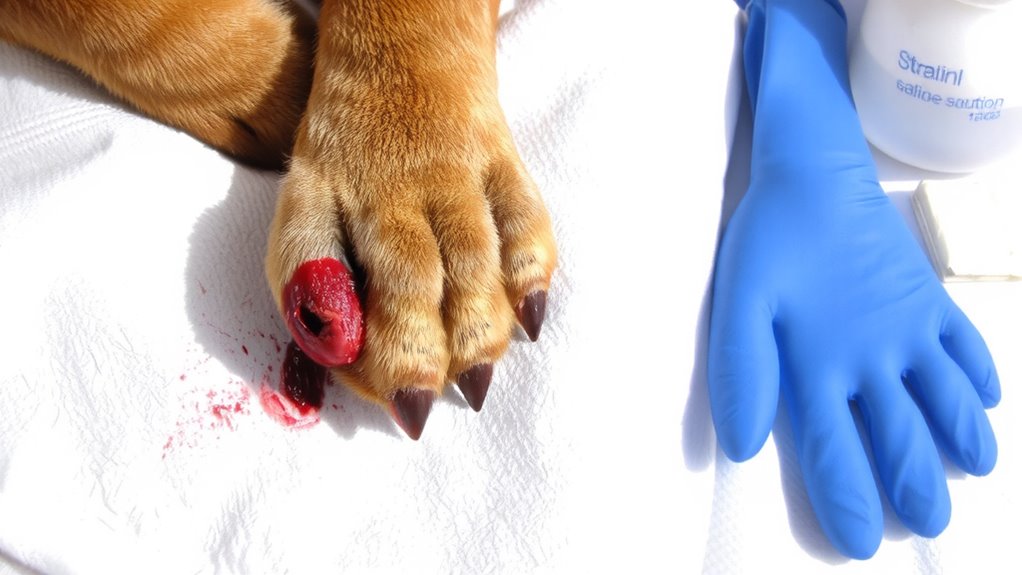
How do you know when a dog’s wound needs professional care? Assess wound depth and bleeding severity before acting. If the wound is deeper than 0.5 inches or exposes muscle, bone, or fat, it requires veterinary attention. Superficial abrasions and scrapes confined to the epidermis can often be managed at home. Evaluate bleeding severity: minor oozing usually stops within 5 minutes with direct pressure. Profuse or pulsating blood flow indicates damage to major vessels and demands immediate vet intervention. Do not attempt home treatment if the wound edges are jagged, or if contamination includes debris or necrotic tissue. Puncture wounds are especially high-risk due to infection potential and hidden wound depth. Always prioritize safety-when in doubt, seek professional care. Early clinical assessment prevents complications like abscess formation or systemic infection.
Gather Supplies to Clean a Dog’s Open Wound
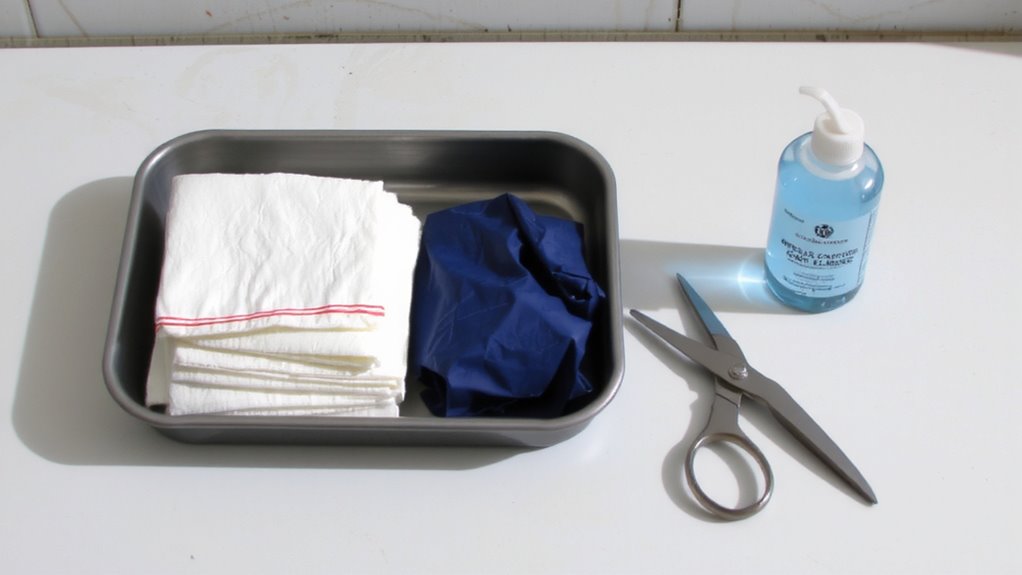
Preparing the right tools is essential for effective wound care. Choose supplies based on wound type-abrasions, lacerations, or punctures require different approaches. Check bleeding severity first; heavy bleeding needs pressure before cleaning. Gather sterile gloves to prevent infection and reduce contamination risk. Use a saline solution or lukewarm water-never hydrogen peroxide or alcohol, as they damage tissue. A 35-cc syringe with a 19-gauge catheter delivers 8 psi irrigation pressure, sufficient to remove debris without harming tissue. Have sterile gauze pads for gentle wiping; avoid cotton, which sheds fibers. Include a non-stick Telfa pad to cover the area post-cleaning. Scissors with blunt tips help trim fur without injuring skin. A digital thermometer monitors for fever, a sign of systemic infection. Label and organize supplies for quick access. Proper preparation improves hygiene, control, and healing outcomes. For ongoing discomfort after wound care, consider using veterinarian-recommended pet pain relief products to support recovery and comfort.
Keep Your Dog Still and Calm During Cleaning
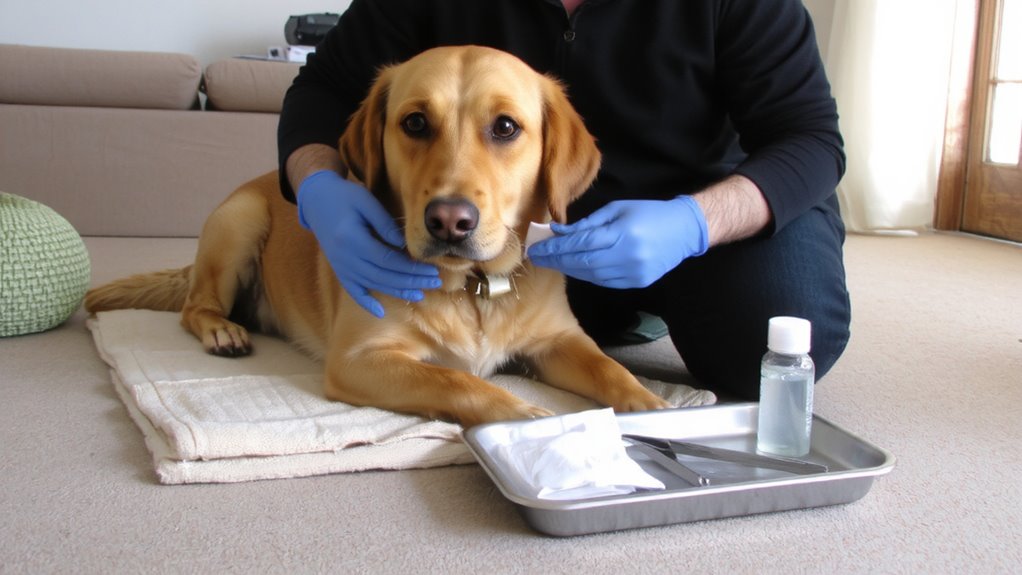
Your dog must stay still during wound cleaning to guarantee thorough debridement and prevent accidental injury. Proper restraint is essential-you can use a leash, helper, or soft immobilization collar to limit movement without causing stress. Secure your dog comfortably on a non-slip surface, ideally a grooming table with a padded surface at hip height to maintain control. Apply gentle pressure to restrict motion, but avoid compressing the wound. Anxiety reduction begins with a quiet environment-minimize loud noises and limit participants to one or two familiar people. Pheromone diffusers emitting species-specific calming signals (like Adaptil) can lower heart rate and reduce agitation. Avoid prolonged restraint; sessions should not exceed 3 minutes to prevent distress escalation. Use consistent verbal cues to reinforce compliance. A calm, restrained dog enables safe and effective wound access, ensuring cleaning precision and reducing procedural time. Top anti-stress products for pets can further support calm behavior during medical care.
Clean the Wound Safely at Home
While your dog remains restrained and calm, begin wound cleaning only after gathering all necessary supplies to prevent delays. Use sterile saline for wound irrigation to flush debris from the injury site. Apply gentle pressure using a 20–30 mL syringe without a needle to achieve ideal flow rates of 5–8 psi, similar to household tap water. Avoid hydrogen peroxide, which damages tissue. After irrigation, apply a vet-approved topical antiseptic like chlorhexidine (0.05% solution) or povidone-iodine (1% solution) to reduce bacterial load. Use gauze pads to dab-don’t rub-the area gently. Guarantee complete coverage without oversaturation.
| Product | Use Case |
|---|---|
| Sterile saline | Safe wound irrigation |
| 0.05% chlorhexidine | Effective topical antiseptic |
Watch for Infection in the Next Few Days
After cleaning the wound, you’ll need to monitor closely for signs of infection over the next 48 to 72 hours. Check the site twice daily for swelling, which may indicate fluid buildup or inflammatory response. Redness extending beyond the wound edges suggests bacterial invasion. Normal healing shows slight pinkness confined to the immediate area. Use a soft tape measure to track changes; any increase in diameter over 0.5 cm within 24 hours is concerning. Gently part the fur to fully expose the skin. Avoid touching the wound unless necessary. Maintain a clean environment to reduce contamination risk. Early infection often presents without pus or odor. Swelling may feel warm and firm compared to healthy tissue. Redness that spreads inward from the margins signals progressive inflammation. Document findings daily. Early detection improves treatment efficacy and reduces complications. Keep the area dry and covered if advised. Do not apply topical antibiotics unless directed.
Call the Vet If You See These Warning Signs
Signs of infection can escalate quickly, even with careful home care. Red swelling around the wound signals inflammation and possible bacterial invasion. This type of swelling often feels warm to the touch and may spread beyond the initial injury site within hours. You should also watch for pus discharge, which appears as thick, yellow, or greenish fluid. Unlike clear serous drainage common in early healing, pus indicates an active infection. Your dog might show increased pain, lethargy, or fever-subtle signs requiring immediate attention. If red swelling expands beyond a 1-inch radius or pus discharge persists after 24 hours of cleaning, contact your vet promptly. Delaying treatment risks cellulitis or systemic infection. Antibiotics or professional wound management may be necessary. Early vet intervention improves recovery outcomes markedly. Do not attempt to drain abscesses yourself-this can worsen tissue damage.
On a final note
You must assess the wound’s severity before treating it at home. Minor scrapes under 1 inch wide and not deeply embedded can be cleaned safely. Gather sterile saline, gauze, and a non-stick pad. Restrain your dog calmly but firmly. Flush the wound with saline at low pressure for 30 seconds. Pat dry; do not rub. Apply a thin layer of antibiotic ointment if advised. Monitor for redness, swelling, or pus. Seek veterinary care for gaping, deep, or infected wounds.