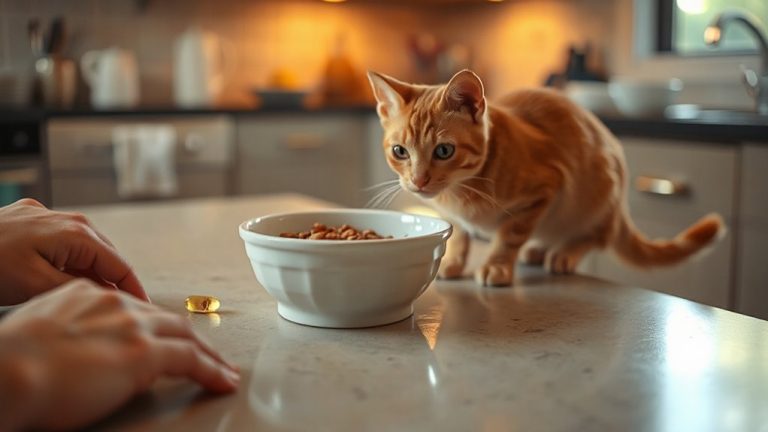
Preventing Obesity in Indoor Cats: A Detailed Portion Control Plan by Age Group
You must tailor your indoor cat’s daily intake by age and activity to prevent obesity. Kittens need 200–280 kcal/kg, fed in 3–4 meals with 30–40% protein. Adults require 180–280 kcal per 5 lbs, adjusted every 4 weeks. Seniors need 20–30% fewer calories, around 40–60 kcal per pound, split into smaller meals. Always use a gram scale-1/4 cup kibble can vary by 5 grams. Monitoring body condition and adjusting portions prevents excess weight gain; further refinements in feeding strategy await.
Notable Insights
- Kittens need 200–280 kcal/kg daily, divided into 3–4 meals, with 30–40% protein to support growth without overfeeding.
- Adult indoor cats require calories based on activity level, ranging from 180–280 kcal per 5 lbs daily, measured precisely by weight.
- Senior cats need 20–30% fewer calories; feed 40–60 kcal per pound daily in 3–4 small meals to match slower metabolism.
- Use a digital scale to measure food accurately, avoiding cups that can vary by up to 15% in portion size.
- Limit treats to 10% of daily calories and use wet food or puzzle feeders to increase satiety and prevent weight gain.
Kitten Portion Control: Feeding for Growth Without Overfeeding
While your kitten’s appetite may seem endless, overfeeding during this critical growth phase can set the stage for obesity and related health issues later in life. Proper portion control supports healthy growth stages without excess calorie intake. Kittens require precise nutrient balance to develop strong bones, muscles, and organs. Feed a diet formulated for kittens, containing 30–40% crude protein and 9–15% fat on a dry matter basis. Follow feeding guidelines on the label, adjusting portions every two weeks based on weight gain. Most kittens need 200–280 kcal/kg body weight daily, divided into 3–4 meals. Use a kitchen scale to measure food; 1/4 cup of dry kibble typically equals 25–30 grams. Monitor body condition score monthly. Adjust if ribs aren’t easily felt under a thin fat layer. Consistent tracking guarantees ideal development without overnutrition.
Adult Cat Portion Control: Match Food to Activity Level
Your cat’s nutritional needs shift dramatically as they move out of kittenhood and into adulthood, making portion control just as important now as it was during rapid growth. Activity level directly influences caloric requirements, so food matching is essential to maintain ideal body condition. Sedentary cats need fewer calories than active ones, and overfeeding can lead to obesity. Use this guideline to adjust portions based on daily movement:
| Activity Level | Daily kcal per 5 lbs body weight |
|---|---|
| Low (minimal play) | 180–200 kcal |
| Moderate (regular play) | 200–220 kcal |
| High (frequent activity) | 220–250 kcal |
| Very High (hyperactive) | 250–280 kcal |
Measure food precisely using a gram scale for consistency. Dry food energy density varies-check labels. Wet food typically provides 15–20 kcal per ounce. Adjust every 4 weeks based on weight trends.
Senior Cat Portion Control: Smaller Meals for Slower Metabolism
As cats age, their metabolic rate declines substantially, making precise portion control essential to prevent excess weight gain. This metabolic slowdown means senior cats need 20–30% fewer calories than adults, depending on activity level. You should adjust daily intake accordingly, typically feeding 40–60 kcal per pound of body weight. To support digestion and stabilize blood sugar, increase meal frequency to three or four small portions daily instead of one or two large meals. Smaller, more frequent meals reduce the risk of gastrointestinal upset and help maintain energy balance. Use a digital scale to measure food, aiming for consistency. High-fiber, low-fat formulas can further aid weight management. Avoid free-feeding, as it undermines portion discipline. Monitoring body condition regularly guarantees adjustments keep pace with changing needs, maintaining peak health through the senior years. For optimal nutrition, consider switching to one of the top-rated best cat food picks designed specifically for indoor senior cats.
How to Measure Cat Food for Accurate Portions
One gram of dry cat food can make the difference between weight maintenance and gradual obesity, so precise measurement is non-negotiable. Use digital food scales calibrated in 1-gram increments for the highest accuracy. These scales outperform measuring cups, which vary by up to 15% depending on scoop style and packing density. If using measuring cups, choose rigid, graduated models marked in 1/8-cup increments and level off the top with a knife. Do not use household cups or spoons-standard kitchenware lacks precision. For best results, weigh food directly into your cat’s bowl. Record daily portions based on your vet’s caloric recommendation, typically 20–30 kcal per pound of ideal body weight. Consistently use the same tool-either food scales or a dedicated measuring cup-to avoid portion creep. Accuracy guarantees your portion control plan works as intended.
Signs Your Cat Is Overfed (and How to Fix It)
How can you tell when your cat is getting too much food? Look for weight gain, reduced activity, and difficulty grooming. Overfed cats often lose interest in play and develop rounder body shapes with no visible waistline. Adjusting the feeding schedule is critical-split daily portions into two measured meals to regulate intake. Consider food texture; moist diets can increase satiety due to higher water content, helping control overeating. Including best wet food picks in their diet can support healthy aging and weight management for senior cats.
| Sign | Solution |
|---|---|
| Weight gain | Measure portions using a gram scale |
| Begging between meals | Stick to a consistent feeding schedule |
| Disinterest in kibble | Adjust food texture (e.g., add wet food) |
Transition gradually to new portions to avoid digestive stress. Use manufacturer feeding guidelines as a baseline but adjust for your cat’s age, weight, and activity level. Monitor changes weekly.
Indoor Cats and Weight: Why Portion Control Matters Most
Portion control is the most effective tool for managing weight in indoor cats. You must measure daily caloric intake precisely to prevent excess. Indoor cats burn fewer calories than outdoor cats due to limited space and activity. Without portion control, weight gain occurs rapidly-just 10 extra kcal per day can lead to one pound of fat in a year. Combine accurate feeding with indoor enrichment to stimulate movement and reduce overeating. Use puzzle feeders or timed dispensers to extend eating duration by 15–20 minutes, mimicking natural foraging. Limit treat frequency to no more than 10% of daily calories-approximately 10–15 kcal for a 10 lb cat. High treat frequency disrupts energy balance. Prioritize wet food over dry, as its higher moisture content increases satiety. Consistent portion sizes, tailored to age and weight, are essential for long-term metabolic health.
On a final note
You must adjust portions based on your cat’s life stage and activity. Kittens need 3–4 meals daily with kitten-specific food, providing 60–70 kcal per pound daily. Adults require 20–30 kcal per pound, split into 2–3 meals. Seniors need up to 20% fewer calories. Measure food using a 1/4-cup scoop or kitchen scale. Overfeeding leads to obesity, so monitor body condition and adjust portions every 4–6 weeks.