How to Monitor Your Dog’s Weight at Home Using a Bathroom Scale
Use a digital bathroom scale with at least 300-lb capacity and 0.1-lb increments for accurate home monitoring. Place it on a hard, level surface like tile or hardwood. Weigh yourself first, then hold your dog and subtract your weight from the total. Keep your dog calm and centered to avoid motion errors. Consistent timing every two weeks helps track trends. You’ll also want to know how size and breed affect weighing techniques.
Notable Insights
- Use a bathroom scale with at least 300 lbs capacity and 0.1 kg (0.2 lb) increments for accurate readings.
- Place the scale on a hard, level surface to ensure stability and consistent measurement results.
- Weigh yourself first, then hold your dog and subtract your weight to get the dog’s weight.
- Acclimate your dog gradually to the scale to reduce anxiety and encourage cooperation.
- Weigh every two weeks for adults, weekly for puppies or seniors, and record results with dates.
How to Weigh Your Dog at Home
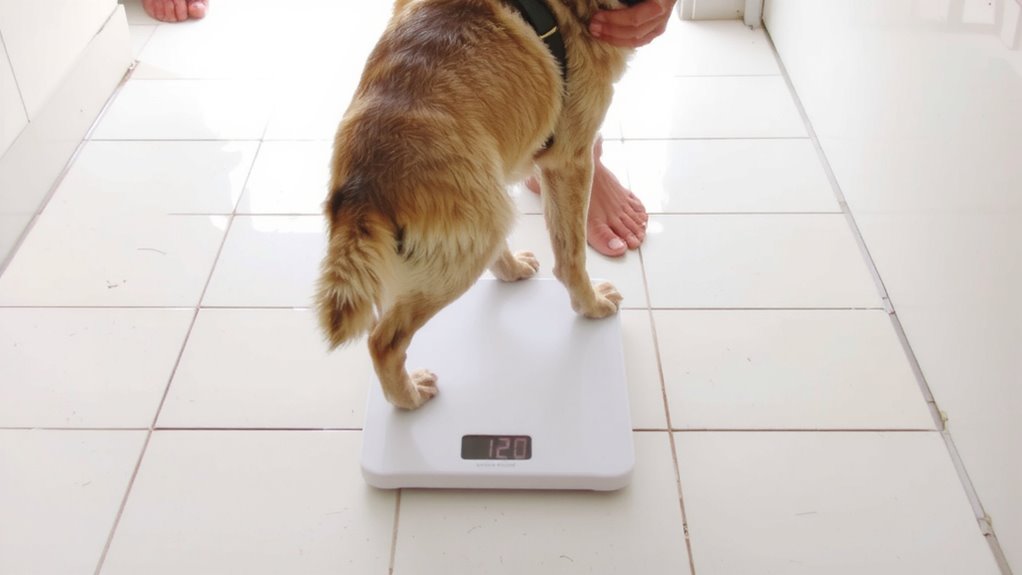
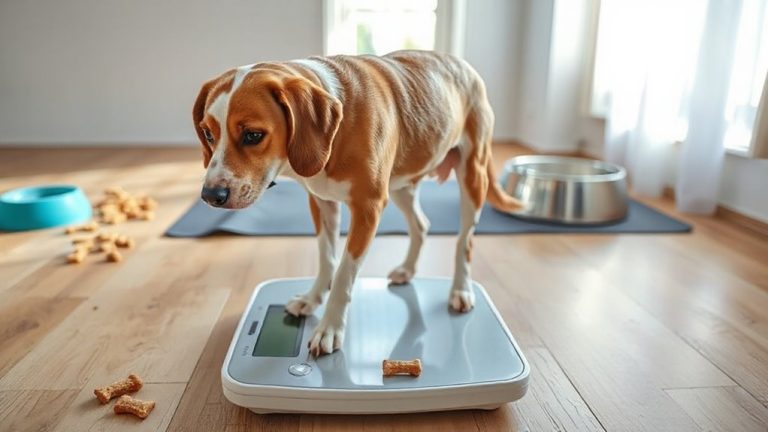
A reliable way to track your dog’s weight at home is by using a digital pet scale designed for animals, which typically offers a capacity of 5 to 500 pounds and measures in 0.1-pound increments. This guarantees precise weight accuracy, critical for detecting subtle changes. To minimize stress, acclimate your dog gradually-sudden movements or resistance are common in anxious dog behavior. Stand your dog centrally on the platform; uneven weight distribution skews readings. Most models feature auto-zero calibration and tare functions, improving measurement consistency. For wiggly pets, use treat-based distraction techniques to maintain stillness. Avoid soft surfaces-place the scale on a hard floor for maximum stability. Consistent timing, like weekly morning readings, reduces variability caused by feeding or hydration. These steps guarantee reliable tracking. Accurate data supports early health issue detection. You’ll notice trends sooner. Precision matters.
Choose the Best Scale for Your Dog’s Size
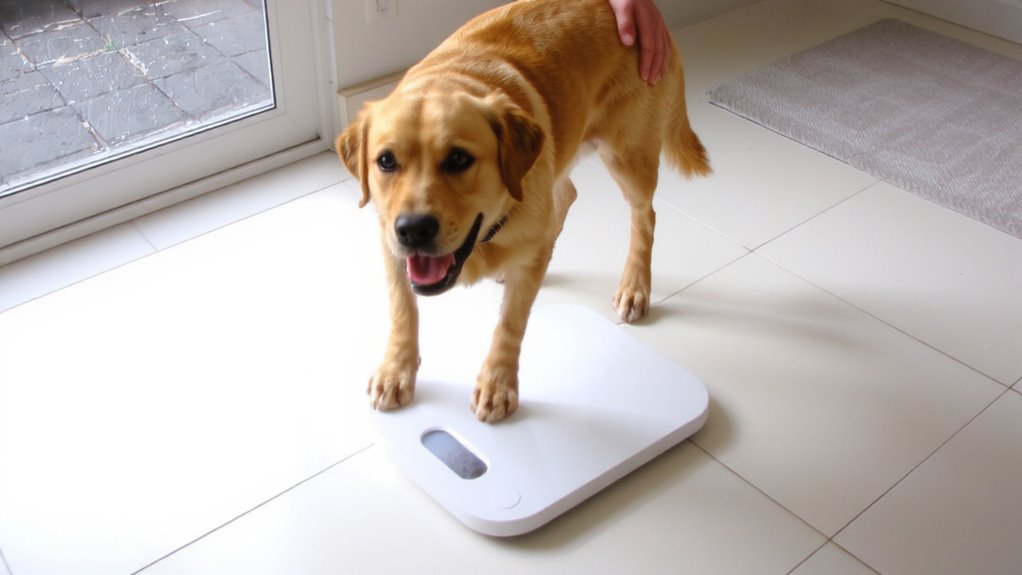
Size matters when selecting a digital pet scale-your dog’s weight range determines the right model for accurate, stress-free monitoring. Choosing the correct scale types ensures reliable tracking over time. Weight capacity must exceed your dog’s current mass by at least 20% to prevent overloading and guarantee long-term accuracy.
| Dog Size | Recommended Scale Type | Weight Capacity |
|---|---|---|
| Small (under 25 lbs) | Compact digital | Up to 40 lbs |
| Medium (25–80 lbs) | Standard pet scale | Up to 100 lbs |
| Large (80+ lbs) | Heavy-duty platform | Up to 200 lbs |
Always match the scale’s design and precision to your dog’s size. High-precision sensors and non-slip surfaces improve consistency. Larger platforms provide stability, while compact models suit travel.
Weigh Small Dogs Safely and Accurately
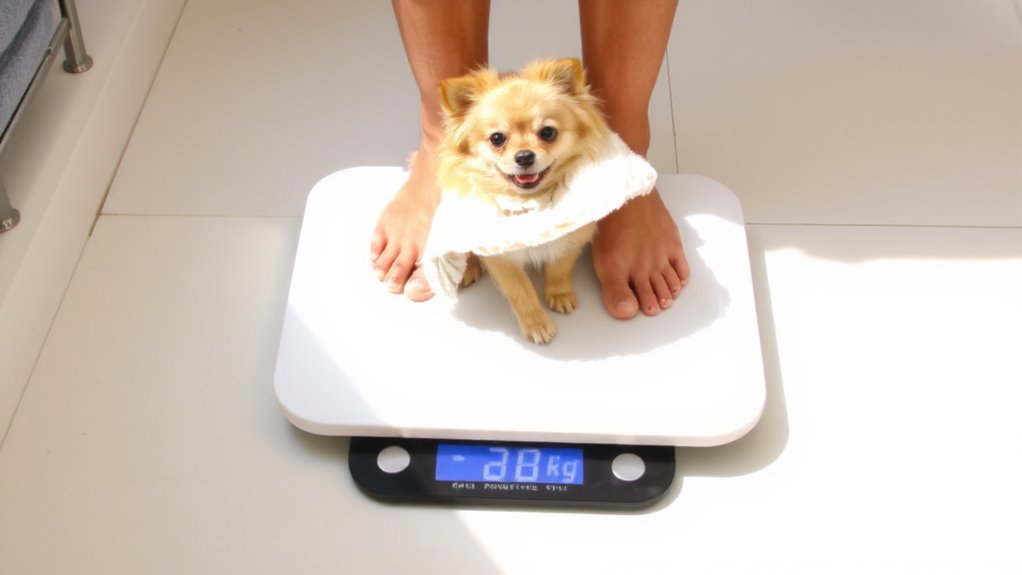
Precision begins with proper setup-stand on the compact digital scale barefoot, press the tare button to zero it, then cradle your small dog securely against your chest before stepping back on. Surface stability is critical; use a hard, level floor to prevent inaccurate readings caused by scale tilting. Avoid carpeted or uneven surfaces, as they compromise measurement consistency. Make certain the scale has a minimum weight detection of at least 0.1 lb (0.05 kg) for precise small-dog monitoring. During dog lifting, support your pet’s body fully to prevent movement, which skews results. Hold still until the display stabilizes-this typically takes 2–3 seconds on high-sensitivity models. Subtract your weight from the combined total to get your dog’s weight. Use this method weekly to track trends. Consistent technique ensures reliable data for veterinary assessments.
Weigh Large Dogs With a Bathroom Scale
Use a standard bathroom scale to track your large dog’s weight by first ensuring the device has a capacity of at least 300 lbs (136 kg) and measures in 0.2 lb (0.1 kg) increments for reliable tracking. Place the scale on a hard, level surface to avoid inaccurate readings. Large dogs often shift or resist, so familiarize your dog with the scale first to minimize stress-related dog behavior issues. Have your dog step on slowly-sudden movements affect calibration. Some digital models feature auto-zero and motion detection for more consistent results. Monitor weight impact over time to detect health changes early. A scale with a tempered glass platform offers durability without compromising sensitivity. Readings should stabilize within 3–5 seconds. For best accuracy, weigh your dog at the same time daily, ideally before meals. Consistent tracking helps identify trends linked to diet, mobility, or medical conditions.
How Often to Track Your Dog’s Weight
Once you’ve set up a reliable weighing routine with a bathroom scale designed for large dogs, it’s just as important to establish a consistent schedule for tracking the results. Weigh your dog every two weeks to monitor weight trends accurately. Consistent intervals allow you to identify subtle changes before they become health concerns. For puppies or senior dogs, weekly tracking helps capture critical growth patterns and metabolic shifts. Record each measurement digitally or in a log, noting date and time. Digital spreadsheets can plot weight trends automatically, improving long-term analysis. Scales with a weight-hold function guarantee stable readings, especially with restless dogs. Use a fixed surface-like tile or hardwood-and avoid carpets to maintain measurement consistency. Over months, these recorded data points reveal meaningful patterns, supporting proactive health management. Tracking isn’t just about numbers; it’s about spotting directional movement, guaranteeing your dog stays within a healthy range.
Spot Sudden Changes in Your Dog’s Weight
Why might your dog’s weight shift noticeably in just a few days? Sudden weight fluctuations can signal underlying health issues rather than simple changes in body mass. Rapid gain or loss, especially over 5% in a week, should prompt concern. These shifts may reflect fluid retention, dehydration, gastrointestinal distress, or metabolic disorders. Recognizing them early helps identify critical health alerts before symptoms worsen.
| Time Frame | Weight Change | Possible Cause |
|---|---|---|
| 24–48 hrs | +10% | Fluid retention, bloat |
| 24–48 hrs | –5% | Dehydration, vomiting |
| 72 hrs | ±3% | Dietary change |
| 5 days | –7% | Infection, cancer |
| 1 week | –10% | Organ failure |
Monitor consistently using calibrated scales. Record data weekly. Sudden deviations demand veterinary evaluation. Weight fluctuations are measurable indicators-treat them as essential signs. Early detection improves intervention outcomes.
On a final note
You now have the tools to monitor your dog’s weight accurately at home. Use a digital bathroom scale with 0.2-pound increments for precision. For small dogs, weigh yourself first, then hold your dog and subtract. Large dogs can be weighed directly if the scale supports up to 400 pounds. Track weight monthly-sudden changes over 5% indicate potential health issues. Consistent measurement guarantees early detection and better outcomes.