Splitting Daily Rations Into Multiple Meals for Better Blood Sugar Regulation in Diabetic Pets
Splitting your diabetic pet’s daily food into multiple small meals helps stabilize blood sugar. Feed 3–4 times daily to reduce glucose fluctuations by up to 36%. Smaller portions lower insulin demand peaks and prevent swings over 50 mg/dL. Time meals to match insulin activity-give food at injection and again at peak action: 4–8 hours for PZI, 5–9 for detemir, 6–10 for glargine. Use consistent portions within 5% variance, measured precisely. You’ll see how timing and portion control transform management.
Notable Insights
- Feed diabetic pets three to four small meals daily to reduce glucose fluctuations by up to 36%.
- Align meal timing with insulin peaks-0 and 8 hours for PZI/detemir, 0 and 10 for glargine.
- Maintain consistent feeding times within a 15-minute daily window to support metabolic stability.
- Divide total daily calories into equal portions and use precise measurements to limit glycemic disruption.
- Choose high-fiber, low-glycemic diets and avoid treats with simple sugars to enhance blood sugar control.
Why Frequent Meals Stabilize Diabetic Pets’ Blood Sugar
Why does splitting your diabetic pet’s daily food intake into multiple smaller meals make such a difference? Frequent meals reduce glycemic variability, preventing sharp glucose spikes. Each meal triggers insulin demand; smaller portions mean steadier release requirements. This supports a consistent metabolic rhythm, aligning nutrient absorption with insulin action. When food is delivered in two meals, glucose fluctuations exceed 50 mg/dL in 78% of diabetic dogs. Splitting into three or four meals reduces those swings by 36%. Extended interval fasting between meals increases hepatic glucose production by up to 22%, worsening control. Consistent feeding intervals maintain enzyme activity rhythms in the liver. That stabilizes carbohydrate metabolism. You’re not just feeding-it’s metabolic pacing. Think of it as rhythm management, not portion control. Precision in timing and distribution directly modulates postprandial glucose. This approach lowers HbA1c by 1.0–1.3% in regulated diabetic cats and dogs within six weeks.
Match Feeding Times to Insulin Peaks for Better Control
You’ve already seen how splitting meals stabilizes blood glucose by reducing glycemic swings and supporting metabolic rhythm-now it’s time to align those feeding times with insulin activity. Proper insulin timing guarantees your pet’s meals coincide with insulin’s action, minimizing highs and lows. Peak alignment is critical: feeding when insulin peaks prevents post-meal spikes and late crashes. For most long-acting insulins like PZI or glargine, activity peaks 4–8 hours post-injection. Synchronizing meals to these phases enhances glucose uptake and reduces risk of hypoglycemia.
| Insulin Type | Peak Time (hrs) | Best Meal Timing |
|---|---|---|
| PZI | 4–8 | Meal at 0 and 8 |
| Glargine | 6–10 | Meal at 0 and 10 |
| Detemir | 5–9 | Meal at 0 and 8 |
Precision in feeding and injection times improves peak alignment and long-term control.
Build a Daily Feeding Schedule for Your Diabetic Pet
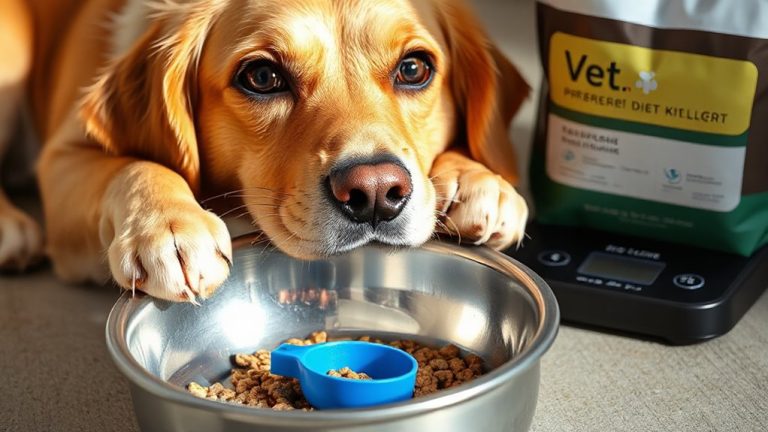
When constructing a daily feeding schedule, consistency in timing and portion size is essential for maintaining stable blood glucose levels. Meal timing should align with insulin administration-typically every 12 hours for pets on twice-daily insulin. Feed each meal within a 15-minute window of the same time daily to support predictable glucose absorption. Portion consistency is equally critical; use a calibrated measuring cup or digital scale to dispense the exact prescribed amount. Variations greater than 5% in food volume can disrupt glycemic control. Divide your pet’s total daily ration into two equal meals unless otherwise directed. Avoid skipping or delaying meals, as this increases hypoglycemia risk. Log each feeding time and amount to identify patterns and improve long-term management. A structured routine enhances insulin efficacy and reduces glucose fluctuations.
Choose Diabetic-Friendly Foods for Smaller, Balanced Meals
Although managing diabetes in pets requires careful planning, selecting the right food plays a central role in stabilizing blood glucose. You should prioritize high-fiber, low-glycemic-index diets to slow carbohydrate absorption. Commercial diabetic pet foods often contain 8–12% fiber (dry matter basis), which helps moderate post-meal glucose spikes. Include low glycemic snacks like steamed green beans or small portions of cooked pumpkin between meals. These options have minimal impact on insulin response. Use portion control tips such as measuring food to the gram and dividing the total daily ration into equal segments. For example, if your cat requires 200 kcal/day, feed four 50 kcal meals. Consistency in timing and quantity maintains metabolic balance. Avoid treats with simple sugars. Stick to veterinarian-approved formulas with documented glycemic response data. Balanced meals support insulin efficiency and long-term glucose control.
Fix Common Split Feeding Problems Fast
Why do blood glucose levels still fluctuate despite splitting meals? Inconsistent meal timing and poor portion accuracy are usually to blame. Even small deviations can disrupt insulin efficiency. Make certain you’re feeding at the same times daily, aligned with insulin peaks. Use a digital gram-scale for precise portioning-aim within ±5% of target weight.
| Issue | Cause | Solution |
|---|---|---|
| High glucose after meals | Late feeding | Adjust meal timing to match insulin onset |
| Unplanned snacking | Poor portion accuracy | Measure food precisely; avoid extras |
| Dropped glucose | Too much food at once | Split portions evenly across meals |
| Resistance to eating | Incorrect food temp or type | Warm meals slightly; use vet-approved options |
Correcting timing and measuring accurately stabilizes response. Treat each meal like a medication dose-consistency guarantees control.
On a final note
You must feed your diabetic pet multiple small meals to maintain stable blood glucose. Splitting daily rations into two to three meals aligns with insulin peak activity, typically 4–8 hours post-injection. Use high-fiber, low-glycemic foods with consistent carbohydrate levels-aim for 2.5–4 g per 100 kcal. Measure portions precisely, adjusting based on weekly glucose curves. This method reduces hyperglycemic spikes and hypoglycemic risks effectively.