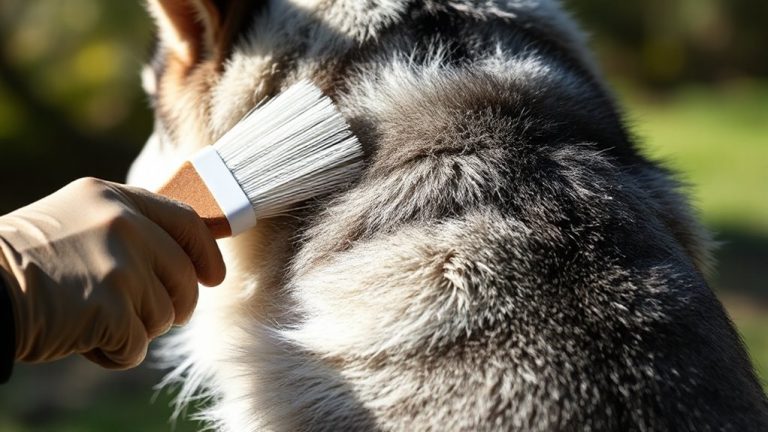
Using a Soft Slicker Brush on a Kitten With Developing Coat Texture
Start brushing your kitten at four weeks using a soft slicker brush. It’s safe for delicate skin and supports healthy coat development. Use a brush with fine, polished stainless steel pins-0.007 to 0.010 inches thick-spaced 1.5 to 2.0 mm apart. Bristles should be under 8 mm deep and spring-mounted for even pressure. Brush at a 45-degree angle, following hair growth. Limit sessions to 2–3 minutes daily, ideally after feeding. Overbrushing or stiff bristles can irritate skin. Adjust frequency as coat type emerges between 4 and 6 months. Longhaired kittens need daily attention; shorthaired ones need brushing two to three times weekly. Monitor texture and shedding to fine-tune your routine. Proper technique prevents tangles and builds trust early. You’ll soon discover how small adjustments improve coat condition over time.
Notable Insights
- Begin brushing at four weeks using a soft slicker brush to support healthy coat development and early grooming habits.
- Use a brush with fine, polished pins spaced 1.5–2.0 mm apart to safely navigate a kitten’s delicate, developing coat.
- Brush at a 45-degree angle with light pressure, following hair growth to avoid skin irritation and build trust.
- Adjust frequency based on coat type: daily for longhaired kittens, 2–3 times weekly for shorthaired as texture evolves.
- Limit sessions to 2–3 minutes initially, avoiding overbrushing to prevent skin stress and coat damage.
When to Start Brushing Your Kitten
When should you begin brushing your kitten? Start at four weeks of age to establish early grooming habits. This timing aligns with the natural shift from milk teeth to deciduous teeth and coincides with rapid coat development. Introduce the soft slicker brush gently for two to three minutes daily, preferably after feeding or during playtime bonding. Early grooming sessions support desensitization to touch, reducing stress responses later in life. Use a brush with fine, polished stainless steel pins spaced 1.5 to 2.0 mm apart to avoid skin irritation. The bristle depth should not exceed 8 mm to accommodate delicate kitten skin. Consistent brushing promotes healthy follicle stimulation and prevents mat formation. These brief, daily interactions also reinforce trust, integrating grooming into routine care without causing fatigue. For best results, choose one of the top-rated cat grooming brushes based on expert evaluations and performance metrics.
Why Soft Slicker Brushes Work for Kittens
A soft slicker brush works effectively for kittens because it’s designed to match the unique sensitivity and texture of their developing coat. Their coat sensitivity requires tools that remove loose fur without irritating delicate skin. The brush flexibility allows bristles to bend on contact, reducing pressure during strokes. Soft slicker bristles are typically 0.007–0.010 inches in diameter-fine enough to navigate fluffy undercoats yet firm enough to lift dead hair. The brush’s spring-mounted pins distribute tension evenly, adjusting to head contours and leg curves. This adaptability prevents snagging during early grooming sessions. Bristle spacing averages 2–3mm, minimizing overstimulation while ensuring thorough detangling. Unlike stiffer brushes, soft slickers generate less friction, preserving natural oils. You’ll find these brushes effective for daily maintenance, especially on kittens under six months. Their design supports healthy coat development without stress. According to grooming experts, the most effective tools for kittens are often included in reviews of the best cat deshedding tools.
Brushing Your Kitten: Step-by-Step Guide
Start by choosing a soft slicker brush with bristles measuring 0.007–0.010 inches in diameter and spaced 2–3mm apart. This spacing prevents skin irritation while effectively detangling fine kitten fur. Hold the brush at a 45-degree angle to the coat. Use gentle pressure-excessive force can damage delicate skin and discourage cooperation. Stroke in the direction of hair growth, starting along the back where most kittens feel comfortable. Short, slow passes work best for early routines, helping your kitten adapt to handling. Pay close attention to the chest and tail, where mats begin. Lift the fur lightly to check skin condition during brushing. Sessions should last 2–3 minutes initially. Consistency builds trust and supports coat monitoring. A well-designed soft slicker distributes natural oils and removes loose undercoat without abrasion. Proper technique now establishes lifelong grooming compliance. For best results, select a brush from among the top small pet grooming brushes recommended for sensitive kitten coats.
How Often to Brush Based on Coat Changes
Typically, you’ll need to adjust brushing frequency as your kitten’s coat evolves through growth stages. During early development, most kittens have a soft, downy undercoat that benefits from brushing every two to three days. As your kitten matures, its adult coat type begins to emerge-this shift occurs between 4 to 6 months and varies by breed. Longhaired kittens develop denser fur with increased shedding potential, requiring daily brushing to prevent tangles. Shorthaired kittens need less frequent care, typically two to three sessions per week. Monitoring texture, length, and shedding helps determine ideal frequency. The soft slicker brush should have fine, bent wires no longer than 0.5 inches to avoid skin irritation. Adjust use based on coat response, ensuring even coverage without overstimulating follicles during these sensitive growth stages.
Mistakes to Avoid With Kitten Brushing
Overbrushing your kitten or using improper tools can lead to skin irritation and coat damage, undermining the benefits of regular grooming. Overgrooming risks include inflammation, hair breakage, and disrupted sebaceous gland function, especially with daily brushing exceeding 5–7 minutes. Use a soft slicker brush with fine, bent wire bristles (0.2–0.3 mm diameter) spaced 1–2 mm apart to minimize traction on delicate skin. Apply light, even strokes following hair growth, exerting no more than 100–150 grams of force. Improper handling-such as restraining too tightly or brushing against the grain-can cause stress and physical injury. Always support your kitten’s torso and limbs gently, allowing movement without escape. Avoid sessions during sleep or feeding times, as these increase resistance. Limit brushing to 3–4 times weekly for 5-minute intervals, adjusting as coat density increases. Monitor for redness or flinching, immediate indicators of discomfort requiring session termination.
On a final note
You should start brushing your kitten early, ideally at 8–12 weeks. A soft slicker brush with fine, bent wire pins spaced 2–3 mm apart minimizes skin irritation. Brush gently in the direction of hair growth, applying light pressure-no more than 100 grams per square centimeter. Use daily 5-minute sessions to acclimate your kitten. Avoid excessive force or wet coats. Consistent grooming supports healthy follicle development and reduces matting as the adult coat emerges.