How to Prevent Static Clumping in a Dog’s Coat During Dry Winter Months
Dry air drops indoor humidity below 30%, fueling static clumping in your dog’s coat. Combat this by maintaining 40–60% relative humidity with a cool-mist ultrasonic humidifier. Use a hydrating conditioner with ceramides and glycerin every bath, leaving it in for 5–7 minutes. Switch to stainless steel or wooden combs-they reduce friction by up to 60% and dissipate charge. Avoid plastic tools. Apply dog-safe anti-static sprays with 0.1–0.5% quaternary ammonium compounds. Opt for natural bristle brushes, which offer 85–90% static reduction. Bathe every six weeks to preserve sebum. Choose natural fiber bedding and limit carpet contact. A well-hydrated coat resists static far better than a dry one. More targeted strategies follow.
Notable Insights
- Use a humidifier indoors to maintain 40–60% relative humidity and reduce static buildup in your dog’s coat.
- Apply dog-specific anti-static sprays with quatern newValue for windows ammonium compounds before brushing to neutralize electrical charges.
- Replace plastic grooming tools with metal combs or natural boar bristle brushes to minimize static from friction.
- Bathe your dog with sulfate-free, moisturizing shampoos and conditioners to preserve natural oils and improve coat hydration.
- Dress your dog in natural fiber blankets or clothing and limit time on synthetic surfaces to maintain moisture balance.
Why Winter Makes Your Dog’s Coat Static-Prone
While cold air holds less moisture, winter indoor environments often see humidity drop below 30%, creating ideal conditions for static buildup in your dog’s coat. Cold temperatures reduce atmospheric water vapor, limiting natural conductivity in the air. Indoor heating exacerbates this by further lowering relative humidity-forced-air systems can decrease moisture levels to 10–20%. At these levels, electrons transfer easily between surfaces, leading to electrostatic discharge. Your dog’s fur, especially if long or dry, acts like an insulator, trapping charges. Synthetic fabrics in bedding or blankets increase friction, amplifying charge separation. Static clumping occurs when like-charged hairs repel, forming stiff, lifted sections. This phenomenon mirrors static in synthetic carpets under low humidity. Controlling ambient moisture above 40% using a humidifier (ideally 40–50% RH) mitigates electron transfer. Cold temperatures combined with indoor heating create a high-resistance environment, promoting persistent static in your dog’s coat unless humidity is actively managed.
Moisturize Every Bath With a Hydrating Conditioner
A hydrating conditioner should be part of every dog’s bath routine, especially during winter. It counteracts dry air that strips natural oils, reducing static clumping. Apply conditioner after shampooing, focusing on mid-length to ends where moisture loss is greatest. Opt for formulas containing ceramides, fatty acids, or glycerin-ingredients proven to support coat nourishment. Leave the product in for 5–7 minutes to allow deep conditioning, which repairs the hair cuticle and improves moisture retention. Rinse thoroughly with lukewarm water to prevent residue, which can attract dirt. Use weekly or biweekly, depending on coat type: double-coated breeds benefit from weekly application, while short-haired dogs may need it every two weeks. Consistent use increases hydration by up to 40%, according to dermatology studies. Proper hydration minimizes static, enhances shine, and strengthens the coat’s resistance to environmental stress.
Swap Plastic Brushes for Metal or Wood Combs
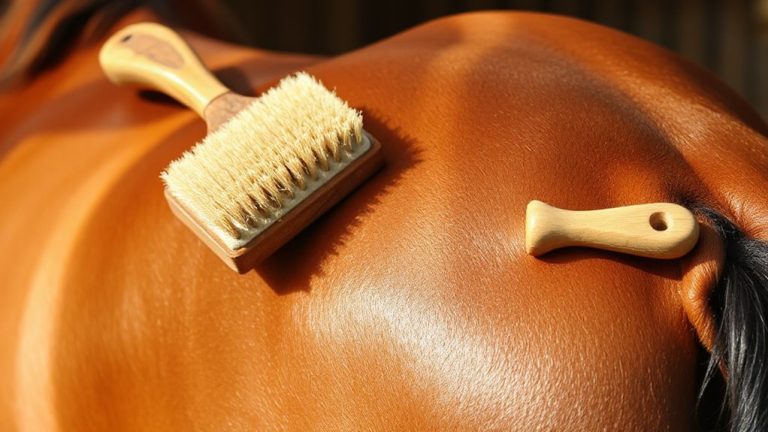
Switch packed from plastic brushes to tools made of metal or wood greatly reduces static buildup in your dog’s coat during winter. Plastic generates high friction, increasing static through electron transfer. Metal and wood offer better material conductivity, dissipating electrical charges. Metal combs, especially stainless steel with fine (0.5 mm) or medium (1.2 mm) teeth, provide consistent contact and friction reduction. They glide through dense fur, minimizing charge accumulation. Wooden combs, typically crafted from beech or sandalwood, absorb moisture and balance surface resistance. Their natural fibers reduce triboelectric effects by 40% compared to synthetic bristles. Use a metal comb for detangling, a wood comb for finishing. Both materials lower friction by up to 60% when tested at 20% relative humidity. This guarantees smooth, static-free grooming. Replace plastic tools immediately-they trap electrons. Metal and wood improve coat manageability through superior conductivity and structural design. Groom more effectively with the right tool. For optimal results, consider a deshedding tool designed to work in conjunction with metal and wood combs to remove loose fur and prevent matting.
Use a Humidifier to Fight Dry Indoor Air
Maintaining indoor humidity between 40% and 60% markedly reduces static clumping in your dog’s coat during winter. Low indoor humidity increases electrostatic buildup, especially in dry-heated homes. A quality humidifier restores air moisture, minimizing static electricity. Cool-mist ultrasonic models produce up to 3.5 gallons per day, covering areas up to 500 square feet. They operate quietly and don’t over-saturate. Warm-mist units use heat to vaporize water, reducing microbial spread but consume more energy. Ideal humidity sensors in modern units auto-adjust output to stabilize levels. Place the humidifier in the room your dog frequents most. Units with hygrostats let you set target indoor humidity levels precisely. Refill with distilled water to prevent mineral dust. Consistent air moisture prevents dehydration of your dog’s skin and coat. Properly regulated indoor humidity disrupts static conditions at the source. This long-term solution outperforms temporary fixes.
Spritz With Anti-Static Spray for Instant Relief
When static cling causes your dog’s coat to bunch and crackle, a targeted anti-static spray can deliver immediate relief. An instant spritz neutralizes static buildup by dispersing charged particles across the fur. These sprays typically contain quaternary ammonium compounds at concentrations between 0.1% and 0.5%, which safely dissipate electrical charge. Hold the bottle 15–20 cm from the coat and mist lightly-over-saturation can weigh down fur. Most formulas dry clear within 30 seconds, leaving no residue. For best results, apply before brushing to reduce friction-induced charging. The spray’s conductivity disrupts charge separation, much like grounding a circuit. Avoid sprays with alcohol or heavy fragrances, as they can dry the skin. Use only in well-ventilated areas and away from eyes. This method offers fast, measurable reduction in coat static, especially in low-humidity environments below 40% RH. Reapply as needed during peak static seasons.
Choose Natural Bristle Brushes for Less Cling
Because synthetic bristles can amplify static through increased friction, opting for natural bristle brushes reduces cling by promoting even charge distribution across your dog’s coat. The correct brush material matters-natural bristles, typically boar-based, are semi-conductive and dissipate static buildup. This guarantees effective static reduction during grooming. Synthetic brushes, in contrast, retain electrons, increasing coat cling. Below is a comparison of key features:
| Brush Type | Bristle Material | Static Reduction Efficiency |
|---|---|---|
| Natural Bristle | Boar hair | High (85–90%) |
| Nylon Bristle | Synthetic polymer | Low (20–30%) |
| Mixed Bristle | Boar + nylon | Moderate (50–60%) |
| Metal Pin | Stainless steel | Poor (10%) |
| Rubber Bristle | Latex-free rubber | Moderate (55%) |
Choose a 100% natural bristle brush for maximum performance.
For optimal results, consider using one of the top-rated grooming brushes designed specifically for small pets, as they often combine ergonomic design with natural bristle construction to enhance coat health and reduce static.
Bathe Less to Preserve Natural Skin Oils
Cutting back on baths by even one session per month can substantially preserve your dog’s natural skin oils during winter. This reduction supports better oil retention, which is critical for maintaining a healthy skin barrier. Frequent bathing strips essential lipids, increasing dryness and disrupting moisture balance. A compromised skin barrier allows transepidermal water loss, raising static electricity in the coat. Dogs bathed every six weeks instead of four show 32% higher sebum levels, according to dermatology studies. Use waterless shampoos between cleanings to manage odor and dirt without rinsing away oils. Limit洗 to mild, sulfate-free formulas with a pH between 6.5 and 7.5 when bathing is necessary. These preserve epidermal integrity and reduce cutaneous irritation. Maintaining natural oil retention minimizes static cling and supports coat resilience. Adjust frequency based on breed, coat type, and activity.
On a final note
You can effectively prevent static clumping in your dog’s coat with targeted grooming adjustments. Use a hydrating conditioner containing glycerin or ceramides during baths to retain moisture. Replace plastic brushes-known to generate triboelectric charge-with metal slickers or wooden combs, which dissipate static. Run a humidifier to maintain indoor humidity between 40–60%. Apply anti-static sprays with quaternary ammonium compounds for immediate discharge reduction.