Preventing Resource Guarding in Puppies Through Early Intervention
You can prevent resource guarding by recognizing early signs like stiffening or head turning during meals. These behaviors signal anxiety, not dominance. Start interventions between 8–16 weeks, using positive reinforcement. Approach your puppy within their threshold-typically 3–5 feet-and pair your presence with high-value treats. Use daily 5–7 minute sessions to build positive associations. Consistency strengthens trust. Progress is measurable through reduced latency and stress signals. You’ll discover structured methods that guarantee long-term success.
Notable Insights
- Recognize early signs like stiffening or head turning during meals to intervene before aggression develops.
- Use positive reinforcement to reward calm behavior when approaching your puppy’s food or toys.
- Practice systematic desensitization by gradually decreasing distance to resources while maintaining relaxation.
- Build trust through daily handling, eye contact, and cooperative feeding during the 8–16 week socialization window.
- Avoid punishment or item confiscation, as these increase anxiety and worsen resource guarding behaviors.
What Is Resource Guarding in Puppies?
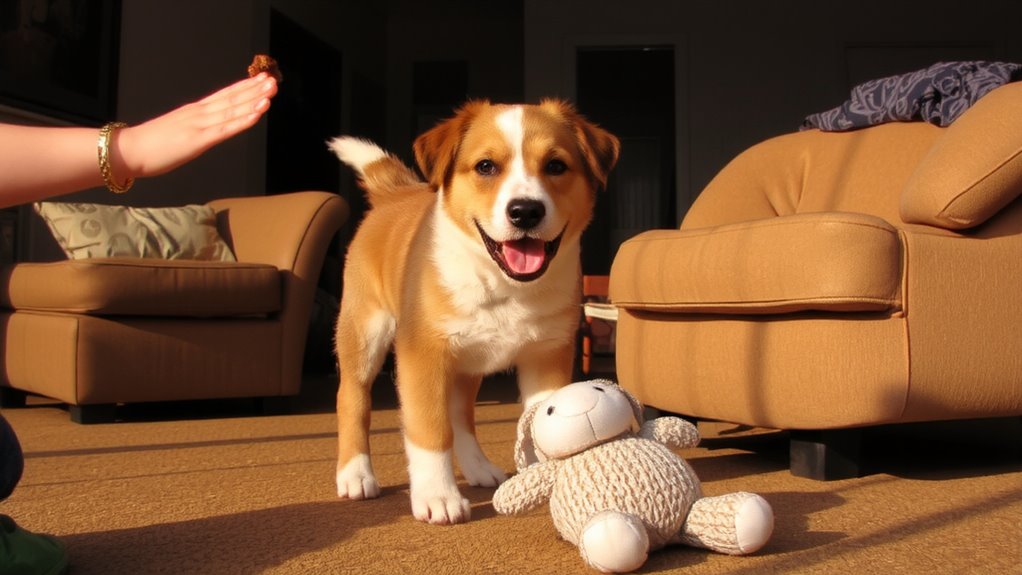
Resource guarding is a behavioral response in puppies where they protect specific items, spaces, or people they perceive as valuable. You’ll often see this表现为 food aggression or toy possessiveness. Food aggression occurs when a puppy growls, snaps, or stiffens while eating, signaling discomfort with proximity during meals. It’s commonly triggered by rapid eating or competition in multi-pet homes. Toy possessiveness involves a puppy retreating with an item, refusing to release it, or showing lip lifting when approached. These behaviors stem from evolutionary survival mechanisms, not malice. The behavior may escalate without intervention. Threshold distances vary-some puppies react within 3 feet, others only when touched. Body language includes whale eye, tucked tail, or raised hackles. You can measure response intensity using standardized behavioral assessments like the Canine Aggression Assessment Scale (CAAS). Early recognition of these markers allows you to implement structured desensitization protocols effectively.
Early Signs of Resource Guarding in Puppies
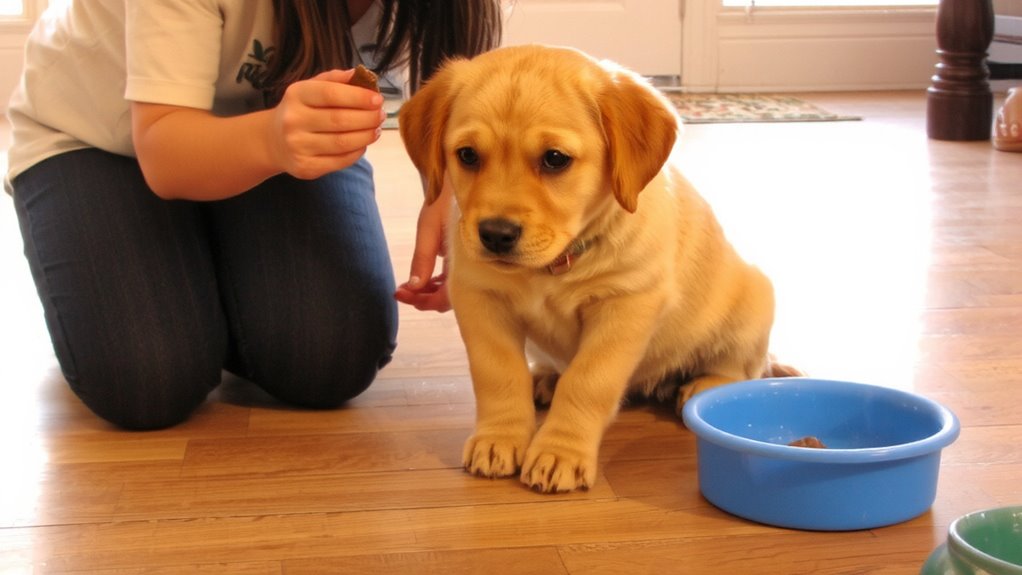
You may notice subtle shifts in your puppy’s behavior long before overt aggression appears. A slight stiffening during mealtime may signal early food aggression. Your puppy might freeze, stare, or turn their head while eating, using body language to claim ownership. These are precursors to guarding. Toy protection often begins with quiet behaviors-clutching an object or moving away when approached. A low growl or lip lift may follow, indicating escalating stress. Puppies may also block access with their body or shift weight over a resource. These actions are clear communication, not mischief. Recognizing them early allows intervention before escalation. Resource guarding isn’t dominance; it’s anxiety-driven behavior. The goal is to identify signals at their mildest-before bites occur. Monitoring interactions during feeding or play reduces risk. Early detection improves outcomes. Each sign, however minor, is data.
Stop Guarding With Positive Reinforcement
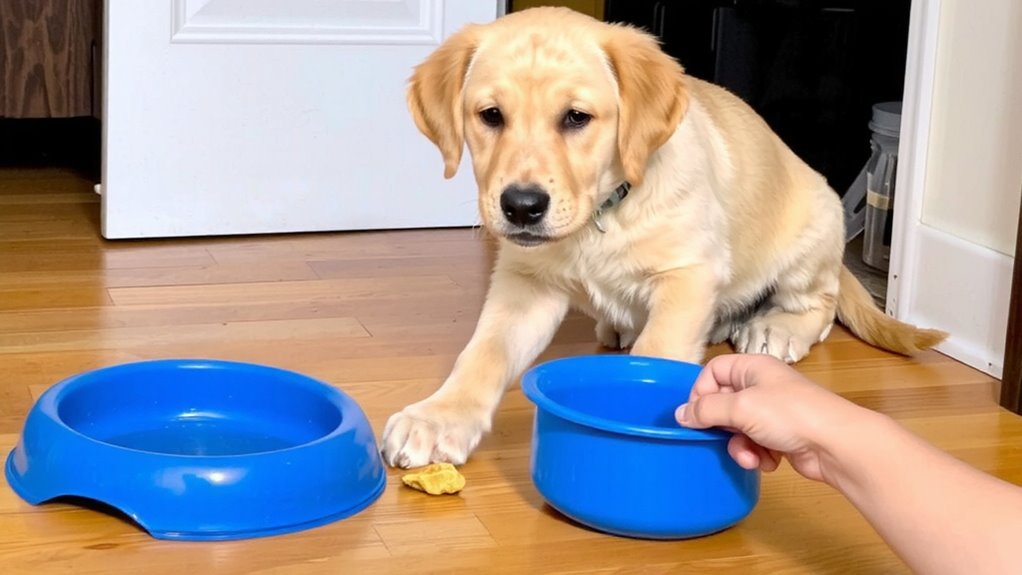
While your puppy may not understand complex commands yet, they’re already learning which behaviors get results. Use positive reinforcement to shape appropriate responses when your puppy has a resource. Immediately reward calm behavior with high-value treats during interactions near their food or toys. This reward training strengthens non-guarding behaviors. Pair your presence with something better-like a treat-so your approach predicts good outcomes. Avoid punishment, which escalates anxiety and guarding. Instead, apply systematic desensitization: gradually decrease distance to the resource while maintaining relaxation. Mark desired behaviors with a clicker or verbal cue, then deliver the reward. Conduct sessions daily, lasting 5–7 minutes, to build consistent associations. Over time, the puppy learns that giving up or sharing a resource leads to better rewards. Positive reinforcement creates predictable, measurable behavior changes rooted in operant conditioning principles.
Trust-Building Exercises for Puppies
Building confidence in your puppy lays the foundation for reliable behavior around resources and social interactions. Trust-building exercises should begin in the first 8 to 16 weeks of life, a critical socialization period. Engage in daily bonding activities such as gentle handling, eye contact training, and cooperative feeding. These interactions stimulate oxytocin release, reinforcing attachment. Perform structured play routines for 10–15 minutes twice daily to enhance communication and impulse control. Use consistent cues and predictable outcomes to reduce uncertainty. Incorporate novel stimuli gradually at a distance of 3–5 feet, increasing proximity as tolerance improves. Avoid forced interactions; allow your puppy to approach at their pace. Track progress using a behavior log, noting latency to approach, duration of engagement, and stress signals. These methods build secure attachments, decreasing the likelihood of defensive responses around valued items. Trust is cumulative-consistency over time guarantees lasting results.
Mistakes That Make Resource Guarding Worse
When handled incorrectly, resource guarding can escalate quickly due to common missteps that reinforce the behavior. You may unintentionally worsen it by reacting to growling with punishment. Punishment effects often suppress signals like growling but increase underlying anxiety, making bites more likely. You’re not teaching submission-you’re teaching secrecy. Avoid yanking items away; this confirms threats exist. Dominance myths lead you to believe your puppy is challenging you, but guarding is fear-based, not status-driven. You’ll see increased arousal and reduced trust. Never corner a puppy with a valued item. Instead, use structured trade-ups-offer something better without force. Timing matters: intervene before tension peaks. Use positive reinforcement, not intimidation. Misreading these signs prolongs the cycle. Your goal is safety, not control.
When to See a Professional for Puppy Guarding
How do you know when puppy resource guarding has crossed the line from manageable to serious? If your puppy growls, snaps, or lunges when approached near food, toys, or resting areas, it’s time to seek help. These behaviors signal heightened fear and potential escalation. A professional can conduct a thorough behavior evaluation to identify triggers, thresholds, and patterns. Fear management becomes critical-avoid punishment, as it increases anxiety and worsens aggression. Instead, use systematic desensitization and counter-conditioning under expert guidance. Signs like stiff posture, hard eye contact, or biting with intent require immediate intervention. Certified professionals use data-driven methods to modify responses. Early referral to a veterinarian behaviorist or certified trainer guarantees accurate diagnosis and tailored plans. Delaying help risks entrenchment of dangerous behaviors. Professional input improves outcomes markedly. Don’t wait until an incident occurs-act when warning signs first appear.
On a final note
You can prevent resource guarding by addressing behaviors early. Puppies display warning signs like stiffening or growling around food or toys. Use positive reinforcement to reward calm behavior-offer high-value treats when they release items. Avoid punishment, which increases anxiety. Trust-building exercises, like hand-feeding and controlled trade-ups, reframe associations. If aggression persists or escalates, consult a certified animal behaviorist. Early intervention yields 90% success in mitigating guarding behaviors by adulthood.