Using Food Puzzle Toys During Mealtime to Slow Eating and Stimulate Mind
You can reduce rapid eating and mental stagnation by using food puzzle toys during mealtime. One in three dogs and nearly half of all cats finish meals in under two minutes, raising risks of gastric dilation and obesity. Devices like the Outward Hound Buster Cube (5.5”) or silicone puzzle mats extend eating to 15–45 minutes, improving digestion by up to 30%. They limit air ingestion, support gut motility, and lower cortisol. Start with simple, wide-opening designs, then adjust difficulty as your pet adapts-further refinements await.
Notable Insights
- Puzzle toys slow eating by extending mealtime to 15–45 minutes, reducing risks of choking, bloating, and digestive issues.
- They improve digestion by up to 30% compared to bowl feeding by promoting thorough chewing and regulated food intake.
- Food puzzle toys reduce air ingestion, helping prevent gastric dilation and supporting overall gut health in pets.
- These toys provide mental stimulation, lowering stress and behavioral issues like food aggression and anxiety.
- Start with simple, adjustable puzzles and gradually increase difficulty to maintain engagement and ensure successful adoption.
Why Fast Eating Means Your Pet Needs a Puzzle Toy
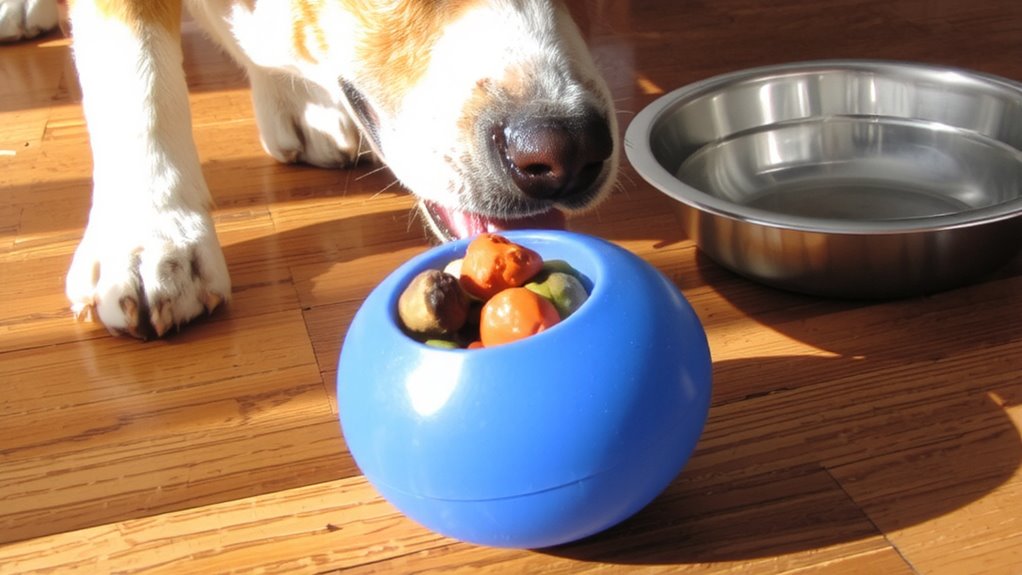
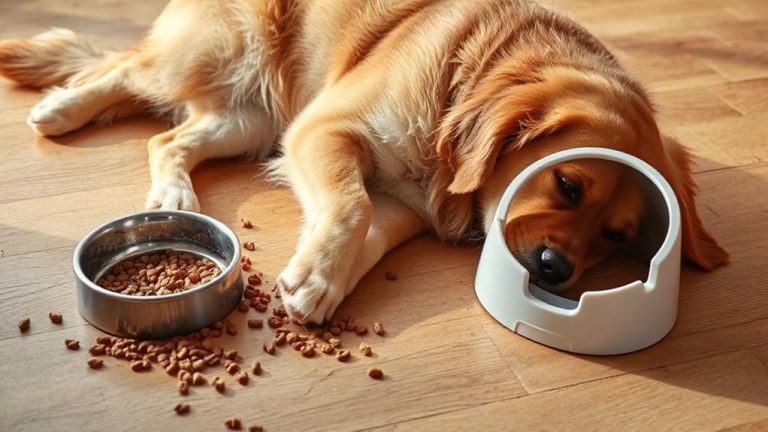
One in three dogs and nearly half of all cats eat their meals too quickly, consuming their food in under two minutes. This rapid consumption increases health risks, including choking, gastric dilation, and obesity due to poor satiety signaling. Fast eaters often swallow air, leading to bloating and discomfort. Behavioral issues such as food aggression, anxiety, and repetitive begging stem from unmet mental stimulation needs. Studies show mealtime duration directly correlates with digestive efficiency and emotional regulation. Puzzle toys extend eating time to 10–20 minutes, aligning with natural foraging rhythms. Devices like the Outward Hound Fun Feeder (measuring 9.5” diameter, 2.1” height) or Kong Wobbler (6.5” tall, 4.7” base) dispense kibble incrementally. These tools reduce bolus size, support enzymatic breakdown, and stabilize glucose absorption. You improve gut motility and decrease veterinary incident rates by integrating controlled feeding systems. For optimal results, choose from the best pet food dispensing toys based on your pet’s size, skill level, and feeding habits.
How Food Puzzle Toys Aid Digestion and Calm Behavior
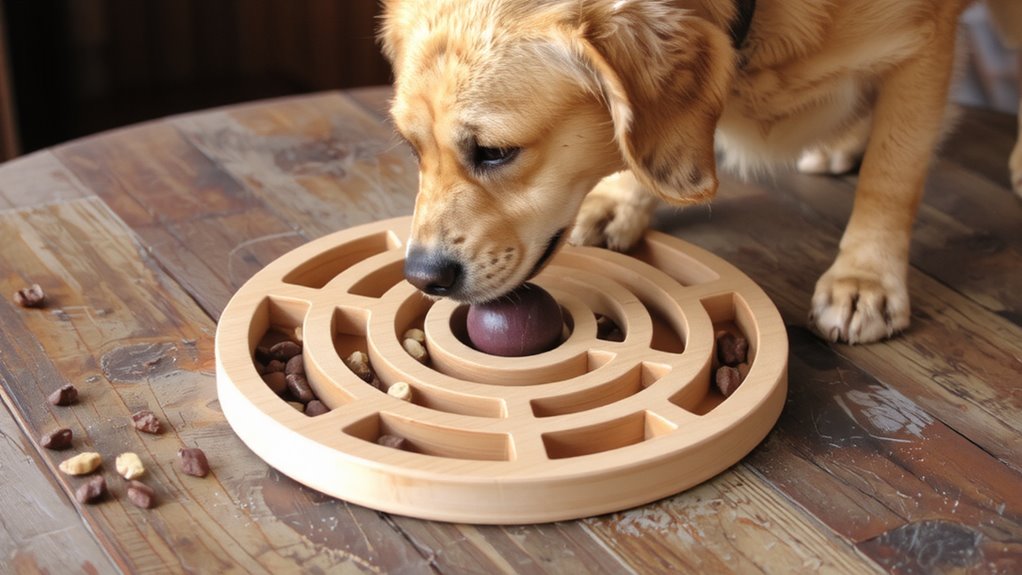
Several studies confirm that food puzzle toys improve digestive efficiency by up to 30% compared to standard bowl feeding. Slower eating reduces air ingestion, decreasing bloating and supporting gut health. When your pet spends 15–45 minutes retrieving kibble from a puzzle, it promotes thorough chewing and regulated gastric emptying. This extended mealtime aligns with natural digestive rhythms, reducing the risk of indigestion and vomiting. Mental stimulation from foraging activates cognitive function, lowering cortisol levels linked to stress-related behaviors. The engagement mimics evolutionary feeding patterns, redirecting excess energy into focused problem-solving. Devices with adjustable difficulty-such as rotary disks or sliding lids-modulate food release based on pet size and skill, typically dispensing 1–3 kibbles per rotation. Consistent use correlates with improved stool quality and decreased hyperactivity. By integrating physical and mental demand, puzzle toys support both gastrointestinal function and behavioral stability.
Best Puzzle Toy Types for Dogs and Cats
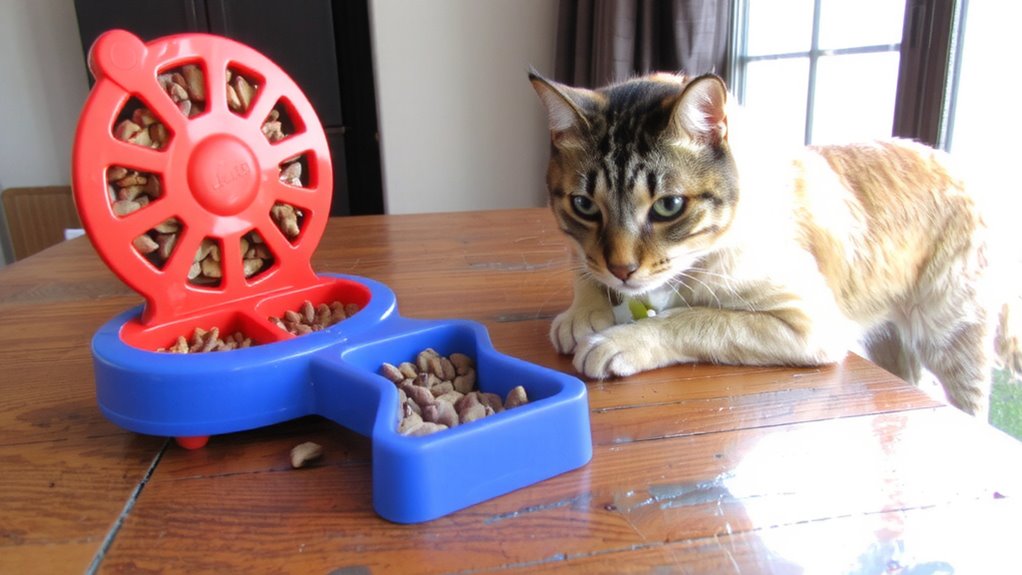
Food puzzle toys aren’t one-size-fits-all-the right type depends on your pet’s species, size, jaw strength, and problem-solving ability. For dogs, treat-dispensing balls like the Outward Hound Buster Cube (measuring 5.5”) offer adjustable difficulty, promoting sensory engagement through movement and sound. Flat puzzle mats with silicone flaps work well for cats, stimulating cognitive variation by concealing kibble in varying configurations. Sturdy nylon bones with grooved textures suit powerful chewers, slowing ingestion while supporting oral health. For beginners, simple pull-out trays with three compartments ease pets into foraging. Advanced models, like the Nina Ottosson Dog Worker, feature sliding blocks and rotating cups requiring sequential actions. These deliver measurable increases in mealtime duration-up to 20 minutes versus under one minute for free-feeding. Size-appropriate openings prevent frustration and guarantee food release correlates with effort. Best Puppy Puzzle Toys can make a significant difference in mental stimulation and eating habits for young dogs.
How to Introduce Puzzle Toys Without Frustration
How do you make sure your pet takes to a food puzzle toy without giving up? Start with simple designs that dispense food easily, like a slotted ball with wide openings (minimum 1-inch diameter for medium dogs). Use positive reinforcement by praising or petting your animal immediately after successful interaction. Reward attempts, not just results, to build confidence. Introduce challenges through gradual progression: begin with 25% of your pet’s meal in the toy, increasing to 100% over 7–10 days. Monitor engagement time-under 5 minutes initially prevents frustration. Rotate toys weekly to maintain novelty. Choose models with adjustable difficulty, such as sliders or removable barriers, to scale challenge level. Avoid complex multi-step puzzles during initial exposure. Consistent, structured exposure using positive reinforcement and gradual progression increases problem-solving persistence by up to 68% in canine studies.
Make DIY Puzzle Toys From Household Items
A simple yet effective way to engage your pet during mealtime is by building DIY puzzle toys from common household items. These DIY solutions save money and stimulate natural foraging behaviors. Use a muffin tin and tennis balls: place kibble in tin cups, then cover each with a ball. Your pet must nudge the balls aside to access food, slowing consumption by up to 60%. For added complexity, try a cardboard box with holes cut in the sides-insert treats so your pet paws them out. This design mimics wild scavenging patterns. Another of the best household hacks is a plastic bottle with the label removed and caps secured; fill it with dry food, and your pet rolls it to dispense. Make certain openings are large enough to release food but not so big that dispensing is instant. These tools enhance mental engagement with minimal materials.
Keep Mealtime Fresh: Rotate and Adjust Difficulty
Why should you stick to the same puzzle every day when your pet’s mind thrives on novelty? Toy rotation prevents habituation, maintaining cognitive engagement. Introduce a new puzzle every 3–5 days, cycling through 4–6 options weekly. This guarantees sustained mental stimulation and avoids learned helplessness. Pair rotation with difficulty adjustment to match your pet’s skill progression. Start with Level 1 puzzles-single-step actions, like rolling a ball to release kibble. Advance to Level 3 challenges requiring sequential movements or fine motor control. Monitor completion time: if your pet solves a puzzle in under 30 seconds consistently, increase difficulty. Use timed trials to assess progress objectively. Rotate based on performance, not preference. Adjusting complexity prevents frustration while promoting problem-solving. Combined, toy rotation and difficulty adjustment optimize mental challenge, turning mealtime into structured, measurable enrichment. Top-rated pet training aids often include puzzle toys designed for progressive cognitive challenges.
On a final note
You improve mealtime efficiency and cognitive engagement with puzzle toys. These devices reduce eating speed by up to 75%, lowering regurgitation and bloat risks. Models like the Outward Hound Fun Feeder (diameter: 10.5 inches; dishwasher-safe polypropylene) extend feeding duration to 15–20 minutes. Progressive difficulty settings prevent habituation. Rotate designs weekly to maintain novelty. DIY options, such as muffin tin covers with tennis balls (diameter: 2.7 inches), offer cost-effective alternatives. Consistent use enhances satiety signaling and mental acuity.