Shedding Patterns Revealed: How Genetics Influence Your Pet’s Shedding Behavior
Your pet’s shedding is controlled by genes regulating the hair cycle phases-anagen (growth), catagen (transition), and telogen (rest). Mutations in follicular genes extend anagen, reducing shedding, as seen in Poodles with their human-hair-like coats. Coat type matters: double coats trap undercoat hairs, releasing them seasonally. DNA tests analyze markers like MC5R and FOXI3, predicting shedding with up to 90% accuracy using polygenic risk scores. Genetic insights guide grooming strategies tailored to your pet’s biology. More details on breed-specific patterns follow.
Notable Insights
- Genetic regulation of hair cycle phases determines shedding intensity and timing in pets.
- Mutations in follicular genes can extend growth phases, reducing shedding frequency and volume.
- Coat type influenced by genetics affects how shed hairs are released or retained.
- Seasonal shedding is driven by environmental cues altering gene expression, not genetic changes.
- DNA testing identifies shedding-related genes, enabling accurate prediction and tailored grooming plans.
How Genes Control Pet Shedding
Why do some pets shed barely a hair while others leave clumps on your furniture? The answer lies in your pet’s genes. Gene expression directly controls when and how much fur sheds. Proteins coded by specific DNA sequences regulate the hair cycle’s phases: anagen (growth), catagen (transition), and telogen (rest). Pets with reduced shedding often have mutations affecting gene expression in follicular cells, prolonging anagen and shortening telogen. This means fewer hairs enter shedding phase at once. In contrast, high-shedding breeds show balanced or accelerated cycling, releasing thousands of hairs daily. The duration and synchronization of the hair cycle are heritable traits. Selective breeding has amplified low-shedding gene variants in certain lines. You can predict shedding tendencies by analyzing genetic markers linked to these cycles. Gene expression isn’t random-it’s a timed, biologically programmed process dictating exactly how much fur your pet will shed.
How Coat Type Affects Shedding
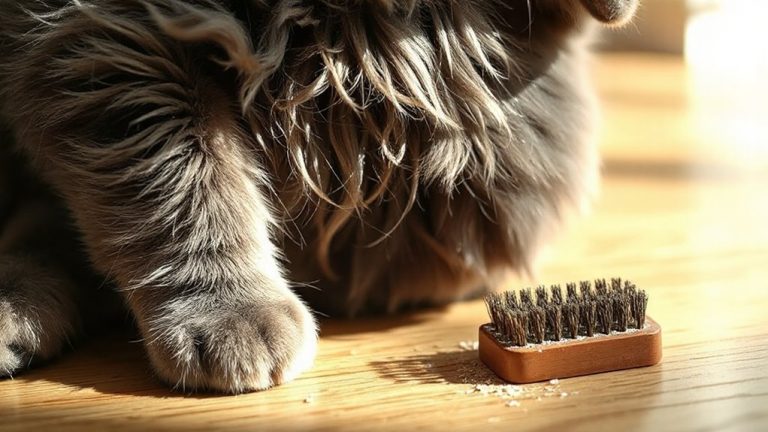
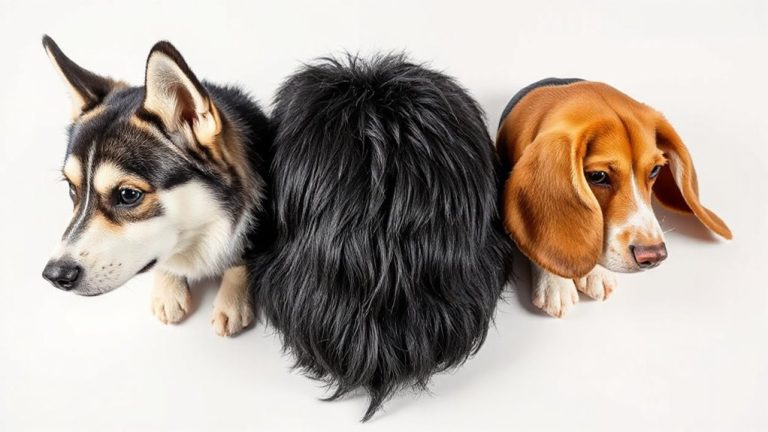
Coat structure plays a decisive role in how much your pet sheds. Short coats typically shed less visibly, but high follicle density means more total hairs are released daily. You’ll notice this when brushing-dense coats trap loose hair, creating clumps. Long coats, while often lower in follicle density, tangle easily, retaining shed hairs until grooming occurs. Coat length directly affects how often you need to intervene; longer fur demands daily brushing to prevent matting and manage shedding. Double-coated breeds have a topcoat and thick undercoat, both contributing to seasonal shedding peaks. The undercoat’s high follicle density releases thousands of hairs during blowouts. Hair coats, with lower follicle density and longer growth cycles, shed minimally compared to fur. Understanding your pet’s coat type helps predict shedding patterns and choose effective grooming tools. For double-coated dogs, using the right tool like a deshedding tool for dogs can significantly reduce loose undercoat hair during peak shedding seasons.
Dog Breeds That Shed the Least (And Why)
Your dog’s shedding habits largely depend on genetics, and some breeds are naturally programmed to shed less. These low-shedding breeds typically have a unique coat texture more similar to human hair than fur. Their coat texture reduces loose hairs in your home. The secret lies in their extended hair growth cycle, where the anagen (growth) phase lasts longer than in high-shedding breeds. This means fewer hairs enter the telogen (resting) phase at once, minimizing shedding. Breeds like Poodles, Bichon Frises, and Maltese exhibit this delayed cycle, resulting in predictable, low shedding. Their tightly curled or silky coats also trap loose hairs instead of releasing them into the environment. Genetic studies show specific gene variants in these breeds regulate keratin proteins and follicle activity, directly affecting coat texture and growth timing. Knowing this helps you choose a dog based on scientific traits, not guesswork.
Do Shedding Genes Change With Seasons?
Shedding genes themselves don’t change with the seasons, but their expression can shift in response to environmental cues like daylight and temperature. You won’t see seasonal mutations in your pet’s DNA-genetic sequences remain constant year-round. Instead, changes occur in gene expression, the process by which genes are turned on or off. Photoperiod, or day length, is a key regulator. As days shorten in fall, melatonin levels rise, signaling hair follicles to enter telogen, the resting phase. This results in heavier shedding in spring as new growth begins. Temperature fluctuations can amplify this cycle. In breeds with double coats, like Huskies or Golden Retrievers, gene expression adjustments are more pronounced. These biological rhythms are deeply conserved, ensuring adaptation to annual climate shifts. While genes stay the same, their seasonal activity patterns drive visible shedding changes in your pet.
Can a DNA Test Predict Your Pet’s Shedding?
How accurately can science peer into your pet’s genetic code to forecast shedding? DNA tests can identify specific genes like MC5R and FOXI3 linked to coat type and hair cycle regulation. These tests analyze saliva samples using SNP genotyping, offering up to 90% accuracy in predicting shedding levels. While genetics set the baseline, behavioral triggers and environmental stressors still influence expression. For example, cortisol spikes from anxiety or seasonal light changes may activate or suppress shedding genes. Tests often classify pets as low, moderate, or high shedders based on polygenic risk scores. They don’t measure real-time hair loss but forecast genetic potential. Reputable kits process over 200,000 genetic markers, including those tied to follicular development. Results typically arrive within 3–5 weeks. Though not infallible, they provide actionable data. You get breed-specific insights and health-linked markers, enabling proactive care adjustments without waiting for visible coat changes.
Match Grooming to Your Pet’s Genes
A pet’s genetic blueprint influences more than just coat texture-it directly determines grooming needs. With genetic grooming, you can tailor routines based on inherited traits like shedding frequency, hair length, and undercoat density. Coat mapping identifies which genes govern your pet’s fur-such as MC5R for shedding and FGF5 for hair length-giving precise insight into maintenance demands. For example, a dog homozygous for the long-coat FGF5 variant requires daily brushing to prevent matting, while a short-haired heterozygote may need weekly care. Breeds with dense undercoats, like Huskies, shed seasonally due to genetic signals tied to daylight exposure. Using DNA results, you can anticipate shedding cycles and adjust tools-deshedding rakes for double-coated breeds, fine-tooth combs for silk-haired types. This approach reduces guesswork. Genetic grooming isn’t just preventive-it’s predictive, optimizing coat health with science-backed precision and improving long-term outcomes through individualized care strategies. Choosing the right tool, such as a deshedding rake, can significantly reduce loose fur and improve coat condition.
On a final note
Your pet’s shedding is driven by genetics, not guesswork. Specific genes regulate hair growth cycles and coat density. Breeds with tightly curled or wire-haired coats often carry mutations in the *RSPO2* and *FGF5* genes, reducing shedding. DNA tests can identify these variants with over 90% accuracy. Match grooming frequency and tools-like deshedding blades or slicker brushes-to your pet’s genetic profile. Seasonal changes affect some, but not all, shedding patterns.