Tailoring Grooming Practices Based on Coat Density and Texture
You must match grooming tools to your dog’s coat type, as density and texture directly affect shedding and skin health. Use an undercoat rake with 1/8-inch spaced stainless steel tines for double coats, removing up to 70% of loose fur. For short coats, a rubber curry brush with 1/2-inch nodules lifts debris gently. Detangle silky coats daily with a wide-tooth comb and pH-balanced spray. Curly or wiry coats need hand-stripping or clipping with a #4F blade. Adjust frequency and tools with seasonal changes-Nordic breeds can thicken by 30% in winter. Proper tool selection reduces grooming time by up to 40% while improving coat condition. Further refinements await based on breed-specific needs.
Notable Insights
- Identify your dog’s coat type by assessing undercoat presence and outercoat structure to choose appropriate grooming tools.
- Use an undercoat rake with bent pins to remove loose fur from dense double coats and prevent matting.
- Maintain smooth short coats with weekly brushing using a rubber curry brush to enhance shine and skin health.
- Detangle long silky coats daily with a wide-tooth comb and detangling spray to prevent breakage and preserve texture.
- Adjust grooming frequency and tools seasonally, increasing de-shedding efforts during peak shedding periods in spring and fall.
Identify Your Dog’s Coat Type First
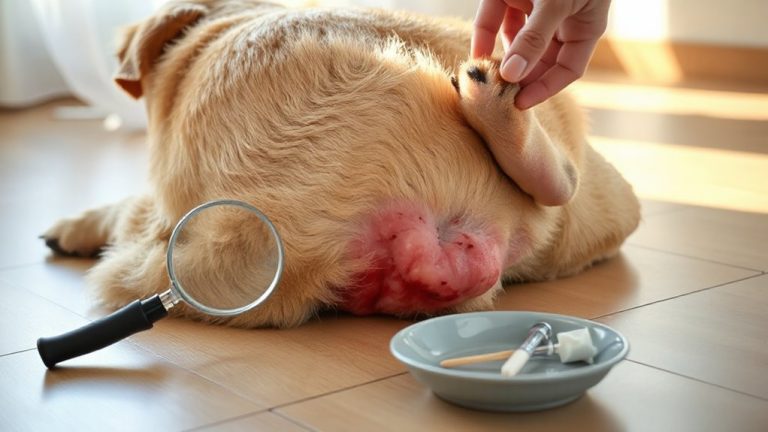
Before selecting any grooming tools or setting a maintenance schedule, you’ll need to identify your dog’s coat type-this step determines everything from brush selection to bathing frequency. Coat assessment begins with visual inspection and tactile evaluation. You should classify the coat as single, double, wiry, curly, or silky based on undercoat presence and outercoat structure. Texture analysis follows, requiring you to pinch a section of fur to assess density, coarseness, and flexibility. Coarse, stiff hairs suggest a guard-heavy coat; soft, fine strands indicate a plush or wool-like texture. Measure fiber diameter using a calibrated comparator if available-most domestic breeds range from 20 to 90 microns. Accurate classification enables precise tool matching: pin brushes for long, flowing coats; slickers for moderate shedding types. You’ll avoid skin irritation and inefficiency by aligning tools with coat metrics. Proper assessment reduces grooming time by up to 40% while improving coat health. Choosing the right deshedding tool can significantly reduce loose fur and improve coat condition, especially for double-coated breeds with heavy shedding cycles. A key solution for managing excessive shedding is using a deshedding tool designed to safely remove undercoat hair without damaging the topcoat.
Rake Dense Double Coats to Prevent Matting
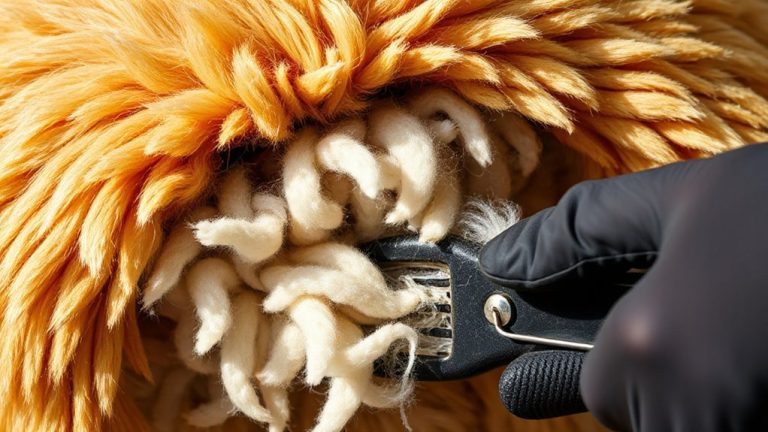
You’ll need a well-constructed undercoat rake to manage dense double coats effectively. These tools feature long, bent pins spaced 1/8 inch apart, designed to penetrate the topcoat without damaging the skin. Regular raking removes loose undercoat fur, directly reducing undercoat shedding by up to 70% during peak seasons. The rake’s firm tension allows it to lift dead hair while promoting air circulation to the skin. This process is essential for tangle prevention, especially in high-friction areas like behind the ears and under the legs. Use the rake at a 45-degree angle, applying moderate pressure in the direction of hair growth. For best results, groom every 5–7 days during shedding cycles. High-quality models use stainless steel tines mounted on ergonomic handles to reduce wrist strain. Proper technique and tool selection prevent surface-only brushing, ensuring deep coat maintenance without irritation.
Brush Smooth Short Coats Weekly for Shine
Typically, brushing once per week maintains ideal shine and skin health in smooth short coats. This coat type sheds moderately and lies flat, requiring minimal but consistent maintenance. Use a rubber curry brush or a short-bristled slicker brush as your primary grooming tools. These tools lift dead hair and distribute natural oils from the skin to the hair shaft, enhancing sheen. A curry brush with 1/2-inch rubber nodules increases dermal stimulation without abrasion. Follow with a soft-bristle finishing brush to polish the coat. Work in sections, applying light pressure and brushing in the direction of hair growth. Sessions should last 5–7 minutes to guarantee coverage without overhandling. Avoid metal combs or undercoat rakes-they’re too harsh for this coat type. Weekly grooming prevents dullness caused by oil buildup and environmental debris, preserving the coat’s sleek appearance and protective function. For optimal results, consider the best dog brushes for short hair based on performance and coat compatibility.
Detangle Long Silky Coats With Gentle Strokes
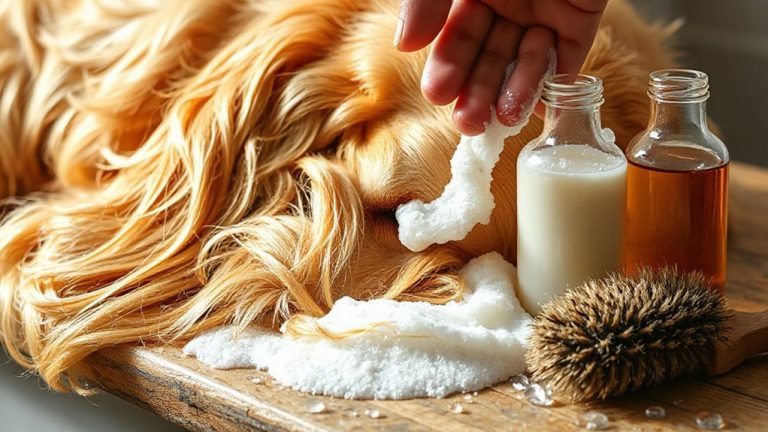
Long silky coats demand meticulous care to prevent matting and maintain their flowing texture. You must detangle daily using a wide-tooth comb followed by a pin brush. Begin at the ends and work upward in 1-inch sections to avoid breakage. Your stroke technique should be slow and deliberate, applying minimal tension. Silk preservation depends on consistent, gentle handling to reduce fiber stress. Use a detangling spray with silk proteins and a pH of 6.5–7.0 to support cuticle integrity. Avoid brushing when dry; slight moisture improves slip and reduces static. A boar bristle brush distributes natural oils without disrupting coat alignment. Never use scissors on mats-this risks permanent texture damage. Detangling takes 10–15 minutes daily but cuts grooming time by 60% weekly. Consistent stroke technique prevents tangles from reforming, preserving gloss and structural integrity.
Hand-Strip or Clip Curly and Wiry Coats
Though texture and growth cycle differ considerably between breeds, curly and wiry coats require specific maintenance to preserve their natural structure and weather-resistant properties. Hand stripping removes dead hair by plucking it from the root, promoting a healthy, dense undercoat and maintaining the harsh outer texture essential in breeds like the Wirehaired Dachshund or Schnauzer. You should hand strip every 3–4 weeks to align with the hair’s anagen phase. If done correctly, it causes minimal discomfort. Alternatively, clippering techniques offer a faster solution using electric clippers with adjustable blades. Use a #7–#10 blade for blending without thinning the coat excessively. Clipping dulls the coat’s natural harshness over time. Never clip strip a true terrier breed meant for hand stripping-you’ll compromise coat quality. Stick to the breed standard when choosing between methods.
Adjust Grooming for Seasonal Coat Changes
When seasons shift, your dog’s coat responds with changes in density and texture, so adjusting your grooming routine is essential. Seasonal shedding cycles dictate when undercoat loss peaks-typically spring and fall-and demand targeted brushing frequency. During heavy shedding, daily use of an undercoat rake with 1.5-inch curved blades removes up to 90% of loose fur, reducing matting and aiding temperature adaptation. In warmer months, shorter clipping with a #4F blade (approx. 0.5 inch length) improves heat dissipation. Cold-season preparation includes trimming only when necessary, preserving the insulating layer that functions like a thermal barrier. Monitor coat density changes closely: Nordic breeds may thicken by 30% in winter. Use deshedding tools with rotating blades weekly during shift periods. Proper seasonal grooming supports natural thermoregulation, aligns with biological shedding cycles, and maintains coat integrity without compromising your dog’s built-in temperature adaptation systems. A high-quality dog brush for shedding can significantly improve coat management during peak shedding seasons.
On a final note
You must tailor grooming to your dog’s coat type for best results. Dense double coats require raking with an undercoat rake every 5–7 days to remove loose fur and prevent matting. Smooth short coats need weekly brushing with a rubber curry brush to distribute oils and enhance shine. Long silky coats demand daily detangling using a wide-tooth comb and steel slicker brush. Curly or wiry coats perform best with hand-stripping every 4–6 weeks, maintaining texture and reducing shedding.