Cat Nail Anatomy: Quick, Keratin Layers & Trimming Schedule
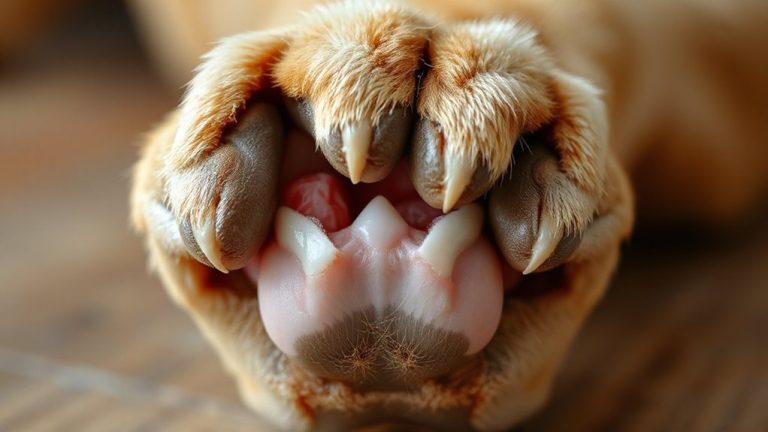
Your cat’s nails are made of dense keratin, growing in layered sheaths that shed every few weeks. They’re curved, sharp, and retractable, unlike human nails. The quick-the pink core-contains nerves and blood vessels; cutting into it causes pain and bleeding. Claws anchor during climbing and hunting, extending via tendon control. Retraction preserves sharpness and prevents wear. Trim every 10–14 days, avoiding the quick, especially in dark nails where it’s hard to see. Further details reveal how this anatomy supports your cat’s natural behaviors.
Notable Insights
- Cat nails are made of layered keratin and shed outer sheaths periodically to maintain sharpness.
- The quick contains nerves and blood vessels; avoid cutting into it during nail trims.
- Cats can extend and retract their claws using tendons, preserving sharpness and enabling stealth.
- Claws are essential for climbing, hunting, and gripping surfaces due to their curved, hook-like shape.
- Regular trimming every 10–14 days prevents ingrown nails, splits, and other common claw problems.
What Makes Cat Nails Different From Human Nails?
Your cat’s nails differ fundamentally from your own, both in structure and function. Nail composition in cats includes a higher concentration of keratin, making them sharper and more durable than human nails. This dense keratin layer enables claws to withstand repeated scratching without fracturing. Unlike your nails, which grow steadily, a cat’s growth cycle involves periodic shedding of outer nail sheaths, revealing a new, sharper layer underneath. This cycle occurs roughly every few weeks, depending on activity level and age. Cat nails grow in layers, with multiple sheaths present at once, allowing for continuous functionality. They extend and retract via tendons in the toes, a mechanism absent in humans. This retractability preserves sharpness and reduces wear. The curvature and hook-like shape are adaptations for climbing and capturing prey. These structural and growth differences mean cat nails require different care than human nails.
What the Quick Is and Why It Matters
The pinkish core visible inside a cat’s nail is the quick, a bundle of nerves and blood vessels that supplies nutrients to the growing claw. This structure is central to nail health and maintenance. Quick sensitivity means cutting too close causes pain and distress. The quick contains living tissue, unlike the outer keratin shell. In light-colored nails, the quick appears as a pink zone extending one-third to one-half the nail length. In dark nails, visibility drops, increasing trimming difficulty. Trimming within 2 mm of the quick raises bleeding risk due to vascular supply. A single cut too deep can trigger prolonged bleeding. Styptic powder helps control bleeding but prevention is better. Accurate identification reduces injury likelihood. Avoid the central core. Understand nail anatomy before every trim. Protect your cat from unnecessary pain and complications. Precision matters.
How Claws Help Cats Climb and Hunt
Claws are precision tools engineered by evolution for survival. They provide critical mechanical advantages during tree climbing and prey capture. Each claw is curved, sharp, and composed of keratin, enabling it to hook into surfaces like bark or flesh. During tree climbing, cats drive their claws into the trunk, using them as anchors while their hind legs push upward. This creates a secure, energy-efficient ascent. For prey capture, claws deploy rapidly to grasp and immobilize targets-acting like grappling hooks in a high-speed maneuver. The front paws typically have five claws, including a dewclaw, offering enhanced dexterity and grip. Retraction keeps claws sharp and ready. These adaptations maximize performance in both vertical navigation and hunting. Your cat’s ability to climb and catch relies directly on this specialized anatomy.
Why Cats Retract Their Claws (And Why It Helps)
While hunting or climbing, cats keep their claws sheathed to preserve sharpness and guarantee quick deployment. This retraction supports stealth behavior by preventing snagging and minimizing noise. When claws are retracted, the digital flexor tendons hold them safely within protective skin folds, reducing wear. You’ll notice silent movement during stalking-retracted claws allow footfalls to remain quiet on varied surfaces. The unguicular process of the third phalanx anchors the claw, letting it extend rapidly when needed. Retraction isn’t constant; cats actively control it using specialized muscles. For example, during climbing, claws extend just before contact with surfaces, providing grip without compromising stealth on the descent. This mechanism supports energy efficiency-less abrasion means less keratin loss. Over time, unretracted claws would dull 40% faster on hard flooring. Retraction also protects household surfaces and human skin during routine contact. You benefit from observing this natural design-it highlights functional precision in everyday feline motion. Grooming with tools like cat grooming gloves helps maintain claw health by removing loose keratin layers during shedding cycles.
Common Cat Nail Problems to Watch For
Because cats rely on their nails for balance, climbing, and defense, spotting abnormalities early can prevent more serious health Muslimah issues down the line. Ingrown nails occur when the nail curves and penetrates the toe pad, often due to overgrowth or improper shedding. This condition causes swelling, pain, and infection risk. You might notice limping or excessive licking of the paw. Split claws result from trauma, brittle nails, or aging keratin structure. They appear as longitudinal fissures in the nail wall and can expose sensitive inner tissue. Environmental factors like dry air or scratching hard surfaces increase vulnerability. Regular inspection lets you detect changes in color, shape, or alignment. Early intervention prevents complications. Look for redness, discharge, or asymmetry in nail growth. These signs suggest underlying issues requiring veterinary assessment. Using soft cat nail caps can help prevent nail trauma and reduce the risk of split claws or environmental damage.
How to Trim Cat Nails Safely
When trimming your cat’s nails, starting with the right tools makes all the difference. Use sharp, scissor-style clippers designed for cats or a motorized nail grinder for precision. Position your cat on a stable surface, gently press each toe to extend the nail. Avoid the quick-the pink vascular core-by clipping only the clear, curved tip. Nail grinding reduces sharpness gradually, minimizing bleeding risk and smoothing edges. Work in short sessions, rewarding calm behavior. Introduce tools early through scratch training to build tolerance. Trim every 10–14 days to prevent overgrowth. A grinder operates at 6,000–18,000 RPM; hold it at a 45-degree angle for even contact. Monitor temperature-overuse can generate heat, irritating the nail bed. Patience and consistency prevent stress. Regular maintenance supports healthy gait and prevents ingrown nails. Combine trimming with appropriate scratching posts to direct natural clawing behavior. For reliable performance and safety, consider trying one of the best cat nail trimmers recommended for at-home grooming.
On a final note
You now understand cat nails are made of keratin layers, grow in sheaths, and contain a blood-rich quick. Trimming every 10–14 days prevents overgrowth. Cut only the translucent tip, 2 mm from the quick’s base. Use bypass clippers with 1.5 cm curved blades for precision. Retractable sheaths protect sharp tips. Regular inspection prevents splits, infections, or ingrown nails. Proper care supports natural behaviors-climbing, scratching, hunting-without damage. Maintenance is preventive medicine.